UPSC Current Affairs

17 topicsGS-1: 2GS-2: 4GS-3: 11
0/17 done
GS-3Editorial

1.India's Energy Security Balance (Energy Security)

Indian Express
Illustration for India's Energy Security Balance (Energy Security)

What & Where

Energy security = uninterrupted, affordable, sustainable energy supply for citizens, industry and government.

Core components : Availability, Accessibility, Affordability, Sustainability; failure in any risks growth and stability.

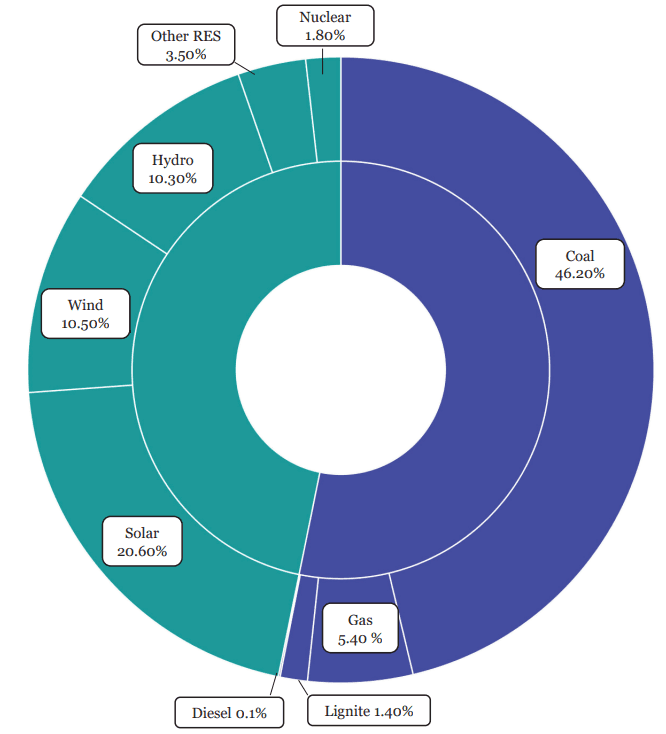
India – large coal endowment (10% global) but pursues 50 % electricity from non-fossil sources by 2030.

Quick Facts for MCQs

Economic Angle

  • Investment-lock: 2010s coal plants—premature closure risks stranded assets, power-tariff spikes.
  • Congestion-costs: Rapid renewables integration internationally raised consumer electricity prices.
  • Budget-2025: Duty waivers, ₹20k cr nuclear push, ₹410 cr critical-minerals—lower long-term import bill.

Tech & Schemes

  • Mission-mode: NCMM, FAME, GEC, NSM, SAUBHAGYA accelerate clean-tech deployment.
  • Innovation: Indigenous BSR and BSMR under Nuclear Energy Mission target modular 470-MW-e reactors.
  • Challenge: Intermittent solar/wind need costly grid upgrades, battery storage, scarce land & minerals.

International Examples

  • France 1970s nuclear surge post-oil embargo; EU 2022 REPowerEU to cut Russian gas.
  • USA 2023 approved largest Alaska oil project—shows continued rich-nation fossil reliance.
  • Global lesson: Historical transitions driven by energy security, not emissions altruism.

Security Dimension

  • Import-dependence: Critical-mineral & renewable-tech supply chains expose India to geopolitical shocks.
  • Coal-base: Domestic abundance delivers price stability, buffers supply disruption risks.
  • Balanced pathway: Gradual diversification ensures affordability while inching toward Net-Zero 2070.

Key Data Points

FeatureData-Point
India’s share in world coal reserves10 %
India’s share in world natural-gas reserves0.7 %
Installed non-fossil capacity (Nov 2024)213,701 MW ≈ 46.8 % of total
Non-fossil share in generation (2022-23)22.8 %
Govt target50 % electricity from non-fossil by 2030
Climate finance pledged at COP-29USD 300 bn/yr (vs need ≈ USD 1 tn)
NCMM outlay (2025-26)₹410 crore
Nuclear Energy Mission outlay₹20,000 crore
Planned Small Modular Reactors≥ 5 by 2033
Customs duty on 25 critical mineralsExempted (July 2024)
Congestion cost meaningExtra cost from limited grid capacity

Related UPSC Prelims PYQs

GS1 2023PYQ 1

निम्नलिखित कथनों पर विचार कीजिए :

GS1 2019PYQ 2

निम्नलिखित कथनों पर विचार कीजिए :
GS-3Economy

2.Extra-Long Staple Cotton Mission (ELS Cotton)

Indian Express

What & Where

Extra-Long Staple (ELS) cotton = fibre length ≥30 mm; premium softness, strength; mainly Gossypium barbadense (Egyptian/Pima).

Global belts: Egypt, China, Australia, Peru; Indian pockets: Atpadi (Maharashtra), Coimbatore (Tamil Nadu), parts of Karnataka & Madhya Pradesh.

Preferred for luxury apparel, high-end home textiles, fine yarn blends.

Quick Facts for MCQs

Agronomic Challenges

  • Yield gap: ELS 7–8 q/acre vs medium 10–12 q/acre reducing farmer appeal
  • Technology deficit: limited advanced seeds, pest-resistant HtBT options, suboptimal agronomic know-how
  • Climate sensitivity: longer crop duration, higher water and nutrient demand

Economic Angle

  • Import dominance: 90 % domestic requirement met through foreign ELS, pressuring trade balance
  • Price realisation: weak market linkages deny growers premium despite superior fibre
  • Low acreage: reduced profitability and risk deter large-scale cultivation

Tech & Schemes

  • Union Budget mission: five-year programme targeting productivity, sustainability, value-chain infrastructure
  • Focus areas: breeder seed improvement, cluster-based cultivation, ginning modernisation
  • Potential partners: private seed firms, ICAR, textile industry for assured offtake

Key Data Points

FeatureData-Point
Fibre length cut-off≥ 30 mm
Principal speciesGossypium barbadense
Typical ELS yield7–8 quintals/acre
Medium-staple yield10–12 quintals/acre
India’s import share≈ 90 % of ELS demand
Annual imports20–25 lakh bales
Budget 2025-26Five-year ELS productivity & sustainability mission announced
Short-staple length< 25 mm
Medium-staple length25–28.6 mm
Long/ELS staple length≥ 30 mm

Related UPSC Prelims PYQs

GS1 2020PYQ 1

“This crop is of tropical origin. For its development it requires about 210 frost-free days and 50–100 centimetres of rainfall annually. Its adaptability to moist, deep, well-drained soils makes it ideally suited for plantation agriculture.” Which one of the following crops is described in the above passage?

GS-3Economy

3.Indian Rupee Depreciation Drivers (Exchange Rate)

IT

What & Where

Exchange rate = domestic currency price for one unit of foreign currency, set by demand–supply in forex market

Location: Inter-bank spot, forward and derivatives markets regulated by RBI under FEMA

Rupee presently weakening versus US dollar amid global protectionism and Fed tightening

Quick Facts for MCQs

Causes of Depreciation

  • Trade-war Tariffs strengthen dollar, reduce demand for emerging-market currencies
  • Fed Tightening raises US bond yields, attracting global funds away from India
  • Inflation Gap higher Indian CPI plus lower domestic rates erode rupee appeal

Economic Impact

  • Imports Costlier fuel, fertiliser, electronics inflate input costs and CPI
  • CAD Widens as dollar-priced oil and gold bills soar, draining forex reserves
  • Exports Gain price advantage; IT, pharma, textiles become more competitive

Policy Options

  • Export Push via Make in India, value-added goods to narrow trade gap
  • Forex Buffer build through higher FDI, curb non-essential imports
  • Inflation Management align monetary stance to anchor price expectations and rupee stability

Key Data Points

FeatureData-Point
Dollar Index level cited109.8
India’s crude-oil import dependence≈ 80 % of consumption
Triggering tariffs announced byUnited States on China, Mexico, Canada
Main capital-flow reactionFII net outflows from Indian equities

Related UPSC Prelims PYQs

CDS_GK, GS1 2019PYQ 1

भारत के संदर्भ में, मुद्रा संकट के जोखिम को कम करने में निम्नलिखित में से किस/किन कारण/कारकों का योगदान है?

CDS_GK, GS1 2025PYQ 2

मुद्रा मूल्यह्रास (Currency depreciation) किस प्रकार से निवल निर्यात (net exports) की वृद्धि को प्रेरित कर सकता है?

GS-3Economy

4.India's Ethanol Blending Progress (Ethanol Blending)

The Hindu

What & Where

Ethanol fuel: renewable bio-alcohol from fermented sugarcane juice, molasses, maize, other grains

Blended with petrol as E5, E10, E20; India targets 20 % blend well before 2025 roadmap

Production capacity 1,600 – 1,700 cr L spread across sugar & maize belts nationwide

Quick Facts for MCQs

Production Capacity

  • Capacity addition from 215 cr L (2014) to 1,600 cr L (2024)
  • Grain route overtook sugar; combined supply sufficient for pan-India E20
  • Target: 86 E20-compliant retail outlets already operational, scaling nationwide

Feedstock Shift

  • Maize contribution surged to 400 cr L, lowering water footprint vs sugarcane
  • DDGS by-product supplies protein-rich poultry feed, aiding food-feed balance
  • Government incentives driving crop diversification toward maize, millets, damaged grains

Challenges & Solutions

  • Sustainability: water-intensive sugarcane, rice threaten aquifers; maize preferred
  • Infrastructure: limited storage, blending depots, interstate movement bottlenecks remain
  • Policy thrust: 2G/3G technologies, uniform taxation, assured pricing to stabilise sector

Key Data Points

FeatureData-Point
Upcoming E20 rolloutWithin next 2 months (mid-2024)
Current blend level15 % (2024)
Distillery capacity 20241,600 crore litres
Target capacity 20251,700 crore litres
Sugar-based ethanol400 crore litres
Grain-based ethanol700 crore litres
Maize ethanol output~400 crore litres (0 in 2020)
Maize farming area↑10 % after policy push

Related UPSC Prelims PYQs

ESE_GS, GS1 2024PYQ 1

Consider the following statements about ethanol:

ESE_GS, GS1 2010PYQ 2

Given below are the names of four energy crops. Which one of them can be cultivated for ethanol ?

GS-3Economy

5.Agriculture Budget Initiatives 2025 (High-Yield Seeds)

PIB

What & Where

National Mission on High-Yielding Seeds: pan-India drive (Budget 2025-26) to supply >100 pest- & climate-resilient varieties.

Support hubs: 2nd National Gene Bank (10 lakh germplasm lines) & National Institute of Food Technology, both in Bihar focus zone.

Complementary boards/missions: Makhana Board (Bihar), 5-yr Cotton Productivity Mission, 6-yr Pulses Self-reliance Mission.

Quick Facts for MCQs

Tech & Schemes

  • Seeds mission promotes high-yield, pest-resilient crops; links with GIS, remote-sensing monitoring.
  • Cotton mission backs extra-long staple varieties aligning 5F: Farm-to-Foreign.
  • Sustainable Fisheries framework covers EEZ, High Seas; priority to Andaman, Lakshadweep.

Economic Angle

  • Fisheries GVA grew 13.67 %, livestock 12.99 % (2013-23); oilseeds only 1.9 %.
  • Irrigation coverage rose to 55 % GCA; intensity now 154.5 %.
  • Rural Prosperity & Resilience Programme eyes under-employment reduction via tech and skilling.

Environmental Impact

  • Monoculture risk flagged; biodiversity loss feared with uniform high-yield seeds.
  • Recommended practices: crop rotation, polyculture, diverse seed banks.
  • Missions pursue drought/flood-resistant traits for ecological stability.

Credit & Finance

  • Grameen Credit Score to widen rural lending footprint for SHG members.
  • Modified Interest Subvention Scheme now covers 7.7 crore farmers, fishers, dairy holders.
  • Focus on 100 low-productivity districts under PM Dhan-Dhaanya Krishi Yojana for irrigation & storage credit.

Key Data Points

FeatureData-Point
Agri GVA growth rate (2016-23)5 % p.a.
Sector GVA share 2022-2330.23 %
New seed varieties target100 + (23 cereals, 11 pulses, 7 oilseeds)
Gene Bank capacity10 lakh germplasm lines
Cotton mission span5 years
Pulses mission span6 years
KCC loan limit (revised)₹5 lakh
Bihar’s share in makhana output90 %
India’s global rank, fish production2nd

Related UPSC Prelims PYQs

CDS_GK, GS1 2010PYQ 1

An objective of the National Food Security Mission is to increase the production of certain crops through area expansion and productivity enhancement in a sustainable manner in the identified districts of the country. What are those crops?

CDS_GK, GS1 2025PYQ 2

केंद्र सरकार द्वारा 2015-16 में प्रारंभ की गई परंपरागत कृषि विकास योजना (PKVY) का उद्देश्य है:

GS-3Infrastructure

6.Budget 2025 Infrastructure Initiatives (National Monetisation Plan)

PIB
Illustration for Budget 2025 Infrastructure Initiatives (National Monetisation Plan)

What & Where

Infrastructure = long-lived physical & social systems (roads, rail, power, ports, housing) enabling economic activity.

Core Indian geography: 2nd-largest road network, 3rd-largest domestic aviation market, 12 major ports across coastline.

Capital outlay 2025-26 pegged at Rs 11.2 lakh crore, signalling priority status in national budgeting.

Quick Facts for MCQs

Budget 2025-26 Outlays

  • Monetisation pipeline Rs 10 lakh cr; total capex highest ever Rs 11.2 lakh cr.
  • Urban Challenge Fund Rs 1 lakh cr; SWAMIH-2 Rs 15,000 cr for 1 lakh stalled homes.
  • Shipbuilding fund Rs 25,000 cr; large vessels gain infrastructure status lowering finance cost.

Transport Targets

  • Railways vision: 2nd-largest cargo mover, 100 % electrified track by FY 26.
  • UDAN extended 10 yrs to link 120 new destinations, add 40 mn passengers.
  • Shipbreaking credit-note mechanism to incentivise circular recycling of steel, copper, aluminium.

Current Sectoral Metrics

  • National highways 1.46 lakh km; build speed up 2.8× since 2014.
  • Metro network 993 km, airports 157, India ranks 22nd in UNCTAD shipping index (44th in 2014).
  • Rural tap connections 15.44 cr; urban waste processing jumped from 18 % to 78 % (2014-24).

Key Data Points

FeatureData-Point
Infra capital expenditure FY 26Rs 11.2 lakh crore
Monetisation target 2025-30Rs 10 lakh crore assets
Urban Challenge Fund sizeRs 1 lakh crore
National Highway length 20241,46,145 km
NH construction pace 2023-2433.8 km / day
Railway electrification Dec 202393.83 % broad-gauge
Railway electrification deadline100 % by FY 26
Operational airports 2024157
Major-port cargo capacity 20241,630 MT
Metro rail length 2024993 km
Rural tap-water coverage Feb 2579.74 % households

Related UPSC Prelims PYQs

CAPF_GAI 2024PYQ 1

निम्नलिखित कथनों पर विचार कीजिए :

CAPF_GAI 2025PYQ 2

भारतमाला परियोजना में निम्नलिखित में से कौन-से शामिल हैं?

GS-1Mapping

7.South Sudan Geography Overview (African Country)

DC
Illustration for South Sudan Geography Overview (African Country)

What & Where

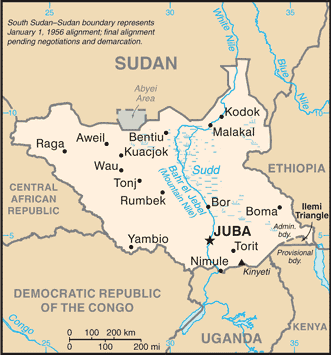
Famine: SPLM-N declares famine in Nuba Mountains & Blue Nile regions, Sudan.

South Sudan: Land-locked East African state; Nile & Sudd wetland dominate.

SPLM-N: Post-2011 rebel faction seeking autonomy for Nuba & Blue Nile.

Quick Facts for MCQs

Physical Geography

  • Rivers: White Nile traverses plains; sustains Sudd, one of world’s biggest wetlands.
  • Terrain: Tropical savannahs, floodplains, forested Imatong mountains southeast.

Rebel Group Profile

  • Origin: Breakaway from SPLM after South Sudan independence.
  • Composition: Predominantly Nuba & Blue Nile ethnic fighters.
  • Objective: Political representation, equitable resource allocation within Sudan.

Humanitarian Concerns

  • Famine declaration signals acute malnutrition & food insecurity in rebel-held zones.
  • Conflict-driven displacement and aid-access restrictions worsen vulnerability.

Key Data Points

FeatureData-Point
South Sudan capitalJuba
Land borders countSix (Sudan, Ethiopia, Kenya, Uganda, DRC, CAR)
Longest riverNile
Major wetlandSudd (central South Sudan)
Highest peakMt Kinyeti – 3,187 m, Imatong Mts
SPLM-N formed2011 (post-South Sudan secession)
Core SPLM-N regionsNuba Mountains, Blue Nile
Key SPLM-N demandGreater autonomy & resource-sharing
GS-3Environment

8.International Big Cat Alliance Treaty (Big Cat Conservation)

PIB
Illustration for International Big Cat Alliance Treaty (Big Cat Conservation)

What & Where

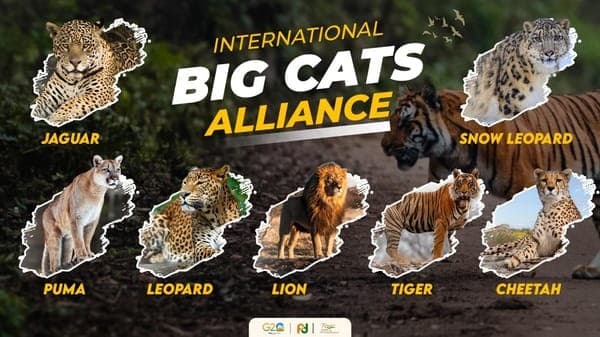
Alliance: treaty-based intergovernmental body for conserving seven big cats

Headquarters: National Tiger Conservation Authority, MoEFCC, India

Ratified by: India, Nicaragua, Eswatini, Somalia, Liberia (comes into force)

Quick Facts for MCQs

Legal & Policy

  • Treaty-based status activated after five ratifications
  • Framework aligns conservation with UN SDG targets
  • Mandates stronger anti-poaching legislation and enforcement support

Funding & Governance

  • Cabinet allocation ₹150 crore 2023-28 for secretariat and programmes
  • Director-General under MoEFCC; structure mirrors International Solar Alliance
  • Alliance mobilises global financial and technical aid for member projects

Conservation Scope

  • Coverage: Tiger, Lion, Leopard, Snow Leopard, Cheetah, Jaguar, Puma
  • India hosts five listed species, missing Jaguar and Puma
  • Strategy couples habitat protection with climate-change mitigation

Operations & Collaboration

  • Platform shares research, best practices, ecological monitoring data
  • Provides capacity building, funding for habitat restoration and protection
  • Coordinates intelligence to curb illegal wildlife trade across borders

Key Data Points

FeatureData-Point
Launch date9 Apr 2023 (Project Tiger @50)
Legal statusTreaty-based intergovernmental organisation
HeadquartersIndia, NTCA, MoEFCC
Big cats coveredTiger, Lion, Leopard, Snow Leopard, Cheetah, Jaguar, Puma
Indian presence5 species (excludes Jaguar, Puma)
Current ratifiersIndia, Nicaragua, Eswatini, Somalia, Liberia
Union outlay₹150 crore for 2023-28
Governance modelDirector-General, ISA-inspired
GS-3Species

9.Gambusia and Guppy Invasive Impact (Invasive Fish)

Business Standard
Illustration for Gambusia and Guppy Invasive Impact (Invasive Fish)

What & Where

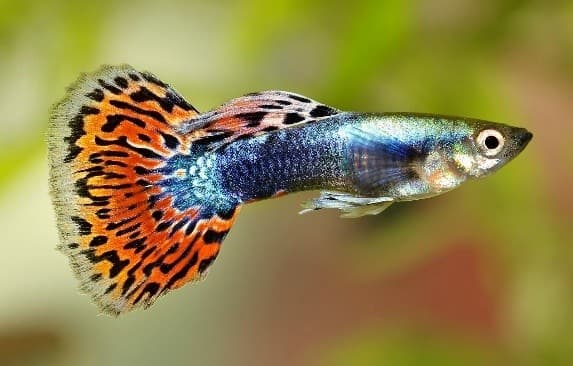
Gambusia affinis & Poecilia reticulata = small, hardy freshwater live-bearers released worldwide for mosquito-larvae control.

Native ranges: North America (Gambusia), NE South America (Guppy); now colonise tropical–temperate ponds, lakes, slow rivers.

Tagged “invasive alien species” by National Biodiversity Authority; NGT has sought Centre’s reply on continued field use.

Quick Facts for MCQs

Legal & Policy

  • NGT: notice seeks Centre’s stance on invasive fish deployment in vector-control programmes.
  • NBA: recommends restriction; absence of clear national eradication protocol.
  • State health agencies: continue releases citing public-health urgency.

Environmental Impact

  • Competition: displaces indigenous fish and amphibian larvae.
  • Trophic shift: heavy zooplankton predation destabilises food webs.
  • Reproduction: high fecundity enables rapid population explosions.

Vector Control

  • Larvivory: proven mosquito-larvae eater, yet efficiency site-specific.
  • Disease link: used against malaria, dengue, chikungunya vectors.
  • Alternatives: native larvivorous fishes (Aplocheilus, Puntius) proposed for eco-safer control.

Key Data Points

FeatureData-Point
Common tagsMosquitofish, Guppy
Introduction purposeBiological mosquito control
Native continent (Gambusia / Guppy)North America / South America
Male length (cm)4 (Gambusia); smaller than females in both species
Female length (cm)7 (Gambusia); larger, live-bearing
Diet shareZooplankton > mosquito larvae (minor proportion)
NBA statusListed invasive alien species
Global notorietyGambusia in “100 worst” invasive list
Tribunal actionNGT notice to MoEF&CC, June 2024
Ecological riskOutcompetes native fish, lowers biodiversity

Related UPSC Prelims PYQs

GS1 2008PYQ 1

The release of which one of the following into ponds and wells helps in controlling the mosquitoes?

GS-3S&T

10.Plastic-Degrading Bacteria and Enzymes (Plastic Biodegradation)

The Hindu

What & Where

Plastic biodegradation: use of naturally occurring or engineered bacteria/enzymes to depolymerise PET and similar plastics.

Key microbes: Ideonella sakaiensis (Japan), X-32 strain, Vibrio natriegens, Bacillus subtilis.

Major R&D hubs: Kyoto Institute of Technology (Japan) & Carbios facility (France).

Quick Facts for MCQs

Key Microbes

  • Ideonella sakaiensis: first bacterium shown to metabolise PET as sole carbon source.
  • X-32: targets tough C-C polymer backbones beyond PET.
  • Vibrio natriegens: fastest known bacterial doublings, ideal chassis for enzyme display.

Engineered Enzymes

  • PETase variants: lab-evolved for higher temperature tolerance & catalytic rate.
  • MHETase couples with PETase, converting MHET to terephthalic acid + ethylene glycol.
  • Carbios enzyme: thermostable, suitable for industrial reactors.

Implementation Challenges

  • Time lag: natural biodegradation may need months–years, slowing throughput.
  • Scale economics: fermenter, purification, and deployment costs remain high.
  • Biosafety: regulatory scrutiny over releasing GM microbes into open ecosystems.

Circular Economy Angle

  • Enzymatic depolymerisation yields monomers fit for closed-loop PET recycling.
  • Process supports low-temperature, solvent-light recycling vs energy-intensive pyrolysis.

Key Data Points

FeatureData-Point
Ideonella sakaiensis enzymesPETase + MHETase (two)
Carbios enzyme performance90 % PET depolymerised in 10 h
X-32 capabilityDegrades PET, polyolefins, polyamides
Vibrio natriegens tweakSurface-displayed PETase for rapid action
Bacillus subtilis useEmbedded in biodegradable plastics; activated in compost
Main hurdleHighly crystalline PET resists most strains
GS-3S&T

11.Electronic Signal Amplifiers Basics (Electronic Amplifiers)

The Hindu

What & Where

Amplifier: electronic device boosting signal amplitude without waveform change.

Key stages: pre-amp → voltage gain → current/power boost → output load.

Found in audio, telecom, medical, scientific, industrial-military equipment.

Quick Facts for MCQs

Amplifier Classes

  • Class A: continuous conduction, top fidelity, poorest efficiency, hi-end audio.
  • Class B: half-cycle conduction, crossover distortion, moderate efficiency, basic sound systems.
  • Class D: MOSFET switching, >90 % efficiency, battery & PA applications.

Signal Flow

  • Input stage: microvolt-level microphone/sensor signal enters circuit.
  • Pre-amp: low-noise gain readies signal for larger amplification stages.
  • Driver & power output: raise current, feed speaker/antenna without voltage sag.

Sectoral Uses

  • Audio: loudspeakers, home theatres, studio mixers.
  • Telecom: mobile base stations, radio transmitters, fibre-optic repeaters.
  • Medical/Science: ECG, ultrasound, seismology, particle physics detectors.

Key Data Points

FeatureData-Point
Core functionRaises voltage/current of input signal, preserves shape
Main active elementTransistor controlling collector current for voltage gain
Initial stagePre-amplifier ensures low-noise first boost
Highest fidelity classClass A
Highest efficiency classClass C (RF)
Hybrid classClass AB: balance of fidelity & efficiency
Digital switching classClass D; >90 % efficient
Typical Class A efficiency≈25-30 %
Key application clustersAudio, Telecom, Medical, Research, Defence
GS-3S&T

12.CSIR-IICT Biohydrogen from Waste (Biohydrogen Production)

The Hindu

What & Where

Biohydrogen: microbial anaerobic fermentation of food waste in an upflow, self-buffered reactor at CSIR-IICT, Hyderabad.

CO₂-to-ethanol/acetic acid: high-pressure gas fermentation (HPGF) reactor eliminates external H₂ use.

Both processes target clean fuel and waste mitigation supporting India’s net-zero pathway.

Quick Facts for MCQs

Technology & Process

  • Upflow reactor promotes higher hydrogen yield, lowers acidic shock via in-situ buffering.
  • HPGF operates at elevated pressure, enhancing gas solubility and product titres.
  • Fermentation strictly anaerobic, utilises mixed bacterial consortia.

Environmental Impact

  • Converts urban food waste to clean hydrogen, cutting landfill methane leakage.
  • Direct CO₂ valorisation into liquid fuels lowers carbon intensity of chemical sector.
  • Both methods energy-efficient, avoiding high-temperature catalytic routes.

Institutional Profile

  • CSIR-IICT among oldest CSIR labs; noted for applied chemical research & tech transfer.
  • Works span pharmaceuticals, agro-chemicals, green energy solutions.

Key Data Points

FeatureData-Point
Lead instituteCSIR–Indian Institute of Chemical Technology (1944), Hyderabad
Feedstock for bioH₂Segregated food waste
Reactor typeUpflow anaerobic fermenter with self-regulating buffer
Main by-products avoidedMethane & CO₂ (vs. conventional biogas)
CO₂ conversion reactorHigh-Pressure Gas Fermentation (HPGF)
External H₂ requirementNil in HPGF route
Key outputsBiohydrogen, ethanol, acetic acid
Climate relevanceReduces GHGs; aids net-zero targets

Related UPSC Prelims PYQs

CAPF_GAI, ESE_GS 2021PYQ 1

Scientists at CSIR-NCL Pune, with support from the Water Technology Initiative of the Department of Science and Technology (DST), Government of India, have recently developed a novel hybrid technology to bring safe and healthy drinking water. What is the name of the hybrid technology?

CAPF_GAI, ESE_GS 2022PYQ 2

US-based Ohmium International has started India's first green hydrogen electrolyzer manufacturing unit at

GS-2Security

13.North American Fentanyl Trafficking Crisis (Opioid Trafficking)

Indian Express

What & Where

Fentanyl – potent synthetic opioid, ~100 × stronger than morphine, approved for anesthesia & severe-pain therapy

Crisis hub: North America; precursor chemicals sourced mainly from China, processed in Mexico, trafficked into USA/Canada

Trade angle: US now levies 25 % tariffs on China, Mexico, Canada to pressure anti-fentanyl action

Quick Facts for MCQs

Health Impact

  • Overdose-leading drug: synthetic opioids now primary cause of accidental deaths in 18-45 age group US
  • Low lethal dose: ~2 mg can kill, complicating emergency response
  • Naloxone efficacy: works but shorter half-life than fentanyl, necessitating repeat dosing

Supply Chain & Trafficking

  • Precursors mailed or shipped from Chinese chemical firms to Mexican cartels for synthesis
  • Finished fentanyl pressed into counterfeit pills, mixed with heroin, raising detection difficulty
  • Canada affected via parcels & cross-border vehicular traffic

Policy Measures

  • US tariffs link trade pressure to narcotics control, unprecedented in opioid policy history
  • Previous bilateral talks (2018-20) led China to schedule fentanyl, yet enforcement gaps persist
  • Calls for multilateral precursor-chemical tracking under UN Convention on Psychotropic Substances

Security Dimension

  • Fentanyl profits finance transnational criminal organizations, escalating violence in Mexican border states
  • US Customs deploying advanced spectroscopy & canine units at ports of entry
  • Cyber-marketplaces facilitate retail distribution, challenging traditional interdiction methods

Key Data Points

FeatureData-Point
Potency vs morphine≈100 times stronger
Medical licencePain relief, anesthesia
2021 US overdose deaths107,000 total
Opioid share in 2021 deaths>75 %; fentanyl dominant
Tariff rate announced25 %
Key precursor exporterChina
Processing hubMexican clandestine labs
Smuggling routesMexico–US land border; maritime to Canada
Addiction driverRapid euphoria, dependence
Stealth riskOften laced into cocaine, meth, fake pills
GS-2Scheme

14.National Mission on Cultural Mapping (Cultural Mapping)

The Hindu

What & Where

National Mission on Cultural Mapping (NMCM): Culture Ministry scheme to GIS-catalogue artists, art forms, heritage assets nationwide.

IGNCA, autonomous body (est. 1987, New Delhi), now leads execution.

Field pilot: 75 villages from Oct 2021; focus on folk-art and village-heritage data.

Quick Facts for MCQs

Legal & Policy

  • Approval cost norms fixed under routine Culture-Ministry umbrella plan heads.
  • Mission aligns with Art & Culture allocation in Union Budget demand No. 17.

Implementation Targets

  • IGNCA aims monthly average ~625 villages to meet 5,000 target by Mar 2022.
  • Digital platform to host searchable, geo-tagged artist profiles and heritage layers.

Stakeholders

  • Community volunteers collect primary data using uniform pro-formas.
  • Line bodies: Zonal Cultural Centres, Sangeet Natak Akademi to validate entries.

Key Data Points

FeatureData-Point
Approval year2017
Current nodal agencyIGNCA
Parent ministryCulture
Pilot size & start75 villages, Oct 2021
FY 2021-22 village target5,000
Full project span5 years (2017-22)
Core database elementsArtists, art forms, cultural resources
Key volunteer sourcesNYKS, NSS, sociology/social-work students
Main objectivesCultural mapping, demography build, cultural vibrancy
Select allied schemesKSVY, ICH Safeguard, Ek Bharat Shreshtha Bharat

Related UPSC Prelims PYQs

CDS_GK, NDA_GAT 2025PYQ 1

Which Ministry has initiated the “Dhara”, a special initiative dedicated to Indian Knowledge System (IKS)?

CDS_GK, NDA_GAT 2025PYQ 2

किस संगठन/संस्थान द्वारा हाल ही में भारत विद्या परियोजना, बहुरत्न भारत और गांधी संवाद प्रवर्तन जैसे नए प्रकल्प प्रारंभ किए गए हैं?

GS-2Scheme

15.Gyan Bharatam Manuscript Mission (Manuscript Preservation)

The Hindu

What & Where

Gyan Bharatam Mission: new Union-Budget 2025-26 scheme to survey, document, conserve India’s manuscript heritage nationwide.

National Manuscripts Mission (NMM): 2003 IGNCA-run programme, now funding vehicle for Gyan Bharatam activities.

Manuscripts: ≥75-year-old handwritten works on paper, bark, cloth, metal, palm leaf; India hosts ≈5 million.

Quick Facts for MCQs

Policy & Governance

  • Mission integrates with existing NMM instead of separate bureaucracy, ensuring continuity.
  • IGNCA remains autonomous but answerable to Culture Ministry oversight.
  • Survey-document-conserve triad aligns with National Cultural Policy draft goals.

Budgetary Outlay

  • 17-fold funding jump enables field surveys, digitisation, conservation labs.
  • Allocation sourced from Culture ministry’s overall hike, not extra-budgetary support.
  • Funds earmarked for institutional grants plus private-collection partnerships.

Cultural Heritage

  • Manuscripts cover Vedas, medicine, astronomy, regional literatures, providing primary-source data.
  • Conservation safeguards fragile palm-leaf, metal-inscribed texts from humidity, pests, oxidation.
  • Digitisation aimed at public portals, boosting scholarly access and global cultural diplomacy.

Key Data Points

FeatureData-Point
Gyan Bharatam launchUnion Budget 2025-26
Implementing ministryCulture
Parent institutionIndira Gandhi National Centre for Arts (IGNCA)
NMM start year2003
IGNCA establishment1987
2024-25 NMM outlay₹3.5 crore
2025-26 NMM outlay₹60 crore
Target manuscripts>1 crore (10 million)
Estimated national stock≈5 million
Manuscript age criterion≥75 years

Related UPSC Prelims PYQs

CDS_GK, NDA_GAT 2025PYQ 1

Which Ministry has initiated the “Dhara”, a special initiative dedicated to Indian Knowledge System (IKS)?

CDS_GK, NDA_GAT 2025PYQ 2

किस संगठन/संस्थान द्वारा हाल ही में भारत विद्या परियोजना, बहुरत्न भारत और गांधी संवाद प्रवर्तन जैसे नए प्रकल्प प्रारंभ किए गए हैं?

GS-2SchemeQuick Bite

16.Grameen Credit Score Framework (Rural Credit)

Indian Express

What & Where

Grameen Credit Score (GCS): rural creditworthiness metric created by public-sector banks

Nationwide rollout; dovetails with SVAMITVA property-mapping for village areas

Complements existing bureau scores – CIBIL, CRIF Highmark – for loan appraisal

Quick Facts for MCQs

Tech & Schemes

  • Integration: GCS feeds on SVAMITVA GIS data for secure land-linked scoring
  • Complementarity: Operates alongside CIBIL & CRIF Highmark within microfinance models
  • Digital-scoring: Targets fraud reduction via precise borrower profiling

Economic Angle

  • Microfinance-boost: Easier rural credit expected to aid agriculture, MSMEs
  • Repayment-discipline: Score incentivises timely instalments, curbing NPAs
  • Cooperative-lending: ₹500 crore infusion to NCDC strengthens sugar-mill finance

Institutional Changes

  • India-Post-transformation: Budget envisages postal network as major public logistics arm
  • Network-leverage: 1.5 lakh outlets, 2.4 lakh staff to serve deep-rural delivery
  • Banking-link: Postal infrastructure poised for last-mile credit & service distribution

Key Data Points

FeatureData-Point
Announced inUnion Budget 2025-26
Developed byPublic Sector Banks
Primary beneficiariesSHGs & rural individuals
Linked schemeSVAMITVA
India Post network size1.5 lakh post offices; 2.4 lakh Dak Sevaks
NCDC grant₹500 crore for cooperative sugar mills

Related UPSC Prelims PYQs

CAPF_GAI, ESE_GS 2025PYQ 1

Which among the following statements with regard to Grameen Bharat Mahotsav, 2025 is/are correct?

CAPF_GAI, ESE_GS 2022PYQ 2

Which one of the following is NOT important initiatives under EASE 4.0?

GS-1Polity

17.Bhopal Begging Ban Order (Begging Prohibition)

Indian Express

What & Where

Ban; Bhopal district imposes blanket prohibition on street begging across public spaces from Feb 2025.

Authority; order issued under Bharatiya Nagrik Suraksha Sahita Section 163, mirroring Indore’s precedent.

Geography; Madhya Pradesh’s capital—signals, shrines, tourist hubs earlier witnessed traffic hazards and accidents.

Quick Facts for MCQs

Legal & Policy

  • Concurrent-list provision enables both Union & states to legislate; no central anti-begging statute currently.
  • Delhi HC 2018 decriminalised begging in capital; SC 2021 called it socio-economic, rejected removal PIL.

Schemes & Targets

  • SMILE-2022 offers medical aid, education, skill training; aims “beggar-free India” by 2026.
  • Rehabilitation progress: 970 individuals, including 352 children, reported by 2024.

Socio-Economic Impact

  • Poverty, hereditary caste roles, disability, disasters push 4.14-lakh Indians into street begging (Census 2011).
  • Organized rings traffic women/children; aggressive solicitation dents tourism, raises urban safety and hygiene concerns.

Key Data Points

FeatureData-Point
Year of Bhopal orderFeb 2025
City that banned earlierIndore, 2024
BNSS urgent-order section163
BNSS disobedience penalty223
Model state lawBombay Prevention of Begging Act 1959
Concurrent List entryList III, Entry 15 (vagrancy)
SMILE launch2022
SMILE rehabilitation till 2024970 persons
Beggar count (Census 2011)4,13,670
State with most beggarsWest Bengal

Ready to practice?

Test your knowledge with our UPSC test series.

Start Free Trial