UPSC Current Affairs

18 topicsGS-1: 8GS-2: 4GS-3: 6
0/18 done
GS-2Polity

1.UGC Draft Vice Chancellor Selection Norms (Higher Education)

The Hindu
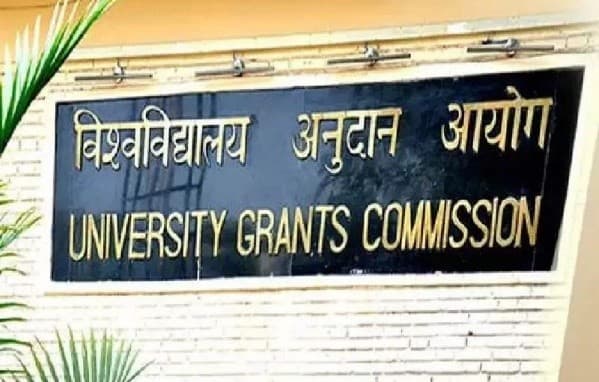
Illustration for UGC Draft Vice Chancellor Selection Norms (Higher Education)

What & Where

Draft “UGC (Appointment of Vice-Chancellors) Regulations 2023” sets uniform VC selection norms.

Applicable to Central, State, Deemed & Private universities under UGC across India.

Relies on a three-member Search-cum-Selection Committee recommending a panel of three names to Chancellor/Visitor.

Quick Facts for MCQs

Legal & Policy

  • Constitutional_basis: Higher-education on Concurrent List; UGC Act 1956 subordinate to State University Acts.
  • SC_precedent: Ch Tika Ramji 1956 bars subordinate rules from overriding State laws, spurring federal friction.
  • Governor_role: Chancellor powers contested amid West Bengal, Tamil Nadu appointment stand-offs.

Governance Upsides

  • Uniformity: Standard committee structure curbs ad-hoc state norms, ensures quality benchmarking.
  • Transparency: Codified criteria plus UGC nominee reduce discretionary political influence.
  • Diversity: Eligibility for industry, policy veterans injects external governance expertise.

Concerns & Critiques

  • Autonomy_loss: Mandatory UGC nominee viewed as Centre intrusion into State university administration.
  • Academic_rigor: Non-academic route lacks research-teaching benchmarks, risking dilution of scholarship.
  • Political_bias: Enhanced Governor leverage could facilitate partisan VC selections.

Way Forward

  • Consultation: Structured UGC-State dialogue to adapt norms without undermining local Acts.
  • Eligibility_clarity: Require proven educational contributions from non-academic aspirants.
  • Judicial_review: Constitutional Bench guidance sought to harmonise UGC rules with cooperative federalism.

Key Data Points

FeatureData-Point
Committee size3 members
Mandatory UGC nominee forAll State Universities
Composition quotaChancellor/Visitor 1 + UGC Chair 1 + University apex body 1
Eligibility expansionProfessionals with ≥10 yrs public policy/administration/industry
Supporting SC caseKalyani Mathivanan v. K.V. Jeyaraj 2015 upheld uniform VC rules
Policy alignmentNEP 2020 focus on quality, transparency, inclusivity

Related UPSC Prelims PYQs

ESE_GS 2021PYQ 1

Which one of the following statements is NOT correct regarding the National Education Policy 2020 in India ?
GS-2Scheme

2.Entity Locker Digital Document Platform (E-Governance)

PIB
Illustration for Entity Locker Digital Document Platform (E-Governance)

What & Where

Platform: secure, cloud-based “Entity Locker” by NeGD-MeitY for nationwide business document storage, sharing, verification

Scope: caters to large firms, MSMEs, startups, trusts, societies for paper-less compliance and record-keeping

Geography: pan-India service integrated with GSTN, MCA, DGFT databases

Quick Facts for MCQs

Tech & Schemes

  • Cloud-storage: 10 GB encrypted locker hosted on government infrastructure
  • Digital-signature: in-platform e-sign confers legal validity to uploaded files
  • API-integrations: instant pull of GST, MCA, DGFT data for auto-verification

Business Facilitation

  • Compliance-time: real-time verification eliminates physical filings and attestation delays
  • Cost-saving: avoids paper, courier, notarisation expenses for enterprises, especially MSMEs
  • Inclusivity: single dashboard usable by startups, NGOs, rural enterprises, export units

Security Dimension

  • Aadhaar-based: role-wise access mapped to identifiable custodians enhancing accountability
  • Consent-layer: entity decides who can view, download, or edit sensitive records
  • Encryption-at-rest: follows MeitY security guidelines to guard against data breaches

Key Data Points

FeatureData-Point
Nodal ministryMeitY
ImplementerNational eGovernance Division (NeGD)
Cloud storage quota10 GB encrypted
Access controlAadhaar-authenticated, role-based
Sharing modeConsent-based digital exchange
AuthenticationBuilt-in digital signature
Real-time verificationAuto-fetch from government databases
Key integrationsGSTN, MCA, DGFT
Covered entitiesLarge orgs, MSMEs, startups, trusts, societies
Primary objectiveEase of Doing Business; lower admin overhead

Related UPSC Prelims PYQs

GS1 2016PYQ 1

Regarding ‘DigiLocker’, sometimes seen in the news, which of the following statements is/are correct?

GS-3Economy

3.India Coffee Production and Exports Surge (Coffee Production)

DD News
Illustration for India Coffee Production and Exports Surge (Coffee Production)

What & Where

Beverage crop introduced by Sufi saint Baba Budan (1600s) to Baba Budan Giri, Karnataka.

Two cultivated species: Arabica – mild, aromatic; Robusta – hardy, strong, suited to instant coffee.

Core belt: shaded highlands 600–1 600 m in Karnataka, Kerala, Tamil Nadu.

Quick Facts for MCQs

Historical Origin

  • Baba Budan smuggled seven Mocha beans from Yemen, sparking Indian coffee cultivation.
  • Baba Budan Giri hills remain symbolic birthplace and major growing zone.

Agro-Climatic Needs

  • Temperature band 15-28 °C; hot, humid, shade-grown conditions critical.
  • Rainfall window 150-250 cm; excess waterlogging harms root system.
  • Soil must be loamy, well-drained, mineral-rich for optimal bean quality.

Production & Exports

  • India ranks 7th globally; exports nearly doubled between FY 2021 and FY 2024.
  • Over 70 % of beans shipped abroad; revenue crosses USD 1 billion annually.
  • Italy, Belgium, Russia dominate destination list for Indian coffee.

State Share

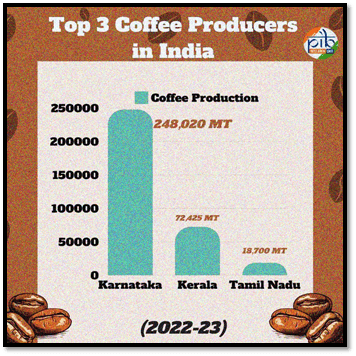
  • Karnataka alone delivers >70 % of national harvest; major tracts in Kodagu, Chikmagalur, Hassan.
  • Kerala follows with significant output; Tamil Nadu’s Nilgiris and Shevaroys hold third spot.

Key Data Points

FeatureData-Point
Global production rank7th
FY 2023-24 export valueUSD 1.29 billion
FY 2020-21 export valueUSD 719.42 million
Export share of output>70 %
Largest importing countryItaly
Other key importersBelgium, Russia
Karnataka share>70 % of national output
Kerala rank2nd largest producer
Tamil Nadu rank3rd largest producer
Ideal temperature15 – 28 °C
Required rainfall150 – 250 cm/yr
Preferred soilWell-drained loam rich in humus, Fe, Ca
Optimal altitude600 – 1 600 m
Number of beans Baba Budan plantedSeven
Higher-value speciesArabica

Related UPSC Prelims PYQs

GEO_GS, GS1 2025PYQ 1

The cultivation of which one of the following crops was introduced in the Baba Budan Hills?

GEO_GS, GS1 2008PYQ 2

Consider the following statements:

GS-3Economy

4.PLI Scheme for White Goods Expansion (Manufacturing Incentive)

News on Air
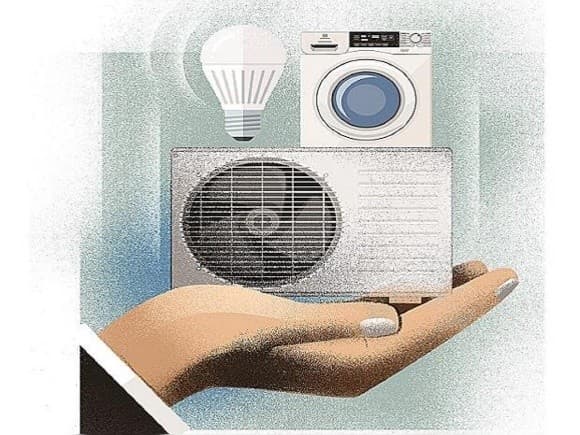
Illustration for PLI Scheme for White Goods Expansion (Manufacturing Incentive)

What & Where

White Goods = durable large household appliances for cleaning, cooking, laundry & climate control

PLI for White Goods incentivises domestic manufacture of Air-Conditioners and LED lights in India

Administered nationwide by DPIIT, Ministry of Commerce & Industry

Quick Facts for MCQs

Tech & Schemes

  • Selection: 24 firms approved under PLI after committing specified capex
  • Coverage: incentives extend to compressors, heat-exchangers, LED chips, drivers
  • Goal: strengthen domestic value chain, curb import dependence

Product Categories

  • Kitchen: refrigerator, oven, microwave, dishwasher
  • Laundry: washing machine, dryer
  • Climate: air-conditioner, heater, dehumidifier, fan

Features & Tech

  • Durability: built for prolonged, heavy daily operation
  • Energy efficiency: designs focus on reduced electricity consumption
  • Connectivity: IoT-enabled smart control & monitoring

Key Data Points

FeatureData-Point
Scheme titlePLI – White Goods
Target productsAir Conditioners, LED lights (core & sub-components)
Selected companies24
Committed investment₹3,516 crore
Implementing bodyDPIIT
Incentive natureOutput-linked production subsidy

Related UPSC Prelims PYQs

GS1 1998PYQ 1

Some time back, the Government of India decided to delicense the ‘white-goods’ industry. ‘White goods’ include

GS-3Economy

5.RBI Liberalises FEMA Cross-Border Rupee Use (Monetary Policy)

Business Standard

What & Where

RBI amendments to FEMA 1999 ease rules for using Indian Rupee in cross-border current & capital transactions.

Enables INR accounts for non-residents and foreign-currency accounts for Indian exporters via overseas AD bank branches.

Operative in India domestically; execution happens through global branches/vostro links with partner-country banks.

Quick Facts for MCQs

Legal & Policy

  • FEMA divides transactions: Current Account vs Capital Account, amended Dec 2023 to allow any currency, incl. INR.
  • RBI empowered to frame rules, issue directions; amendments target orderly forex-market development.
  • Liberalisation shields INR amid depreciation pressures, aligning with external-sector strategy.

Banking Instruments

  • SNRR/SRVA allow repatriable INR balances between non-residents; funds convertible for investments.
  • NRE & FCNR(B) accounts hold tax-free principal + interest; NRO taxable—primarily for India-sourced income.
  • Overseas AD branches now gatekeepers for opening, maintaining rupee and foreign-currency exporter accounts.

Trade & Investment Impact

  • Exporters may receipt proceeds abroad and recycle them for import payments, lowering conversion costs.
  • Non-residents’ direct INR use in FDI and portfolio flows deepens rupee liquidity offshore.
  • Cross-border INR settlements envisioned to reduce dependence on USD, diversify payment-risk profile.

Key Data Points

FeatureData-Point
Parent lawFEMA 1999 (replaced FERA 1973)
RegulatorReserve Bank of India
Nature of FEMA breachCivil offence
New facilityINR accounts by overseas AD bank branches
Eligible non-resident accountsSNRR & Special Rupee Vostro (SRVA)
Non-resident use of balanceTrade, FDI, other non-debt investments
Exporters’ new optionOpen foreign-currency account overseas
SRVA launchJuly 2022
Recent MoUs for local-currency tradeUAE, Indonesia, Maldives
Tax on NRE / FCNR(B) interestNil; NRO interest taxable

Related UPSC Prelims PYQs

GS1 2003PYQ 1

Which one of the following statements is correct with reference to FEMA in India?

GS1 2021PYQ 2

निम्नलिखित पर विचार कीजिए :

GS-1History

6.Ratnagiri Buddhist Excavation Finds (Ratnagiri Site)

Indian Express

What & Where

Ratnagiri — early‐medieval Buddhist monastic-cum-educational complex in Jajpur, Odisha; part of “Diamond Triangle” with Udaygiri, Lalitgiri

Site lies ~100 km NE of Bhubaneswar on Birupa-Kelua river plain; excavated by ASI (1958-61, 2024-ongoing)

Flourished 5th–13th CE, apex 7th–10th CE; major Mahayana-Tantrayana (Vajrayana) centre rivaling Nalanda

Quick Facts for MCQs

Archaeological Findings

  • Discoveries include colossal Buddha head, giant palm, ancient brick wall, inscribed relics
  • Materials reinforce evolution of votive stupas, monastic architecture, iconography
  • Inscriptions aid chronology of Odisha Vajrayana spread

Historical Context

  • Buddhism patronised after Ashoka’s 261 BCE Kalinga War; Ratnagiri later apex under Bhaumakara-Somavamsi rulers
  • Monastery likely hosted scholars, pilgrims, missionaries toward Southeast Asia
  • Mentions in Chinese pilgrim accounts corroborate academic stature

Maritime & Global Links

  • Odisha’s ancient boita ships enabled religious-trade circuits to Southeast Asia, echoed in Baliyatra fair
  • Artefacts indicate cultural osmosis with Java-Sumatra art styles
  • Ratnagiri served as launchpad for Vajrayana diffusion overseas

Key Data Points

FeatureData-Point
District & StateJajpur, Odisha
Distance from Bhubaneswar~100 km NE
Triangle peersUdaygiri, Lalitgiri
Flourishing span5th–13th CE
Peak construction7th–10th CE
Dominant Buddhist schoolsMahayana, Tantrayana
Colossal Buddha head3–4 ft high
Separate palm find~5 ft long
Inscription age8th–9th CE
ASI dig resumption2024
Possible Hiuen-Tsang visit638–639 CE
Maritime festival linkBaliyatra of Odisha
Trade outreachJava, Sumatra, Bali
Rivalled institutionNalanda Mahavihara

Related UPSC Prelims PYQs

GS1 2015PYQ 1

With reference to the art and archaeological history of India, which one among the following was made earliest?

GS-1History

7.Kalaripayattu Martial Art at National Games (Martial Arts)

Indian Express
Illustration for Kalaripayattu Martial Art at National Games (Martial Arts)

What & Where

Antiquity: Among world’s oldest martial arts, born in Kerala’s Kalari arenas, integrates body-mind with animal tactics

Styles: Northern variant weapons-centric linear moves; Southern variant multi-directional with minimal arms

Training: Four phases—Maippayattu conditioning, Kolthari wooden weapons, Angathari metal weapons, Verumkai bare-hand vital-point combat

Quick Facts for MCQs

Historical Lineage

  • Legend: Parasurama founded art; Bodhidharma carried techniques to China’s Shaolin monastery

Training Structure

  • Progression: Maippayattu → Kolthari → Angathari → Verumkai, each stage intensifies weapons and anatomical targeting
  • Focus: Flexibility, breath control, nerve-point strikes, weapon mastery including sword, urumi, staff

National Games 2025

  • Decision: IOA shifted Kalaripayattu from competitive list despite 19 golds, citing demonstration rules
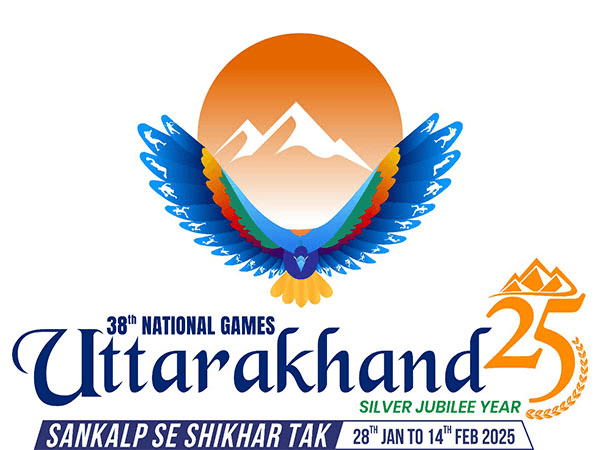
  • Scope: 32 medal sports plus 4 demos in 38th edition hosted by Uttarakhand
  • Branding: Mascot Mouli; tagline highlights Himalayan resolve toward sporting zenith

Key Data Points

FeatureData-Point
Literal meaningKalari = gymnasium, Payattu = fight
Attributed founderSage Parasurama
Chinese transmissionBodhidharma to Shaolin, 5th C AD
Animal inspirationElephant, lion, boar, horse, snake, rooster, cat, fish
Medal haul Goa 202322 medals, 19 gold
38th National GamesUttarakhand; 28 Jan–14 Feb 2025
Current statusDemonstration sport, no medals
Other demo sportsYogasana, Mallakhambh, Rafting
Games mascotMouli (Monal bird)
Games tagline“Sankalp Se Shikhar Tak”

Related UPSC Prelims PYQs

ESE_GS, GS1 2021PYQ 1

The Ministry of Sports and Youth Affairs has recently approved the inclusion of four indigenous games to be part of Khelo India Youth Games 2021. Which one of the following is NOT included ?

ESE_GS, GS1 2014PYQ 2

With reference to India’s culture and tradition, what is ‘Kalaripayattu’?

GS-1HistoryQuick Bite

8.India Clinches Kho Kho World Cup (Traditional Sports)

The Hindu

What & Where

Sport Traditional Indian tag game Kho Kho, roots in Maharashtra

Event Inaugural Kho Kho World Cup 2025 won by India (men & women) over Nepal

Format IOA-backed tournament used group stages followed by knock-outs for both divisions

Quick Facts for MCQs

Historical Roots

  • Evolution Chakravyuha war formation of Mahabharata mirrors ring defence concept
  • Codification Deccan Gymkhana Club Pune fixed modern foot rules in 1914
  • Showcase Kho Kho exhibited at Berlin 1936 Olympics beside kabaddi and mallakhamb

Game Mechanics

  • Composition Nine active players plus three substitutes per side during a match
  • Role-switch Players alternate between chasing, tagging and defending within set innings
  • Origin Chariot-based early version later abandoned for foot format

Global Outreach

  • Membership Growth from six nations 2020 to fifty-five in 2025
  • Expansion Plan IKKF aims reach ninety countries for stronger Olympic case
  • Olympic Bid Inclusion eyed for 2036 Games

Institutional Support

  • National Sponsor Indian Olympic Association financed and endorsed first World Cup
  • Governance International Kho Kho Federation standardises rules, drives global promotion
  • Format Choice World Cup employed group-to-knockout structure mirroring other major sports

Key Data Points

FeatureData-Point
Inaugural year2025
Champions (M&W)India
Finals opponentNepal
Backing bodyIOA
Global bodyIKKF
Origin stateMaharashtra
Rules codified1914
Team size9 players + 3 subs
Olympic demoBerlin 1936
Countries 202555
Olympic target2036

Related UPSC Prelims PYQs

GEO_GS, GS1 2025PYQ 1

The host country of the inaugural Kho Kho World Cup, 2025 is

GEO_GS, GS1 2025PYQ 2

Consider the following statements in respect of the first Kho Kho World Cup:

GS-1MappingQuick Bite

9.Mount Ibu Stratovolcano Eruption (Volcanology)

The Hindu
Illustration for Mount Ibu Stratovolcano Eruption (Volcanology)

What & Where

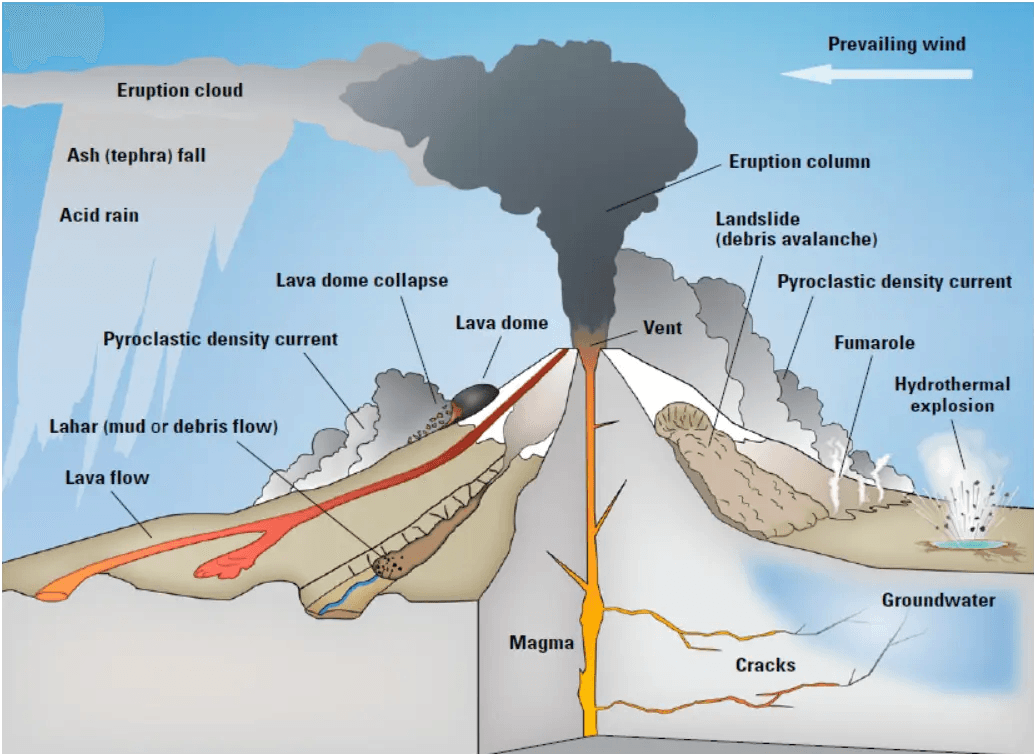
Stratovolcano: steep, conical composite of alternating lava, ash, pyroclast layers

Convergent boundary: typical birthplace as subducting oceanic plate melts and rises

Mount Ibu: Halmahera Island, North Maluku, Indonesia; part of Pacific Ring of Fire

Quick Facts for MCQs

Volcanic Activity

  • Eruptions: Mount Ibu one of January 2025’s most active volcanoes worldwide
  • Ash-plume: Heights threaten aviation, maritime visibility, local agriculture
  • Multiple vents: Lewotobi twin peaks, Ruang summit emitting repeated explosions

Regional Geography

  • Subduction: Indo-Australian plate dives beneath Eurasian and Pacific microplates around Halmahera
  • Density: Indonesia hosts >120 active volcanoes, highest global concentration
  • Location: North Maluku lies between Celebes Sea and Pacific Ocean shipping lanes

Disaster Management

  • Evacuations: Authorities relocated residents near Lewotobi and Ruang to temporary shelters
  • Monitoring: PVMBG uses seismographs, gas sensors, drones for real-time alerts
  • Alert levels: Status raised to Siaga (Level III) where eruption risk elevated

Key Data Points

FeatureData-Point
Mount Ibu eruptions (Jan 2025)1,079 events
Ash column height0.3 km – 4 km
Volcano typeStratovolcano (composite)
Island & provinceHalmahera, North Maluku
Other active volcanoesMt Lewotobi Laki-Laki; Mt Ruang
Tectonic zonePacific “Ring of Fire”

Related UPSC Prelims PYQs

CAPF_GAI 2021PYQ 1

Volcano Mount Merapi, which erupted in January 2021, is situated in

GS-3Environment

10.Asan Wetland Ramsar Site Biodiversity (Ramsar Wetland)

New Indian Express
Illustration for Asan Wetland Ramsar Site Biodiversity (Ramsar Wetland)

What & Where

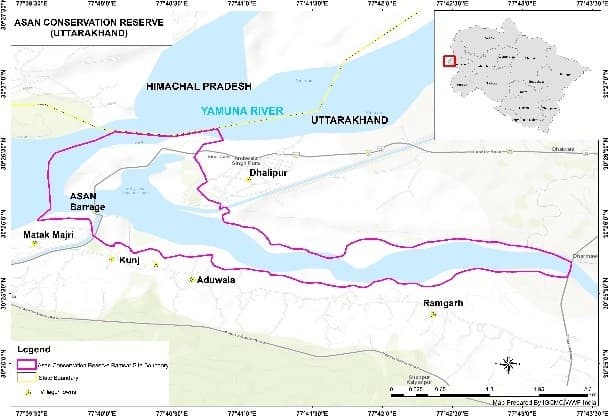
Asan Wetland = man-made reservoir (Dhalipur Lake) at Asan River–Eastern Yamuna Canal confluence, Dehradun district, Uttarakhand–Himachal border.

Originated 1967 after Asan Barrage for Dhalipur hydropower; declared Uttarakhand’s 1st Ramsar site in 2020.

Key wintering ground where Asian Waterbird Census (AWC) tallies migratory waterfowl each January.

Quick Facts for MCQs

Biodiversity Significance

  • Habitat hosts Central Asian migrants: Brahminy duck, Red-crested pochard, Gadwall, Mallard.
  • Wetland supports hydrological regimes benefiting avifauna, fish, aquatic vegetation.
  • Presence of three critically endangered raptors underscores trophic richness.

Conservation Status

  • Ramsar listing mandates wise-use norms, ecological character monitoring, community participation.
  • First and only Ramsar site in Uttarakhand boosts state wetland conservation profile.
  • Barrage-created waterbody illustrates engineered wetlands gaining global importance.

Citizen Science

  • AWC engages volunteers, forest staff, researchers for synchronized waterbird counts.
  • Data feed International Waterbird Census aiding flyway-level population assessments.
  • Annual results guide management actions at Asan and comparable wetlands.

Key Data Points

FeatureData-Point
Ramsar designation year2020
Formed byAsan Barrage (1967)
DistrictDehradun, Uttarakhand
Alternate nameDhalipur Lake
AWC 2024 count5,225 birds; 117 species
Total bird species present≈330
Critically endangered birdsWhite-rumped vulture, Red-headed vulture, Baer’s pochard
Fish diversity49 species
Endangered fishPutitor mahseer
AWC coordinatorWetlands International
AWC frequencyAnnual, January
Feeding river/canalAsan River & Eastern Yamuna Canal

Related UPSC Prelims PYQs

CAPF_GAI, CDS_GK 2021PYQ 1

Where is Asan Conservation Reserve located?

CAPF_GAI, CDS_GK 2022PYQ 2

Which of the following about Khijadiya Bird Sanctuary is/are correct?

GS-3S&T

11.Obesity Redefinition Framework (Health Research)

Indian Express
Illustration for Obesity Redefinition Framework (Health Research)

What & Where

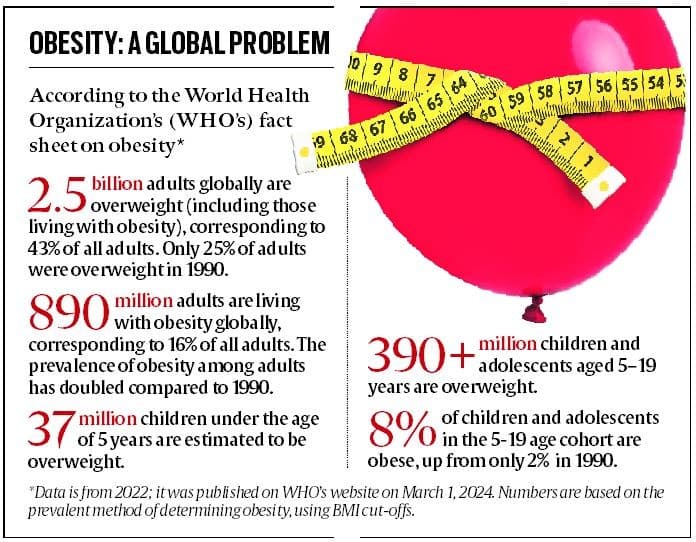
Lancet Commission redefines obesity as chronic illness altering organ function, even without comorbid disease.

Diagnosis shifts from sole BMI to multi-parameter risk assessment using waist metrics, imaging, symptoms.

India-specific staging: Stage-1 & Stage-2 obesity triggered at BMI > 23 kg/m².

Quick Facts for MCQs

Diagnostic Shift

  • Chronic-disease framing encourages long-term management, not short-term weight loss.
  • Multi-stage approach enables preventive therapy before organ damage.
  • BMI retained as entry screen, not diagnostic gold standard.

Measurement Tools

  • Waist-based ratios detect central adiposity driving metabolic risk.
  • DEXA scans quantify body fat, muscle, bone separately.
  • Symptom checklist adds functional limitation data to classification.

Regional Sensitivity

  • Asians, esp. Indians, accrue higher body-fat at lower BMI values.
  • Lower Indian BMI thresholds improve detection of diabetes–hypertension risk.
  • Commission counters prior over-/under-diagnosis seen with universal BMI cutoffs.

Key Data Points

FeatureData-Point
Old global obesity cutoffBMI ≥30 kg/m²
Old Indian obesity cutoffBMI ≥25 kg/m²
Overweight range, globalBMI 25–29.9 kg/m²
Overweight range, IndianBMI 23–24.9 kg/m²
New term introducedPre-clinical obesity
Indian Stage-1 obesityBMI > 23; no organ dysfunction
Indian Stage-2 obesityBMI > 23 + extra fat metrics + comorbidity
Core added metricsWaist-circumference, waist-hip, waist-height ratios
Direct fat assessmentDual-energy X-ray absorptiometry (DEXA)
Key symptoms checkedSleep apnea, breathlessness, joint pain
GS-3S&T

12.Mission SCOT Commercial SSA Satellite (Space SSA)

PIB

What & Where

Space Situational Awareness (SSA) – real-time tracking and characterisation of orbiting objects

Mission SCOT – first commercial SSA satellite by Digantara, launched on SpaceX Transporter-12 into Low Earth Orbit

Coverage – detects Resident Space Objects ≥ 5 cm, strengthening global debris monitoring

Quick Facts for MCQs

Tech & Schemes

  • Transporter-12 rideshare offers cost-effective orbit insertion for multiple payloads
  • NETRA building phased-array radars and optical telescopes for indigenous SST network
  • IS4OM dashboard integrates CAM planning and releases annual ISSAR report

Economic Angle

  • Venture financing by Aditya Birla Ventures & SIDBI signals private capital flow into Indian SSA market
  • Rideshare model reduces launch cost per kilogram boosting commercial viability for startups
  • SSA data services create subscription revenue from global satellite operators

Security Dimension

  • Collision Avoidance Manoeuvres vital to protect GSAT and other assets from 50,000+ tracked debris pieces
  • Mission SCOT enhances warning capability for RSOs too small for conventional radar
  • Indigenous SST network reduces dependence on foreign NORAD data improving strategic autonomy

Key Data Points

FeatureData-Point
Mission ownerDigantara (Indian startup)
Mission claimWorld’s first commercial SSA satellite
Launch vehicleSpaceX Falcon 9 under Transporter-12 rideshare
Minimum detectable size5 cm objects in LEO
Key backersAditya Birla Ventures, SIDBI
Indian SSA radarMulti Object Tracking Radar, Sriharikota
ISRO platformIS4OM dashboard; issues annual ISSAR
Forthcoming networkNETRA Space Surveillance & Tracking (radars + optics)

Related UPSC Prelims PYQs

CDS_GK 2024PYQ 1

भारत का ‘मिशन शक्ति’ (DRDO) निम्नलिखित में से किससे संबंधित है?

CDS_GK 2025PYQ 2

Which one of the following PSLVs, launched by ISRO, is not correctly matched with their Missions?

GS-2Economy

13.World Economic Forum Davos 2025 Meeting (World Economic Forum)

Live Mint
Illustration for World Economic Forum Davos 2025 Meeting (World Economic Forum)

What & Where

World Economic Forum (WEF): Swiss-based international NGO (1971) promoting stakeholder capitalism & public-private cooperation.

HQ: Cologny, canton Geneva; flagship Annual Meeting each January in alpine resort Davos, Switzerland.

2025 Davos theme: “Collaboration for the Intelligent Age” on economic, social, environmental challenges.

Quick Facts for MCQs

Organisational Functions

  • Global Dialogues; hosts Davos forum uniting business, politics, civil society for problem-solving.
  • Policy Advocacy; advances sustainability, inclusive growth, tech innovation within stakeholder capitalism.
  • Network Platforms; convenes taskforces on climate, health, digital economy.

Key Reports

  • Global Competitiveness Report; benchmarks productivity drivers across nations.
  • Global Gender Gap Report; quantifies parity in economics, politics, health, education.
  • Future of Jobs & Energy Transition Index; map labour shifts, assess clean-energy readiness.

Diplomatic Role

  • Dialogue facilitation; enabled 1992 Mandela–de Klerk rapprochement during South Africa’s transition.
  • Neutral venue; offers high-level roundtables for geopolitical, corporate conflict resolution.
  • Multistakeholder coalitions; launches initiatives like Net-Zero, Reskilling Revolution aligning governments & industry.

Key Data Points

FeatureData-Point
Year founded1971
FounderKlaus Schwab (Germany)
Original nameEuropean Management Forum
Renamed as WEF1987
HeadquartersCologny, Switzerland
Annual Meeting venueDavos, Switzerland
2025 ThemeCollaboration for the Intelligent Age
Sample flagship reportsGlobal Competitiveness, Global Gender Gap, Future of Jobs, Energy Transition Index
Historic diplomacy1992 Mandela–de Klerk meeting facilitated

Related UPSC Prelims PYQs

CAPF_GAI, GS1 2025PYQ 1

वर्ष 2025 में निम्नलिखित में से किसके तत्वावधान में आयोजित की गई बैठक का विषय 'दुश्मान युग के लिए सहयोग (Collaboration for the Intelligent Age)' था?

CAPF_GAI, GS1 2006PYQ 2

Where is Davos—the venue of the annual meeting of World Economic Forum—located?

GS-2PolityQuick Bite

14.Nigeria Joins BRICS as Partner Country (BRICS Expansion)

The Hindu

What & Where

BRICS partner country = invited nation attending summits/ventures sans voting rights or membership.

Nigeria on West African coast; dubbed “Giant of Africa”.

BRICS bloc spans Brazil, Russia, India, China, South Africa; expanding since 2023.

Quick Facts for MCQs

Membership & Partnership

  • Partner status grants summit access but excludes formal decision-making.
  • Nigeria entry announced under Brazil’s 2025 presidency.
  • Expansion aims counterweight to G7 influence.

Demography & Economy

  • Nigeria hosts >220 million people, key consumer market.
  • Hydrocarbon-based economy, yet 4th largest African GDP.
  • Youth bulge offers labour, investment opportunities.

Geopolitical Significance

  • Nigeria inclusion widens BRICS outreach into West Africa.
  • Strengthens South-South cooperation narrative.
  • Signals BRICS openness beyond traditional Eurasian-Latin cores.

Key Data Points

FeatureData-Point
BRICS presidency 2025Brazil
Latest partner countryNigeria
Partner count after Nigeria9
Other partnersBelarus, Bolivia, Cuba, Kazakhstan, Malaysia, Thailand, Uganda, Uzbekistan
Nigeria population rank6th world, 1st Africa
Nigeria economic rank Africa4th largest GDP
BRICS creation2009 (BRIC), 2010 +South Africa
New BRICS members 2023Iran, Egypt, Ethiopia, UAE
Invited 2023 (pending)Saudi Arabia
Joining Jan 2025Indonesia (10th member)
ApplicantsTurkey, Azerbaijan, Malaysia

Related UPSC Prelims PYQs

GEO_GS, GS1 2026PYQ 1

Consider the following countries:

GEO_GS, GS1 2014PYQ 2

With reference to a grouping of countries known as BRICS, consider the following statements :

GS-1Editorial

15.Urbanisation Behavioural Change Strategies (Behavioural Insights)

New Indian Express
Illustration for Urbanisation Behavioural Change Strategies (Behavioural Insights)

What & Where

Behavioral insights: application of psychology/economics to nudge citizen/officer decisions in Indian urban governance.

Key instruments: MINDSPACE framework, Chief Behavioral Officers, data-driven nudges, pilot experimentation.

Geography: Demonstrated in Indore, Delhi, Kerala, Bihar; proposed for all Urban Local Bodies (ULBs).

Quick Facts for MCQs

Urban Service Delivery

  • Indore model: colour-coded bins, musical trucks increased 3-way waste segregation compliance.
  • Real-time feedback apps optimize garbage-truck routing and collection schedules.
  • Behavioural nudges cut operational costs by reducing landfill volumes.

Sustainability & Environment

  • Public-transport nudges: fare discounts, information prompts shift modal share from private vehicles.
  • Energy-saving campaigns using social-norm feedback trimmed municipal electricity bills.
  • Odd-even scheme shows emissions and congestion fall with temporary behavioural rules.

Institutional Mechanisms

  • Training: periodic workshops for municipal cadres on MINDSPACE, randomized-control trials.
  • Dedicated CBO posts embed behavioural review in every policy note and tender.
  • Citizen surveys plus big-data analytics identify locality-specific bottlenecks.

Challenges

  • Cultural inertia: low uptake of household segregation, public-transport stigma persists.
  • Capacity gaps: few officers versed in behavioural science; limited earmarked budgets.
  • Coordination: sanitation, transport, policing agencies often siloed, hampering city-wide nudges.

Key Data Points

FeatureData-Point
Urban population share by 2030≈40% of Indians
Indore waste campaign‘Kachra Gadi’ awareness; city topped Swachh Bharat rankings
Delhi odd-even (2016)≈30% fall in traffic congestion
Kerala Janamaithri SurakshaCommunity policing; higher police-citizen trust indices
Bihar maternal-health nudgeInstitutional deliveries up via reminders/incentives
NITI Aayog BI UnitIntegrates nudges in welfare schemes since 2019
MINDSPACE elementsMessenger, Incentives, Norms, Defaults, Salience, Priming, Affect, Commitments, Ego
Proposed roleChief Behavioral Officer in every ULB
GS-1Editorial

16.Oxfam Report on Global Inequality (Income Inequality)

Down to Earth

What & Where

Report: Oxfam 2025 “Takers Not Makers” tracks billionaire gains versus stagnant poverty.

Concept: Global inequality = skewed distribution of wealth, power, opportunities among 8 billion people.

Geography: $30 mn/hour flows South→North; colonial legacy central to Africa, Asia, Latin America disparities.

Quick Facts for MCQs

Wealth Trends

  • Billionaires: wealth grew thrice faster than 2023; inequality gap now 38× poorest half.
  • Inheritance: 2023 first year heir-made billionaires > entrepreneurs; 60 % fortunes via inheritance/cronyism/monopoly.
  • Life expectancy: Africans live 15 years less than Europeans, mirroring fiscal disparity.

Colonial Legacy

  • Extraction: UK drained USD 64.82 trn from India; one-third funnelled to top 10 %.
  • Finance: USD 30 mn/hour net outflow from Global South sustains North wealth concentration.
  • Governance: IMF, World Bank, UNSC voting skew; education pipelines keep 39 % leaders North-trained.

India Snapshot

  • Wealth share: Top 10 % own 77 % assets; top 1 % command 53 %.
  • Tax burden: Bottom 50 % pay 64 % GST; top 10 % only 4 %.
  • Sectors: Uneven LPG gains; agriculture, small industry face low wages, scant security.

Policy Prescriptions

  • Taxation: Progressive global wealth levies; mandatory public asset reporting; shut tax havens.
  • Reparations: Financial, climate funding to colonially exploited nations; bolster South-South cooperation.
  • Inclusion: Strengthen MGNREGA, PMJDY, Ayushman; advance SDG-10, value unpaid care work.

Key Data Points

FeatureData-Point
New billionaires 2024204
2024 billionaire wealth jump+USD 2 trillion
Daily gain per billionaireUSD 2 million
Richest 1% wealth share45 % of global wealth
People < USD 6.85 PPP/day3.6 billion
Women in extreme poverty1 in 10
UK extraction from India (1765-1900)USD 64.82 trillion
South→North financial transferUSD 30 million per hour
Global heads educated UK/US/FR (2017)39 %
India Gini 20230.410
GS-1Economy

17.ILO WESO 2025 Employment Outlook (Global Employment)

The Hindu
Illustration for ILO WESO 2025 Employment Outlook (Global Employment)

What & Where

WESO Trends 2025 = ILO flagship report reviewing global labour market health and outlook

Scope global; data cut-off 2024; focus on unemployment, jobs gap, wages, sectoral shifts

Key geographies spotlighted Sub-Saharan Africa, upper-middle-income economies, low-income countries

Quick Facts for MCQs

Economic Angle

  • Growth decelerating: 3.6 % → 3.3 % → 3.2 % (2022-24) with similar 2025 projection
  • Real wage growth weak due to low job creation, employer bargaining power rise
  • 70 developing nations nearing debt distress, many spend more on interest than health or education

Regional Disparities

  • Sub-Saharan Africa 62.6 % households under USD 3.65/day; employment mostly informal
  • LICs seeing falling labour-force participation, hindering decent job expansion
  • Upper-middle-income economies carry highest youth unemployment, low-income record higher underemployment

Demographic Focus

  • Older workers and women driving participation gains in advanced economies
  • Young men NEET rate up 4 percentage-points over pre-Covid in LICs
  • Informal employment worldwide back to pre-pandemic share

Policy & Schemes

  • ILO urges remittance pooling into productive funds for private-sector growth
  • Push structural transformation toward modern services, manufacturing, green tech
  • Calls for coordinated fiscal-monetary policies plus universal skill training for youth

Key Data Points

FeatureData-Point
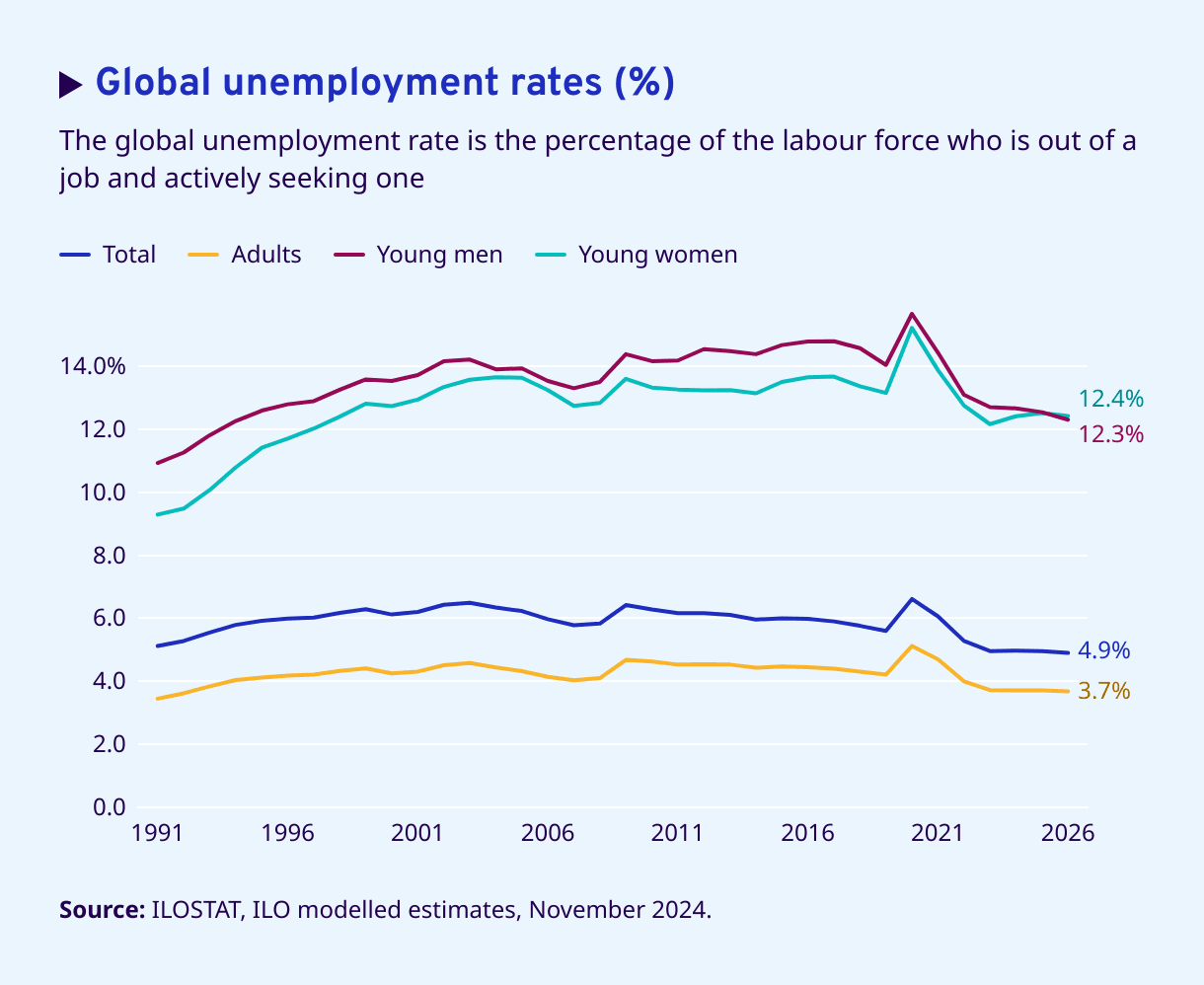
Global unemployment rate 20245 % (historic low)
Youth unemployment rate 202412.6 %
Highest youth joblessness16 % in upper-middle-income states
Global jobs gap 2024402 million persons
Component – unemployed186 million
Component – discouraged137 million
Component – caregiving constrained79 million
NEET population 2024259.1 million (66 % women)
Real GDP growth 20243.2 %
Renewable-energy jobs 202316.2 million (46 % China)
GS-1Misc

18.ILO 2022 International Migrant Workers Estimates (Migrant Workers)

The Hindu
Illustration for ILO 2022 International Migrant Workers Estimates (Migrant Workers)

What & Where

Benchmark: ILO’s “Global Estimates on International Migrant Workers 2022” quantifies migrant participation in world labour force.

Coverage: Utilises 2020 UN migration stock data across income groups, sectors, age–sex cohorts.

Hot-spots: High-income Europe, North America and Arab States account for >80 % of all international migrant workers.

Quick Facts for MCQs

Demographic Profile

  • Dominance: Three-fourths migrants are prime-age, enhancing productivity dividend for host economies.
  • Longevity: Seniors (65+) form only 3.4 %, easing social-security burden on hosts.
  • Youth: Sub-10 % share suggests limited pipeline for long-term replenishment.

Sectoral Spread

  • Services magnet: Care, health, retail concentrate two-thirds of migrants, feminised at 80 % for women.
  • Industry: Construction & manufacturing absorb nearly one-quarter, heavily male-skewed.
  • Agriculture: Mere 7.4 %, stark contrast to 24 % for natives, indicating rural-to-urban job shift.

Host Geography & Income

  • Pull factors: High-income economies host over two-thirds owing to ageing population and skill shortages.
  • Shift: Arab States share dips marginally over decade, reflecting diversification of labour corridors.
  • Upper-middle cluster: China, Russia, Turkey together draw 17 %, signalling rising South-South migration.

Key Data Points

FeatureData-Point
Report year2022 (covers 2013-22 trend)
Share in world labour force4.7 %
Total migrant workers167.7 million
Added since 2013+30 million
Male proportion61.3 % (102.7 m)
Female proportion38.7 % (64.9 m)
Prime-age 25-54 yrs74.9 %
Youth 15-24 yrs9.3 %
Older 55-64 yrs12.5 %
Services share68.4 %
Industry share24.3 %
Agriculture share7.4 %
Women in services80.7 % of female migrants
High-income host share68.4 % (114 m)
Upper-middle-income host share17.4 % (29.2 m)
Arab States share13.3 %

Ready to practice?

Test your knowledge with our UPSC test series.

Start Free Trial