UPSC Current Affairs

19 topicsGS-1: 4GS-2: 5GS-3: 10
0/19 done
GS-2Polity

1.Draft DPDP Rules 2024 (Data Protection)

The Hindu

What & Where

Definition: Draft rules to operationalise the Digital Personal Data Protection Act, 2023.

Authority: Issued by Ministry of Electronics & Information Technology, Government of India.

Processes: Notice-and-consent, user data rights, grievance redress, localisation obligations.

Quick Facts for MCQs

Legal & Policy

  • Principle: Consent notices simplified to curb fatigue, align with global privacy norms.
  • Obligation: SDFs face stricter localisation, compliance and audit duties.
  • Gap: No independent regulator; powers centralised under Union government.

User Rights

  • Provision: Individuals may access, correct, update, erase personal data.
  • Issue: Practical procedures for exercising rights remain undefined.
  • Empowerment: Rules seek to heighten transparency, autonomy in digital interactions.

Child Protection

  • Requirement: Verifiable parental consent before processing data of minors under 18.
  • Exemptions: Sectoral relaxations envisaged for education, healthcare.
  • Concern: Vague age-verification standards invite inconsistent application.

Institutional Mechanism

  • Body: DPB to handle breaches, disputes; independence limited.
  • Limitation: Restricted adjudicatory powers may weaken impartial grievance redress.
  • Recommendation: Stakeholders urge creation of an autonomous Data Protection Authority.

Key Data Points

FeatureData-Point
Parent ministryMeitY
Act year2023
Children age cut-offBelow 18 years
Oversight bodyData Protection Board (DPB)
Data transfer ruleCross-border restricted; tighter for SDFs
Framework stylePrinciples-based, simplicity focus
Key user rightsAccess, correction, update, erasure

Related UPSC Prelims PYQs

CAPF_GAI 2023PYQ 1

सूचना का अधिकार अधिनियम, 2005 के बारे में निम्नलिखित में से कौन-सा/कौन-से कथन सही है/हैं ?
GS-2PolityQuick Bite

2.SC Outlaws Unauthorized E-Ticketing (Railways Act 1989)

The Hindu

What & Where

Unauthorised railway e-ticket sale: commercial procurement/supply without IRCTC authorisation across Indian Railways network

Supreme Court, Jan 2025, Mathew K Cherian v. Union of India clarified Section 143, Railways Act 1989 covers online & offline tickets

Activity declared “social crime,” enforceable country-wide

Quick Facts for MCQs

Legal & Policy

  • Supreme Court extended statutory scope to emerging technologies using purposive interpretation principle
  • Judgment overruled Kerala HC, restoring pan-modal applicability of Sec 143 penalties
  • Declared deterrence essential for protecting public transport integrity

Tech & Schemes

  • Accused leveraged multiple user IDs to bypass IRCTC algorithmic ticket limits
  • Case underscores need for stronger KYC & digital surveillance on railway booking portals
  • Sec 143 penalties now explicitly encompass cyber-based ticket touting

Social Concerns

  • Court framed unauthorised e-ticket trade as harming common passengers’ equitable access
  • “Social crime” tag elevates moral culpability, aiding awareness campaigns
  • Mass passenger volume (673 crore) magnifies societal impact of such fraud

Key Data Points

FeatureData-Point
Relevant Act sectionSection 143, Railways Act 1989
SC judgment year2025
Earlier Kerala HC viewApplied Sec 143 only to offline sales
Foreign case citedComdel Commodities Ltd v. Siporex Trade SA (1990, UK)
Accused’s methodHundreds of fake IRCTC user IDs
IRCTC monthly ticket cap12–24 tickets per user
Indian Railways annual passengers~673 crore
Court’s label for offence“Social crime”
GS-3Infrastructure

3.Z-Morh Tunnel Connectivity (Border Infrastructure)

Business Standard
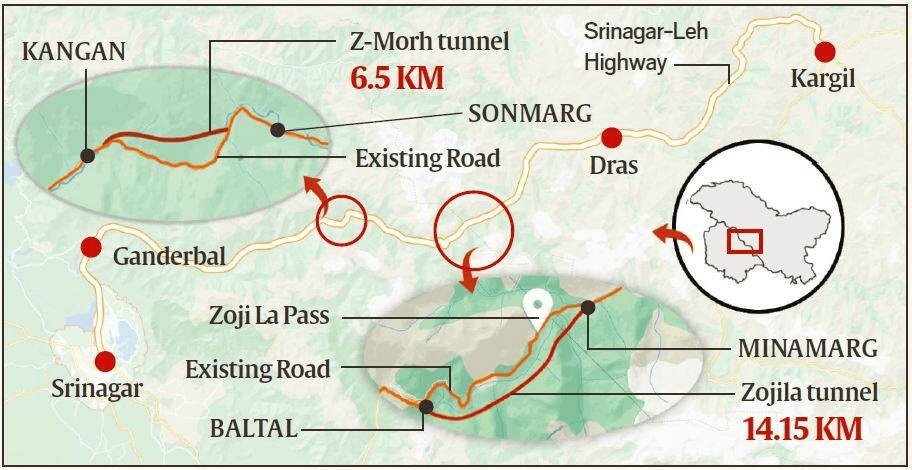
Illustration for Z-Morh Tunnel Connectivity (Border Infrastructure)

What & Where

Infrastructure: 6.4 km Z-Morh road tunnel on NH-1, Srinagar–Sonamarg–Leh axis, Ganderbal district, J&K

Purpose: All-weather access to Sonamarg; companion link to larger Zojila tunnel system toward Ladakh

Terrain: Avalanche-prone Zoji La approach, Himalaya high-altitude zone impacting civilian and military mobility

Quick Facts for MCQs

Security Dimension

  • Attack: First militant strike on J&K strategic infra; seven fatalities at tunnel portal
  • Threat: Militancy aims to disrupt military logistics lifeline toward Ladakh fronts with Pakistan & China
  • Protection: Heightened security protocols for NHIDCL projects along NH-1

Project Timeline

  • Planning: BRO conceived 2012; funding constraints delayed progress
  • Re-tender: NHIDCL assumed charge, awarded to private firm under EPC model
  • Status: Construction ongoing alongside Zojila, target synchronised for year-round Ladakh access

Strategic Connectivity

  • Mobility: Tunnel bypasses snowbound stretches, slashing winter closure of Sonamarg route
  • Military: Enables rapid troop, armour, supply movement to Eastern Ladakh deployment zones
  • Tourism: Keeps Sonamarg valley open, aiding regional economy outside summer peak

Key Data Points

FeatureData-Point
Tunnel length6.4 km
CorridorSrinagar–Sonamarg–Leh (NH-1)
State/UTJammu & Kashmir
DistrictGanderbal
Original plannerBorder Roads Organisation, 2012
Current ownerNHIDCL
ContractorPrivate concessionaire (re-tendered)
Linked mega-projectZojila tunnel
Primary purposeAll-weather connectivity to Sonamarg & Ladakh
Strategic usersIndian Army in Ladakh sector
Recent incident7 killed in militant attack (Oct 2024)
VulnerabilityFrequent snow avalanches block open road

Related UPSC Prelims PYQs

CDS_GK, ESE_GS 2021PYQ 1

Which one of the following statements is NOT correct about the Atal Tunnel ?

CDS_GK, ESE_GS 2021PYQ 2

The distance between which two cities has been reduced by the Atal Tunnel?

GS-1History

4.Maha Kumbh Mela Pilgrimage (Religious Festival)

Indian Express

What & Where

Mass Hindu pilgrimage for ritual bathing; tagged “largest human gathering”.

Cycles: Ardh Kumbh every 6 yrs; Maha/ Poorna Kumbh every 12 yrs.

Rotates across Prayagraj-Sangam, Haridwar-Ganga, Nashik-Godavari, Ujjain-Kshipra.

Quick Facts for MCQs

Historical & Mythic Roots

  • Samudra Manthan legend legitimises four pilgrimage spots.
  • Continuity traced from ancient Magh Mela to present mass fair.
  • Xuanzang note confirms 7th c congregation at Prayagraj.

Astrological Logic

  • Jyotish calculations on Sun, Moon, Jupiter decide exact year, month, auspicious bath dates.
  • Site selection rotates per specific zodiac positions of Jupiter.

Socio-Economic Impact

  • Temporary tent cities, sanitation, transport projects executed for lakhs of pilgrims.
  • Pilgrim spending and daan boost local trade, handicrafts, hospitality sectors.

Akhada Processions

  • Naga, Digambar, Juna etc lead sequential royal baths displaying martial and ascetic traditions.
  • Procession order fixed by centuries-old akhada hierarchy, ensures crowd flow management.

Key Data Points

FeatureData-Point
Mythic originSamudra Manthan amrita drops
Earliest textSkanda Purana
Foreign accountXuanzang, 7th c CE
Astral determinantsSun-Moon-Jupiter alignments
Ardh frequency6 yrs, Prayagraj & Haridwar only
Maha frequency12 yrs, all four sites
Prayagraj riversGanga, Yamuna, mythical Saraswati
Nashik-Trimbak riverGodavari
Ujjain riverKshipra
Signature ritualShahi Snan by akhadas
Popular epithetLargest gathering of humanity
GS-1History

5.Swami Vivekananda Anniversary (Reform Leader)

Indian Express

What & Where

National Youth Day 12 Jan; honours Swami Vivekananda’s 1863 birth nationwide

Viksit Bharat Young Leaders Dialogue 2025; Delhi forum engaging 3 000 youth via Viksit Bharat Challenge

Swami Vivekananda; Kolkata-born monk, enlightened at Kanyakumari rock, famed at 1893 Chicago Parliament

Quick Facts for MCQs

Philosophy & Thought

  • Neo-Vedanta blends Vedanta and Yoga with Western rationality for balanced spiritual-material growth
  • Service doctrine views helping jiva as worship of Shiva, foundation of Karma Yoga
  • Youth call urges muscles of iron, nerves of steel, unwavering goal pursuit

Organisations & Addresses

  • Ramakrishna Mission 1897 promotes education, relief, spiritual uplift
  • Belur Math 1899 serves as headquarters and Vivekananda’s final abode
  • Global outreach includes Chicago Parliament 1893 and London Hindu Association lecture July 1896

Youth Policy

  • NYP 2014 targets education, employment, leadership, health, social justice with inclusion lens
  • Draft NYP 2024 aligns with NEP 2020, stresses mental and reproductive health, sports, tech empowerment
  • Roadmap seeks measurable youth development outcomes by 2030 through multi-stakeholder approach

Key Data Points

FeatureData-Point
Birth nameNarendra Nath Datta
Birth date12 Jan 1863
Orders foundedRamakrishna Mission 1897; Belur Math 1899
Key booksRaja Yoga, Karma Yoga, Jnana Yoga, Bhakti Yoga
Youth definition NYP 201415–29 yrs (~40 % of population)
Draft NYP 2024 horizon10-year plan to 2030, SDG aligned
VB Dialogue participants3 000 youth selected merit-based
VB Dialogue focus areas10 themes: tech, sustainability, women, manufacturing, agriculture etc
Enlightenment siteVivekananda Rock, Kanyakumari 1892

Related UPSC Prelims PYQs

NDA_GAT 2024PYQ 1

Which of the following statements is/are correct?

NDA_GAT 2024PYQ 2

निम्नलिखित में से किस युवा संगठन/योजना का आदर्श वाक्य “स्वयं से पहले आप (Not me, but you)” है ?

GS-3Environment

6.Hoollongapar Gibbon Sanctuary (Wildlife Sanctuary)

The Hindu
Illustration for Hoollongapar Gibbon Sanctuary (Wildlife Sanctuary)

What & Where

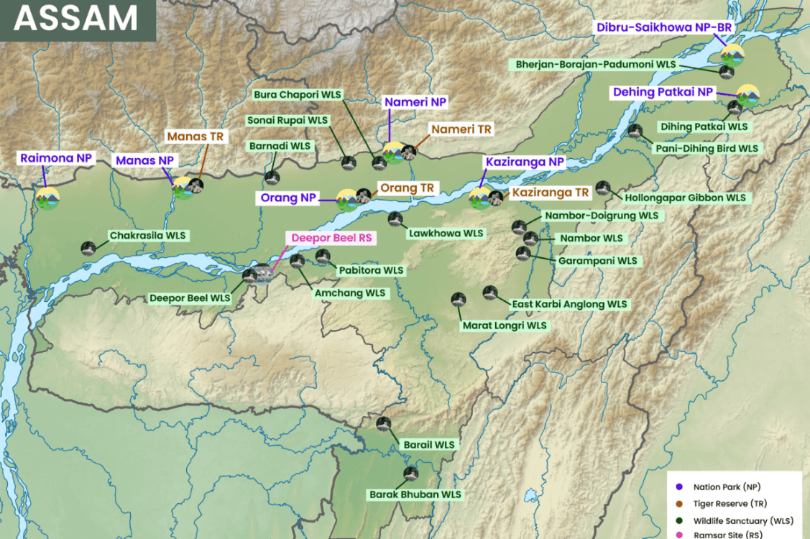
Hoollongapar Gibbon Wildlife Sanctuary, Jorhat district Assam; evergreen island forest within designated Eco-Sensitive Zone (ESZ)

Altitude 100–120 m; gentle southeast-to-northwest slope; bordered by Bhogdoi River creating waterlogged semi-hydrophytic belts

India’s sole refuge of Hoolock Gibbons; NBWL now okays oil–gas exploratory drilling inside ESZ

Quick Facts for MCQs

Legal & Policy

  • NBWL approval under Wildlife (Protection) Act conditions allows Oil India Ltd exploratory drilling within ESZ
  • ESZ activities normally regulated; drilling classified as permissible with NBWL & MoEFCC clearances
  • Project still requires site-specific environmental clearance from Expert Appraisal Committee

Biodiversity Highlights

  • Sanctuary supports highest Western Hoolock Gibbon density in India
  • Houses four squirrel species and diverse small carnivores enhancing trophic complexity
  • Region crucial corridor between Brahmaputra floodplains and Naga-Patkai hill ranges

Physical Geography

  • Semi-hydrophytic vegetation dominates waterlogged patches along Bhogdoi oxbows
  • Evergreen canopy interspersed with Hollong, Nahar, Amari dominant trees
  • Low relief landscape increases vulnerability to flooding and industrial contamination

Key Data Points

FeatureData-Point
StateAssam
DistrictJorhat
Sanctuary Area TypeEvergreen forest
Altitude Range100–120 m
Bordering RiverBhogdoi
Forest SlopeSE to NW
ESZ StatusExploratory drilling cleared by NBWL
Naming DistinctionOnly Indian sanctuary named after a primate
Flagship SpeciesWestern Hoolock Gibbon
Nocturnal PrimateBengal Slow Loris
Other MammalsElephants, tigers, leopards, stump-tailed & pig-tailed macaques
Governing Clearance BodyNational Board for Wildlife

Related UPSC Prelims PYQs

ESE_GS 2026PYQ 1

Laokhowa Wildlife Sanctuary is located in which state?

GS-3Environment

7.Groundwater Contamination in India (Water Pollution)

The Hindu
Illustration for Groundwater Contamination in India (Water Pollution)

What & Where

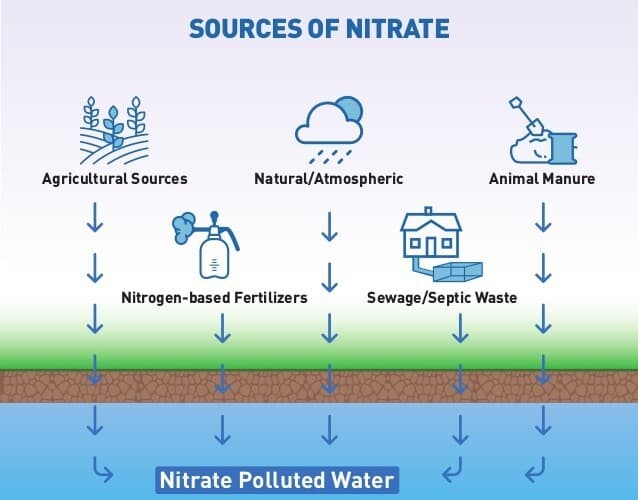
Definition: Groundwater contamination is pollutant‐induced quality loss of aquifers from natural leaching and human activities

Key pollutants: nitrate, fluoride, arsenic, uranium; ancillary iron, ammonia

Geography: Highest nitrate incidence in Rajasthan, Karnataka, Tamil Nadu, Madhya Pradesh

Quick Facts for MCQs

Sources & Drivers

  • Fertilizers: major nitrate contributor via leached ammonium nitrate, urea
  • Sewage: adds nitrate and ammonia to shallow aquifers
  • Geogenic processes: dissolve fluoride, arsenic, uranium from host rocks

Health Impact

  • Nitrate: converts haemoglobin to non-functional form, causing methemoglobinemia in infants
  • Fluoride: chronic intake leads to dental and skeletal fluorosis
  • Arsenic & uranium: long-term exposure linked to cancers, kidney toxicity

Environmental & Economic

  • Nitrate: stimulates algal blooms, causes eutrophication and aquatic hypoxia
  • Contamination: raises household treatment costs, depresses farm productivity
  • Iron & ammonia: impart unpleasant taste, limiting potable use

Key Data Points

FeatureData-Point
Safe nitrate limit45 mg per L
Permissible fluoride1.0 mg per L
Acceptable uranium30 ppb
Dominant nitrate sourceFertilizers: ammonium nitrate, urea
Classical nitrate illnessMethemoglobinemia (blue baby syndrome)
Top nitrate-hit stateRajasthan ≈ 49 % sampled areas

Related UPSC Prelims PYQs

ESE_GS, GS1 2013PYQ 1

Which of the following can be found as pollutants in the drinking water in some parts of India?

ESE_GS, GS1 2025PYQ 2

Nitrate when present in excess in drinking water causes

GS-3Environment

8.Pink Ammonium Fire Retardant (Fire Management)

Indian Express
Illustration for Pink Ammonium Fire Retardant (Fire Management)

What & Where

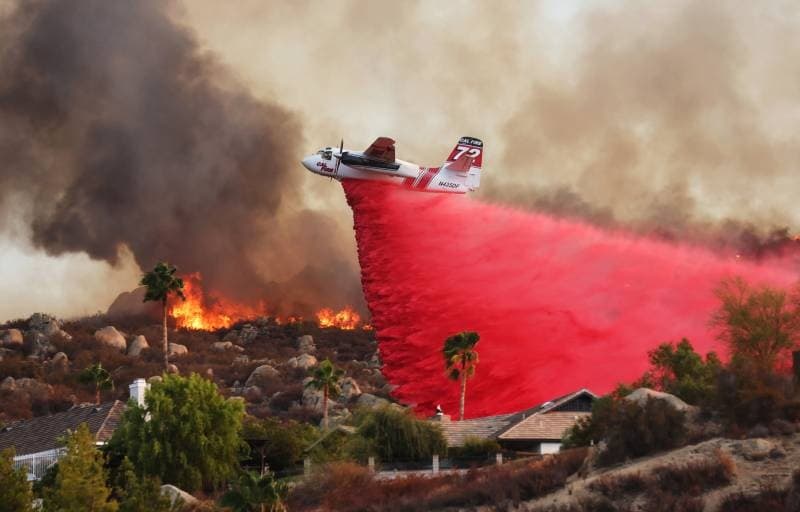
Pink fire retardant = ammonium polyphosphate slurry (brand Phos-Chek)

Aerially sprayed ahead of wildfire fronts to build oxygen-blocking fire lines

Present deployment focus: Southern California chaparral & forest zones

Quick Facts for MCQs

Operational Advantages

  • Visibility dye aids precise line placement, even in complex terrain
  • Proactive barrier reduces combustible fuel before flames arrive
  • Effective from altitude, allowing rapid coverage of large acreage

Environmental Impact

  • Metal contaminants threaten fish, amphibians, riparian flora
  • Residual chemicals may alter soil pH and nutrient cycling

Health Risks

  • Chronic chromium, cadmium exposure linked to cancer, renal, hepatic damage
  • Firefighters risk inhalation during aerial drop mist

Limitations & Costs

  • Performance sensitive to terrain, wind, fuel type variations
  • High material volume and aviation hours drive up suppression costs

Key Data Points

FeatureData-Point
Scientific nameAmmonium polyphosphate-based slurry
Common brandPhos-Chek
Added dye colourPink for high-contrast visibility
Core chemicalAmmonium polyphosphate salts
Primary functionCoats vegetation, starves fire of oxygen
Evaporation vs waterMuch slower; persists on fuels
Delivery platformsFixed-wing aircraft, helicopters
DurabilityLonger-lasting than water-only suppressants
Toxic trace metalsChromium, Cadmium
Key vulnerable zoneAquatic ecosystems downstream
GS-3Environment

9.California Wildfires Overview (Wildfire Ecology)

Indian Express
Illustration for California Wildfires Overview (Wildfire Ecology)

What & Where

Wildfires: large uncontrolled vegetation fires; California’s Northern & Central forests currently ablaze.

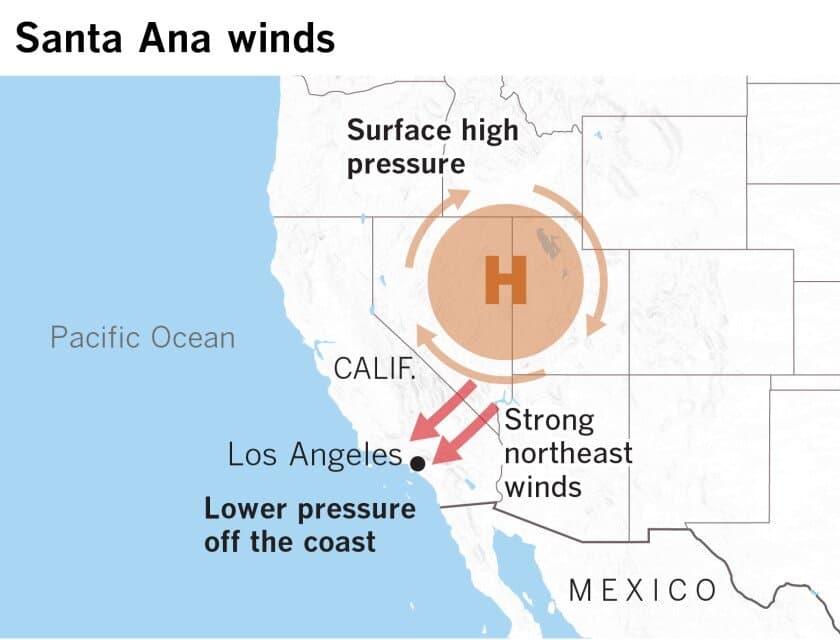
Dual fire seasons: Jun–Sep inland high-elevation; Oct–Apr coastal–urban, wind-driven by Santa Ana.

Santa Ana winds: dry, warm downslope gusts from Great Basin to Southern California coast.

Quick Facts for MCQs

Climatic Drivers

  • Drought: Vegetation dries through long rainless summers increasing flammability
  • Warming: Regional temperature risen 1–2 °C, lengthening fire season
  • Wind: Santa Ana removes humidity and transports embers rapidly

Human Factors

  • Ignition: Fallen power lines, accidents major spark sources
  • Interface: Expanding urban–wildland settlements expose more assets to flames
  • Suppression legacy: century of fire exclusion built up dry fuel loads

Environmental & Economic Impact

  • Air-quality: PM, acids, organics create severe pollution episodes across West Coast
  • Land: Intense heat sterilises soil, accelerating desertification and erosion
  • Losses: 80 % fire-season-2 damages; billions dollars property, biodiversity decline

Management & Mitigation

  • Prescribed-burn: US Forest Service adopting cool, controlled fires to cut fuel
  • Planning: Restrict development in fire-prone zones; avoid planting eucalyptus, pine
  • Long-term: Greenhouse gas mitigation essential to stabilise fire regimes

Key Data Points

FeatureData-Point
Area scorched Aug 2020> 400,000 acres
Lightning strikes triggering fires~11,000
Rise in western US wildfire frequency since 1970400 %
Largest US wildfireMendocino Complex 2018
“Top-10” CA fires recordedAll since 2000
Second fire season share of economic loss80 %
Spread speed of second-season fires3 × first season
Santa Ana wind peakDecember
GS-3EnvironmentQuick Bite

10.Cryo-Born Baby Corals (Coral Conservation)

OM

What & Where

Cryo-born baby corals: first juveniles from frozen sperm now out-planted in Australia’s Great Barrier Reef

Method: coral eggs fertilised with cryopreserved sperm, reared in National Sea Simulator, settled in seabed ‘coral cradles’

Aim: seed heat-tolerant hard corals to protect reefs from climate-driven ocean-warming stress

Quick Facts for MCQs

Tech & Schemes

  • Cryopreservation: ultra-low temperature storage keeps coral sperm viable for years, enabling off-season cross-breeding
  • Coral cradles: 3-D structures boost settlement and early survival during reef transplantation
  • Work part of Reef Restoration & Adaptation Program led by Australian Institute of Marine Science

Environmental Impact

  • Heat-resilient juveniles expected to reduce bleaching losses amid rising SST and frequent marine heatwaves
  • Technique offers scalable restoration model for other threatened reefs worldwide
  • CryoDiversity Bank provides genetic insurance against future mass-mortality events

Species Biology

  • Coral polyps secrete aragonite skeletons, building massive reef frameworks over centuries
  • Soft corals lack heavy skeletons and thus do not create reef structures
  • Symbiotic zooxanthellae supply up to 90 % of coral metabolic energy via photosynthesis

Key Data Points

FeatureData-Point
Breakthrough year2025
Project siteGreat Barrier Reef, Queensland
Lead facilityNational Sea Simulator (SeaSim)
Sperm repositoryCryoDiversity Bank, Australia
Bank sizeLargest global store; 32 species
Collection start2011, annual sampling
Coral phylumCnidaria
Reef buildersOnly hard corals form limestone skeletons
Nutritional partnerZooxanthellae algae
Target traitElevated heat tolerance

Related UPSC Prelims PYQs

GS1 2022PYQ 1

"Biorock technology" is talked about in which one of the following situations ?

GS-3S&T

11.Small Language Models in AI (AI Models)

The Hindu

What & Where

SLMs = Small Language Models; compact AI systems (millions–few billion parameters) trained on narrow, domain-specific datasets

Edge deployment on smartphones, IoT devices; suitable for low-infrastructure regions including rural India

Core tasks include real-time translation, basic summarisation, speech recognition, sector-specific problem solving

Quick Facts for MCQs

Tech & Schemes

  • Parameter reduction enables real-time inference without GPU clusters
  • Smaller data needs shorten development cycles for startups and research labs
  • Energy thrift aligns with green-AI and mobile-first design goals

Economic Angle

  • Cloud-independent models cut subscription and bandwidth expenses for MSMEs
  • Sector-tailored SLMs unlock new SaaS niches in health, agri, edu tech
  • Lower barrier of entry fuels decentralised, regional AI entrepreneurship

Social Concerns

  • Supports diverse Indian languages, aiding digital inclusion and cultural preservation
  • Offline capability delivers AI services where connectivity is patchy or expensive
  • On-device processing enhances privacy by limiting data transmission

Key Data Points

FeatureData-Point
Parameter scale≈ 10⁶–10⁹ vs LLMs’ 10¹¹–10¹²
Training datasetLimited, targeted corpus rather than web-scale scrape
Primary purposeNiche/vertical applications, not general AGI
Deployment locusOn-device / edge; minimal cloud reliance
Energy demandSignificantly lower; fit for battery devices
Training speedFaster fine-tuning owing to smaller size
Cost profileLower capex & opex than LLM-based solutions
GS-3S&T

12.Bacterial Degradation of DEHP (Bioremediation)

The Hindu
Illustration for Bacterial Degradation of DEHP (Bioremediation)

What & Where

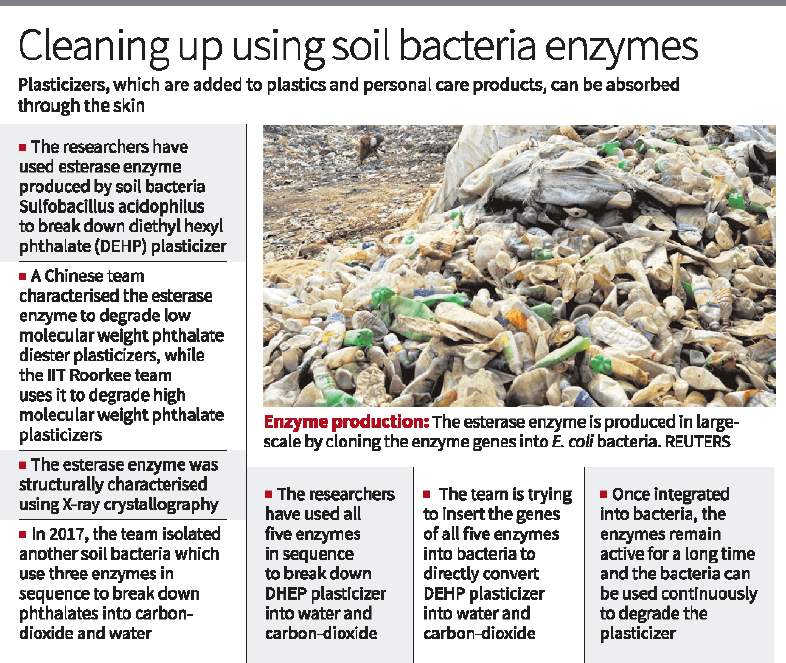
Plasticizer degradation method targeting di-ethyl-hexyl phthalate (DEHP) in plastics and cosmetics

Two-step enzymatic pathway: esterase (Sulfobacillus acidophilus) + four enzymes (Comamonas testosteroni)

Developed at IIT Roorkee, India; currently lab-scale validation

Quick Facts for MCQs

Technology & Process

  • Step-1 hydrolysis converts DEHP to MEHP + 2-ethyl hexanol via esterase
  • Sequential catabolism drives MEHP to benign end-products through bacterial metabolic pathway
  • Gene-integration strategy aims single microbe possessing full degradation toolkit

Environmental Impact

  • Pollution-cut Plasticizer breakdown mitigates water-body contamination and endocrine disruptions
  • Sustainability Biocatalytic route avoids harsh chemicals and secondary pollutants
  • Public-health Reduces carcinogenic and reproductive toxicity risks from phthalate exposure

Operational Limitations

  • Stability Free enzymes degrade quickly outside cells, requiring frequent replenishment
  • Scale Time-intensive kinetics may slow large-volume wastewater treatment
  • Field-readiness Further optimisation and pilot trials needed beyond controlled laboratory conditions

Key Data Points

FeatureData-Point
Target pollutantDEHP, a high-molecular-weight plasticizer
First enzymeEsterase from Sulfobacillus acidophilus
Subsequent enzymes sourceComamonas testosteroni (4 enzymes)
Key intermediatesMEHP, 2-ethyl hexanol, phthalate
Final productsWater and carbon dioxide
Planned gene cassette5 enzyme genes in a single bacterium
Scale-up hostRecombinant Escherichia coli
Major benefitSustainable, carcinogen-free plasticizer removal
GS-3S&T

13.India Pursues Sovereign AI (AI Sovereignty)

Business Standard
Illustration for India Pursues Sovereign AI (AI Sovereignty)

What & Where

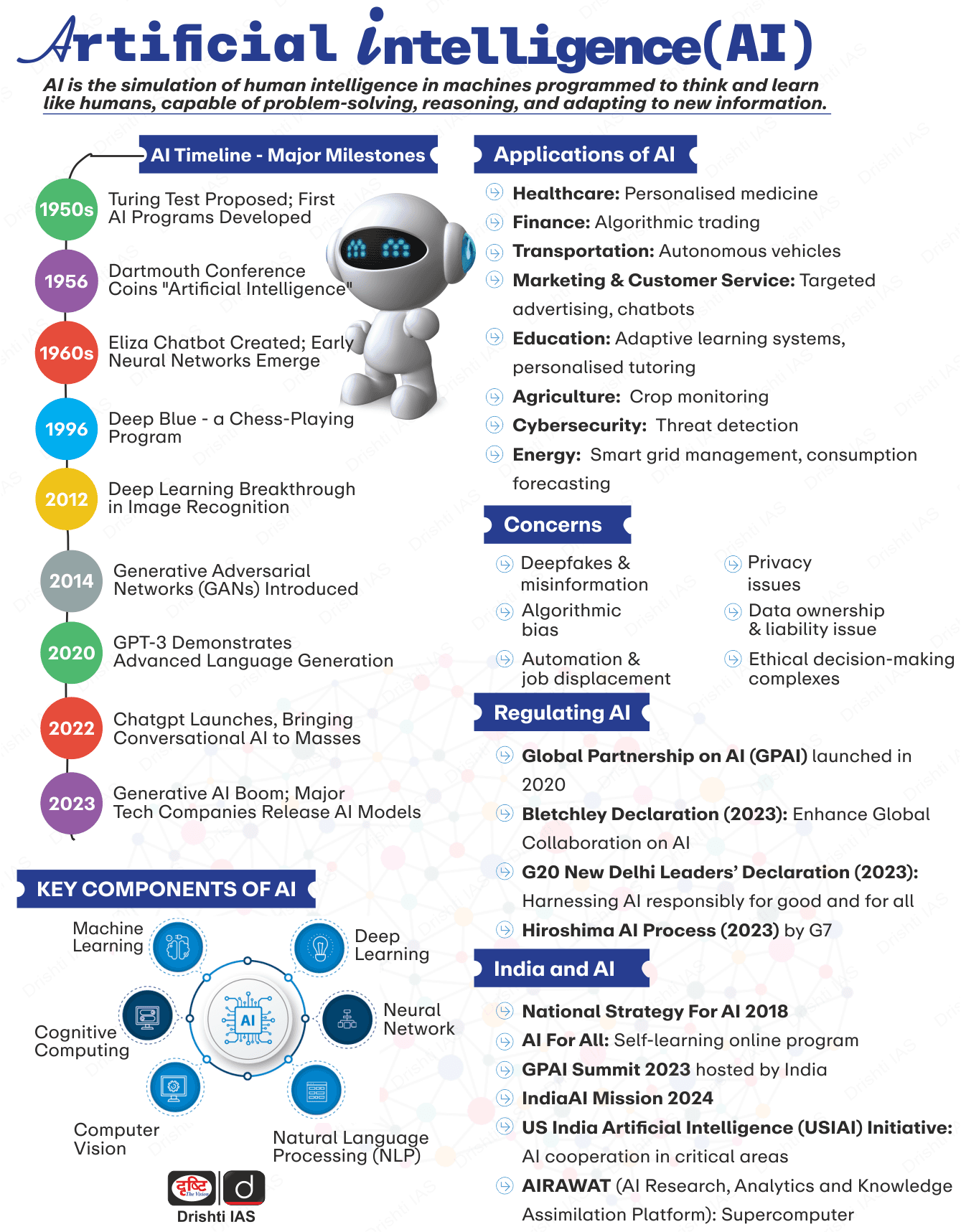
Sovereign AI = nation-owned development, deployment and governance of AI models, data, compute and talent

Key processes: domestic LLM training, semiconductor fabs, AI supercomputers, strict data localisation

Geography focus: India via IndiaAI Mission; potential global norms under proposed Global AI Compact

Quick Facts for MCQs

Legal & Policy

  • National control aligns AI with domestic laws, ethics, security protocols
  • Data sovereignty keeps citizen data onshore, protecting privacy and critical databases
  • Global AI Compact seeks shared resources and equitable technology access

Economic Angle

  • AI positioned to propel USD 1 trillion digital economy ambition by 2028
  • Sovereign AI boosts industrial innovation; lag risks competitiveness loss
  • Semiconductor investment expected to cut imports and generate high-skill employment

Tech & Schemes

  • Parameter leap: 340 M (2018) → 1.8 T (ChatGPT), 1.5 T (Gemini), 240 B (DeepSeek)
  • IndiaAI Mission planning petascale supercomputer with thousands of advanced chips
  • Tata and Reliance crafting India-centric LLMs leveraging vernacular datasets

Security Dimension

  • Strategic autonomy reduces dependence on foreign cloud or proprietary foundation models
  • Defence, healthcare, transport identified for domestically governed AI deployments
  • National ethical guardrails aim to curb surveillance misuse and algorithmic bias

Key Data Points

FeatureData-Point
Govt outlay for Sovereign AIUSD 1.2 billion
Digital economy goalUSD 1 trillion by 2028
Planned AI supercomputerThousands of chips, IndiaAI Mission
Largest known LLMChatGPT 1.8 trillion parameters
Gemini parameter size1.5 trillion
DeepSeek parameter size240 billion
Large LLM in 2018340 million parameters
Indian corporate playersTata Group, Reliance
Proposed global accordGlobal AI Compact

Related UPSC Prelims PYQs

ESE_GS, GS1 2025PYQ 1

ग्रैण्ड पैलै (Grand Palais) पेरिस में नवम्बर 2025 में आयोजित होने वाले AI शिखर सम्मेलन के सन्दर्भ में, निम्नलिखित कथनों पर विचार कीजिए :

ESE_GS, GS1 2026PYQ 2

Which Ministry released the India AI Governance Guidelines in 2025?

GS-2Misc

14.UN Big Data Statistics Committee (UN Statistics)

Times of India

What & Where

Specialized UN body (2014) under UN Statistical Commission; explores big data & data-science for official statistics.

Operates globally; secretariat housed at UN Headquarters, New York.

Tasks include SDG-indicator support, standards drafting, capacity-building; India joined in 2024.

Quick Facts for MCQs

Institutional Mandate

  • Standards: Draft global norms for big-data inclusion in national statistical systems.
  • Collaboration: Forum linking national statistical offices, academia, private data holders.
  • Capacity-building: Supplies toolkits, training, missions for statistical modernisation.

Data Sources & Technology

  • Satellite: Land-use, climate, disaster metrics feeding SDG indicators.
  • IoT: Sensor networks generate high-frequency economic & environmental datapoints.
  • Private sector: Mobile, social media, transaction data supplement survey gaps.

India’s Accession

  • Recognition: India’s statistical digitalisation experience acknowledged with membership.
  • Leverage: Access to UN Global Platform, algorithm repositories, peer expertise.
  • Outreach: Expected pilots using administrative and geospatial datasets for SDG metrics.

Key Data Points

FeatureData-Point
Year created2014
Parent bodyUN Statistical Commission
AbbreviationUN-CEBD
Latest entrantIndia (2024)
Core mandateIntegrate big data into official statistics
Key SDG roleMonitoring & reporting progress
Sample data sourcesSatellite imagery, IoT, private-sector datasets
Support offeredTechnical guidance & global standards

Related UPSC Prelims PYQs

ESE_GS, GS1 2024PYQ 1

Which one of the following Institutions launched Centre of Data for Public Good (CDPG) for multidisciplinary research, bringing together experts from academia, industry, and Government to harness the power of data to benefit the public?

ESE_GS, GS1 2022PYQ 2

“संयुक्त राष्ट्र प्रत्यय समिति (United Nations Credentials Committee)” के सम्बन्ध में, निम्नलिखित कथनों पर विचार कीजिए:

GS-2Misc

15.Henley Passport Index 2025 (Passport Rankings)

The Hindu
Illustration for Henley Passport Index 2025 (Passport Rankings)

What & Where

Henley Passport Index – annual list ranking 199 passports by visa-free/visa-on-arrival reach to 227 global destinations

Data from IATA Timatic; index compiled by Henley & Partners, UK-based citizenship-advisory firm

India 2025 rank 85; Singapore leads, Afghanistan anchors bottom

Quick Facts for MCQs

Ranking Trends

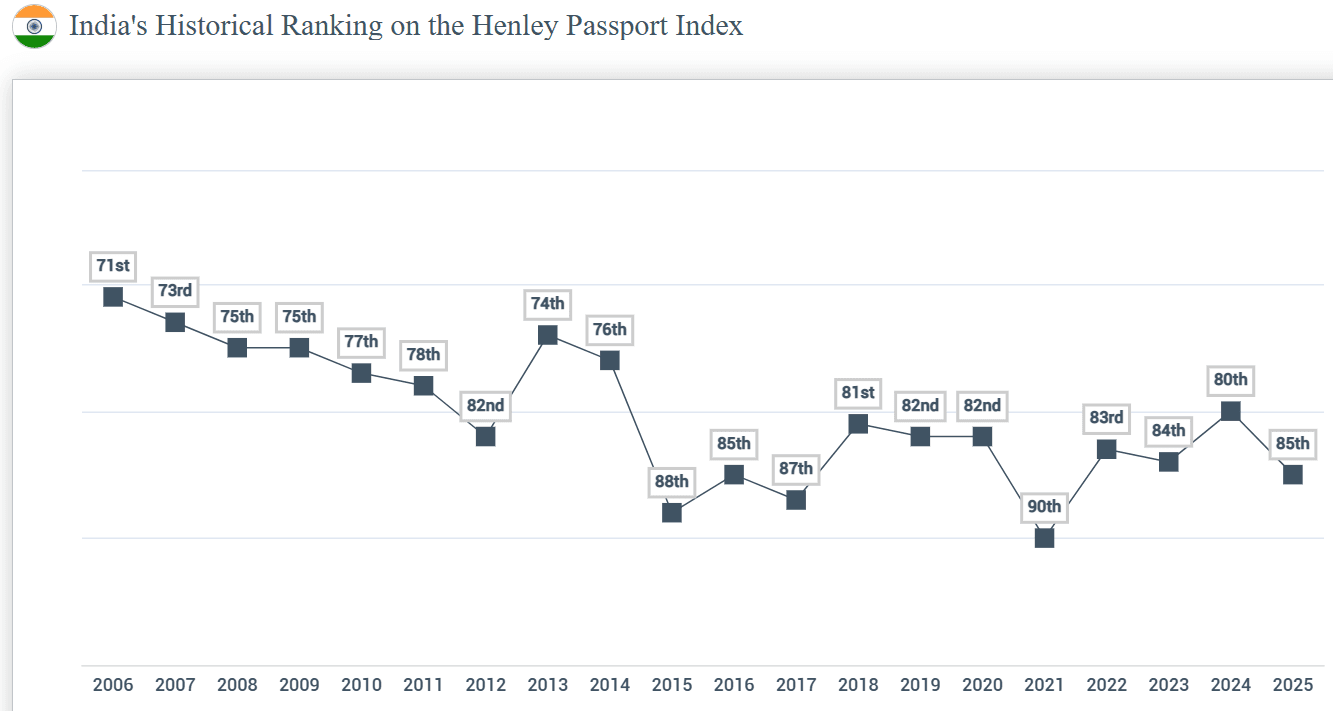
  • India-2025: rank 85, down five spots from 2024
  • Peak-position: 71 in 2006; trough 90 in 2021 (Covid restrictions)
  • USA/UK display multi-year decline of ≥7 places since 2014

Cost Comparison

  • Affordability-metric: India delivers world’s best “cost per year” value (Compare-the-Market 2024)
  • Expensive-group: Mexico, Australia, USA demand highest issuance fees
  • Cheap-group: UAE, India, Hungary keep costs minimal

International Standings

  • Leader-board: Singapore 195, Japan 193, EU+South Korea 192 destinations
  • Bottom-cluster: Pakistan & Yemen 103rd; Iraq, Syria, Afghanistan trail further
  • Access-spread: stronger economies/diplomacies enjoy broader visa waivers

Methodology & Scope

  • Coverage-width: 199 passports evaluated against 227 destinations worldwide
  • Visa-count includes visa-free, visa-on-arrival, e-TA; excludes pre-departure visas
  • Update-cycle: quarterly revisions using IATA Timatic database

Key Data Points

FeatureData-Point
India rank 202585th
Indian visa-free destinations 202557
India best rank71st (2006)
India worst rank90th (2021, Covid)
Index topper 2025Singapore – 195 destinations
2nd place 2025Japan – 193
Shared 3rd 2025Several EU states + South Korea – 192
US slide2nd (2014) → 9th (2025)
UK slide1st (2014) → 5th (2025)
Cheapest passports 2024UAE, India, Hungary
Most expensive passports 2024Mexico, Australia, USA
Bottom three 2025Iraq, Syria, Afghanistan

Related UPSC Prelims PYQs

ESE_GS, GEO_GS 2024PYQ 1

Consider the following statements regarding Henley Passport Index 2023:

ESE_GS, GEO_GS 2020PYQ 2

Which one of the following countries was ranked 1st in the IMD World Competitiveness ranking 2019?

GS-3Security

16.HAL Dhruv Utility Helicopter (Utility Helicopter)

IT
Illustration for HAL Dhruv Utility Helicopter (Utility Helicopter)

What & Where

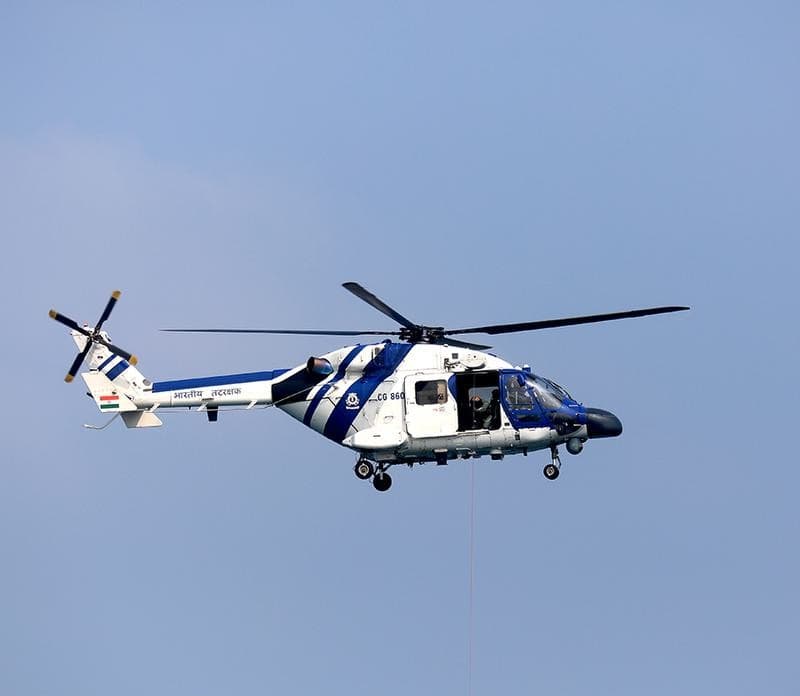
Indigenous 5.5-ton Advanced Light Helicopter Dhruv; multi-role platform for military & civil use.

Designed, developed and produced by Hindustan Aeronautics Ltd. (HAL), Bengaluru.

Operated across India’s forces; exported to Bolivia, Myanmar, Israel, Maldives and Nepal.

Quick Facts for MCQs

Tech & Design

  • Rigid-rotor concept; enhances agility, reduces vibration.
  • Glass cockpit, modern avionics integrated in Mk-III onward.
  • Modular airframe; enables quick role change from medical to armed support.

Security Dimension

  • Mk-IV Rudra gives Army/IAF close-air-support with integrated EO pod and ballistic protection.
  • Coast Guard employs Mk-III for maritime surveillance, SAR, pollution response.
  • Grounding advisory aims accident-prevention until crash cause isolation.

International Examples

  • Export deliveries: 6 to Ecuador (later Bolivia), 3 to Maldives, 2 to Myanmar, limited numbers to Israel, Nepal.
  • HAL offers tailored tropical/high-altitude kits to foreign customers.

Economic Angle

  • Indigenous content exceeds 90 %; saves forex and supports local MSME supply chain.
  • Successful export orders bolster Make-in-India aviation credentials.

Key Data Points

FeatureData-Point
DeveloperHindustan Aeronautics Ltd.
First flight1992 (series induction 2002)
Weight class5.5 ton
Engine layoutTwin-engine
Rotor typeFour-blade rigid main rotor
Utility variantsMk-I, Mk-II
Advanced utilityMk-III
Armed versionMk-IV Rudra
Rudra weapons20 mm gun, 70 mm rockets, air-to-air missiles
EW suiteRadar/missile warning, IR jammer, chaff & flare
Key missionsRescue, high-altitude logistics, attack, coastal patrol
Recent advisoryHAL asked civilian operators to ground ALH after Coast Guard crash

Related UPSC Prelims PYQs

GS1 2008PYQ 1

In the context of the Indian defence, what is ‘Dhruv’?

GS-2Scheme

17.Bharat Cleantech Manufacturing Platform (Renewable Manufacturing)

PIB

What & Where

Definition; National platform to strengthen India’s cleantech manufacturing value-chains and collaborations

Location; Launched at Bharat Climate Forum 2025, New Delhi; steered by Ministry of Commerce & Industry

Scope; Focus on solar, wind, green hydrogen and battery-storage production capacities

Quick Facts for MCQs

Tech & Schemes

  • Innovation; Encourages joint R&D, IP exchange among Indian manufacturers
  • Scalability; Drives large-scale plants to cut unit costs and boost exports
  • Platform; Acts as one-stop interface linking industry, investors, policymakers

Economic Angle

  • Funding; Provides matchmaking with domestic and global financiers for projects
  • Competitiveness; Aims to reduce import dependence and elevate export share in RE equipment
  • Efficiency; Targets cost parity without long-term subsidy outlays

Environmental Impact

  • Emissions; Supports decarbonisation via indigenous supply of low-carbon technologies
  • NDCs; Directly aligned with Paris-pledged RE capacity and emission intensity goals
  • Leadership; Enhances India’s image as sustainability front-runner in Global South

Key Data Points

FeatureData-Point
Launch year2025
Nodal ministryCommerce & Industry
Event of launchBharat Climate Forum 2025, New Delhi
Core technologiesSolar, Wind, Hydrogen, Battery storage
National RE target backed500 GW by 2030
Strategic aimPosition India as global cleantech leader
Innovation approachCo-innovation and technology sharing
Finance roleConnects firms with cleantech funding options
Subsidy stanceSeeks self-sustaining sector, minimal incentives
International obligation aidedIndia’s NDCs under Paris Agreement

Related UPSC Prelims PYQs

CAPF_GAI, ESE_GS 2025PYQ 1

Which of the statements given below is/are correct?

CAPF_GAI, ESE_GS 2026PYQ 2

What is the name of the initiative launched by India and Denmark in November 2025 to enhance bilateral ties?

GS-1Editorial

18.Denotified Tribes Challenges (Denotified Tribes)

The Hindu

What & Where

Denotified Tribes: groups branded “criminal” by Criminal Tribes Act 1871; officially de-notified in 1952.

Nomadic & Semi-Nomadic Tribes: mobile populations; many overlap with DNTs; 1,526 communities listed by Idate Commission 2017.

Geography: South Asia’s largest nomad share; about 10 % of Indians (~25 crore) belong to DNT/NT/SNT, present across all states.

Quick Facts for MCQs

Historical Context

  • British label “criminal tribes” institutionalised stigma; surveillance persists decades after repeal.
  • Landlessness entrenched; denial of property, education, jobs feeds intergenerational poverty.
  • Protection gap: PoA Act lacks dedicated schedule; Idate urged third-schedule inclusion.

Committees & Commissions

  • Inquiries: 1947 United Provinces committee; 1949 Ayyangar led to Act repeal.
  • OBC focus: Kalelkar 1953, Mandal 1980 flagged DNT concerns.
  • Idate 2017 sought permanent commission, caste-census data, state-level departments.

Schemes & Welfare

  • SEED: free exam coaching, PM-JAY insurance, NRLM livelihoods, PM-Awas housing.
  • Scholarships: Dr Ambedkar Pre/Post-Matric (since 2014-15) for DNTs outside SC/ST/OBC.
  • Hostels: Nanaji Deshmukh scheme funds state/UT hostel construction for DNT students.

Implementation Gaps

  • Certificate denial in 29 states; 269 groups outside SC/ST/OBC lists lose reservations.
  • SEED rollout slow; DWBDNC lacks full-time chair, weak field outreach.
  • Overlapping eligibility with SC/ST/OBC schemes complicates beneficiary identification.

Key Data Points

FeatureData-Point
Criminal Tribes Act enacted1871
De-notification of tribes1952
Idate Commission set up2014
Communities identified1,526
Still unclassified groups269
Population estimate25 crore+
SEED scheme launchFeb 2022
SEED budgetRs 200 cr (2021-26)
Implementing bodyDWBDNC

Related UPSC Prelims PYQs

GEO_GS, GS1 1996PYQ 1

In the Indian context the term De-notified tribes refers to

GEO_GS, GS1 2020PYQ 2

Which one of the following was NOT a feature of Criminal Tribes Act, 1871?

GS-1Misc

19.Meta Community Notes Shift (Fake News Control)

The Hindu

What & Where

Community Notes: crowd-sourced, consensus-based context tool (ex-Twitter Birdwatch, 2021); adopted by Meta replacing third-party fact-checkers.

Professional fact-checking: 11 independent Indian partners verifying posts in 15 languages under IFCN-style ethical codes.

Geographic impact: India’s multi-lingual, high-user social media space, especially during election cycles vulnerable to misinformation.

Quick Facts for MCQs

Tech & Schemes

  • Notes shown only after algorithm finds cross-ideological agreement; no employee editorial oversight.
  • Rating system ranks usefulness, aiming bias-mitigation but reducing expert intervention.
  • AI moderation gaps in regional scripts spur call for multilingual detection tools.

Social Concerns

  • Crowd moderation may let majoritarian or partisan views dominate, fuelling polarisation.
  • User-flag process slows correction, letting viral lies gain traction.
  • Cultural-political diversity hampers consensus on complex issues.

Legal & Policy

  • IPC §§153, 295 address violence/communal unrest; §§499-500 cover defamation.
  • IT Act 2000 §§66C-67 penalise identity theft, impersonation, obscene or false digital content.
  • Press Council Act 1978 & NBA offer self-regulation; India lacks statutory fake-news definition.

Security Dimension

  • Election integrity threatened by deepfakes, manipulated claims, rapid social-media propagation.
  • Notable hoaxes: Muzaffarnagar riot video, ₹2000 “GPS chip”, UNESCO anthem rumour.
  • Safe-harbour shields platforms, complicating liability for user-generated misinformation.

Key Data Points

FeatureData-Point
Birdwatch pilot year2021
Meta Indian fact-checkers11 organisations
Languages covered by partners15
False info spread vs truth70 % faster
Deepfake videos growth (2019)Doubled every 6 months
Deepfake share in disinformation96 % of samples

Ready to practice?

Test your knowledge with our UPSC test series.

Start Free Trial