
Biogas is considered to be an excellent fuel which burns without smoke. The main constituent of biogas is:
- (a)methane
- (b)hydrogen
- (c)carbon dioxide
- (d)hydrogen sulphide
Correct — A, methane. Biogas is the gas mixture left behind when micro-organisms break down cattle dung, crop residue, vegetable waste or sewage in the absence of oxygen. Methane makes up the bulk of it, roughly half to three-quarters by volume, with carbon dioxide taking most of the rest and hydrogen, nitrogen and hydrogen sulphide present only in traces. Methane is also the only component present in quantity that burns at all, so it supplies essentially the whole of the fuel value. Burning methane completely gives carbon dioxide and water and nothing else — no soot, because the molecule carries one carbon to four hydrogens and needs no cracking, and no ash, because the fuel is a gas rather than a solid. That is why the stem's description of a smokeless fuel points at methane.
- (b)hydrogen — Hydrogen is present, but only as a trace at a few per cent at most. It burns very cleanly, which is what makes the option feel plausible, yet a trace component cannot be the main constituent of the mixture.
- (c)carbon dioxide — Carbon dioxide is the second largest component by volume, so this is the closest wrong answer. It does not burn at all — it is the inert diluent that keeps the heating value of biogas well below that of natural gas, and upgrading biogas to bio-CNG means stripping it out.
- (d)hydrogen sulphide — A trace contaminant, usually well under one per cent. It is responsible for the smell and for corroding engines and burners, which is why it is scrubbed before the gas is put to serious use, but it is nowhere near being the main constituent.
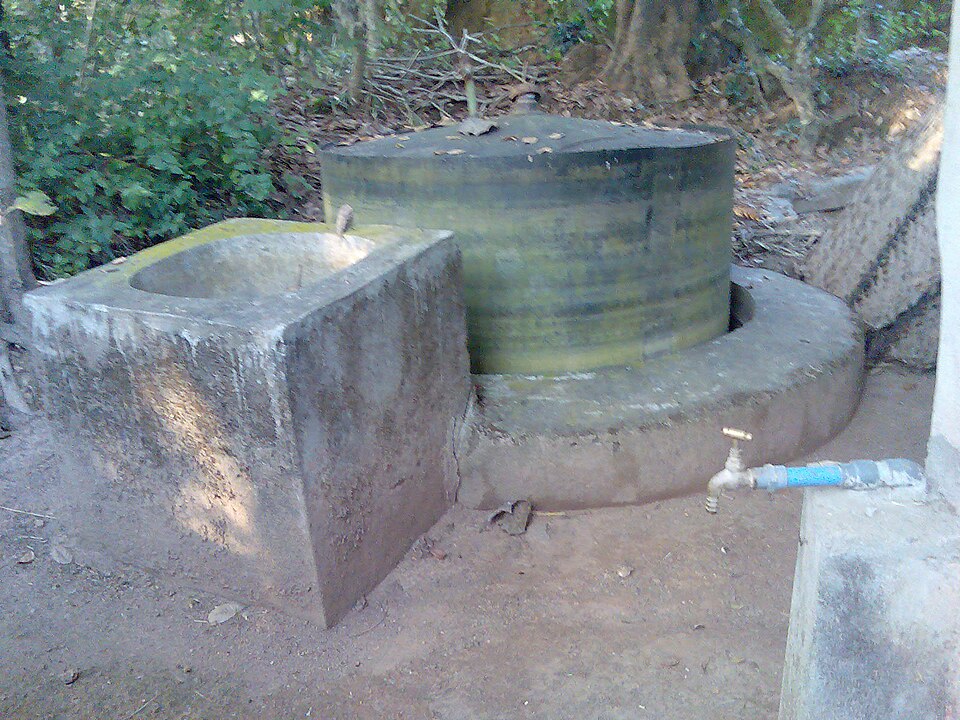
Anaerobic digestion is carried out by a community of micro-organisms ending in the methanogens, which produce methane from the products of earlier breakdown stages. A household gobar-gas plant runs on cattle dung slurry in a sealed digester, works over a retention period of a few days to a few weeks, and yields two useful outputs: the gas itself, and a spent slurry that is a better manure than the raw dung because the nitrogen has been conserved while the carbon has left as gas.
Two properties in the stem are doing the work. Smokeless points to a gaseous hydrocarbon with a high hydrogen-to-carbon ratio, which rules out solid fuels and points squarely at methane. Excellent fuel rules out carbon dioxide, which cannot burn however abundant it is. Biogas counts as renewable because the carbon in the dung was fixed from the air by plants within the last season, so burning it returns carbon that was recently removed; and the process also keeps methane, a far stronger greenhouse gas than carbon dioxide, out of the open air where dung would otherwise have rotted.
- Biogas is roughly 50 to 75 per cent methane by volume, with most of the balance carbon dioxide.
- Hydrogen, nitrogen and hydrogen sulphide together account for only a small trace fraction.
- The gas is produced by anaerobic digestion — micro-organisms working in the absence of oxygen.
- The spent slurry from a biogas plant is used as manure, so the plant produces fuel and fertiliser together.
- Biogas is a renewable resource; upgrading it by removing carbon dioxide and hydrogen sulphide gives bio-compressed natural gas.
- Choosing carbon dioxide because it is genuinely abundant in the mixture, and forgetting that it cannot burn.
- Choosing hydrogen because it burns cleanest, when it is only a trace component here.
- Assuming a smokeless flame means the fuel contains no carbon.
Asked as a composition-recall item, usually with a property of the fuel supplied in the stem as a hint towards the constituent that explains it.
Which one of the following is the largest composition in biogas?
- (a) Carbon dioxide
- (b) Methane
- (c) Hydrogen
- (d) Hydrogen sulphide
Answer(b) Methane
Effectively the same question with the four options reshuffled. It confirms that the examiners keep testing the ranking of biogas components rather than any single number, so the order methane first and carbon dioxide second is what has to be remembered.
Which one of the following statements about biogas is not correct ?
- (a) It is mainly composed of methane gas.
- (b) It is a non-renewable source of energy.
- (c) It is formed by the decomposition of cow dung in the absence of oxygen.
- (d) It burns without smoke and leaves no residue.
Answer(b) It is a non-renewable source of energy.
The same four facts arranged as a spot-the-false item. Its correct statements are that biogas is mainly methane, that it forms without oxygen and that it burns smokelessly — the identical package tested here, with renewability added as the point of failure.
- practice — not a real PYQ
The micro-organisms that produce the combustible component of biogas work under which one of the following conditions?
- (a)In the presence of abundant oxygen
- (b)In the absence of oxygen
- (c)Only in direct sunlight
- (d)Only at temperatures below freezing
Answer(b) In the absence of oxygen — biogas is produced by anaerobic digestion, which is why the digester is a sealed vessel.
- practice — not a real PYQ
Which one of the following components of biogas is removed when it is upgraded to bio-compressed natural gas?
- (a)Methane
- (b)Carbon dioxide
- (c)Both methane and carbon dioxide
- (d)Neither of them
Answer(b) Carbon dioxide — stripping out the non-combustible carbon dioxide, along with hydrogen sulphide and moisture, raises the methane fraction and the calorific value.