
Which one of the following is the main cause of the acid rains?
- (a)The Sun causes heating of upper layer of atmosphere.
- (b)The burning of fossil fuels releases oxides of carbon, nitrogen and sulphur in the atmosphere.
- (c)The electrical charges are produced due to friction amongst clouds.
- (d)The atmosphere of the Earth contains acids.
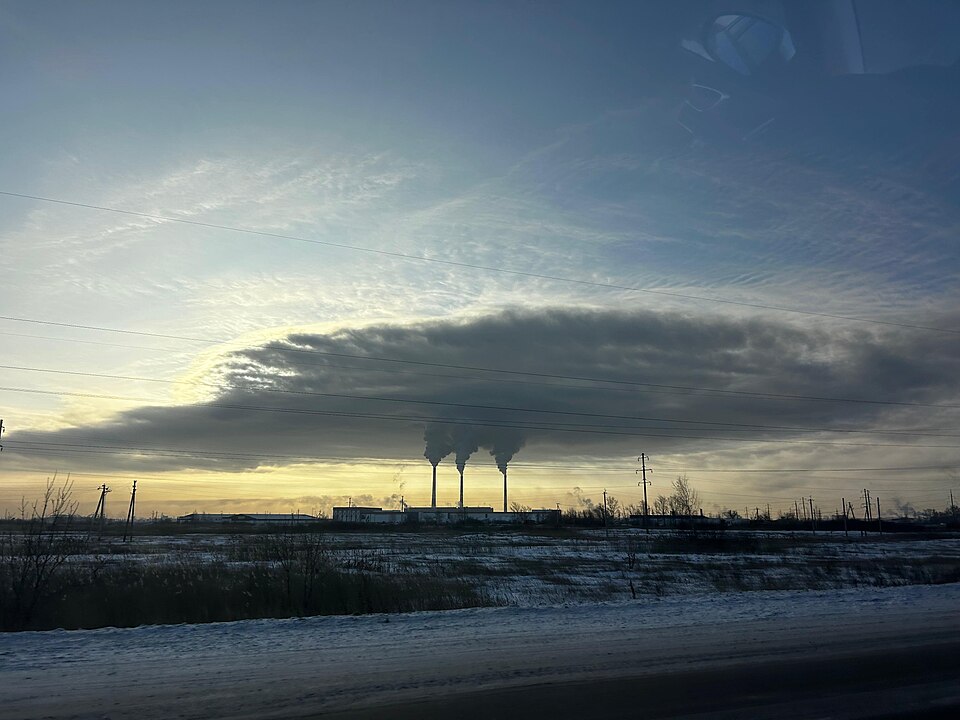
Correct — B, the burning of fossil fuels. Coal and oil carry sulphur as an impurity, and burning them releases sulphur dioxide; the high flame temperature also forces nitrogen and oxygen from the air itself to combine into nitrogen oxides. Once airborne these gases oxidise and dissolve in cloud droplets to give sulphuric acid and nitric acid, which come down as rain, snow or dry deposition with a pH well below the natural value. That is the whole chain, and it starts at the combustion chamber. One honest qualification belongs on the option as printed: of the three oxides it names, the sulphur and nitrogen ones make the strong acids, while carbon dioxide only makes weak carbonic acid — which is what already holds clean rain at a pH of about 5.6. Acid rain is the fall below that baseline, and fossil fuel combustion is what causes it.
- (a)The Sun causes heating of upper layer of atmosphere. — Solar heating drives atmospheric circulation and, higher up, the ozone chemistry of the stratosphere. Heat alone manufactures no acid — an acid needs an acid-forming gas, and heating the upper atmosphere supplies none.
- (c)The electrical charges are produced due to friction amongst clouds. — That describes the charge separation behind lightning. Lightning does fix a small quantity of atmospheric nitrogen into nitrogen oxides, so the contribution is not zero, but it is a minor natural background against the industrial emissions that acidify rainfall over and downwind of coal-burning regions.
- (d)The atmosphere of the Earth contains acids. — Circular, and wrong in the way it matters. The atmosphere holds acid-forming gases rather than a standing stock of acid, and the small natural acidity from dissolved carbon dioxide is the baseline that acid rain is measured against, not the phenomenon itself.
Sulphur dioxide oxidises in the atmosphere to sulphur trioxide and then dissolves to sulphuric acid; nitrogen oxides follow a parallel path to nitric acid. Rainfall untouched by these gases still carries dissolved carbon dioxide as weak carbonic acid and sits at a pH of roughly 5.6, so the working definition of acid rain is precipitation below that figure. Deposition can be wet, as rain or snow, or dry, as acidified particles and gases settling directly on surfaces.
The examiner is checking whether you can trace an effect back to a source rather than to a circumstance. Three of the four options describe conditions that exist in the atmosphere; only one names a process that manufactures acid. The damage this does is worth carrying: lakes acidify and their fish die, aluminium is leached out of soils into root zones and streams, forests on thin upland soils decline, and limestone and marble buildings corrode, which is the argument that produced the Taj Trapezium Zone around Agra. Robert Angus Smith first showed the link between rainfall chemistry and air pollution at Manchester in 1852 and coined the term acid rain in 1872. Sulphur emissions in Europe and North America have fallen sharply since the 1979 Convention on Long-Range Transboundary Air Pollution, so the problem is regional and policy-sensitive rather than permanent.
- Unpolluted rain has a pH of about 5.6 because of dissolved carbon dioxide; acid rain is precipitation below that value.
- The strong acids in acid rain are sulphuric acid from sulphur dioxide and nitric acid from oxides of nitrogen.
- Sulphur enters the air as an impurity in coal and oil; nitrogen oxides form from the air itself at high combustion temperatures.
- Robert Angus Smith showed the relation between rainfall acidity and air pollution at Manchester in 1852 and coined the term in 1872.
- Acid deposition damages lakes, leaches aluminium from soils and corrodes limestone and marble structures.
- Blaming carbon dioxide, which produces only weak carbonic acid and sets the natural baseline.
- Confusing acid rain with the greenhouse effect or with ozone depletion — three separate problems with three separate chemistries.
- Reading lightning as a major source; its contribution to nitrogen oxides is real but small.
Asked as a cause-identification item, where three options name atmospheric conditions and only one names a process that actually makes acid.
Consider the following: 1. Carbon monoxide 2. Nitrogen oxide 3. Ozone 4. Sulphur dioxide Excess of which of the above in the environment is/are cause(s) of acid rain?
- (a) 1, 2 and 3
- (b) 2 and 4 only
- (c) 4 only
- (d) 1, 3 and 4
Answer(b) 2 and 4 only
The sharper version of the same chemistry. It narrows the culprits to the oxides of nitrogen and sulphur and throws out the carbon and ozone options, which is exactly the qualification this card attaches to the option as printed.
Which one of the following is the main reason of acid rains?
- (a) Dissolution of sulphur and nitrogen oxides in rain
- (b) Dissolution of minerals in rain
- (c) Dissolution of dust particles in rain
- (d) Dissolution of soil solution in rain
Answer(a) Dissolution of sulphur and nitrogen oxides in rain
The same question written from the chemistry end rather than the source end. It asks what dissolves in the raindrop; this one asks what put it into the air, and the two together give the full chain from the furnace to the pH meter.
- practice — not a real PYQ
Rainfall is described as acid rain when its pH falls below approximately
- (a)7.0
- (b)6.5
- (c)5.6
- (d)4.0
Answer(c) 5.6 — clean rain is already mildly acidic from dissolved carbon dioxide and sits near pH 5.6, so that value is the threshold rather than the neutral 7.0.
- practice — not a real PYQ
Which one of the following is the acid formed in the atmosphere from sulphur dioxide released by burning coal?
- (a)Nitric acid
- (b)Carbonic acid
- (c)Sulphuric acid
- (d)Hydrochloric acid
Answer(c) Sulphuric acid — sulphur dioxide oxidises to sulphur trioxide and dissolves in water droplets as sulphuric acid, while nitric acid comes from the oxides of nitrogen instead.