
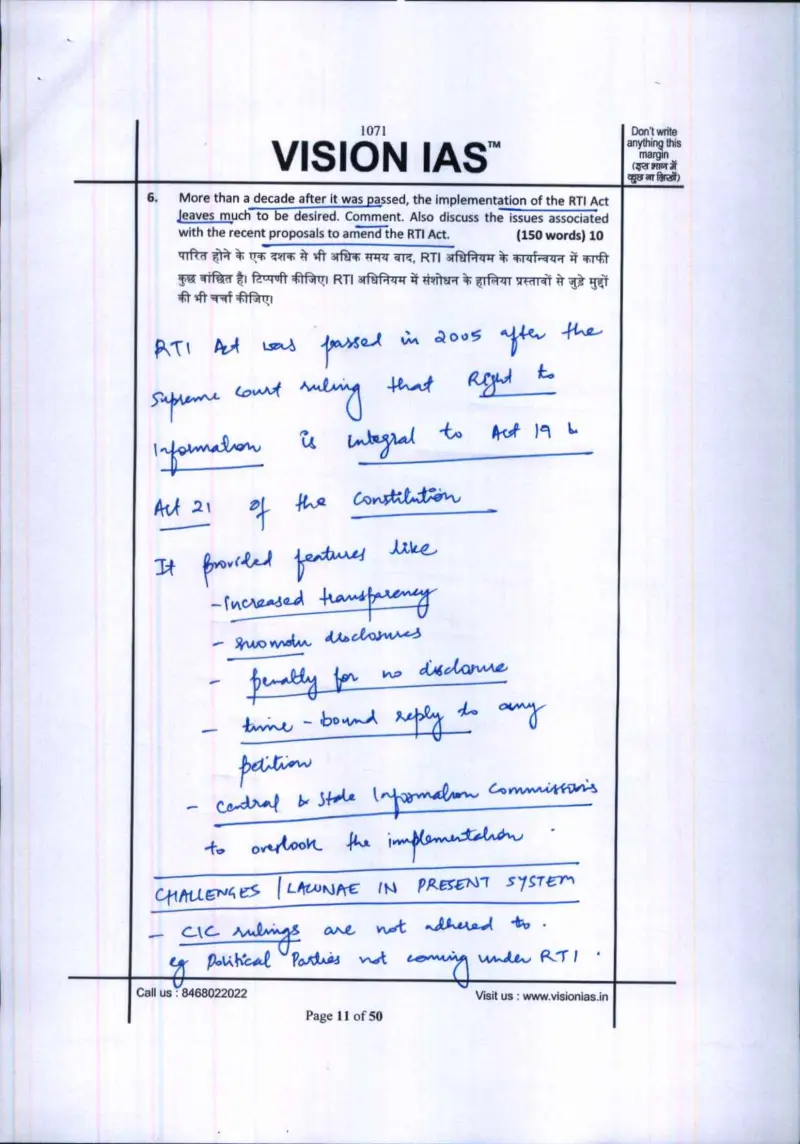
 View answer copy →
Kanishak KatariaAIR 1CSE 2018
Answered a very similar question
Their question: “RTI Act implementation shortfalls and issues with proposed amendments”
The topper's critique of RTI implementation shortfalls and the problems with proposed amendments directly serves the PYQ on RTI amendments impacting the autonomy of the Information Commission.
Key learnings from their answer
- ›Constitutional recall is precise and clustered to the demand, not name-dropped: Art 280/275/131 for the Finance Commission, Art 50/13/142/72 for the independent judiciary, and Art 16(4A)/326/39 for the Constitution-synthesis answer. -> When a polity question has clear constitutional hooks, thread the exact relevant articles into the body so the answer reads as legally literate, not bookish.
- ›'Critically discuss' prompts are answered as a genuine two-sided ledger before a balanced verdict, applied consistently to electoral bonds, PoCA amendments, reservation-in-promotion and Ayushman Bharat. -> Treat the directive literally: build explicit benefits-vs-concerns sides (e.g. boxed sub-headings) and only then judge, rather than arguing one way.
What they cited: RTI Act 2005; Article 19 & Article 21 (Right to Information integral); CIC/SIC; Official Secrets Act 1923; public-authority definition; political parties outside RTI (Q6)