
Consider the following statements: 1. Aluminium powder is used as a solid fuel for rocket engines. 2. Compared to liquid fuel propelled rocket engines, the thrust per amount of fuel burned is higher in solid fuel propelled rocket engines. Which of the statements given above is/are correct?
- (a)1 only
- (b)2 only
- (c)Both 1 and 2
- (d)Neither 1 nor 2
Correct — A, 1 only. Statement 1 is true: powdered aluminium is a standard fuel in composite solid propellants, burning with an oxidiser such as ammonium perchlorate in a rubbery binder, and it is used because it releases a great deal of heat per kilogram and raises the density of the propellant grain. Statement 2 reverses the real comparison. Thrust per unit of fuel burned is what engineers call specific impulse, and liquid propellants beat solids on it comfortably — a liquid oxygen and liquid hydrogen engine reaches well above 400 seconds in vacuum while a solid motor sits near 250 to 280. Solids win on simplicity, storability, thrust per unit volume and instant readiness; they lose on fuel economy.
- (b)2 only — This rejects the true statement and accepts the false one. Aluminium powder genuinely is a solid-propellant fuel, and it is the second claim that fails.
- (c)Both 1 and 2 — Statement 2 cannot stand — if solids gave more thrust per kilogram of fuel, no launch vehicle would carry the extra plumbing that liquid stages demand.
- (d)Neither 1 nor 2 — Statement 1 is solidly true. Aluminium is the fuel component of composite propellant, alongside an oxidiser and a binder.
A rocket motor needs a fuel, an oxidiser and, in the solid case, a binder that holds them in a cast grain. Specific impulse measures how much impulse is obtained per unit of propellant consumed, so it is the fuel-economy figure for a rocket, and it depends on the chemistry of the propellant rather than on its physical state being solid or liquid.
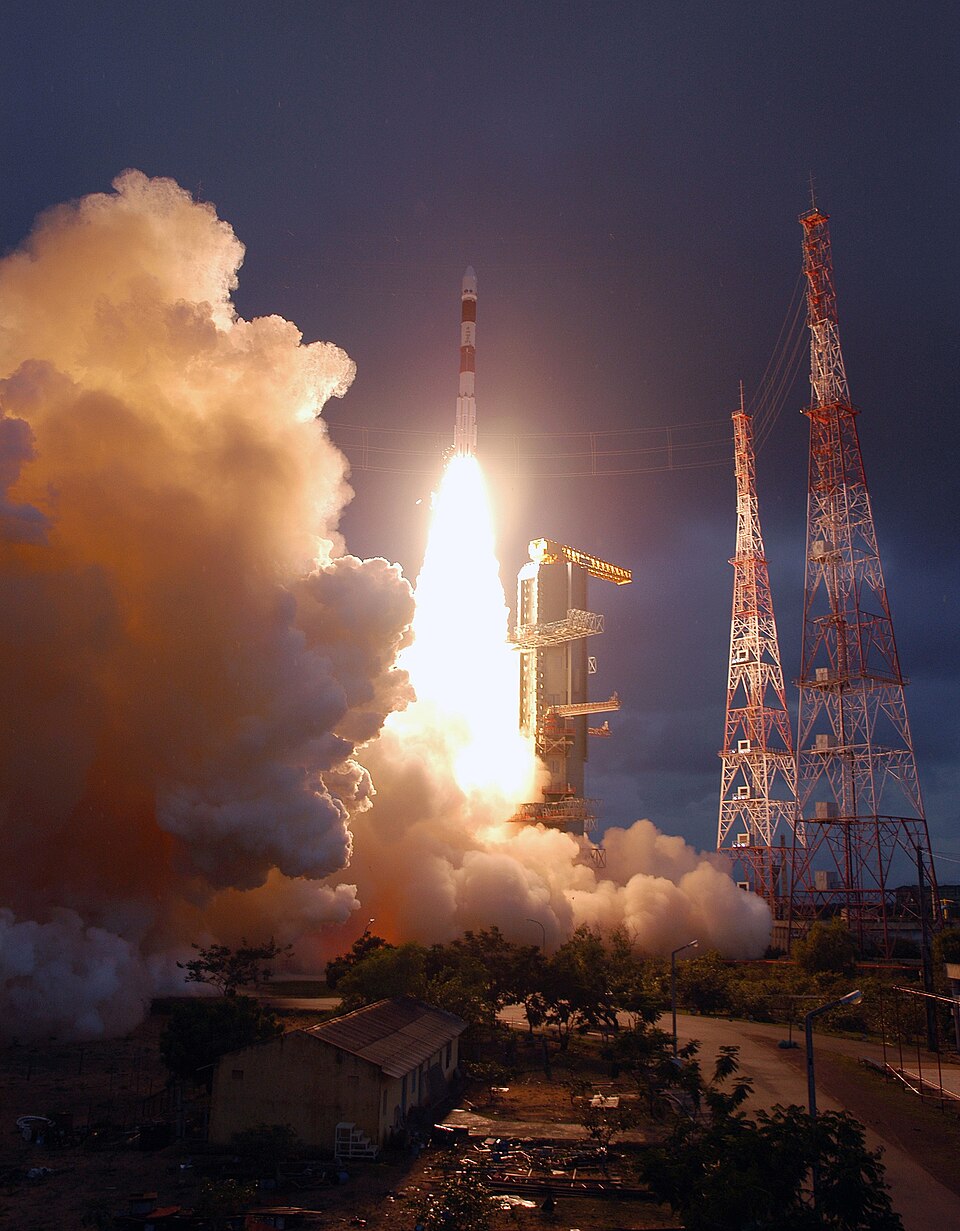
The item is set up so that the plausible-sounding second statement carries the trap. Solid motors do produce enormous thrust, which is why they are used as strap-on boosters, but that is thrust per unit of time and volume rather than per unit of fuel. India's launch vehicles show the trade-off directly: the PSLV alternates solid and liquid stages, its first stage being one of the largest solid motors in use, while the cryogenic upper stage of the GSLV burns liquid hydrogen and liquid oxygen precisely because that combination gives the highest specific impulse available.
- Composite solid propellant is typically ammonium perchlorate as oxidiser, aluminium powder as fuel and a polymer such as HTPB as binder.
- Specific impulse: solid motors about 250 to 280 seconds, kerosene and liquid oxygen about 330 to 360, liquid hydrogen and liquid oxygen above 400.
- Solid motors cannot easily be throttled or shut down and restarted; liquid engines can do all three.
- Solids are stored fuelled and can be launched at short notice, which is why most ballistic missiles now use them.
- The PSLV's first stage is solid; the GSLV's upper stage is cryogenic, burning liquid hydrogen with liquid oxygen.
- Equating high thrust with high fuel efficiency; the two are different measures.
- Assuming a statement about aluminium powder must be wrong because aluminium is thought of as a structural metal.
- Forgetting that solid motors cannot be throttled or restarted, which is a separate limitation from efficiency.
Asked as a two-statement item on propulsion, or as a direct question about which vehicle stage uses which kind of propellant.
With reference to Agni-IV Missile, which of the following statements is/are correct? 1. It is a surface-to-surface missile. 2. It is fuelled by liquid propellant only. 3. It can deliver one-tonne nuclear warheads about 7500 km away. Which of the statements given above is/are correct?
- (a) 1 only
- (b) 2 and 3 only
- (c) 1 and 3 only
- (d) 1, 2 and 3
Answer(a) 1 only
Also a two-of-three item decided by a propellant claim. Agni-IV is solid-fuelled, so the statement calling it liquid-fuelled fails, exactly as the solid-versus-liquid comparison fails in the CAPF item.
- practice — not a real PYQ
The cryogenic stage of an Indian launch vehicle burns
- (a)liquid hydrogen and liquid oxygen
- (b)kerosene and nitrogen tetroxide
- (c)ammonium perchlorate and aluminium
- (d)hydrazine and liquid nitrogen
Answer(a) liquid hydrogen and liquid oxygen — both stored at very low temperature, which is what makes the stage cryogenic and gives it the highest specific impulse.
- practice — not a real PYQ
Which one of the following is an advantage of a solid-propellant rocket motor over a liquid-propellant engine?
- (a)Higher specific impulse
- (b)Ability to be throttled in flight
- (c)Ability to be shut down and restarted
- (d)Simplicity and readiness for immediate launch
Answer(d) Simplicity and readiness for immediate launch — the other three are advantages of liquid engines.