
Which one of the following metals does not react with oxygen, water or acids?
- (a)Na
- (b)Cu
- (c)Fe
- (d)Au
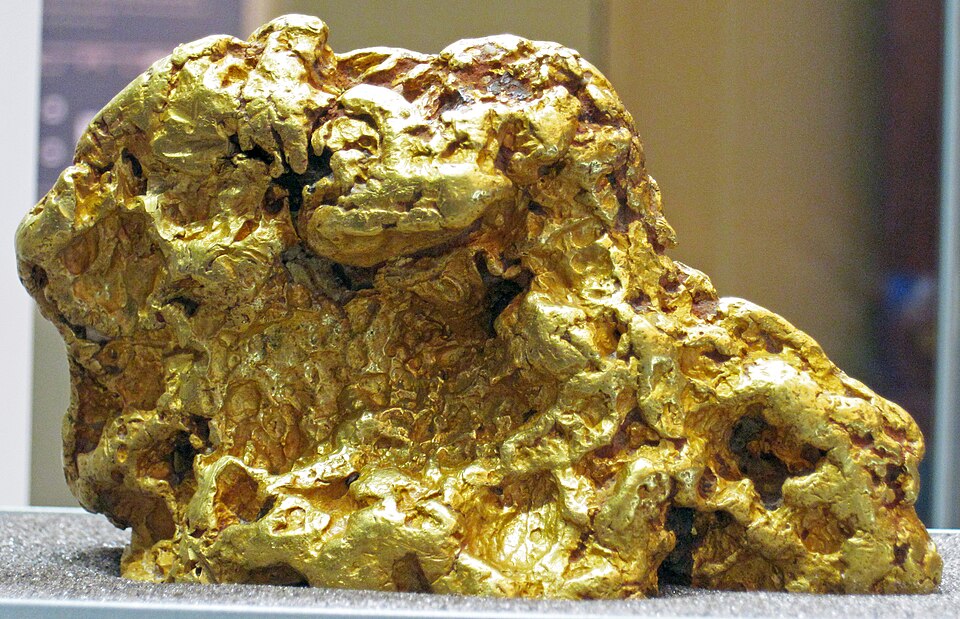
Correct — D, Au. Gold is at the very bottom of the reactivity series, and it shows. It does not tarnish in air even on heating, it is unaffected by water at any temperature, and single mineral acids leave it alone — only aqua regia, the three-to-one mixture of concentrated hydrochloric and nitric acids, will dissolve it. That inertness is why gold is found in nature as the free metal, why ancient gold ornaments come out of the ground bright, and why it has served as a store of value for millennia.
- (a)Na — Sodium is near the top of the reactivity series and reacts with all three. It tarnishes the instant it is cut, catches fire on water, and reacts explosively with acids, which is why it is stored under oil.
- (b)Cu — Copper does not react with water, but it is oxidised on heating in air to black copper oxide and it dissolves in oxidising acids such as concentrated nitric acid. The green patina on old copper roofs is the same chemistry working slowly.
- (c)Fe — Iron rusts in the presence of air and moisture, reacts with steam to give the magnetic oxide, and dissolves in dilute acids with hydrogen released. It fails all three tests.
The reactivity series arranges metals by how readily they lose electrons. At the top, potassium and sodium react with cold water; magnesium, aluminium, zinc and iron react with steam or with dilute acids; copper, silver, gold and platinum lie below hydrogen and cannot displace it from an acid at all. The last few are called noble metals for exactly that reason, and their position explains why they occur native while reactive metals occur only as compounds.
The stem asks for a metal that fails on all three counts, so the fastest route is to knock out any metal that fails on one. Sodium goes immediately. Iron goes on rust. Copper survives the water test but not the air test, since heating it in air gives black copper oxide. Only gold is left. Platinum would do equally well if it were offered — CAPF asked precisely that in 2023 — and silver is the near miss, because although it resists water and dilute acids it does tarnish in air containing sulphur compounds.
- Gold and platinum are the least reactive of the common metals and occur in nature in the free state.
- Gold dissolves only in aqua regia, a mixture of concentrated hydrochloric and nitric acids in a 3:1 ratio.
- Metals below hydrogen in the reactivity series cannot displace hydrogen from a dilute acid.
- Sodium and potassium react with cold water; magnesium and iron react with steam.
- Copper is oxidised to black copper oxide on heating in air and dissolves in concentrated nitric acid.
- Choosing copper because it does not react with water, while forgetting that it is oxidised on heating in air.
- Assuming gold is inert to everything, when aqua regia does dissolve it.
- Confusing the reactivity series with the electrochemical series in the direction of the ordering.
A reactivity-series item requiring three tests at once; CAPF asked the same family in 2023 with platinum as the answer, and NDA asks it through the metal least reactive with water.
Which one of the following elements is least reactive with water ?
- (a) Lithium
- (b) Sodium
- (c) Potassium
- (d) Cesium
Answer(a) Lithium
Works the same series at the opposite end, where reactivity with water rises down the alkali metals — the behaviour that eliminates sodium from this item at once.
Which one of the following metals does not react with oxygen directly?
- (a) Ti
- (b) Fe
- (c) Pt
- (d) Zn
Answer(c) Pt
The same question narrowed to one of its three tests, and answered by the other noble metal; gold and platinum sit together at the unreactive end of the series.
- practice — not a real PYQ
Which one of the following metals is found in nature mainly in the free state?
- (a)Aluminium
- (b)Zinc
- (c)Gold
- (d)Sodium
Answer(c) Gold — its low reactivity means it is not locked up as a compound.
- practice — not a real PYQ
The mixture of concentrated hydrochloric acid and concentrated nitric acid that dissolves gold is called
- (a)aqua fortis
- (b)aqua regia
- (c)oleum
- (d)brine
Answer(b) aqua regia — a 3:1 mixture by volume of hydrochloric and nitric acids.