
Which one of the following metals does not react with oxygen directly?
- (a)Ti
- (b)Fe
- (c)Pt
- (d)Zn
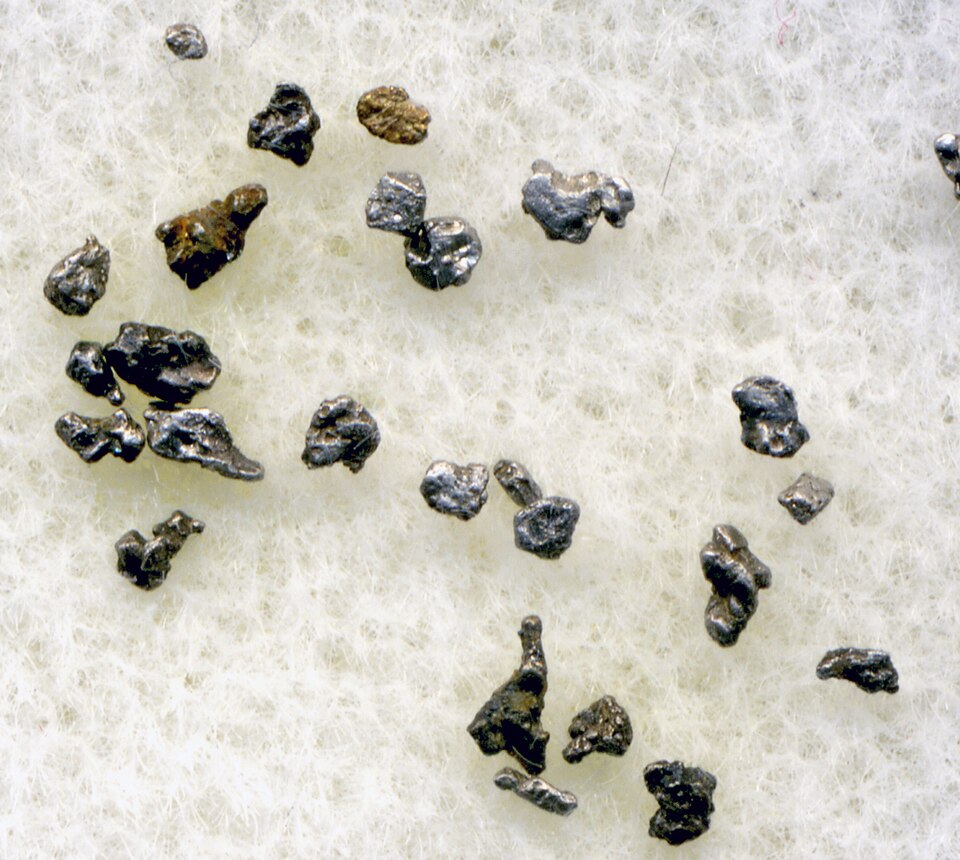
Correct — C, Pt. Platinum is a noble metal. It lies below hydrogen in the reactivity series, and combination with oxygen is not favourable for it under ordinary conditions, so heating platinum in air leaves it bright and unchanged. That is exactly why platinum is chosen for crucibles, laboratory electrodes and catalyst surfaces — it must survive hot, oxidising conditions without being consumed. The other three all combine with oxygen directly: titanium takes on a tough oxide film the instant it meets air, iron heated in air gives the black oxide Fe₃O₄ and in damp air corrodes to hydrated iron(III) oxide, and zinc burns in air with a bright flame to zinc oxide.
- (a)Ti — Titanium has a strong affinity for oxygen. The reason it passes for inert is that the oxide film it forms on contact with air is thin, tight and self-repairing, so the reaction stops itself rather than never starting.
- (b)Fe — Iron reacts with oxygen readily. Heated in air it gives Fe₃O₄, and in the presence of moisture it corrodes to the hydrated oxide we call rust, a process that does not stop because the product flakes away.
- (d)Zn — Zinc burns in air to zinc oxide with a bright flame, and zinc surfaces carry a dull oxide and carbonate layer for the same reason. This protective coating is what makes galvanising work.
The reactivity series orders metals by how readily they give up electrons. The top of the series — potassium, sodium, calcium, magnesium, aluminium — reacts with oxygen vigorously and often with water too; the middle — zinc, iron, tin, lead — reacts with oxygen on heating; and the bottom — copper, silver, gold, platinum — resists. Gold and platinum are called noble because they are found in the free state in nature and are not attacked by air, water or single acids.
The item is easier than it looks once you notice that three of the four options are workaday industrial metals whose oxides everyone has seen — rust, zinc oxide and the grey film on titanium. Two side facts protect against overthinking. First, a metal can be reactive and still look inert: titanium and aluminium both owe their corrosion resistance to an oxide layer rather than to any reluctance to react. Second, platinum's resistance is not absolute — it dissolves in aqua regia, the three-to-one mixture of hydrochloric and nitric acids — but nothing in the stem asks about acids.
- Noble metals, chiefly gold and platinum, are found free in nature and are not attacked by air or water.
- Platinum is used for crucibles, electrodes and catalysts precisely because hot oxidising conditions leave it intact.
- Titanium and aluminium are reactive metals whose thin, adherent oxide films make them behave as corrosion-resistant ones.
- Iron heated in air gives Fe₃O₄; in moist air it forms hydrated iron(III) oxide, which flakes and exposes fresh metal.
- Platinum and gold dissolve in aqua regia, a mixture of concentrated hydrochloric and nitric acids in a three-to-one ratio.
- Reading titanium as unreactive because titanium articles do not corrode.
- Assuming a metal that resists acids must also resist oxygen, or the other way round.
- Forgetting that zinc, though used as a protective coating, is itself reactive with oxygen.
Asked as a which-one-does-not item over four metals from very different parts of the reactivity series, so the examiner is testing where the noble metals sit.
Which one of the following is the correct arrangement of metals in the decreasing order of their reactivity?
- (a) Iron, Sodium, Silver, Copper
- (b) Silver, Copper, Iron, Sodium
- (c) Sodium, Copper, Silver, Iron
- (d) Sodium, Iron, Copper, Silver
Answer(d) Sodium, Iron, Copper, Silver
The ordering this item is a single slice of. Placing platinum near silver and copper at the unreactive end is what settles which metal will ignore oxygen.
- practice — not a real PYQ
Which one of the following metals is found in nature mainly in the free state?
- (a)Aluminium
- (b)Gold
- (c)Zinc
- (d)Calcium
Answer(b) Gold — noble metals resist attack by air, water and acids, so they survive in the uncombined state.
- practice — not a real PYQ
Aluminium articles resist corrosion because
- (a)aluminium is a noble metal
- (b)a thin adherent oxide layer forms on the surface
- (c)aluminium does not react with oxygen at all
- (d)aluminium is coated with zinc during manufacture
Answer(b) a thin adherent oxide layer forms on the surface — the metal is reactive, and it is its own oxide film that protects it.