
Which of the following State was not annexed under Lord Dalhousie's Doctrine of Lapse ?
- (a)Sambhalpur
- (b)Satara
- (c)Jaipur
- (d)Nagpur
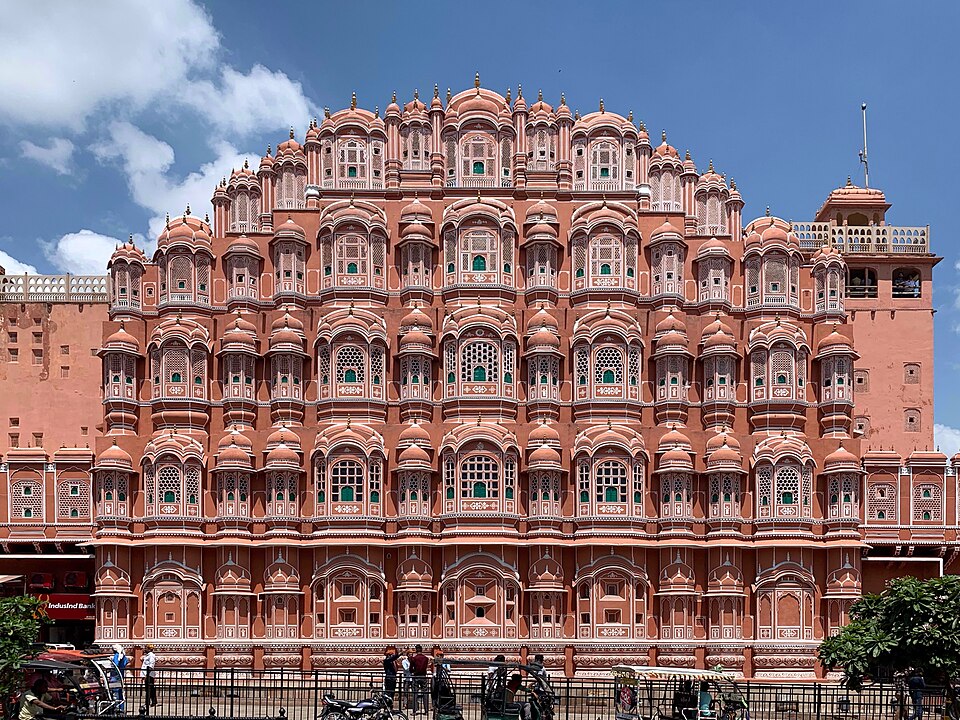
Correct — C, Jaipur. Lord Dalhousie was Governor-General from 1848 to 1856, and the Doctrine of Lapse was his instrument for absorbing dependent princely States. Its rule was that where a ruler under British paramountcy died without a natural heir, the State lapsed to the Company, because adoption of an heir required the sanction of the paramount power and that sanction would now be withheld. Applied over eight years it took in Satara in 1848, Jaitpur and Sambalpur in 1849, Baghat in 1850, Udaipur in 1852, Jhansi in 1853 and Nagpur in 1854 — a substantial share of the map, and the grievance that put Rani Lakshmibai of Jhansi and Nana Saheb, whose adoptive pension was stopped on the same principle, into the revolt of 1857. Three of the four options are on that list: Satara was the first and the model case, Sambalpur followed the year after, and Nagpur was the largest of them. Jaipur is the odd one out and was never annexed at all. It was a Rajput State of the Rajputana agency, in subsidiary alliance with the British since a treaty of 1818, and it remained a princely State with its own ruler right through the colonial period, acceding to the Indian Union in 1947 and being merged into the new State of Rajasthan in 1949 — with Jaipur city becoming that State's capital. Two things kept Rajputana out of Dalhousie's net: those States were allies under treaty rather than dependencies created by the Company, and their rulers had heirs. Note also that Dalhousie's annexation of Awadh in 1856, the one most resented of all, was NOT made under the Doctrine of Lapse but on the separate ground of alleged misgovernment.
- (a)Sambhalpur — Sambalpur, in what is now western Odisha, was annexed in 1849 — the second year of Dalhousie's application of the doctrine, alongside Jaitpur. Its raja died without a natural heir and the State passed to the Company. Its unfamiliarity compared with Jhansi or Nagpur is what makes it a plausible thing to strike out, and it is exactly why the option is here.
- (b)Satara — The first State taken under the doctrine, in 1848, and the case that established the pattern. Satara was the rump Maratha State created for the Chhatrapati's line after the Peshwa's defeat in 1818; when its ruler died leaving an adopted son, the Company refused to recognise the adoption and annexed it.
- (d)Nagpur — Annexed in 1854, the largest acquisition made under the doctrine — the Bhonsle Maratha kingdom of Nagpur, whose territory became the core of the Central Provinces. The famous auction of the Nagpur palace effects in Calcutta, jewels and all, became one of the most quoted grievances of the period.
Dalhousie's eight years were the most aggressive expansion in the Company's Indian history, and the Doctrine of Lapse was only one of three routes he used. States lapsed for want of a natural heir; States were annexed outright by conquest, as Punjab was in 1849 after the Second Anglo-Sikh War and Lower Burma after the Second Anglo-Burmese War of 1852; and States were taken for alleged misgovernment, which is how Awadh went in 1856. Alongside that came the abolition of titles and pensions — the Nawab of Carnatic's and the Raja of Tanjore's titles were extinguished, Nana Saheb's pension as the Peshwa's adopted heir was stopped, and the Mughal emperor's family was told it must leave the Red Fort. The same Governor-General also introduced the railway, the electric telegraph, a uniform postal rate and the Public Works Department, and gave effect to Wood's Despatch of 1854 on education, so his record is a genuine mixture of modernisation and expropriation.
The way to answer a Doctrine of Lapse question is to know what kind of State each option is. States annexed under the doctrine were dependent principalities whose rulers had been placed or confirmed by the Company itself — Satara, Jhansi and Nagpur are all Maratha successor States created or preserved after 1818. The Rajput States of Rajputana were in a different relationship: they signed subsidiary treaties in 1817-18, they were treated as allies, and none of them was annexed. So on any question of this kind, a Rajputana name — Jaipur, Jodhpur, Udaipur in Rajasthan, Bikaner — is the likeliest odd one out. Two cautions are worth holding. First, there is a second Udaipur in this story: the small State of Udaipur annexed in 1852 was in what is now Chhattisgarh, not the Mewar capital in Rajasthan, and confusing the two produces a wrong answer. Second, Awadh is the standard trap in the other direction — the most famous of Dalhousie's annexations, and not a lapse case at all.
- States annexed under the Doctrine of Lapse: Satara (1848), Jaitpur and Sambalpur (1849), Baghat (1850), Udaipur (1852), Jhansi (1853) and Nagpur (1854).
- Awadh was annexed in 1856 on the ground of misgovernment, not under the Doctrine of Lapse; Punjab was annexed in 1849 by conquest after the Second Anglo-Sikh War.
- Jaipur was a Rajput State in subsidiary alliance with the British from 1818, was never annexed, acceded to India in 1947 and was merged into Rajasthan in 1949, its city becoming the State capital.
- The doctrine fed directly into the revolt of 1857: Rani Lakshmibai of Jhansi and Nana Saheb, whose pension as the Peshwa's adopted heir was stopped, both became leaders of the rising.
- Dalhousie, Governor-General from 1848 to 1856, also introduced India's first railway line, the electric telegraph, a uniform half-anna postal rate, the Public Works Department, and gave effect to Wood's Despatch of 1854.
- Including Awadh among the lapses. It was annexed in 1856 for alleged misgovernment, which is a different ground entirely.
- Confusing the Udaipur annexed in 1852 — a small State in present-day Chhattisgarh — with Udaipur in Mewar, Rajasthan, which was never annexed.
- Assuming any princely State on a list must have been annexed. Rajputana's States held subsidiary treaties from 1817-18 and survived to 1947.
BPSC asks the doctrine as an odd-one-out with one non-annexed State among three real ones, which rewards a memorised list. UPSC prefers to make the same list do more work — ordering the annexations chronologically, or hiding the doctrine inside a pair-matching question about which Governor-General is associated with which measure — so the years, and not just the names, have to be held.
Consider the following princely States of the British rule in India: 1. Jhansi 2. Sambalpur 3. Satara The correct chronological order in which they were annexed by the British is
- (a) 1, 2, 3
- (b) 1, 3, 2
- (c) 3, 2, 1
- (d) 3, 1, 2
Answer(c) 3, 2, 1
The same three annexations, with the years doing the work instead of the names. Satara 1848, Sambalpur 1849, Jhansi 1853 — two of those States are options on the BPSC paper too, and a candidate who has the dates can answer both questions from one piece of memory.
Which one of the following pairs is not correctly matched?
- (a) Pitt's India Act — Warren Hastings
- (b) Doctrine of Lapse — Dalhousie
- (c) Vernacular Press Act — Curzon
- (d) Ilbert Bill — Ripon
Answer(c) Vernacular Press Act — Curzon
Places the doctrine in the wider grid of measure-to-Governor-General pairs that both commissions build questions from. Dalhousie and the Doctrine of Lapse is the pair that is correct here; the Vernacular Press Act belongs to Lytton, not Curzon.
Which of the following were the reasons for the failure of the Revolt of 1857? 1. The military superiority of the British 2. The rebels did not have a unified programme and ideology 3. There was a lack of support from all the sections of society Select the correct answer using the codes given below.
- (a) Only 1 and 2
- (b) Only 2 and 3
- (c) All of the above
- (d) None of the above
Answer(c) All of the above
The consequence of the annexations this question lists. The Doctrine of Lapse dispossessed the very rulers — Jhansi, Nagpur, the Peshwa's heir — whose grievances fed the revolt of 1857, and the 69th CCE asked why that revolt then failed.
- practice — not a real PYQ
Which one of the following States was annexed by Lord Dalhousie on the ground of alleged misgovernment rather than under the Doctrine of Lapse ?
- (a)Jhansi
- (b)Awadh
- (c)Nagpur
- (d)Satara
Answer(b) Awadh — annexed in 1856 on the ground that it was misgoverned, and the most resented of all Dalhousie's acquisitions. Jhansi, Nagpur and Satara were all taken under the Doctrine of Lapse.
- practice — not a real PYQ
The first State annexed under Lord Dalhousie's Doctrine of Lapse was
- (a)Jhansi
- (b)Sambalpur
- (c)Satara
- (d)Nagpur
Answer(c) Satara — annexed in 1848, the first year of Dalhousie's term, when the Company refused to recognise the adopted heir of its last ruler. Sambalpur followed in 1849, Jhansi in 1853 and Nagpur in 1854.