
What is the unit of measure of magnetic field ?
- (a)Ohm
- (b)Tesla
- (c)Ampere
- (d)Cobalt
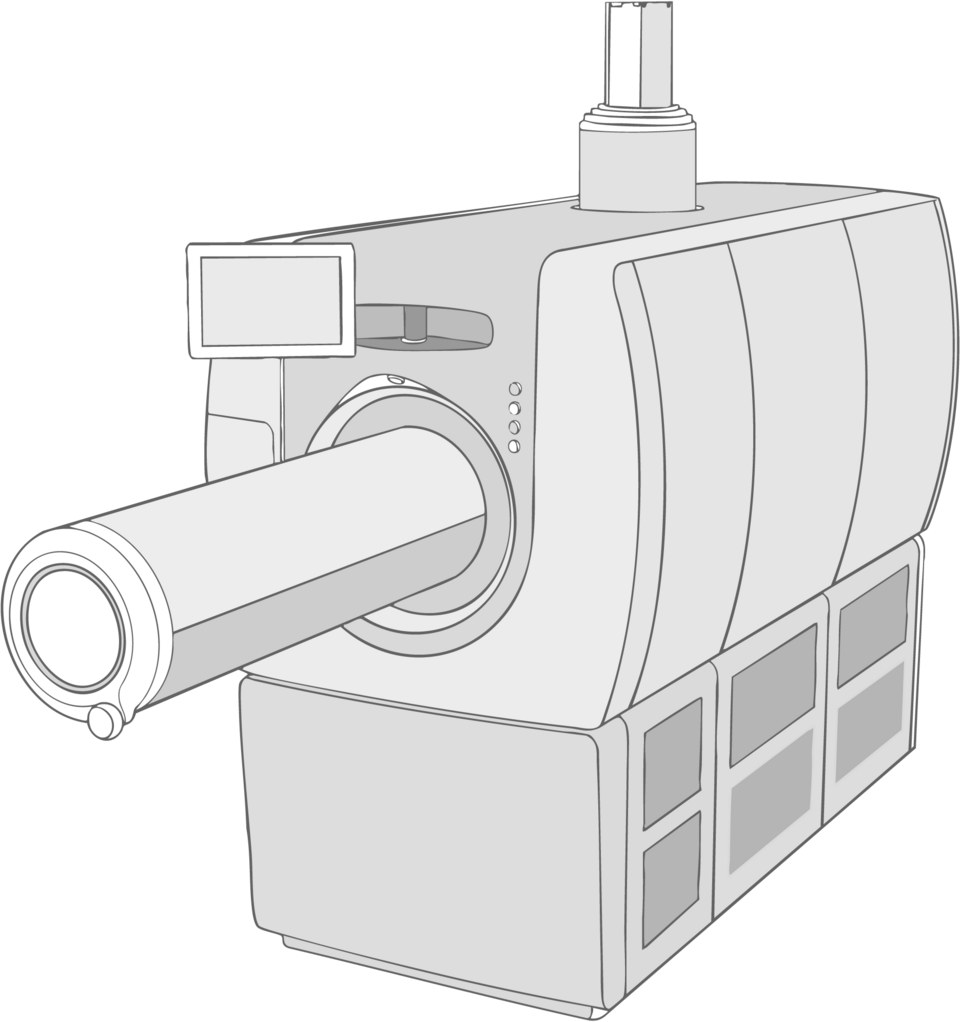
Correct — B, Tesla. The tesla, symbol T, is the SI unit of magnetic flux density — the quantity written B and loosely called the magnetic field. It is a derived unit: one tesla is one weber per square metre, and in base units one kilogram per ampere per second squared. The physical definition is the cleanest way to hold it. A particle carrying one coulomb of charge, moving perpendicular to a magnetic field of one tesla at one metre per second, experiences a force of one newton — which is the Lorentz force law read as a definition, and which is also why the tesla can be written as one newton per ampere-metre. The unit was announced at the General Conference on Weights and Measures in 1960 and named for Nikola Tesla, the Serbian-American electrical engineer, on a proposal from the Slovenian engineer France Avčin. A tesla is a very large field. The Earth's own magnetic field at the surface measures between about 25,000 and 65,000 nanotesla — that is, 25 to 65 microtesla, roughly a twenty-thousandth of a tesla — while a clinical MRI scanner runs at 1.5 or 3 tesla, which is where the unit is met in everyday life. In the older CGS system the same quantity is measured in gauss, and one tesla equals ten thousand gauss, so a fridge magnet at a few milliteslas is a few tens of gauss. One distinction is worth making because it explains the third option: physics uses two different 'magnetic field' quantities. The flux density B is measured in tesla; the magnetising field H is measured in amperes per metre, not in amperes. And the total magnetic flux through a surface is measured in webers. A note on this paper's bilingual text: the facing हिन्दी page prints चुम्बकीय बल — magnetic force — where the English column says magnetic field. The answer does not move, because the newton, which would be the unit of a force, is not among the options, and of the four printed only the tesla is a magnetic unit at all.
- (a)Ohm — The ohm is the unit of electrical resistance — one ohm is one volt per ampere — and it is named after Georg Simon Ohm. It belongs to the same broad topic of electricity and magnetism, which is the whole of its plausibility here; it has nothing to do with fields.
- (c)Ampere — The genuinely tempting wrong answer, because it is close to being right about a different quantity. The ampere is the SI base unit of electric current. The magnetising field H is measured in amperes per metre — but that is per metre, and the bare ampere measures current, not field. A candidate who half-remembers 'ampere per metre' and drops the metre lands here.
- (d)Cobalt — Not a unit of anything. Cobalt is a chemical element, atomic number 27, and it is on the list because it is magnetic — one of the three elements that are ferromagnetic at ordinary temperatures, alongside iron and nickel. The option tests whether the candidate is reading the question or matching on the word 'magnetic'.
Magnetism is described by three different quantities, and most confusion about its units comes from mixing them up. Magnetic flux density B — what a compass needle or a moving charge actually responds to — is measured in tesla. Magnetic flux, the total amount of that field passing through a given surface, is measured in webers, and one tesla is simply one weber spread over one square metre. The magnetising field H, which describes the field a current produces before the medium's own response is accounted for, is measured in amperes per metre. Only the first of these is what an exam means by 'magnetic field'. The SI itself is built from seven base units — metre, kilogram, second, ampere, kelvin, mole and candela — and everything else, including the tesla, the ohm, the newton and the volt, is derived from them. Twenty-two derived units carry special names, and almost all of those names honour a scientist: ampere for Ampère, ohm for Ohm, tesla for Nikola Tesla, weber for Wilhelm Weber, henry for Joseph Henry.
A one-line unit question is answered by classifying the options rather than by recalling the answer. Three of the four here can be placed instantly: the ohm measures resistance, the ampere measures current, and cobalt is not a unit at all but an element. That leaves the tesla, and the elimination is complete before any physics has been done. The habit worth building is a two-column list of quantity against unit for the electricity-and-magnetism block, because state papers ask it every year in one direction or the other — sometimes the unit for a named quantity, sometimes the quantity for a named unit, and sometimes, as BPSC did on the December 2024 paper, the dimensional equivalent of a unit. Keep at least these: current in amperes, charge in coulombs, potential difference in volts, resistance in ohms, capacitance in farads, inductance in henries, magnetic flux in webers, magnetic flux density in tesla, and power in watts. Attach one magnitude to each so the numbers stay real — for the tesla, that the Earth's field is a few tens of microtesla and an MRI magnet is a few tesla.
- The tesla (T) is the SI unit of magnetic flux density; one tesla equals one weber per square metre, and in SI base units one kilogram per ampere-second-squared
- By the Lorentz force law, a charge of one coulomb moving at one metre per second perpendicular to a field of one tesla feels a force of one newton — so one tesla is also one newton per ampere-metre
- The unit was announced at the General Conference on Weights and Measures in 1960 and named after Nikola Tesla, on the proposal of France Avčin
- The Earth's magnetic field at the surface is about 25,000 to 65,000 nanotesla, i.e. 25 to 65 microtesla; clinical MRI scanners operate at 1.5 to 3 tesla
- In the CGS system magnetic flux density is measured in gauss, and one tesla equals 10,000 gauss
- Different quantity, different unit: magnetic flux is measured in webers and the magnetising field H in amperes per metre, while resistance is measured in ohms and current in amperes
- Answering 'ampere' because the magnetising field H is measured in amperes per metre — the bare ampere is the unit of current
- Treating the weber and the tesla as interchangeable; the weber is total flux, the tesla is flux per unit area
- Being pulled by 'cobalt' because it is magnetic — an element is a substance, not a unit
BPSC asks the unit itself and sits it beside two other electrical units and one element, so the item is really a reading test. The December 2024 paper shows the harder version the Commission also likes — asking what the tesla is equivalent to in newtons, amperes and metres, which cannot be answered by recognition alone. UPSC prefers to match a column of quantities against a column of units, or to test the physics of the field rather than its unit.
Match List I (Quantity) with List II (Units) and select the correct answer using the codes given below the Lists: List I I. High speed II. Wavelength III. Pressure IV. Energy List II A) Mach B) Angstrom C) Pascal D) Joule Codes:
- (a) I-B, II-A, III-C, IV-D
- (b) I-A, II-B, III-D, IV-C
- (c) I-A, II-B, III-C, IV-D
- (d) I-B, II-A, III-D, IV-C
Answer(c) I-A, II-B, III-C, IV-D
The same quantity-to-unit skill in UPSC's preferred format — four pairings instead of one, so a single confusion costs the mark. The defence is identical: keep a two-column list of physical quantities against their units.
Electrically charged particles from space travelling at speeds of several hundred km/sec can severely harm living beings if they reach the surface of the Earth. What prevents them from reaching the surface of the Earth ?
- (a) The Earth's magnetic field diverts them towards its poles
- (b) Ozone layer around the Earth reflects them back to outer space
- (c) Moisture in the upper layers of atmosphere prevents them from reaching the surface of the Earth
- (d) None of the statements (a), (b) and (c) given above is correct
Answer(a) The Earth's magnetic field diverts them towards its poles
The physics behind the unit. What the tesla measures is precisely the field that bends a moving charge — the Lorentz force in the definition of the unit is the same force that steers solar-wind particles to the poles.
Which of the following is equivalent to tesla ?
- (a) Newton per Coulomb
- (b) Ampere per Newton
- (c) Newton per ampere meter
- (d) Newton per ampere-second
Answer(c) Newton per ampere meter
The 70th CCE paper of December 2024 asked about the same unit at one level deeper — not what the tesla measures but what it decomposes into. Newton per ampere-metre is exactly the Lorentz-force reading of the definition used on this card.
Which of the following is a non-contact force ?
- (a) Magnetic force
- (b) Frictional force
- (c) Impact force
- (d) None of these
Answer(a) Magnetic force
Same block, asked conceptually: a magnetic force acts at a distance because it is mediated by a field, and the strength of that field is what the tesla puts a number on.
- practice — not a real PYQ
One tesla is equal to
- (a)One weber per square metre
- (b)One weber per metre
- (c)One ampere per metre
- (d)One newton per coulomb
Answer(a) One weber per square metre — the weber measures total magnetic flux, and spreading one weber over one square metre gives a flux density of one tesla; newton per coulomb is the unit of electric field.
- practice — not a real PYQ
The magnetic field of the Earth at its surface is of the order of
- (a)A few tesla
- (b)A few millitesla
- (c)A few tens of microtesla
- (d)A few tens of nanotesla
Answer(c) A few tens of microtesla — measured values run from about 25 to 65 microtesla, that is 25,000 to 65,000 nanotesla.