
 View answer copy →
Kanishak KatariaAIR 1CSE 2018
Answered a very similar question
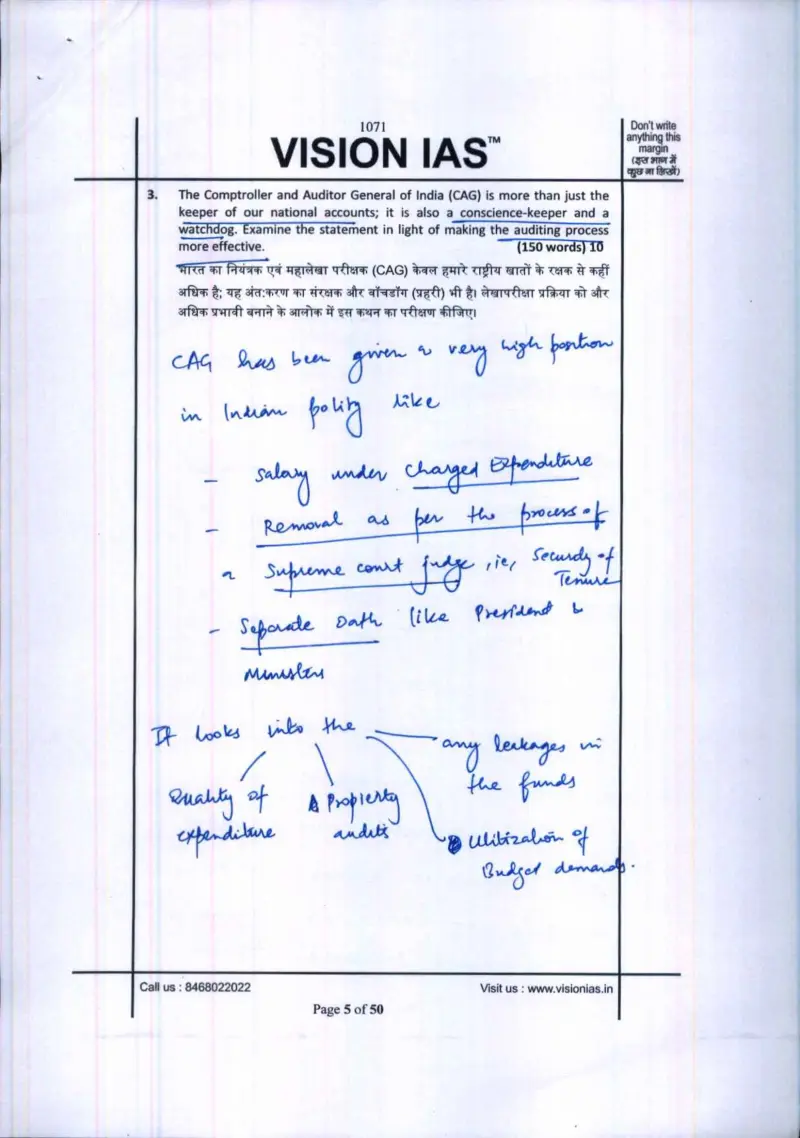
Their question: “CAG as conscience-keeper and watchdog; making auditing more effective”
The topper's account of the CAG's safeguards, powers and how to make auditing more effective maps directly onto the PYQ on the CAG's vital role reflected in appointment and powers.
Key learnings from their answer
- ›Constitutional recall is precise and clustered to the demand, not name-dropped: Art 280/275/131 for the Finance Commission, Art 50/13/142/72 for the independent judiciary, and Art 16(4A)/326/39 for the Constitution-synthesis answer. -> When a polity question has clear constitutional hooks, thread the exact relevant articles into the body so the answer reads as legally literate, not bookish.
- ›Every answer runs the same disciplined skeleton: a 1-2 line context/definition intro, then boxed ALL-CAPS sub-headings (SUCCESSES/ISSUES/CHALLENGES/MEASURES/WAY FORWARD) with crisp bullets, closing on a one-line verdict; the judiciary answer (p.28) even branches a boxed 'CHALLENGES' via arrows into 'Judicial Overreach', 'overlap of powers' and 'Executive overreach by Judiciary'. -> Pre-fix a repeatable structural template so under time pressure you produce a scannable, evaluator-friendly answer every time without re-inventing layout.
What they cited: CAG safeguards: salary under Charged Expenditure on Consolidated Fund of India, removal like a Supreme Court judge, security of tenure; RAW exempt from audit on national-security grounds; post-mortem/recommendatory nature of audit (Q3)