
'Rashtriya Vigyan Puraskar, 2024' under the category of 'Vigyan Ratna Award' was given to
- (a)Prof. Govindarajan Padmanabhan
- (b)Dr. Anandharamakrishnan C.
- (c)Prof. Umesh Varshney
- (d)Prof. Jayant Bhalchandra Udgaonkar
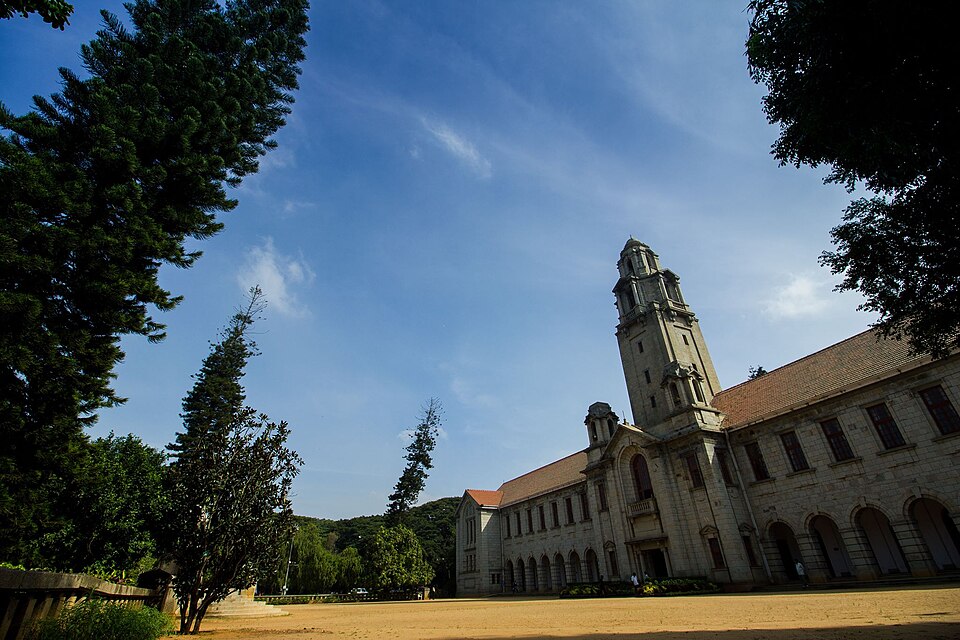
Correct — A, Prof. Govindarajan Padmanabhan. The Rashtriya Vigyan Puraskar was instituted in 2024 as a single consolidated national science award replacing a long list of earlier ministry prizes, and its highest tier, the Vigyan Ratna, went in that first year to Prof. Govindarajan Padmanabhan of the Indian Institute of Science, Bengaluru, in the field of biological sciences. He is a biochemist known for work on the malaria parasite's haem biosynthesis and on cytochrome P450, and for building molecular biology capacity in India over a career spanning decades. The other three names on this list are real 2024 awardees, but all of them were honoured in the Vigyan Shri tier, not the Vigyan Ratna.
- (b)Dr. Anandharamakrishnan C. — Dr. Anandharamakrishnan C. of CSIR–National Institute for Interdisciplinary Science and Technology, Thiruvananthapuram, received a Vigyan Shri in agricultural science in 2024, one tier below the Vigyan Ratna.
- (c)Prof. Umesh Varshney — Prof. Umesh Varshney, also of the Indian Institute of Science, received a Vigyan Shri in biological sciences in 2024 — the same institution and the same field as the Vigyan Ratna awardee, which is what makes this option the hardest of the three to reject.
- (d)Prof. Jayant Bhalchandra Udgaonkar — Prof. Jayant Bhalchandra Udgaonkar of IISER Pune received a Vigyan Shri in biological sciences in 2024. Like the other two, a genuine awardee placed in the wrong tier.
The Rashtriya Vigyan Puraskar was created in 2024 to consolidate scores of separate science awards into one national framework with four categories: Vigyan Ratna for lifetime achievement, Vigyan Shri for distinguished contribution, Vigyan Yuva–Shanti Swarup Bhatnagar for young scientists, and Vigyan Team for collaborative work. Awards are announced on National Science Day, 28 February, and conferred later in the year. The awards carry a citation and a medal rather than prize money.
Award questions are set as tier traps rather than name traps. Every option here is a real awardee of the same year, so recognising a name proves nothing; what decides the item is which rung of the ladder each name sits on. The one usable discriminator is that the Vigyan Ratna is a lifetime-achievement honour, so it goes to the senior-most figure on any such list — and Padmanabhan, an emeritus professor whose career runs back to the 1970s, is that figure. The presence of two IISc biological-sciences names on the same list, one in each tier, is exactly the confusion the examiner is exploiting.
- The Rashtriya Vigyan Puraskar was instituted in 2024 and replaced a large number of earlier science awards.
- It has four categories: Vigyan Ratna, Vigyan Shri, Vigyan Yuva–Shanti Swarup Bhatnagar and Vigyan Team.
- The 2024 Vigyan Ratna went to Prof. Govindarajan Padmanabhan, a biochemist at the Indian Institute of Science.
- Awardees are announced on National Science Day, 28 February.
- The awards carry a medal and a citation, not a cash component.
- Rejecting an option because the name is unfamiliar, when every option here is a real awardee.
- Mixing the Vigyan Ratna with the Vigyan Shri tier of the same year's list.
- Assuming the top science award goes to a currently serving institutional head rather than a lifetime figure.
Asked as a single-name recall item where all four options are genuine awardees of the same year and only the tier separates them.
No directly related past PYQ was found.
- practice — not a real PYQ
Under the Rashtriya Vigyan Puraskar, which category recognises young scientists?
- (a)Vigyan Ratna
- (b)Vigyan Shri
- (c)Vigyan Yuva–Shanti Swarup Bhatnagar
- (d)Vigyan Team
Answer(c) Vigyan Yuva–Shanti Swarup Bhatnagar — the young-scientist tier of the consolidated award.
- practice — not a real PYQ
On which day are the Rashtriya Vigyan Puraskar awardees announced each year?
- (a)National Science Day, 28 February
- (b)National Technology Day, 11 May
- (c)National Space Day, 23 August
- (d)Republic Day, 26 January
Answer(a) National Science Day, 28 February — which commemorates the discovery of the Raman effect.