
Which one among the following biotechnologies is applied to manufacture pharmaceutical products such as insulin, antibiotics and vaccines?
- (a)White Biotechnology
- (b)Red Biotechnology
- (c)Green Biotechnology
- (d)Blue Biotechnology
Correct — B, Red Biotechnology. Biotechnology is conventionally colour-coded by field of application, and red is the medical and pharmaceutical branch. It covers the manufacture of therapeutic proteins in engineered cells — human insulin from recombinant bacteria and yeast, growth hormone, clotting factors and monoclonal antibodies — along with antibiotic production, vaccine development including recombinant and viral-vector platforms, gene therapy and molecular diagnostics. The colour is a reminder of blood and medicine, and insulin, antibiotics and vaccines are all squarely inside it.
- (a)White Biotechnology — White biotechnology, also called industrial biotechnology, applies enzymes and micro-organisms to manufacturing — enzymes for detergents, bioplastics, biofuels and cleaner chemical processes. Its products are industrial, not therapeutic.
- (c)Green Biotechnology — Green biotechnology is the agricultural branch: transgenic crops, tissue culture, biofertilisers and biopesticides. Bt cotton is its best known Indian example.
- (d)Blue Biotechnology — Blue biotechnology draws on marine and aquatic organisms — algal products, marine enzymes, aquaculture improvement and compounds from deep-sea micro-organisms.
The colour scheme is a teaching convention rather than a legal classification, but it is used consistently: red for health and pharmaceuticals, green for agriculture, white for industry, blue for marine and aquatic work, and grey for environmental applications such as bioremediation. What unites all of them is recombinant DNA technology — cutting a gene out with restriction enzymes, joining it into a vector with ligase, and expressing it in a host cell that then manufactures the product.
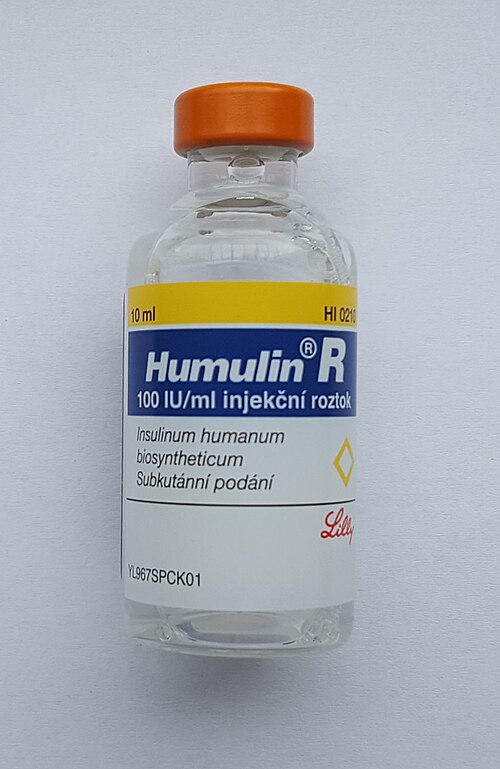
Insulin is the anchor example. Before 1982 diabetics used insulin extracted from pig and cattle pancreas; human insulin made by engineered Escherichia coli was the first recombinant drug approved anywhere, and it is the standard illustration of red biotechnology in every syllabus. If the colour code has slipped, work from the products named in the stem — all three are things a hospital dispenses, so the branch must be the medical one. India's Department of Biotechnology, set up in 1986 under the Ministry of Science and Technology, funds work across all of these branches.
- Red biotechnology covers medicine and pharmaceuticals: insulin, antibiotics, vaccines, gene therapy and diagnostics.
- Green covers agriculture, white covers industrial processes, blue covers marine work and grey covers environmental applications.
- Recombinant human insulin, approved in 1982, was the first genetically engineered drug on the market.
- Bt cotton, the only transgenic crop approved for commercial cultivation in India, belongs to green biotechnology.
- India's Department of Biotechnology was established in 1986 under the Ministry of Science and Technology.
- Reading 'red' as a reference to blood cells rather than to the medical field as a whole.
- Placing vaccines under green biotechnology because they are biological products.
- Assuming the colour code is a statutory classification rather than a teaching convention.
A terminology item. The four colours are offered together and the products in the stem point unambiguously at one branch.
An antibiotic is not useful against a virus whereas a vaccine is. Which one of the following is the most appropriate reason for this?
- (a) An antibiotic can break RNA only, whereas virus has DNA.
- (b) An antibiotic is a carbohydrate in its chemical nature, whereas a vaccine is a protein which works well to kill a virus.
- (c) Only a vaccine can break the genetic material of a virus.
- (d) A virus does not use biochemical pathways which can be blocked by an antibiotic. But a vaccine can boost an immune system to fight the virus.
Answer(d) A virus does not use biochemical pathways which can be blocked by an antibiotic. But a vaccine can boost an immune system to fight the virus.
Two of the three products named here, examined for how they work. Antibiotics and vaccines are both outputs of the medical branch of biotechnology, and knowing what each does is what makes the branch recognisable.
- practice — not a real PYQ
The use of genetically modified crops such as Bt cotton falls under which branch of biotechnology?
- (a)Red
- (b)Green
- (c)White
- (d)Blue
Answer(b) Green — the agricultural branch of the colour code.
- practice — not a real PYQ
The first recombinant DNA product to be approved as a human medicine was
- (a)penicillin
- (b)human insulin
- (c)aspirin
- (d)the oral polio vaccine
Answer(b) human insulin — approved in 1982 and made in engineered bacteria.