
Which one among the following does NOT have any linkage with the phenomenon of electromagnetic induction?
- (a)Electric transformer
- (b)Induction cooker
- (c)Galvanometer
- (d)Electron microscope
Correct — D, Electron microscope. Electromagnetic induction is the production of an electromotive force by a changing magnetic flux, and the first three devices all use it. A transformer is the textbook case: alternating current in the primary produces a changing flux that induces a voltage in the secondary. An induction cooker drives a high-frequency alternating current through a coil, and the changing flux induces eddy currents in the iron base of the pan, which heat it. A moving-coil galvanometer is bound up with induction on both sides — it is the standard detector in Faraday's own experiments, and its coil is wound on a metal former in which induced eddy currents provide the damping that makes the needle settle. An electron microscope uses none of that: electrons are accelerated by a static electric field and focused by the static magnetic field of a lens coil, and a steady field induces nothing.
- (a)Electric transformer — A transformer is the purest application of the law. It has no moving parts, and works only because the flux through the secondary is changing; feed it direct current and it stops working.
- (b)Induction cooker — An induction cooker names the phenomenon in its own title. The coil under the hob sets up a rapidly changing magnetic field, which induces eddy currents in a ferromagnetic pan base and heats it directly.
- (c)Galvanometer — A galvanometer's deflecting torque comes from the force on a current-carrying coil, so its pointer mechanism is a motor effect. It is still tied to induction, because a galvanometer is the instrument that detects induced currents in Faraday's experiments, and because eddy currents induced in its metal former damp the swing.
Faraday's law says the induced electromotive force in a circuit equals the rate of change of magnetic flux through it, and Lenz's law fixes the sign so that the induced effect opposes the change producing it. Two families of device follow: those that induce a voltage in a second circuit, such as transformers and generators, and those that induce circulating eddy currents in a conducting body, such as induction cookers, induction furnaces, eddy-current brakes and metal detectors.
The word 'induction' is a false friend here, and the item exploits it. Electron microscopes use electromagnetic lenses, and the name tempts candidates into ticking them as an induction device. The lens is simply a coil producing a shaped, steady magnetic field that bends electron paths, exactly as a glass lens bends light — no changing flux, no induced electromotive force. The galvanometer is the option that repays care: its own deflection is a motor effect rather than an induction effect, but its damping is genuinely induced, and it is the classroom detector for induced current, so it does have a linkage with the phenomenon. The electron microscope has none.
- Faraday's law: a changing magnetic flux through a circuit induces an electromotive force proportional to the rate of change.
- A transformer changes alternating voltage by mutual induction between two coils on a common core; it does not work on direct current.
- An induction cooker heats a ferromagnetic pan by eddy currents induced in its base, so the hob itself stays comparatively cool.
- A moving-coil galvanometer deflects by the motor effect, and its swing is damped by eddy currents induced in its metal former.
- An electron microscope focuses an electron beam with static magnetic lenses; its resolution is far better than an optical microscope's because the electron wavelength is far shorter.
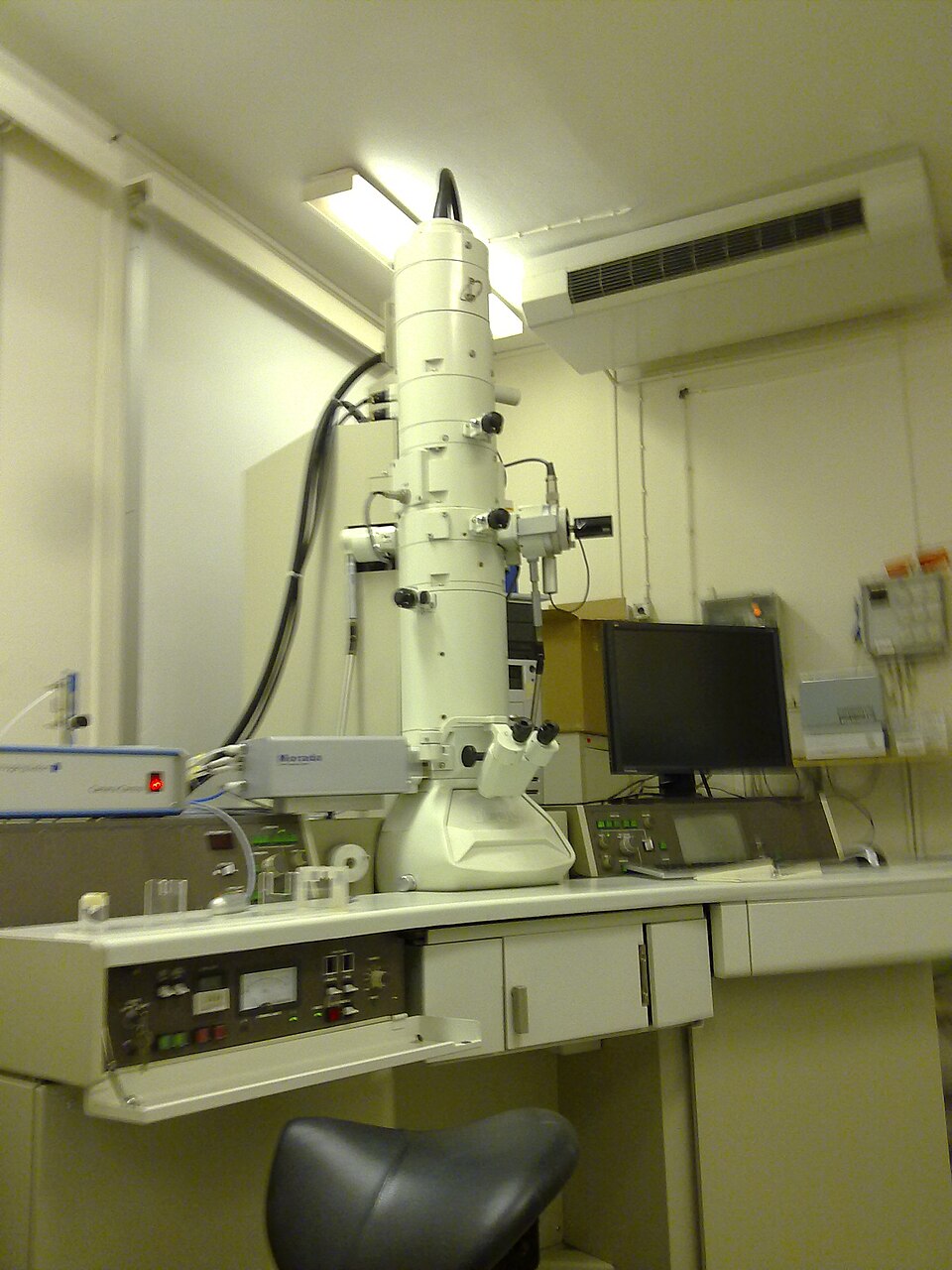
- Ticking the electron microscope as an induction device because its lenses are called electromagnetic.
- Assuming a transformer works on direct current.
- Forgetting that a galvanometer's damping, though not its deflection, is an induction effect.
An odd-one-out item built on a word that appears in more than one sense. Three devices genuinely involve changing flux; the fourth only borrows the vocabulary.
Which one of the following devices changes low voltage alternating current to high voltage alternating current and vice versa ?
- (a) Generator
- (b) Motor
- (c) Transformer
- (d) Vibrator
Answer(c) Transformer
The same device identified from its function rather than its physics. Recognising that only the transformer changes alternating voltage is the first half of the reasoning here; the second half is knowing why, which is mutual induction between two coils.
- practice — not a real PYQ
An induction cooker will not heat a vessel made of which one of the following?
- (a)Cast iron
- (b)Magnetic stainless steel
- (c)Glass
- (d)Enamelled steel
Answer(c) Glass — it is neither conducting nor ferromagnetic, so no eddy currents can be induced in it.
- practice — not a real PYQ
A transformer cannot be used to step up which one of the following?
- (a)Alternating voltage
- (b)Direct voltage
- (c)Alternating current
- (d)Audio-frequency signals
Answer(b) Direct voltage — steady current produces no changing flux, so nothing is induced in the secondary.