
Match List – I of social reformers with List – II of their societies and choose answer from the code given below : List – I List – II a. Brahma Samaj i. Vishnu Shastri Pandit b. Ramkrishna Mission ii. Swami Vivekananda c. Servants of India Society iii. Raja Rammohan Roy d. Vidhwa Vivah Samaj iv. Gopal Krishna Gokhale Code : a b c d
- (a)iii ii i iv
- (b)iii i ii iv
- (c)iii ii iv i
- (d)None of the above
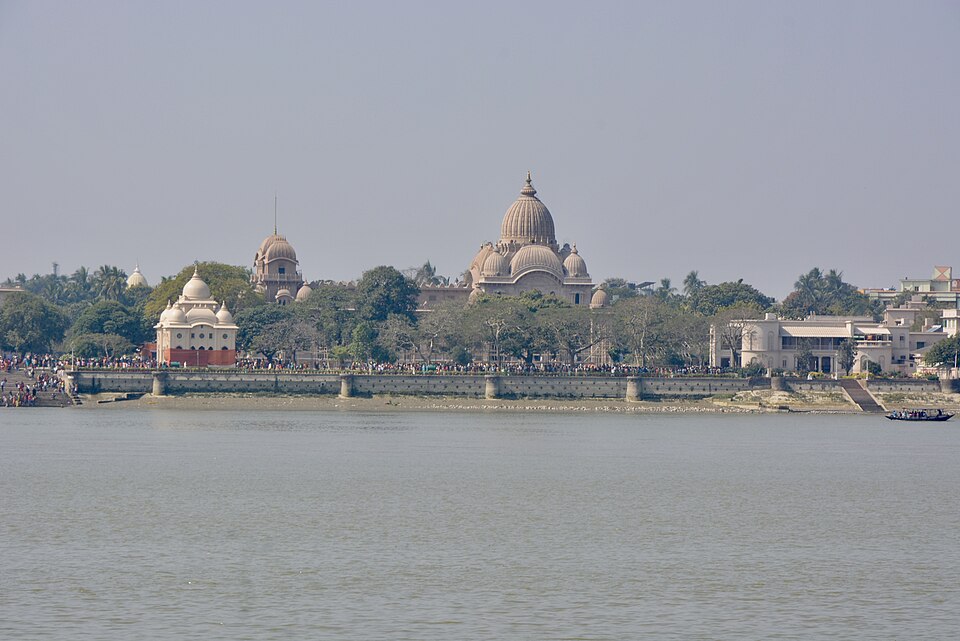
Correct — C, iii ii iv i. Note first that the lists are the other way round from the usual arrangement: List-I holds the organisations and List-II the people, despite the stem calling List-I the reformers. Work with what is printed. Three of the four pairings are beyond argument. The Brahmo Samaj grew out of the Brahmo Sabha founded by Raja Rammohan Roy at Calcutta in 1828, so a matches (iii). The Ramakrishna Mission was founded by Swami Vivekananda, Ramakrishna's chief disciple, on 1 May 1897, and is headquartered at Belur Math in West Bengal — so b matches (ii). The Servants of India Society was formed on 12 June 1905 by Gopal Krishna Gokhale with its headquarters at Pune, to train men who would give their lives to public service in the manner of a secular religious order — so c matches (iv). Those three alone fix the code, because only one option opens iii, ii and continues with iv. The remaining pairing follows by elimination and is independently right: the Vidhwa Vivah Samaj, the widow remarriage association, belongs to Vishnu Shastri Pandit, one of the leading advocates of women's causes in western India in that generation and a figure the reform circles around the Rukhmabai case knew well. The sequence is therefore iii, ii, iv, i — code (c).
- (a)iii ii i iv — Gets the first two right and then swaps the last two, handing the Servants of India Society to Vishnu Shastri Pandit and the Vidhwa Vivah Samaj to Gopal Krishna Gokhale. It is the closest wrong option, and the one a candidate reaches for after fixing the two famous pairings and then guessing between the remaining names. Gokhale's society was a national political and service organisation founded in 1905, not a widow-remarriage association.
- (b)iii i ii iv — Correct only on the first pairing. It gives the Ramakrishna Mission to Vishnu Shastri Pandit and the Servants of India Society to Swami Vivekananda — the second of which inverts the whole point of the list, since Vivekananda's organisation is the monastic one and Gokhale's is the secular public-service one.
- (d)None of the above — The escape is available only if all three codes fail, and code (c) reproduces every pairing correctly. The temptation towards it comes from the stem's own wording, which calls List-I 'social reformers' when List-I in fact holds the societies — but a mislabelled heading is not a defect in the match, because the entries themselves are unambiguous.
The socio-religious reform movements of the nineteenth century split along two axes worth holding separately. The first is region: Bengal produced the Brahmo Samaj and the Ramakrishna movement, western India the Prarthana Samaj, the Satyashodhak Samaj and the widow-remarriage associations, north India the Arya Samaj, and south India the Self-Respect Movement of the next century. The second is method. Reformist bodies worked within their tradition and appealed to reason and to reinterpreted scripture — the Brahmo Samaj rejected idolatry and the need for a priestly class to interpret texts. Revivalist bodies appealed instead to a purified past. And a third strand, of which the Servants of India Society is the clearest example, was not religious at all: Gokhale's society trained full-time public workers on subsistence allowances, effectively a secular order, and it is the ancestor of the modern idea of professional public service. The Ramakrishna Mission sits between the strands, propagating Vedanta while making organised social service — schools, hospitals, relief work — its practical expression, on the principle of karma yoga.
Matching questions of this kind are solved by anchoring, not by working every pair. Two anchors here are common knowledge — Rammohan Roy with the Brahmo Samaj and Vivekananda with the Ramakrishna Mission — and both appear in the same positions in all three codes, so they eliminate nothing on their own. The discriminator is the third position, and that is the pairing to reason about: the Servants of India Society is a political and public-service body of 1905 and Gokhale is the only political figure in List-II, so c must be (iv). That single decision selects code (c) outright. The general lesson is to look for the option position where the three codes actually differ and spend your reasoning there. It is also worth noticing the stem's mislabelling — List-I holds societies, not reformers — because a candidate who tries to force the printed description on to the printed content will lose time. Read what is in the columns, not what the heading claims is in them.
- Raja Rammohan Roy founded the Brahmo Sabha at Calcutta in 1828, the body from which the Brahmo Samaj grew; it opposed idolatry and denied the need for a priestly class to interpret religious texts.
- The Ramakrishna Mission was founded by Swami Vivekananda, Ramakrishna's chief disciple, on 1 May 1897, and is headquartered at Belur Math in West Bengal; it works on the principle of karma yoga.
- The Servants of India Society was formed on 12 June 1905 by Gopal Krishna Gokhale with its headquarters at Pune, to train full-time workers for public service.
- The Vidhwa Vivah Samaj, the widow remarriage association of western India, is associated with Vishnu Shastri Pandit, a leading advocate of women's causes in the region in that generation.
- The stem labels List-I 'social reformers', but List-I in fact contains the organisations and List-II the people — a printed inconsistency that does not affect the matching.
- Reading the headings instead of the columns. The stem calls List-I 'social reformers' when it actually holds the societies; the entries are unambiguous even though the label is not.
- Assuming the two famous pairings will decide the code. Rammohan Roy and Vivekananda occupy the same positions in every option here — the question turns entirely on the third pairing.
- Confusing the Servants of India Society with a religious order. Gokhale's body was secular, political and dedicated to training public workers, founded in 1905, not a reform samaj of the earlier generation.
BPSC keeps a standing stock of society-and-founder pairs and asks them as match-the-pairs in almost every edition, including the less famous entries such as the Vidhwa Vivah Samaj, which is where the question is actually decided. UPSC prefers to interrogate one organisation at a time — which statements about the Brahmo Samaj are correct, or who the distinguished members of the Servants of India Society were.
M.C. Setalvad, B.N. Rao and Alladi Krishnaswamy Iyer were distinguished members of the
- (a) Swaraj Party
- (b) All India National Liberal Federation
- (c) Madras Labour Union
- (d) Servants of India Society
Answer(d) Servants of India Society
Takes up the very organisation this question is decided on, and shows what it was for — a body whose members went on to become India's first Attorney-General, the Constitutional Adviser to the Constituent Assembly and one of its leading drafters.
Which of the following statements is/are correct regarding Brahmo Samaj? 1. It opposed idolatry. 2. It denied the need for a priestly class for interpreting the religious texts. 3. It popularized the doctrine that the Vedas are infallible. Select the correct answer using the codes given below:
- (a) 1 only
- (b) 1 and 2 only
- (c) 3 only
- (d) 1, 2 and 3
Answer(b) 1 and 2 only
Goes past the founder's name to what the Brahmo Samaj actually held — against idolatry and against a priestly monopoly on scripture, but not for Vedic infallibility, which is the Arya Samaj's position. That is the level BPSC escalates to once the founder pairing is too easy.
- practice — not a real PYQ
The Servants of India Society was founded in 1905 by
- (a)Bal Gangadhar Tilak
- (b)Gopal Krishna Gokhale
- (c)Mahadev Govind Ranade
- (d)Dadabhai Naoroji
Answer(b) Gopal Krishna Gokhale — formed on 12 June 1905 with its headquarters at Pune, to train full-time workers for public service. Ranade had earlier founded the Prarthana Samaj and the Poona Sarvajanik Sabha.
- practice — not a real PYQ
The Ramakrishna Mission, founded on 1 May 1897, has its headquarters at
- (a)Dakshineswar
- (b)Belur Math
- (c)Kamarpukur
- (d)Cossipore
Answer(b) Belur Math, on the Hooghly at Howrah in West Bengal. Dakshineswar is the temple where Ramakrishna served, Kamarpukur his birthplace, and Cossipore the garden house where he spent his last months.