
Who was the first Muslim President of Indian National Congress ?
- (a)Maulana Azad
- (b)Hasrat Mohani
- (c)Badruddin Taiyabji
- (d)More than one of the above
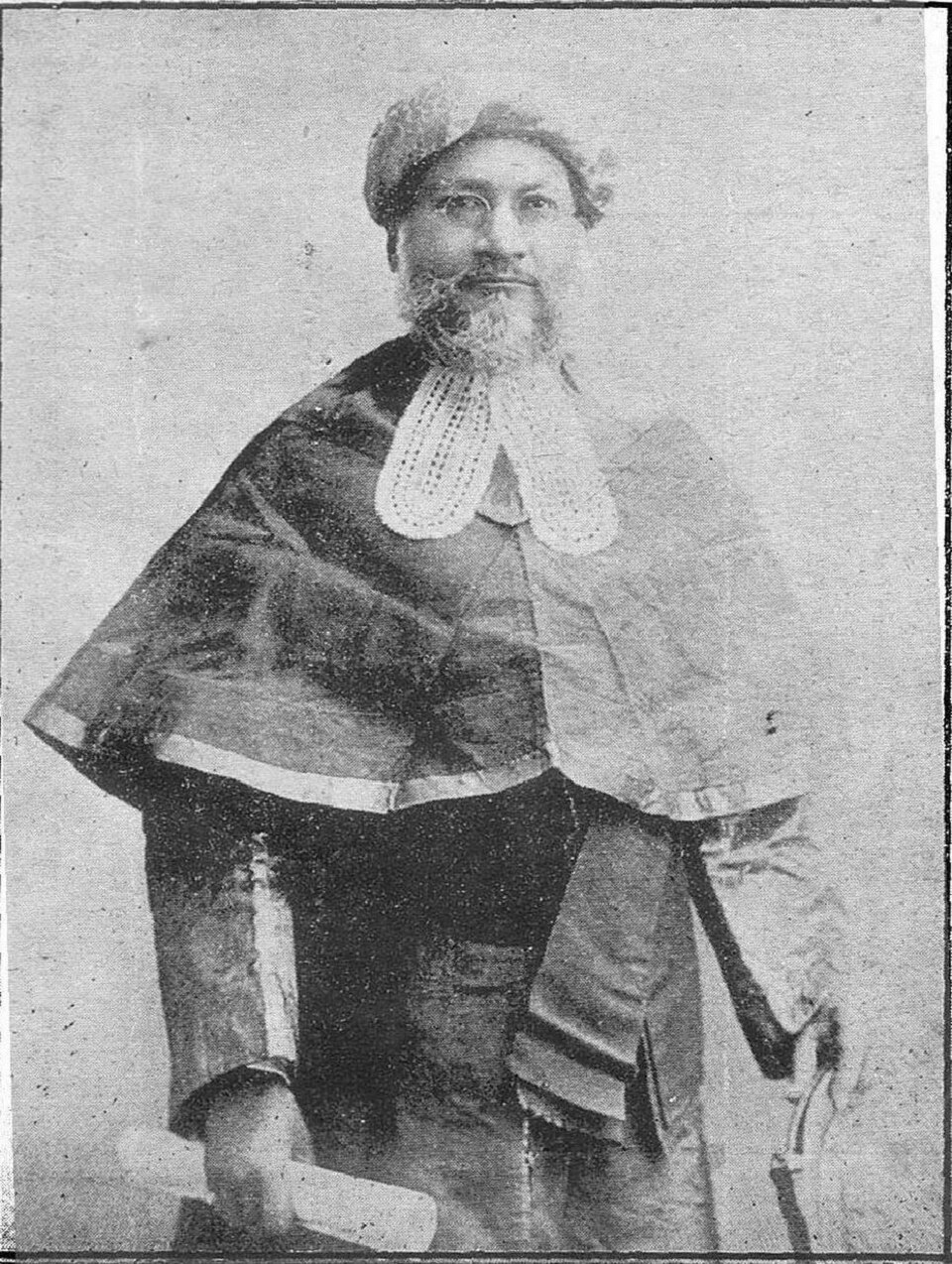
Correct — C, Badruddin Taiyabji. Badruddin Tyabji (10 October 1844 – 19 August 1906) presided over the third session of the Indian National Congress, held at Madras in December 1887, and he was the first Muslim to hold the office. The Congress was only two years old: W. C. Bonnerjee had presided at Bombay in December 1885, Dadabhai Naoroji at Calcutta in 1886, Tyabji at Madras in 1887, and George Yule — the first Englishman in the chair — at Allahabad in 1888. Tyabji was not a late recruit either; he was among the founding members. He was a Bombay lawyer of the Sulaimani Bohra community and the first Indian to practise as a barrister of the Bombay High Court, was raised to that court's bench in June 1895 as the first Muslim and the third Indian judge on it, and in 1902 became the first Indian to occupy the office of Chief Justice of the Bombay High Court. He had founded the Anjuman-i-Islam in Bombay in 1874 to open modern education to Muslims. His presidential address at Madras in 1887 is the reason his name is attached to the question rather than merely to the list — speaking as the representative of that Anjuman, he told the session that there was nothing in the position of India's communities, 'be they Hindus, Musalmans, Parsis, or Christians', that should make the leaders of one stand aloof from the others in seeking reforms for the common benefit. Because only one person can be first, and only one of the three named men ever held the office at all, option (d) 'More than one of the above' is unavailable by construction.
- (a)Maulana Azad — The most tempting wrong answer, because Azad is the Muslim Congress president everybody can name. But he came decades later: he presided over the special Delhi session of September 1923 — at 35, the youngest president to that date — and then again from the Ramgarh session of 1940 through to 1946, the long war-time and Quit India presidency. First in prominence, not first in time.
- (b)Hasrat Mohani — Hasrat Mohani (Syed Fazl-ul-Hasan) was never Congress president. He is remembered for two other things: with Swami Kumaranand he demanded complete independence at the Congress session at Ahmedabad in 1921, years before the Lahore resolution, and he coined the slogan Inquilab Zindabad. He also presided over the All India Muslim League and later sat in the Constituent Assembly — a Muslim League presidency, which is exactly the confusion the option trades on.
- (d)More than one of the above — A 'more than one' option is correct only when you can name at least two listed choices that are simultaneously true of the same claim. Here the claim is a superlative — first — and a superlative admits exactly one holder. Even setting that aside, only one of the three named men ever presided over the Congress at all, so there is no second candidate to pair with.
The Indian National Congress was founded in December 1885 and, from 1885 to 1933, elected a president for a one-year term, session by session. That list is one of the most heavily mined tables in Indian history preparation, because it gives an examiner a ready supply of 'first' and 'which session' questions. The early presidencies were deliberately spread across communities and provinces to support the Congress's claim to speak for the whole country: a Bengali barrister in 1885, a Parsi in 1886, a Muslim in 1887, a Scottish businessman in 1888. Tyabji's election matters for a further reason. Sir Syed Ahmad Khan was at the same time urging Muslims to keep away from the Congress, and Tyabji's presence in the chair — with his argument that no community gained by standing aloof — was the Congress's answer to that appeal. The office was also not merely ceremonial: the president shaped the session's resolutions, and in later years the presidency became the prize contested between political tendencies, as at Surat in 1907 and Tripuri in 1939.
Two habits solve almost every question from this table. First, separate 'first' from 'famous'. Sarojini Naidu is famous as a woman president but Annie Besant (1917) came first; Azad is famous as a Muslim president but Tyabji (1887) came first; Nehru is famous for the independence resolution but the demand was first pressed by Hasrat Mohani in 1921. Second, anchor the first four or five names to their years and cities, because most 'first' questions are decided inside the first decade: Bonnerjee 1885 Bombay, Naoroji 1886 Calcutta, Tyabji 1887 Madras, Yule 1888 Allahabad, and Rahimtulla M. Sayani at Calcutta in December 1896 as the second Muslim president. Once those are fixed, an option list like this one collapses immediately, because Azad's dates are visibly forty years too late and Hasrat Mohani is not on the list at all. Third, when an option set names people from very different decades, ask which decade the question's superlative must live in — 'first Muslim president' has to be an 1880s or 1890s answer, and only one name here is of that generation.
- Badruddin Tyabji (10 October 1844 – 19 August 1906) presided over the third Congress session, at Madras in December 1887 — the first Muslim president and one of the founding members
- Order of the first four presidents: W. C. Bonnerjee (Bombay, December 1885), Dadabhai Naoroji (Calcutta, 1886), Badruddin Tyabji (Madras, 1887), George Yule (1888, the first British president)
- Rahimtulla M. Sayani presided at Calcutta in December 1896 — the second Muslim president of the Congress
- Tyabji was the first Indian to practise as a barrister of the Bombay High Court, became a judge of that court in June 1895, and in 1902 the first Indian to hold the office of its Chief Justice; he founded the Anjuman-i-Islam in Bombay in 1874
- Maulana Abul Kalam Azad presided over the special Delhi session of September 1923 and again from Ramgarh in 1940 until 1946
- Hasrat Mohani, with Swami Kumaranand, moved the demand for complete independence at the Ahmedabad Congress of 1921 and coined the slogan Inquilab Zindabad; he presided over the All India Muslim League, never the Congress
- Naming Maulana Azad for any 'first Muslim' question in the freedom struggle — he is the best known, not the earliest
- Confusing a Muslim League presidency with a Congress presidency; Hasrat Mohani held the first and never the second
- Reaching for 'More than one of the above' on a superlative question — a 'first' has exactly one holder, so that option can never be right on such a stem
BPSC asks the Congress presidency as a single name attached to a single label — first Muslim president, president at the Patna session of 1912 — so the preparation is a memorised table of sessions, years, cities and presidents. UPSC asks the same table analytically, as statement sets about who presided when and in what circumstances (whether a president was in jail, whether a Briton ever held the office), so the same list has to be held with its exceptions attached.
Consider the following statements about the Indian National Congress: I. Sarojini Naidu was the first woman to be the President of the Congress. II. C. R. Das was in prison when he functioned as the President of the Congress. III. The first Britisher to become the President of the Congress was Alan Octavian Hume. IV. Alfred Webb was the President of the Congress in 1894. Which of these statements are correct?
- (a) I and III
- (b) II and IV
- (c) II, III and IV
- (d) I, II, III and IV
Answer(b) II and IV
The same table of Congress-presidency 'firsts', asked as a statement set. Both questions punish the same error — attaching a superlative to the best-remembered name rather than the earliest one, which is how 'first woman' goes to Sarojini Naidu and 'first Muslim' goes to Azad.
Consider the following statements: 1. The First Session of the Indian National Congress was held in Calcutta. 2. The Second Session of the Indian National Congress was held under the presidentship of Dadabhai Naoroji. 3. Both Indian National Congress and Muslim League held their sessions at Lucknow in 1916 and concluded the Lucknow Pact. Which of these statements given above is/are correct?
- (a) 1 and 2
- (b) 2 only
- (c) 2 and 3
- (d) 3 only
Answer(c) 2 and 3
Tests the very sequence that settles this question — Bombay 1885, Naoroji at Calcutta in 1886, and therefore Tyabji at Madras in 1887. Hold the first three sessions in order and both papers are answered from the same three lines.
Who was the President of the Indian National Congress at Patna Session held in 1912 ?
- (a) Sir S. P. Sinha
- (b) Saiyed Mohammad Bahadur
- (c) R. N. Madhulkar
- (d) Saiyed Hassan Imam
Answer(c) R. N. Madhulkar
The 70th CCE paper of December 2024 asked the same table from the Bihar end — which president chaired the session held at Patna (Bankipore) in 1912. A candidate who has learnt the session-and-president list as a list answers both; one who has learnt only famous names answers neither.
- practice — not a real PYQ
Who presided over the first session of the Indian National Congress held at Bombay in December 1885 ?
- (a)Dadabhai Naoroji
- (b)W. C. Bonnerjee
- (c)Badruddin Tyabji
- (d)A. O. Hume
Answer(b) W. C. Bonnerjee — Dadabhai Naoroji presided in 1886 and Badruddin Tyabji in 1887; A. O. Hume was the Congress's general secretary in its early years, not the president of its first session.
- practice — not a real PYQ
The slogan 'Inquilab Zindabad' was coined by
- (a)Bhagat Singh
- (b)Maulana Azad
- (c)Hasrat Mohani
- (d)Subhas Chandra Bose
Answer(c) Hasrat Mohani — he coined it in 1921; Bhagat Singh and Batukeshwar Dutt made it famous by raising it in the Central Legislative Assembly in 1929.