
The oldest civilization in the world is
- (a)Egyptian
- (b)Mesopotamia (Iraq)
- (c)Chinese
- (d)Indus valley
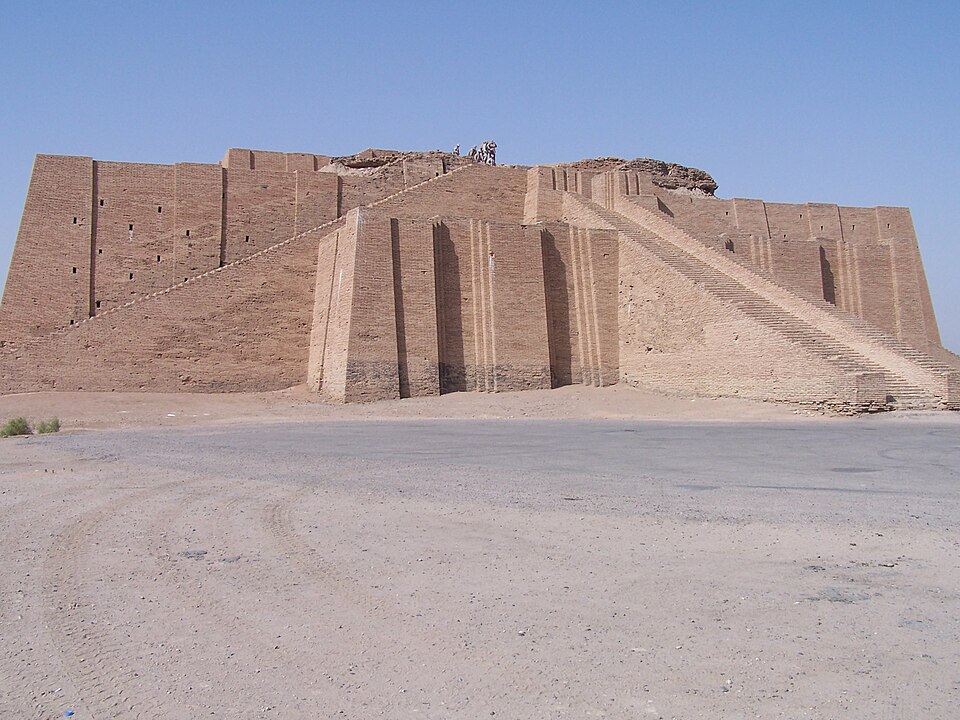
Correct — B, Mesopotamia (Iraq). Mesopotamia — the land between the Tigris and the Euphrates, most of which lies in modern Iraq — is where every marker archaeologists use to define a civilization first appears together. Permanent town life at Eridu and Uruk in southern Sumer runs back into the fifth millennium BCE; by about 3200 BCE Uruk covered some 250 hectares and housed tens of thousands of people, making it the largest settlement on earth at the time. It is also where writing begins: the pictographic clay tablets from the Eanna precinct at Uruk, kept to record rations and temple stores, harden into cuneiform script by about 3000 BCE. Add the potter's wheel, the wheeled vehicle, monumental temple platforms that grew into the ziggurat, bronze metallurgy and the first written law codes, and the case is not close. Every other option is later on its own dating. Dynastic Egypt begins with the unification traditionally credited to Narmer about 3100 BCE — after Sumerian urbanism and after the first Uruk tablets. The Indus has an Early Harappan phase from roughly 3300 BCE, but its Mature urban phase, the one with Mohenjo-daro's grid streets, standardised bricks and covered drains, dates from about 2600 BCE. China is the youngest of the four: the Erlitou culture is placed about 1900 BCE and the earliest securely read Chinese writing, the Shang oracle-bone inscriptions from Anyang, about 1200 BCE. So on both of the criteria that actually decide the ranking — the first cities and the first writing — Mesopotamia is first, and (b) is the answer.
- (a)Egyptian — The nearest miss, and the option a well-read candidate is likeliest to pick. Dynastic Egypt is genuinely ancient — Narmer's unification of Upper and Lower Egypt is dated about 3100 BCE, and Djoser's Step Pyramid at Saqqara follows within four centuries — but that is a century or more after the first Uruk tablets and well after Sumerian city life. Egypt is taught as the second of the primary civilizations, not the first.
- (c)Chinese — The youngest of the four by a wide margin, and the option that trades on a real but different claim. Chinese civilization has the longest unbroken continuity of any on this list, which is not the same thing as being the oldest. Its earliest state-level culture, Erlitou, is dated about 1900 BCE, and its earliest decipherable writing, the Shang oracle bones from Anyang, about 1200 BCE — some two thousand years after cuneiform.
- (d)Indus valley — The patriotic trap on an Indian paper. The Indus (Harappan) civilization is one of the three great Bronze Age civilizations of the Old World and its cities are superbly planned, but the Mature Harappan phase runs about 2600–1900 BCE — five centuries after Egypt's unification and far later than Uruk. Its script also remains undeciphered, so it cannot claim the first writing either.
'Oldest civilization' is not a loose superlative — archaeology answers it against a checklist. A society is called a civilization, rather than a village culture, when it shows cities of substantial size, a surplus-producing agriculture that frees part of the population from farming, craft specialisation, monumental public architecture, a state with rulers and taxes, and — the criterion that usually breaks ties — writing. Four regions crossed that threshold independently in the Old World, each on a great river: Sumer on the Tigris–Euphrates, Egypt on the Nile, the Harappans on the Indus and Ghaggar, and the Yellow River cultures of China. The Americas added Norte Chico in coastal Peru and, much later, Mesoamerica. Because writing leaves a datable trace and villages do not, the conventional ranking follows the earliest script — and the earliest script is cuneiform.
The question looks like bare recall but is really about knowing which measure is being asked for. 'Oldest' can mean the oldest farming, the oldest settlement, the oldest city, the oldest writing, or the longest continuous tradition, and a different answer wins on each. Jericho in the Jordan valley and Çatalhöyük in Anatolia are older settlements than Uruk, yet neither is a civilization on the checklist — no state, no script. China wins 'longest continuous'; Egypt wins recognition for the third-millennium monuments. On the standard measure, first cities plus first writing, Sumer wins, which is why 'Mesopotamia' is the expected answer to this exact wording. The discriminating fact to carry into the hall is one pair of dates: proto-cuneiform at Uruk about 3200 BCE against Narmer's Egypt about 3100 BCE and Mature Harappan about 2600 BCE. Note too that the paper prints 'Mesopotamia (Iraq)' — the bracket is doing work, telling you the setter means a region rather than a modern nation. Mesopotamia was never one state; it held Sumer, Akkad, Babylonia and Assyria in turn.
- Mesopotamia is Greek for 'land between rivers' (mesos + potamos) — the Tigris–Euphrates basin, today mostly Iraq with parts of Syria, Turkey and Iran.
- Uruk was the largest settlement on earth around 3200 BCE, roughly 250 hectares; the earliest proto-cuneiform tablets come from its Eanna temple precinct and are accounting records of grain, beer and livestock, not literature.
- Sumerian legacies still in daily use include the sexagesimal (base-60) system behind the 60-minute hour and the 360-degree circle, and the wheel in both its potter's and its vehicle form.
- The Code of Hammurabi, carved on a diorite stele about 1754 BCE for the Babylonian king Hammurabi and now in the Louvre, is among the earliest substantially preserved law codes; the Epic of Gilgamesh is the oldest long poem to survive.
- Comparative dates worth memorising: Sumerian urbanism c. 4000–3200 BCE; Egyptian unification c. 3100 BCE; Mature Harappan c. 2600–1900 BCE; Erlitou c. 1900 BCE and Shang oracle bones c. 1200 BCE.
- Choosing 'Indus valley' because it is the Indian option. The Mature Harappan phase begins about 2600 BCE, later than both Sumer and Egypt.
- Confusing 'oldest' with 'longest continuous'. Chinese civilization has the longest unbroken record of the four, and is nevertheless the youngest in origin.
- Offering Jericho or Çatalhöyük as older. They are older settlements, but a civilization on the standard checklist needs cities, a state and writing, and neither has them.
BPSC asks antiquity as a bare one-line superlative — oldest civilization, oldest script, oldest university — where one memorised fact scores the mark and speed is the whole test. UPSC almost never asks 'which is oldest' about world civilizations; when it touches deep antiquity it puts Indian items in a chronological sequence or asks what a named site yielded, so the same dates have to be usable for ordering, not just for a superlative.
What is the correct chronological order in which the following appeared in India? I. Gold coins II. Punch-marked silver coins III. Iron plough IV. Urban culture Select the correct answer using the codes given below:
- (a) III, IV, I, II
- (b) III, IV, II, I
- (c) IV, III, I, II
- (d) IV, III, II, I
Answer(d) IV, III, II, I
The same dating instinct, turned into an ordering drill. What puts 'urban culture' first in the UPSC sequence is the Harappan urban phase at about 2600 BCE — and holding that date is exactly what stops you from calling the Indus the oldest civilization in the world.
Which of the following animals was not known to the people of the Indus Valley Civilization?
- (a) Bull
- (b) Horse
- (c) Elephant
- (d) None of the above
Answer(b) Horse
The 69th CCE tested the same civilization that option (d) offers here. The absence of the horse is one of the markers that separates the Harappan world from the later Vedic one — the sort of dating boundary you have to hold to place the Indus third in age among the four, rather than first.
- practice — not a real PYQ
Cuneiform, the earliest known system of writing, was developed in which one of the following ancient civilizations ?
- (a)Egyptian
- (b)Sumerian (Mesopotamian)
- (c)Chinese
- (d)Harappan
Answer(b) Sumerian (Mesopotamian) — wedge-shaped signs pressed into wet clay with a reed stylus, evolving from the pictographic accounting tablets of Uruk by about 3000 BCE. Egypt's hieroglyphs are roughly contemporary but slightly later, and the Harappan script is still undeciphered.
- practice — not a real PYQ
The Code of Hammurabi, one of the earliest substantially preserved written law codes, belongs to which civilization ?
- (a)Egyptian
- (b)Chinese
- (c)Babylonian (Mesopotamian)
- (d)Indus Valley
Answer(c) Babylonian (Mesopotamian) — promulgated by Hammurabi of Babylon about 1754 BCE and carved on a diorite stele now in the Louvre, with roughly 280 provisions built on the principle of retaliation in kind.