
With reference to the Indo-Roman trade, who among the following referred to the drain of Roman gold into India? 1. Strabo 2. Pliny 3. Ptolemy 4. Dio Chrysostom Select the answer using the code given below.
- (a)1 and 2
- (b)2 and 3
- (c)2 and 4
- (d)1 and 3
Correct — C, 2 and 4. Pliny the Elder is the source every account quotes: in the Natural History he complains that India, China and Arabia drain the empire of a vast sum in sesterces every year, paid out for pepper, gems, silk and other things Rome wanted and could not make. Dio Chrysostom, the Greek orator of the same period, voices the same anxiety about wealth leaving for the east, which is why the two names are put together. Ptolemy belongs to a different genre — his Geography maps the coasts and the interior of India and takes no view on the balance of trade. Strabo does record how much the traffic had grown, noting the fleet that sailed each year from Myos Hormos to India, but that is an observation of volume rather than a lament about gold.
- (a)1 and 2 — Pliny belongs, but Strabo does not. His famous passage counts the ships leaving the Red Sea port of Myos Hormos for India, which is evidence of the scale of the trade rather than a complaint about the money going out.
- (b)2 and 3 — Ptolemy's contribution is cartographic: coordinates, coastlines, river mouths and the emporia of the Indian shore. He does not write about the fiscal effect of the trade on Rome.
- (d)1 and 3 — Leaves out Pliny, the one writer whose complaint about the drain is quoted in every textbook. Any option without Pliny can be discarded before the rest of the reasoning begins.
From the first century CE the discovery of the monsoon sailing pattern let ships cross open water between the Red Sea and the Indian coast instead of creeping along it, and the volume of trade jumped. Rome bought pepper from Malabar, gems, pearls, fine cotton and Chinese silk transhipped through Indian ports, and sent back wine, glass, coral, some metals and, above all, coin. Hoards of Roman gold and silver in peninsular India, thickest in the pepper country, are the archaeological trace of the imbalance.
Sort the four names by what each actually wrote and the item answers itself. Pliny the Elder wrote an encyclopaedia and grumbled about luxury; Dio Chrysostom delivered orations on public morals and shared the grumble; Strabo wrote a geography that measured the trade; Ptolemy wrote a geography that mapped it. Only the first two are commenting on wealth flowing out. There is a useful cross-check as well: since Pliny must be in the answer, options (b) and (d) can be struck immediately, and the item reduces to Strabo against Dio Chrysostom.
- Pliny the Elder's Natural History complains of the annual outflow of Roman coin to India, China and Arabia for luxuries.
- Dio Chrysostom, a Greek orator of the late first and early second century CE, expresses the same anxiety about wealth going east.
- Strabo records the growth of the traffic, including the fleet sailing yearly from Myos Hormos on the Red Sea to India.
- Ptolemy's Geography maps the Indian coast and its ports but says nothing about the balance of payments.
- Roman coin hoards cluster in peninsular India, especially in the pepper-growing tracts of the south-west.
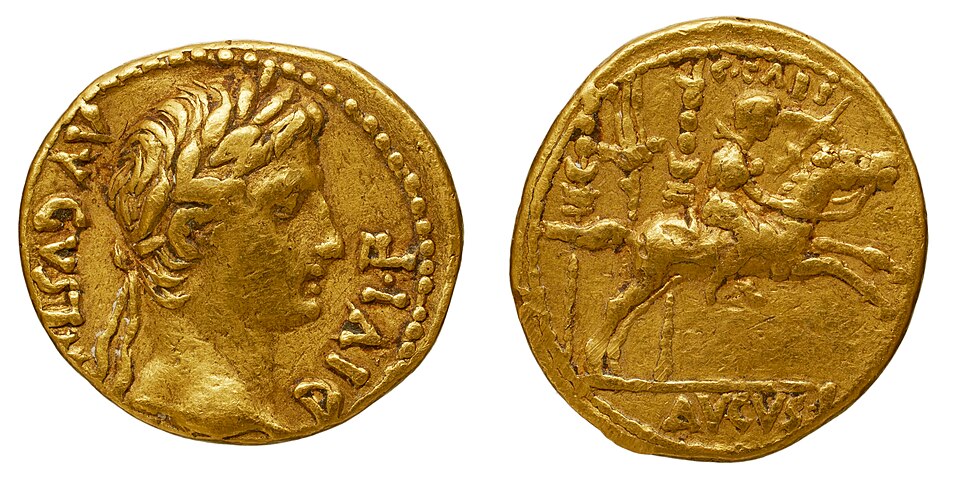
- Reading Strabo's ship count as a complaint about bullion.
- Assuming a geographer must have commented on trade economics.
- Forgetting that Pliny is the anchor and that any option without him is dead.
A which-classical-writers item, answered by sorting the four names by the kind of book each of them wrote.
From the third century AD when the Hun invasion ended the Roman Empire, the Indian merchants relied more and more on the
- (a) African trade
- (b) West European trade
- (c) Southeast Asian trade
- (d) Middle Eastern trade
Answer(c) Southeast Asian trade
What happened after the trade this item describes fell away. The Roman market shrank in the third century and Indian merchants turned east, which is the background to the Indianised polities of Funan, Champa and the Malay peninsula.
- practice — not a real PYQ
Which classical text is the principal guide to the ports and goods of the Indian Ocean trade in the first century CE?
- (a)Indica of Megasthenes
- (b)Periplus of the Erythraean Sea
- (c)Geography of Ptolemy
- (d)Natural History of Pliny
Answer(b) Periplus of the Erythraean Sea — a merchant's handbook of the route, its harbours and its cargoes.
- practice — not a real PYQ
The site of Arikamedu, near Puducherry, is associated with
- (a)Harappan bead making
- (b)Indo-Roman trade
- (c)Mauryan rock edicts
- (d)Chola bronze casting
Answer(b) Indo-Roman trade — Roman amphorae and arretine ware were found there.