
Which of the following statements about the economy of Assam in the medieval period is/are correct? 1. Ahoms cast excellent matchlocks and made first rate gunpowder and artillery pieces 2. Assam adopted new crafts of brass-casting and making granulated sugar during this period 3. Sarthebari village (in Kamrup) was known for its skill in metal casting Select the answer using the code given below:
- (a)1 only
- (b)1 and 2 only
- (c)2 and 3 only
- (d)1, 2 and 3
Correct — D, 1, 2 and 3. The Ahom state kept its own arsenal and is credited in the economic histories of the region with casting good matchlocks, making serviceable gunpowder and producing artillery — a capacity that helps explain how it held off repeated Mughal invasions and won at Saraighat in 1671. The second statement records the arrival of new crafts in the same centuries, brass-casting and the making of granulated sugar being among the skills the region took up. The third names Sarthebari in Kamrup, whose bell-metal work is still the best-known metal craft of Assam and supplies the xorai and bota used in every namghar. All three claims belong to the same account of a regional economy that was more diversified than its distance from the Gangetic plain suggests.
- (a)1 only — Gun-founding was not the whole of it. Assam's metal crafts and its sugar-making are part of the same record of the period.
- (b)1 and 2 only — This drops Sarthebari, whose bell-metal industry is the most durable of the crafts named and is still working today.
- (c)2 and 3 only — This drops the Ahom armaments, which are the best-attested item of the three and the one with visible military consequences.
The Ahoms ruled the Brahmaputra valley from the thirteenth century to the early nineteenth, and their state rested on the paik system, under which adult men owed labour or military service to the state in rotation. That system supplied the manpower for embankments, roads, tanks and workshops as well as for war, which is why the Ahom polity could sustain crafts — gun-founding among them — that needed organised labour rather than a market.
The question tests whether medieval Assam is thought of as a working economy or as a blank space on the map. Each statement points to a different sector: armaments, new crafts and a specialised craft village. The military claim is the one to anchor on, because it has a consequence anybody preparing for the exam already knows — the Ahom victories over Mughal armies, culminating in Lachit Barphukan's defence at Saraighat in 1671, needed guns and powder of their own making. Sarthebari is a second anchor, since its bell-metal is a living industry.
- The Ahoms ruled the Brahmaputra valley from 1228 to the early nineteenth century.
- Their paik system of rotational labour service supported public works and state workshops.
- Ahom armouries produced matchlocks, gunpowder and artillery pieces.
- Sarthebari in Kamrup is the centre of Assam's bell-metal craft, which makes the xorai and bota.
- Lachit Barphukan defeated the Mughal fleet at Saraighat on the Brahmaputra in 1671.
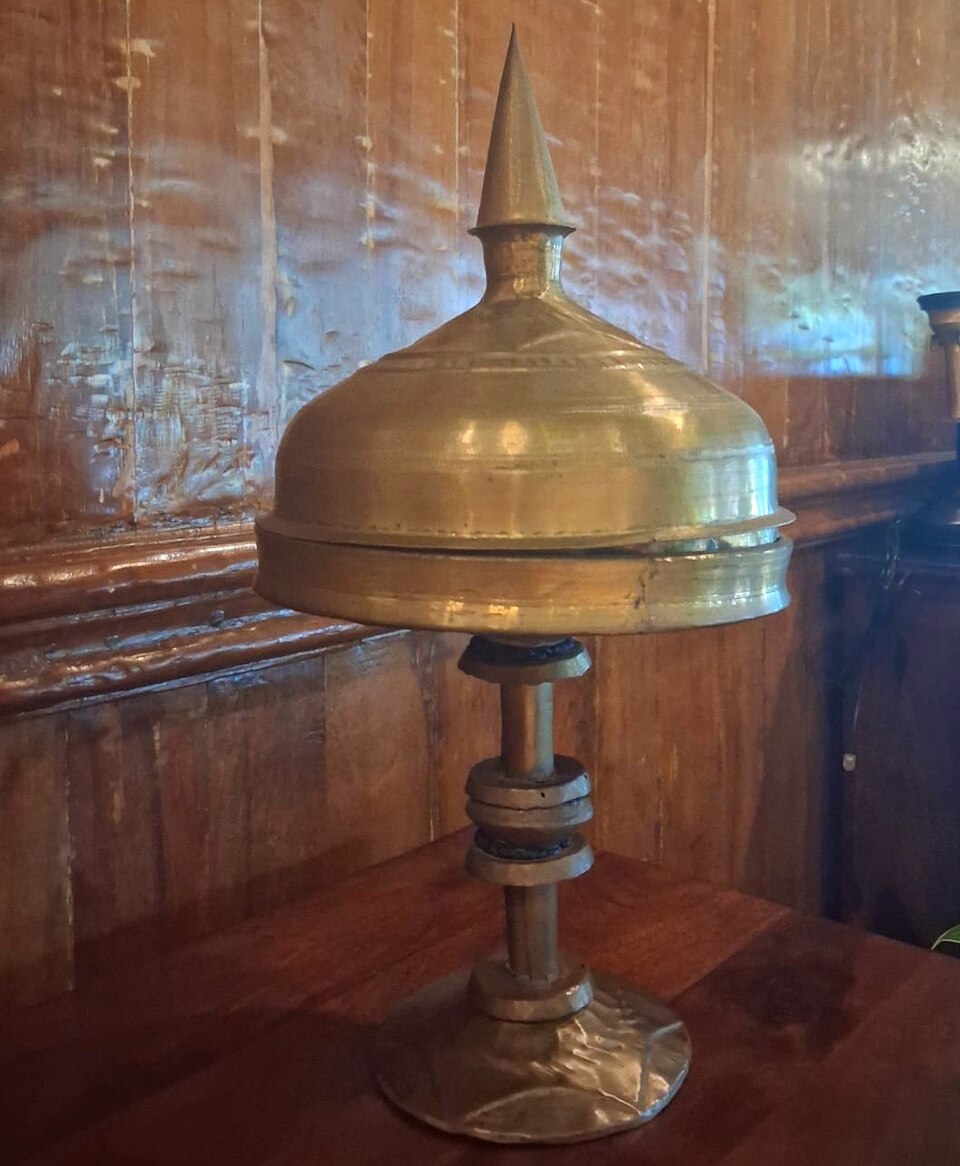
- Assuming a frontier region could not manufacture firearms.
- Marking the least familiar statement wrong simply because it is unfamiliar.
- Confusing Sarthebari's bell-metal with the brass work of Hajo.
A three-statement item on a regional economy, where all three statements hold and the difficulty is the temptation to reject the unfamiliar one.
No directly related past PYQ was found.
- practice — not a real PYQ
The paik system was a feature of which of the following states?
- (a)The Ahom kingdom
- (b)The Chola empire
- (c)The Bahmani Sultanate
- (d)The Kakatiya kingdom
Answer(a) The Ahom kingdom — able-bodied men owed the state labour or military service in rotation.
- practice — not a real PYQ
The battle of Saraighat in 1671 was fought between the Mughals and
- (a)the Ahoms
- (b)the Kacharis
- (c)the Koches
- (d)the Manipuris
Answer(a) the Ahoms — a river battle on the Brahmaputra won under Lachit Barphukan.