
Consider the following statements about the costumes and headgear/hairstyle in India during 4th – 7th century AD : 1. There was a marked preference for stitched garment as compared to any previous age 2. Simple plaits without any floral embellishment dominated the hairstyle of women Which of the statements given above is/are correct?
- (a)1 only
- (b)2 only
- (c)Both 1 and 2
- (d)Neither 1 nor 2
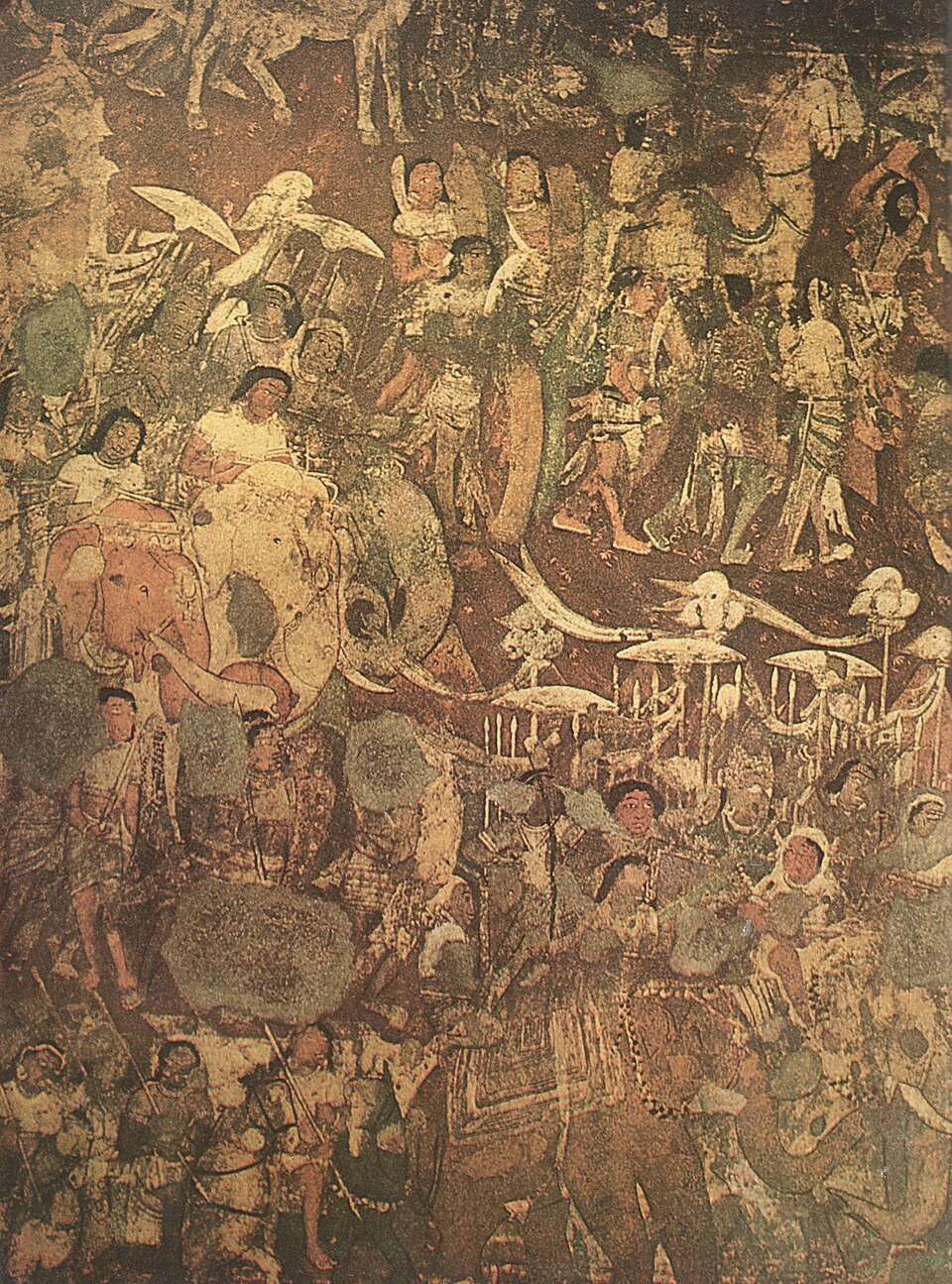
Correct — A, 1 only. Statement 2 is contradicted by the visual record of exactly these centuries. Women at Ajanta, on Gupta terracottas and in the sculpture of the period wear hair in elaborate coils and knots dressed with flowers, pearl strings and jewelled bands, and the coiffure is one of the ways rank and role are marked. Simple unadorned plaits do not dominate. Statement 1 states the standard account of costume in the same period: the tailored garment, introduced from Central Asia under the Kushanas, becomes far more common in these centuries than in any earlier age, appearing beside the older draped and unstitched dress rather than replacing it.
- (b)2 only — The floral and jewelled dressing of women's hair is among the best-attested features of Gupta and post-Gupta art. Statement 2 asserts the opposite of what the sculpture and painting show.
- (c)Both 1 and 2 — The two statements cannot both stand, because statement 2 fails on the evidence of the same period's art.
- (d)Neither 1 nor 2 — Rejecting statement 1 as well goes too far. The stitched garment is more prominent in the fourth to seventh centuries than in the periods before, which is what the statement claims.
Indian dress before the Christian era was overwhelmingly unstitched — the antariya wrapped at the waist, the uttariya over the shoulder, the kayabandh sash. Tailored clothing entered with the Shakas and Kushanas from Central Asia, bringing the tunic, coat and trousers of a riding people. Over the following centuries stitched forms settled into Indian wardrobes, and Gupta-period art shows both traditions in use at once. Hairstyles of the age were correspondingly elaborate, dressed with flowers, pearls and ornamental bands.
The paired-statement format is generous here, because one statement can be tested against images almost anyone preparing for the exam has seen. The Ajanta paintings and the Gupta terracottas of Ahichchhatra and Bhitargaon give the answer to statement 2 directly, and once it falls only options (a) and (d) remain. Statement 1 is a claim about relative frequency rather than an absolute one, which is worth noticing: it does not say draped dress disappeared, only that stitched dress was preferred more than in any earlier age.
- Early Indian dress was unstitched: the antariya, uttariya and kayabandh.
- Stitched tunics, coats and trousers entered India with the Shakas and Kushanas from Central Asia.
- Gupta and post-Gupta art shows draped and tailored garments in use together.
- Women's hairstyles of the period are shown dressed with flowers, pearl strings and jewelled bands.
- Ajanta's paintings and Gupta terracottas are the principal visual evidence for costume of the fourth to seventh centuries.
- Assuming Indian dress was entirely unstitched until the Delhi Sultanate.
- Reading statement 1 as a claim that draped garments disappeared.
- Treating a claim about art as untestable when the paintings and sculptures are the evidence.
A cultural-history item where one statement can be checked against well-known art and, once it falls, the answer narrows to two options.
No directly related past PYQ was found.
- practice — not a real PYQ
The stitched garments of tunic, coat and trousers entered Indian dress mainly through which one of the following?
- (a)The Cholas
- (b)The Shakas and Kushanas
- (c)The Satavahanas
- (d)The Pallavas
Answer(b) The Shakas and Kushanas — Central Asian riding costume, visible on Kushana royal statuary.
- practice — not a real PYQ
The paintings of Ajanta chiefly depict themes drawn from
- (a)the Jataka stories
- (b)the Ramayana
- (c)the Puranas
- (d)Jain hagiography
Answer(a) the Jataka stories — the previous lives of the Buddha, alongside scenes of court and city life.