
Which of the following statements regarding faunal resources of India is/are correct? 1. High degree of endemism has been noticed in the biodiversity hotspots of India 2. Of the total biosphere reserves in India, the Sundarbans has the largest number of species and Nokrek has the smallest number of species Select the answer using the codes given below:
- (a)1 only
- (b)2 only
- (c)Both 1 and 2
- (d)Neither 1 nor 2
Correct — C, Both 1 and 2. Statement 1 is the definition of a biodiversity hotspot at work. Norman Myers's criteria require a region to hold at least 1,500 endemic vascular plant species and to have lost 70 per cent or more of its original vegetation, so high endemism is what qualifies a region in the first place. India's four hotspots — the Western Ghats and Sri Lanka, the Himalaya, Indo-Burma, and Sundaland covering the Nicobar Islands — all show it, and the Western Ghats are the standard Indian illustration, with a very large share of their amphibians found nowhere else. Statement 2 is the comparative claim the paper makes about India's biosphere reserves, placing the Sundarbans at the top of the species-richness listing and Nokrek at the bottom. Taken together, both statements stand, so the code that accepts both is the answer.
- (a)1 only — This accepts the hotspot statement and rejects the comparison between reserves. The endemism statement is certainly correct, but rejecting the second statement outright requires evidence that the ranking is wrong, and the paper treats it as sound.
- (b)2 only — This rejects the endemism statement, which is the securest fact in the question. Endemism is not merely observed in hotspots — it is one of the two criteria by which a hotspot is identified.
- (d)Neither 1 nor 2 — This rejects both. Since high endemism is part of the very definition of a biodiversity hotspot, no reading of statement 1 makes it false.
A biodiversity hotspot is a region that is exceptionally rich in endemic species and exceptionally threatened; both conditions must hold. Biosphere reserves are a different instrument altogether, created under UNESCO's Man and the Biosphere programme to combine conservation with sustainable use and research. Each is zoned into a strictly protected core, a buffer where limited activity is allowed, and a transition area where communities live and work. India has 18 biosphere reserves, of which several are on UNESCO's World Network.
The two statements test different things, and they are not equally firm. The endemism claim is definitional and cannot fail. The comparison between the Sundarbans and Nokrek rests on species counts printed for the reserves in Indian geography compilations, and those counts come from different surveys of different taxonomic groups rather than from one standardised census, so the ranking is the weaker half of the item. A candidate in the hall has no way to test it and has to decide whether it is plausible: the Sundarbans is a very large mangrove and estuarine system with tigers, crocodiles, dolphins and a wide fish fauna, while Nokrek in the Garo Hills is one of the smallest reserves, so the direction of the comparison at least fits the geography.
- A biodiversity hotspot must hold at least 1,500 endemic vascular plant species and have lost 70 per cent or more of its original habitat.
- India's hotspots are the Western Ghats and Sri Lanka, the Himalaya, Indo-Burma, and Sundaland including the Nicobars.
- India has 18 biosphere reserves, zoned into core, buffer and transition areas under the UNESCO Man and the Biosphere programme.
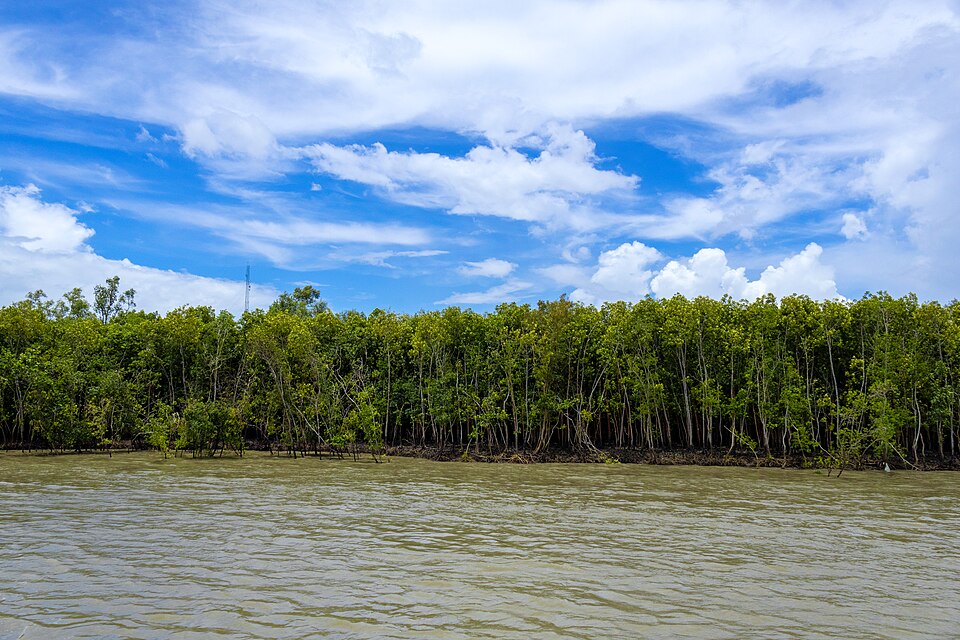
- The Sundarbans Biosphere Reserve in West Bengal is a large mangrove and estuarine system; Nokrek is in the Garo Hills of Meghalaya.
- The Nilgiri reserve, notified in 1986, was India's first biosphere reserve.
- Rejecting the endemism statement, which is part of the very definition of a hotspot.
- Confusing biodiversity hotspots with biosphere reserves; they are separate designations with separate criteria.
- Assuming the largest reserve by area must automatically hold the most species.
A two-statement code item that pairs a definitional fact with a comparative ranking, so the second statement is where the difficulty sits.
Which of the following statements with regard to Biosphere Reserve is/are correct? 1. The idea of Biosphere Reserve was initiated by UNESCO in 1973-74 2. There are 18 designated Biosphere Reserves in India 3. All Biosphere Reserves in India have been included in world network of Biosphere Reserves of UNESCO Select the correct answer using the code given below:
- (a) 1 only
- (b) 2 only
- (c) 1 and 2 only
- (d) 1, 2 and 3
Answer(c) 1 and 2 only
The same designation examined for its origin and its count. Its third statement fails because only some of India's eighteen reserves are on the UNESCO network, a distinction worth carrying into any question that compares one reserve with another.
Which one of the following biosphere reserves is spread over three States in India?
- (a) Nilgiri
- (b) Achanakmar-Amarkantak
- (c) Seshachalam
- (d) Agasthyamalai
Answer(a) Nilgiri
The reserve list tested on geography rather than species counts. Knowing which reserves are large and which are small is the background a comparison of their faunal richness rests on.
- practice — not a real PYQ
Which one of the following is not among the biodiversity hotspots recognised in India?
- (a)Western Ghats and Sri Lanka
- (b)Himalaya
- (c)Indo-Burma
- (d)Thar Desert
Answer(d) Thar Desert — it has neither the endemic plant richness nor the hotspot criteria.
- practice — not a real PYQ
The three zones of a biosphere reserve are
- (a)core, buffer and transition
- (b)core, corridor and periphery
- (c)reserve, sanctuary and park
- (d)inner, middle and outer
Answer(a) core, buffer and transition — protection tightening inward.