
An aqueous solution of a salt is known as brine. The salt is:
- (a)Sodium chloride
- (b)Potassium chloride
- (c)Calcium chloride
- (d)Sodium nitrate
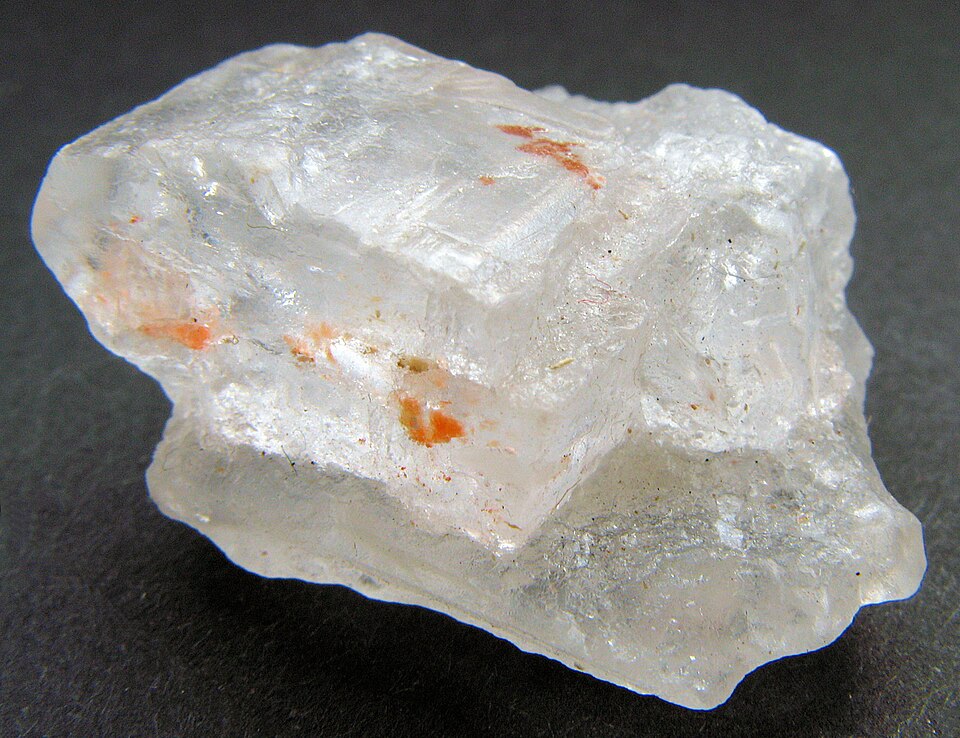
Correct — A, Sodium chloride. Brine is the chemist's name for a concentrated aqueous solution of common salt, sodium chloride, and it is one of the most important raw materials in the whole of inorganic industry. Passing electricity through it — the chlor-alkali process — splits it into three products at once: chlorine at the anode, hydrogen at the cathode and sodium hydroxide left in the solution. Brine is also the feedstock for the Solvay process that makes sodium carbonate, and from there for baking soda and bleaching powder. The salt itself comes from evaporating seawater in shallow pans and from underground deposits of rock salt.
- (b)Potassium chloride — Potassium chloride is a real and useful salt, mined as sylvite and used as a fertiliser, but a solution of it is not called brine.
- (c)Calcium chloride — Calcium chloride solution is circulated as a coolant in industrial refrigeration, where engineers use 'brine' loosely for any circulating salt solution. In chemistry the word has the narrower meaning, and here it is sodium chloride.
- (d)Sodium nitrate — Sodium nitrate is Chile saltpetre, a nitrogenous fertiliser and an old source of nitric acid. Its solution has no connection with brine.
Sodium chloride is the parent of the sodium chemical industry. Nearly every common sodium compound a student meets — sodium hydroxide, sodium carbonate, sodium hydrogencarbonate — is traced back to a brine solution, and chlorine and hydrogen come out of the same tank. That is why the electrolysis of brine has a name of its own, the chlor-alkali process, after the two products it is run for.
The question is a one-word definition, but the reason it recurs is the chain of chemistry hanging off it. If you can write down what brine gives on electrolysis, you can answer a family of questions about bleaching powder, washing soda and baking soda without learning each one separately. The distractor worth understanding is calcium chloride, because refrigeration engineers really do call its solution a brine — a reminder that a technical word can be narrower in one discipline than in another, and that the chemistry paper wants the chemistry meaning.
- Brine is a concentrated aqueous solution of sodium chloride.
- Electrolysis of brine gives chlorine at the anode, hydrogen at the cathode and sodium hydroxide in the solution.
- The chlorine and the sodium hydroxide are combined to make bleaching powder and are the starting point for the Solvay route to sodium carbonate.
- Sodium chloride is obtained by evaporating seawater in salt pans and by mining rock salt.
- Plaster of Paris is the standard exception in this family — it comes from gypsum, calcium sulphate, and not from common salt at all.
- Reading 'brine' as any salt solution, which is how the refrigeration usage leaks into a chemistry answer.
- Attributing plaster of Paris to common salt when it comes from gypsum.
- Placing the products of brine electrolysis at the wrong electrodes — chlorine is the anode product, hydrogen the cathode product.
A one-line definition item. The same topic returns in a harder form as 'which compound is not made from common salt', where plaster of Paris is the usual odd one out.
Brine is an aqueous solution of
- (a) NaCl
- (b) NaOH
- (c) NaHCO₃
- (d) Na₂CO₃
Answer(a) NaCl
The same definition, with formulas instead of names, and with three sodium compounds as the distractors rather than three other chlorides. Sodium hydroxide and sodium carbonate are products of brine, not brine itself.
Common salt (NaCl) is not used as a raw material for preparation of which one of the following compounds?
- (a) Bleaching powder
- (b) Baking soda
- (c) Plaster of Paris
- (d) Washing soda
Answer(c) Plaster of Paris
The chain of chemistry that makes this definition worth learning. Bleaching powder, baking soda and washing soda all begin at a brine tank; plaster of Paris begins at a gypsum quarry.
- practice — not a real PYQ
The electrolysis of brine yields chlorine at the anode and, at the cathode,
- (a)oxygen
- (b)sodium metal
- (c)hydrogen
- (d)sodium hydroxide
Answer(c) hydrogen — sodium hydroxide is left dissolved in the solution rather than deposited at an electrode, and sodium metal is obtained by electrolysing the molten salt, not its solution.
- practice — not a real PYQ
Which one of the following is not obtained from common salt as a raw material?
- (a)Washing soda
- (b)Baking soda
- (c)Bleaching powder
- (d)Plaster of Paris
Answer(d) Plaster of Paris — it is made by heating gypsum, calcium sulphate dihydrate, and has nothing to do with sodium chloride.