
Who among the following was the first pro-tem Speaker to be unanimously elected as the Speaker of the Lok Sabha?
- (a)Rabi Ray
- (b)Hiren Mukherjee
- (c)Somnath Chatterjee
- (d)P.A. Sangma
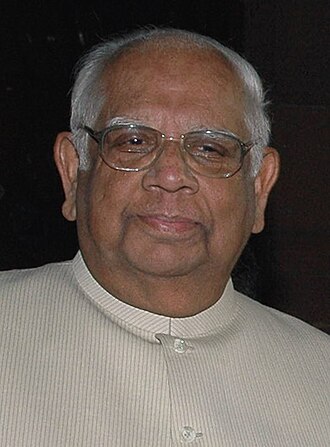
Correct — C, Somnath Chatterjee. When the fourteenth Lok Sabha met in 2004 he was its senior-most member, having sat in the House for nine terms, and the President appointed him Speaker pro tem to administer the oath to the newly elected members and to preside until the House chose a Speaker of its own. The House then elected him Speaker, and it did so without a division — the ruling coalition and the opposition both supported him, so the chair passed from the temporary occupant to the permanent one in the same person and without a contest. That combination of facts is what the question is after: not merely a pro tem Speaker, and not merely a unanimously elected Speaker, but the first man to be both in the same House.
- (a)Rabi Ray — Rabi Ray was Speaker of the ninth Lok Sabha from 1989 to 1991, but he did not come to the office from the pro tem chair.
- (b)Hiren Mukherjee — Hiren Mukherjee was one of the most admired parliamentarians of the early Lok Sabhas and a long-serving communist member from Calcutta, but he never held the office of Speaker.
- (d)P.A. Sangma — P. A. Sangma was Speaker of the eleventh Lok Sabha from 1996 to 1998 and later a Union minister and a presidential candidate; his route to the chair was not through a pro tem appointment.
A newly elected Lok Sabha has no Speaker on the day it first meets, and the members have not yet been sworn in, so somebody must administer the oath and preside over the election of the Speaker. The Constitution meets this by having the President appoint a Speaker pro tem — by convention the senior-most member of the new House, seniority being counted by years of membership rather than by age. The pro tem Speaker's authority lasts only until the House elects its Speaker under Article 93, whereupon the office lapses.
Two threads run together in this item and both are worth keeping. One is the office itself, which is a caretaker appointment made by the President and is not mentioned by that name in the text of the Constitution. The other is the convention of a unanimous Speaker, which Indian practice aspires to but does not always achieve; the Speaker is expected to stand above party once elected, and the House marks that by trying to elect without a division. Somnath Chatterjee's own later career made the point sharply, since he refused to resign the chair when his party withdrew support from the government in 2008 and was expelled from the party for it.
- Article 93 requires the House of the People to choose two of its members to be Speaker and Deputy Speaker.
- The Speaker pro tem is appointed by the President, by convention from among the senior-most members, to administer the oath and to preside until the Speaker is elected.
- Somnath Chatterjee presided as Speaker pro tem of the fourteenth Lok Sabha in 2004 and was then elected its Speaker without a division.
- The Speaker's salary and allowances are charged on the Consolidated Fund of India and are not subject to the annual vote of Parliament.
- The Speaker votes only in the event of a tie, exercising a casting vote under Article 100.
- Treating the pro tem Speaker as an office named and defined in the Constitution; the appointment rests on convention and on the President's warrant.
- Counting seniority by age rather than by length of membership of the House.
- Assuming a Speaker must belong to the ruling party; the office is meant to be occupied without reference to party once the election is over.
As a 'who was the first to' item, which combines two facts about the same person — so eliminate on either fact and the answer falls out.
Consider the following statements: 1. The Chairman of the Committee on Public Accounts is appointed by the Speaker of the Lok Sabha. 2. The Committee on Public Accounts comprises members of the Lok Sabha, members of the Rajya Sabha, and a few eminent persons of the industry and trade. Which of the statements given above are correct?
- (a) 1 only
- (b) 2 only
- (c) Both 1 and 2
- (d) Neither 1 nor 2
Answer(a) 1 only
What the Speaker does once elected. The chair is not ceremonial — it appoints the chairman of the Public Accounts Committee and constitutes most of the parliamentary committee system, which is why the manner of the Speaker's own election attracts attention.
- practice — not a real PYQ
The Speaker pro tem of a newly constituted Lok Sabha is appointed by
- (a)the President
- (b)the outgoing Speaker
- (c)the Prime Minister
- (d)the Chairman of the Rajya Sabha
Answer(a) the President — conventionally choosing the senior-most member of the new House.
- practice — not a real PYQ
The Speaker of the Lok Sabha exercises a vote
- (a)on every question put to the House
- (b)only in the case of an equality of votes
- (c)never, in any circumstance
- (d)only on money bills
Answer(b) only in the case of an equality of votes — the casting vote under Article 100.