
The speed of the wind is measured by
- (a)wind vane
- (b)wind rose
- (c)barometer
- (d)anemometer
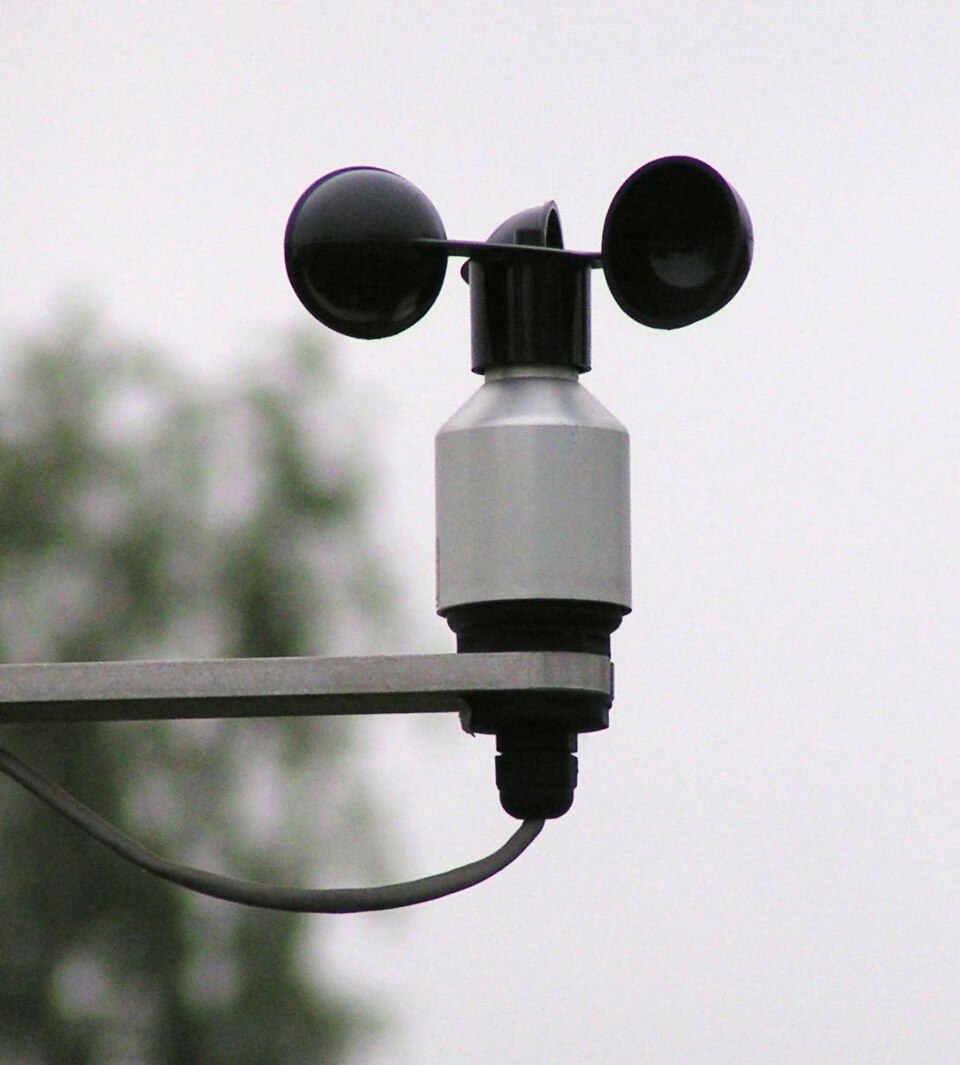
Correct — D, anemometer. An anemometer measures the speed of the wind. The common design is the cup anemometer, three or four hemispherical cups on horizontal arms that spin about a vertical shaft; the rate of rotation is proportional to the wind speed and is read off electrically. Every weather station carries one, usually mounted with a wind vane on the same mast, since speed and direction are recorded together.
- (a)wind vane — A wind vane gives the direction the wind is blowing from, not its speed. It is the arrow or cockerel that turns freely on a vertical spindle.
- (b)wind rose — A wind rose is not an instrument at all. It is a diagram summarising, for a place over a period, how often the wind blew from each direction and at what strength.
- (c)barometer — A barometer measures atmospheric pressure. A sudden fall in the reading warns of stormy weather, which is a related forecast but a different measurement.
Weather is recorded with a set of instruments, each for one element: thermometer for temperature, barometer for pressure, anemometer for wind speed, wind vane for wind direction, hygrometer for humidity and rain gauge for precipitation. The wind rose belongs to the presentation of the data rather than to its collection, which is what sets it apart from the other three options.
Two of the four options concern wind, and the split between them is speed against direction — an anemometer counts turns to give a rate, while a vane points. The third is a diagram masquerading as an instrument, which is the sharpest trap in the list. The fourth measures the right sort of thing for weather but the wrong quantity, and a candidate who recalls that a falling barometer signals a storm may reach for it on the wrong association.
- An anemometer measures wind speed, most commonly through rotating cups.
- A wind vane indicates the direction from which the wind is blowing.
- A wind rose is a diagram of wind frequency by direction and speed, not an instrument.
- A barometer measures atmospheric pressure, and a sudden fall indicates stormy weather.
- A hygrometer measures humidity and a rain gauge measures precipitation.
- Choosing the wind vane, which measures direction rather than speed.
- Treating the wind rose as an instrument.
- Reaching for the barometer because falling pressure is associated with strong winds.
A straightforward instrument-recognition item; the sibling papers ask the same set by naming the instrument for atmospheric pressure or by asking what a falling barometer signals.
Which of the following weather conditions is indicated by a sudden fall in barometer reading?
- (a) Stormy weather
- (b) Calm weather
- (c) Cold and dry weather
- (d) Hot and sunny weather
Answer(a) Stormy weather
Explains why the barometer feels like a plausible answer here and why it is not one — it forecasts strong winds through pressure, but it does not measure their speed.
Which one of the following devices is used to measure atmospheric pressure ?
- (a) Ammeter
- (b) Barometer
- (c) Potentiometer
- (d) Lactometer
Answer(b) Barometer
Fixes the instrument-to-quantity pairing for the third option here, leaving the anemometer as the only device on this list that measures a wind speed.
- practice — not a real PYQ
The instrument used to measure relative humidity is the
- (a)hygrometer
- (b)anemometer
- (c)barometer
- (d)seismograph
Answer(a) hygrometer — the anemometer measures wind speed and the barometer pressure.
- practice — not a real PYQ
A wind rose diagram shows
- (a)the speed of the wind at one instant
- (b)the frequency of winds from each direction over a period
- (c)the pressure gradient across a region
- (d)the path of a cyclone
Answer(b) the frequency of winds from each direction over a period — it presents data rather than measuring it.