
Which one among the following is not a luminous object?
- (a)Sun
- (b)Proxima Centauri
- (c)Jupiter
- (d)Alpha Centauri
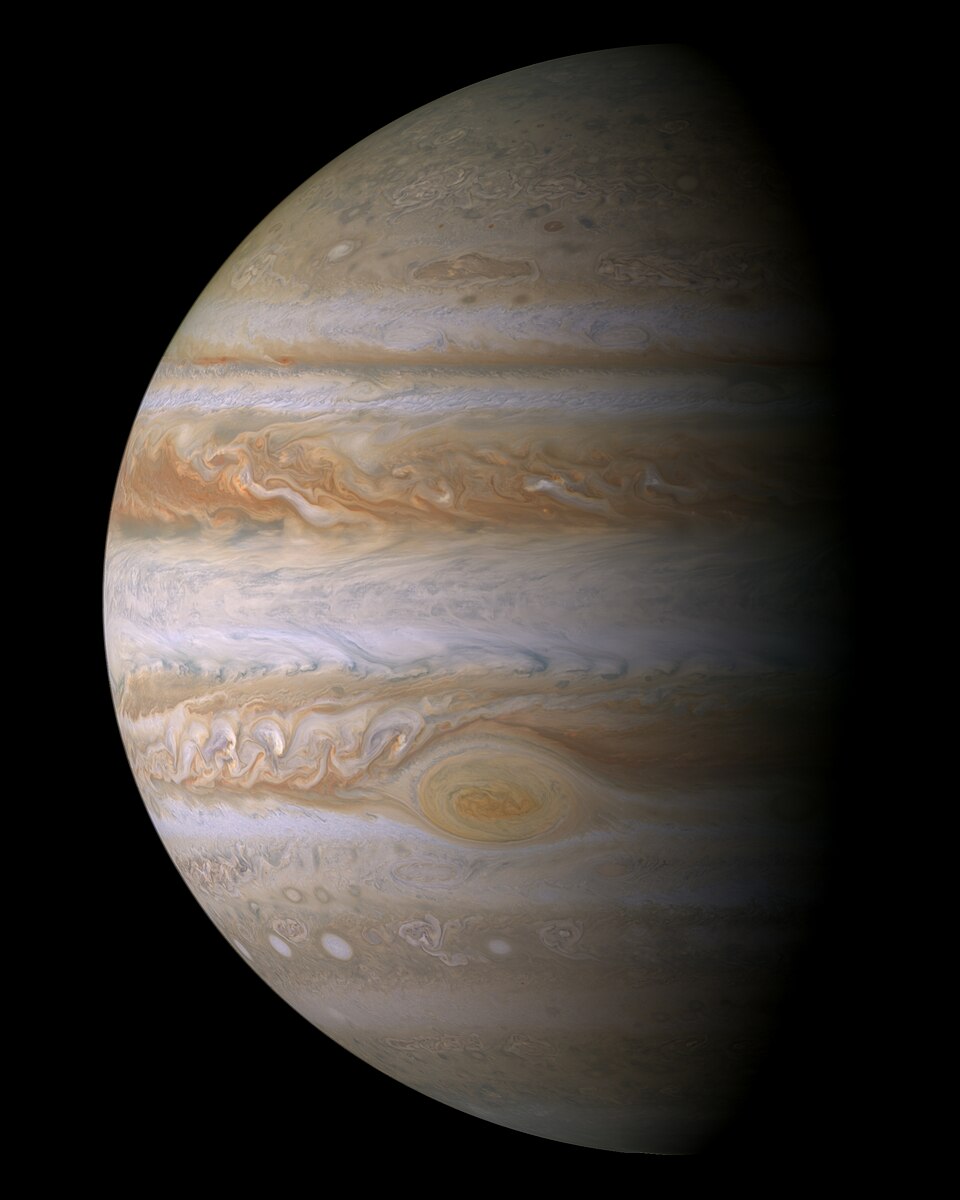
Correct — C, Jupiter. A luminous object emits light of its own. Stars do, because thermonuclear fusion in their cores releases energy that eventually leaves the surface as radiation. Jupiter is a planet — the largest in the solar system, but far too small for fusion to ignite — and the light by which we see it in the night sky is sunlight reflected from its cloud tops. It is therefore an illuminated, non-luminous body.
- (a)Sun — The Sun is a star, and the nearest one to Earth. Hydrogen fusion in its core is the source of nearly all the light and heat reaching the planet.
- (b)Proxima Centauri — Proxima Centauri is a red dwarf star and, at about 4·2 light years, the closest star to the Sun. It is faint and invisible to the naked eye, but faint is not the same as non-luminous.
- (d)Alpha Centauri — Alpha Centauri is a star system whose two main components are Sun-like stars. It shines by its own light, and at magnitude −0·27 it is one of the brightest points in the southern sky.
Luminous bodies generate the light they emit; non-luminous bodies are seen only when light from elsewhere falls on them and is reflected. Stars are luminous, and planets, moons, asteroids and comets are not. The distinction is why planets do not twinkle in the way stars do — a star is effectively a point source whose light is disturbed by atmospheric turbulence, while a planet is a small disc whose many points average out.
Three options are stars and one is a planet, so the item is decided the moment a candidate recognises Proxima Centauri and Alpha Centauri as stars rather than something else. The names are chosen for exactly that reason: both look unfamiliar beside the Sun and Jupiter, and a candidate who does not know them may reason that anything named after a constellation must be distant and dim. Brightness in the sky is a poor guide here, since Jupiter routinely outshines almost every star while emitting no light at all.
- Luminous bodies emit their own light; non-luminous bodies only reflect it.
- All stars are luminous; planets, moons and asteroids are not.
- Proxima Centauri, a red dwarf about 4·2 light years away, is the closest star to the Sun.
- Alpha Centauri A and B are Sun-like stars in the same system as Proxima Centauri.
- Stars twinkle and planets generally do not, because a planet presents a small disc rather than a point.
- Assuming a bright object in the sky must be luminous.
- Not recognising Proxima Centauri and Alpha Centauri as stars.
- Forgetting that the Sun is itself a star, which makes it the nearest one to Earth.
A definition item wrapped in astronomy vocabulary; UPSC has asked the neighbouring question — which star is nearest the Earth — where the answer is the Sun for the same reason.
Which one of the following stars is nearest to the earth?
- (a) Polaris
- (b) Alpha Centauri
- (c) Sun
- (d) Sirius
Answer(c) Sun
Turns on the same recognition. Alpha Centauri appears there as a star, as it does here, and the item is won by remembering that the Sun belongs in the same category.
Which of the following groups of planets is termed as ‘gas planets’ as they are composed primarily of lighter ices, liquids and gases?
- (a) Mars, Jupiter, Neptune, Uranus
- (b) Jupiter, Uranus, Neptune, Saturn
- (c) Saturn, Mars, Jupiter, Neptune
- (d) Neptune, Saturn, Mars, Uranus
Answer(b) Jupiter, Uranus, Neptune, Saturn
Places Jupiter firmly among the planets rather than the stars, which is the whole of what this CAPF item asks a candidate to notice.
- practice — not a real PYQ
Which one of the following is a non-luminous body?
- (a)The Sun
- (b)Sirius
- (c)The Moon
- (d)Betelgeuse
Answer(c) The Moon — it is seen by reflected sunlight, while the other three are stars.
- practice — not a real PYQ
The nearest star to the solar system is
- (a)Sirius
- (b)Proxima Centauri
- (c)Betelgeuse
- (d)Polaris
Answer(b) Proxima Centauri — a red dwarf about 4·2 light years away.