
A milkman adds a small amount of baking soda to milk. This makes the pH of the milk
- (a)strongly alkaline
- (b)weakly alkaline
- (c)strongly acidic
- (d)weakly acidic
Correct — B, weakly alkaline. Fresh milk is slightly acidic, at about pH 6. Baking soda, sodium hydrogencarbonate, is a weak base, and the milkman adds only a small amount of it. Two mild quantities cannot produce an extreme result: the pH is nudged from just below 7 to just above it, so the milk becomes weakly alkaline. He does it because milk that is slightly alkaline resists souring, since the lactic acid the bacteria produce has to neutralise the added base before it can start curdling the milk.
- (a)strongly alkaline — Strong alkalinity would need a strong base such as sodium hydroxide, or a large quantity of a weak one. A pinch of baking soda cannot take milk to a high pH, and milk at a high pH would be unfit to drink.
- (c)strongly acidic — Baking soda is a base, so it cannot make anything acidic. Adding it raises the pH rather than lowering it.
- (d)weakly acidic — Fresh milk is already weakly acidic at about pH 6, so this option describes the starting point, not the effect of the addition.
The pH scale runs from 0 to 14 with 7 as neutral; below 7 is acidic and above it alkaline. How far a substance moves the pH depends both on the strength of the acid or base and on how much is added. Sodium hydrogencarbonate is a weak base, mild enough to be eaten, which is why it appears in baking, in antacids and in fire extinguishers.
The stem plants the two words that decide the answer — 'small amount' and 'baking soda'. One limits the quantity, the other limits the strength, and together they rule out anything 'strongly'. Direction settles the rest, since a base can only move pH upward. This is the NCERT case study asked back almost verbatim, and the follow-up in the textbook is worth carrying too: milk treated this way takes longer to set as curd, because the added base has to be used up first.
- Fresh milk has a pH of about 6, which is slightly acidic.
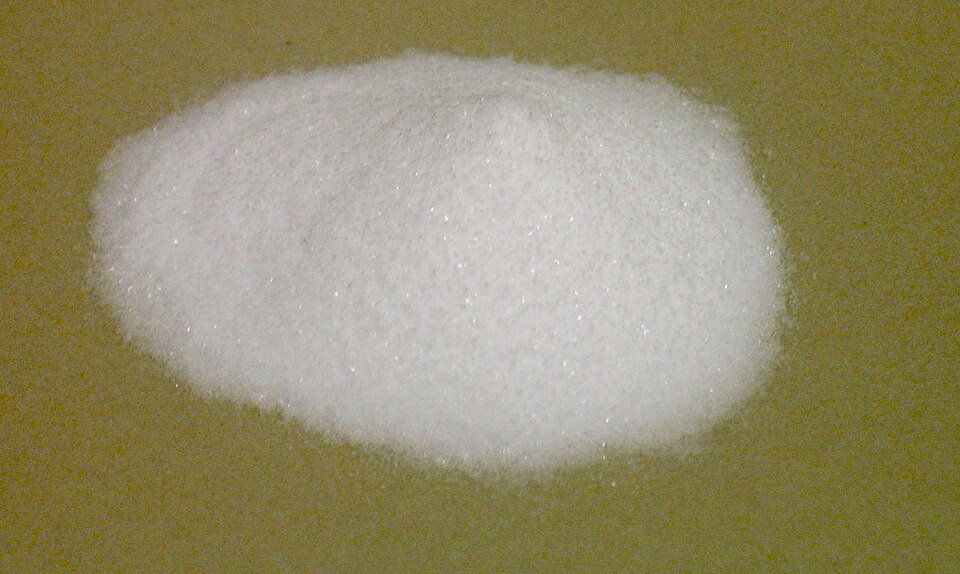
- Baking soda is sodium hydrogencarbonate, NaHCO3, and is a weak base.
- A small amount of a weak base shifts milk to slightly alkaline, delaying souring.
- Milk sours because bacteria convert lactose to lactic acid, which lowers the pH and curdles the protein.
- Sodium hydrogencarbonate is also used in antacids and in soda-acid fire extinguishers.
- Reading 'weakly' and 'strongly' as decoration rather than as the point of the question.
- Confusing baking soda with washing soda, which is sodium carbonate and more strongly alkaline.
- Assuming milk is neutral at pH 7 to begin with.
A direct lift of an NCERT case study, testing both the direction of the pH shift and its magnitude; CAPF and NDA also ask the same compound through bread, antacids and fire extinguishers.
Consider the following statements : 1. Anhydrous sodium carbonate is commonly known as baking soda 2. Baking soda is used in fire extinguishers 3. Bleaching powder is manufactured in Hasenclever plant Which of the statements given above is/are correct?
- (a) 1, 2 and 3
- (b) 2 and 3
- (c) 3 only
- (d) 1 and 2
Answer(b) 2 and 3
Turns on exactly the confusion that misleads candidates here — anhydrous sodium carbonate is washing soda, not baking soda, and the two differ in how strongly alkaline they are.
Which of the following makes bread soft and spongy when baking soda is added?
- (a) Sodium salt of acid
- (b) NaHCO3
- (c) CO2
- (d) H2O
Answer(c) CO2
The same compound in its other household role. Heating or acidifying baking soda releases carbon dioxide, which is why a pinch of it changes both bread and the pH of milk.
- practice — not a real PYQ
A milkman adds baking soda to fresh milk mainly in order to
- (a)make it set as curd faster
- (b)delay the souring of the milk
- (c)increase its fat content
- (d)make it taste sweeter
Answer(b) delay the souring of the milk — the added base must be neutralised before lactic acid can curdle it.
- practice — not a real PYQ
The chemical name of baking soda is
- (a)sodium carbonate
- (b)sodium hydrogencarbonate
- (c)calcium carbonate
- (d)sodium hydroxide
Answer(b) sodium hydrogencarbonate — NaHCO3; sodium carbonate is washing soda.