
Initially, what was the purpose of setting up the hill stations during the colonial period in India?
- (a)To serve as winter capitals for the British
- (b)To serve the needs of the British army
- (c)To source timber from forests
- (d)To set up sanatoria
Correct — B, To serve the needs of the British army. Hill stations were founded in the first instance as military posts. Simla grew out of the Anglo-Gurkha war of 1815-16, and the stations along the Himalayan foothills and in the Nilgiris were established to garrison troops in a climate the army believed suited European constitutions, at a safe altitude above the plains and near the frontiers that mattered. The other uses came later. They became sanatoria for sick and convalescent soldiers, then the seasonal seats of government — Simla was made the summer capital only in 1864 — and finally resorts for planters, traders and officials on leave.
- (a)To serve as winter capitals for the British — The direction is wrong twice over. Hill stations were used in summer, not winter, and the shift of government offices to Simla began decades after the first stations were founded.
- (c)To source timber from forests — Colonial forestry did take heavily from the Himalayan and Nilgiri forests, especially for railway sleepers, but that was a separate enterprise run by the Forest Department, not the reason a hill station was laid out.
- (d)To set up sanatoria — The strongest of the three wrong options, because hill stations really did serve as sanatoria for troops. The word in the stem is 'initially', and the sanatorium function developed from the military presence rather than preceding it.
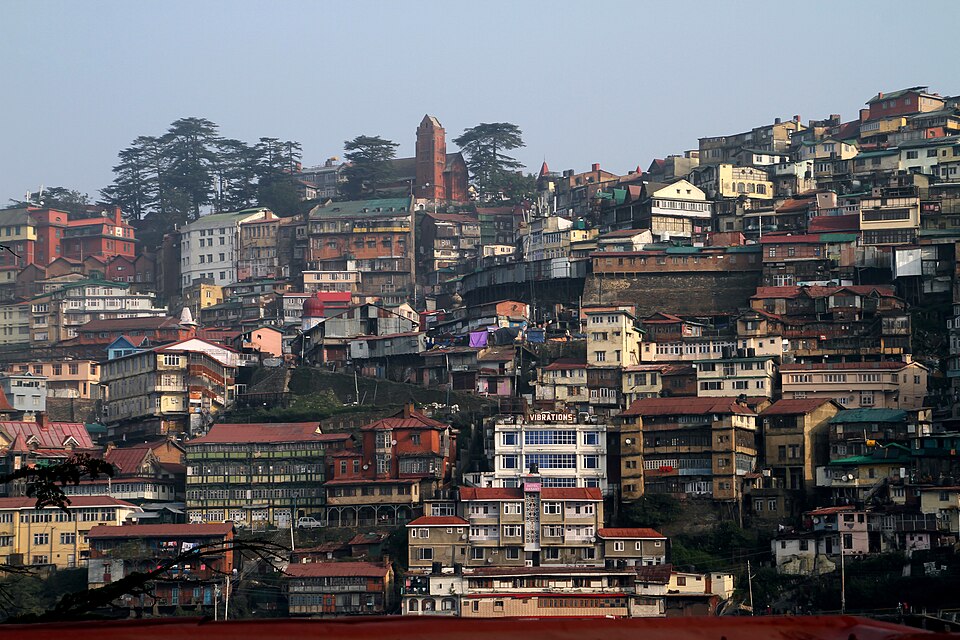
Hill stations were a colonial urban form with no Indian precedent — a settlement created at altitude for a European population, laid out around a mall, a church and a club, and populated seasonally. Their growth depended on the railways, which brought first officials and later a wider public within reach, and on a local labour force drawn from the surrounding hills.
The four options are all things hill stations were used for, which is what makes the item awkward; only the word 'initially' separates them. Fixing one date settles it — Simla dates from the Gurkha war of 1815-16 and only became the summer capital in 1864, so the military purpose plainly came first. John Lawrence was the Viceroy who first moved his Council there for the summer officially.
- Simla was founded in the aftermath of the Anglo-Gurkha war of 1815-16.
- Hill stations first served as garrisons and as sanatoria for soldiers.
- Simla became the summer capital of British India in 1864, under Viceroy John Lawrence.
- Darjeeling, Mount Abu, Ootacamund and Ranikhet followed the same pattern in different regions.
- The railways of the later nineteenth century turned the stations from garrisons into resorts.
- Reading the sanatorium function as the founding purpose; it grew out of the garrison.
- Assuming the summer capital arrangement was there from the start.
A single-word item — initially — separating four purposes that hill stations all eventually served.
Which one of the following Viceroys was the first to officially shift his Council to Simla in summer season?
- (a) John Lawrence
- (b) Lord Dalhousie
- (c) Lord Mayo
- (d) William Bentinck
Answer(a) John Lawrence
The later chapter of the same story. The move of the Council to Simla in 1864 is what turned a garrison town into a seat of government, which is why the summer-capital option here cannot be the original purpose.
- practice — not a real PYQ
Simla was established in the aftermath of which conflict?
- (a)The Anglo-Gurkha war
- (b)The First Anglo-Sikh war
- (c)The Third Anglo-Maratha war
- (d)The Second Anglo-Afghan war
Answer(a) The Anglo-Gurkha war of 1815-16 — the station grew from the military presence left behind.
- practice — not a real PYQ
In which year did Simla become the summer capital of British India?
- (a)1815
- (b)1838
- (c)1864
- (d)1911
Answer(c) 1864 — the Viceroy's Council moved there officially for the summer under John Lawrence.