
Which of the following statements is/are correct? 1. The Satavahanas ruled over parts of western India and the Deccan 2. The Satavahanas repaired and rebuilt Sudarshana Lake Select the correct answer using the code given below:
- (a)1 only
- (b)2 only
- (c)Both 1 and 2
- (d)Neither 1 nor 2
Correct — A, 1 only. The Satavahanas did rule over parts of western India and the Deccan; their core lay in what is now Maharashtra and the Andhra country, with Pratishthana, modern Paithan on the Godavari, as their principal capital. The second statement transfers the credit for Sudarshana Lake to the wrong dynasty. That reservoir in Saurashtra was built under Chandragupta Maurya by his governor Pushyagupta, given conduits under Ashoka, and repaired after a storm burst its embankment by Rudradaman, the Shaka Kshatrapa ruler — an event recorded in his own Junagadh rock inscription of about the middle of the second century CE. It was repaired again under the Guptas. The Satavahanas are nowhere in that sequence.
- (b)2 only — Rejects the one statement that is plainly true and accepts the one that names the wrong dynasty for Sudarshana Lake.
- (c)Both 1 and 2 — Accepts the lake statement. Sudarshana Lake belongs to the Mauryan, Shaka and Gupta record; the Junagadh inscription names Rudradaman as its repairer, and Rudradaman was a Kshatrapa rival of the Satavahanas, not one of them.
- (d)Neither 1 nor 2 — Would deny the Satavahanas the Deccan, which is the one thing everyone agrees they held.
The Satavahanas filled the political gap in the Deccan after the Mauryas, holding the western Deccan and the Andhra country for roughly four centuries either side of the start of the common era. They issued coins in lead, potin, copper and silver, patronised the rock-cut Buddhist monasteries of the western Ghats, and are the dynasty whose kings are identified by their mothers' names — Gautamiputra Satakarni is the famous instance.
The trap here is a real historical connection twisted by one step. The Satavahanas and the Shaka Kshatrapas of western India fought each other repeatedly, and Rudradaman's Junagadh inscription boasts of defeating a Satakarni twice while sparing him because of a marriage tie. So the two dynasties share a page of history, and a candidate who half-remembers the inscription may attach the lake to the wrong name in it. Hold on to the sequence instead — the reservoir was Mauryan in origin, Shaka in repair under Rudradaman, and Gupta in its second repair under Skandagupta. That inscription is also the first long royal record in Sanskrit rather than Prakrit, which is why it is set so often.
- The Satavahana core lay in the western Deccan and the Andhra country, with Pratishthana or Paithan as the principal capital.
- Sudarshana Lake in Saurashtra was built under Chandragupta Maurya and provided with conduits under Ashoka.
- Rudradaman, a Shaka Kshatrapa, repaired the lake after a storm, and his Junagadh rock inscription of about 150 CE records it.
- The Junagadh inscription is the earliest long royal inscription written in Sanskrit.
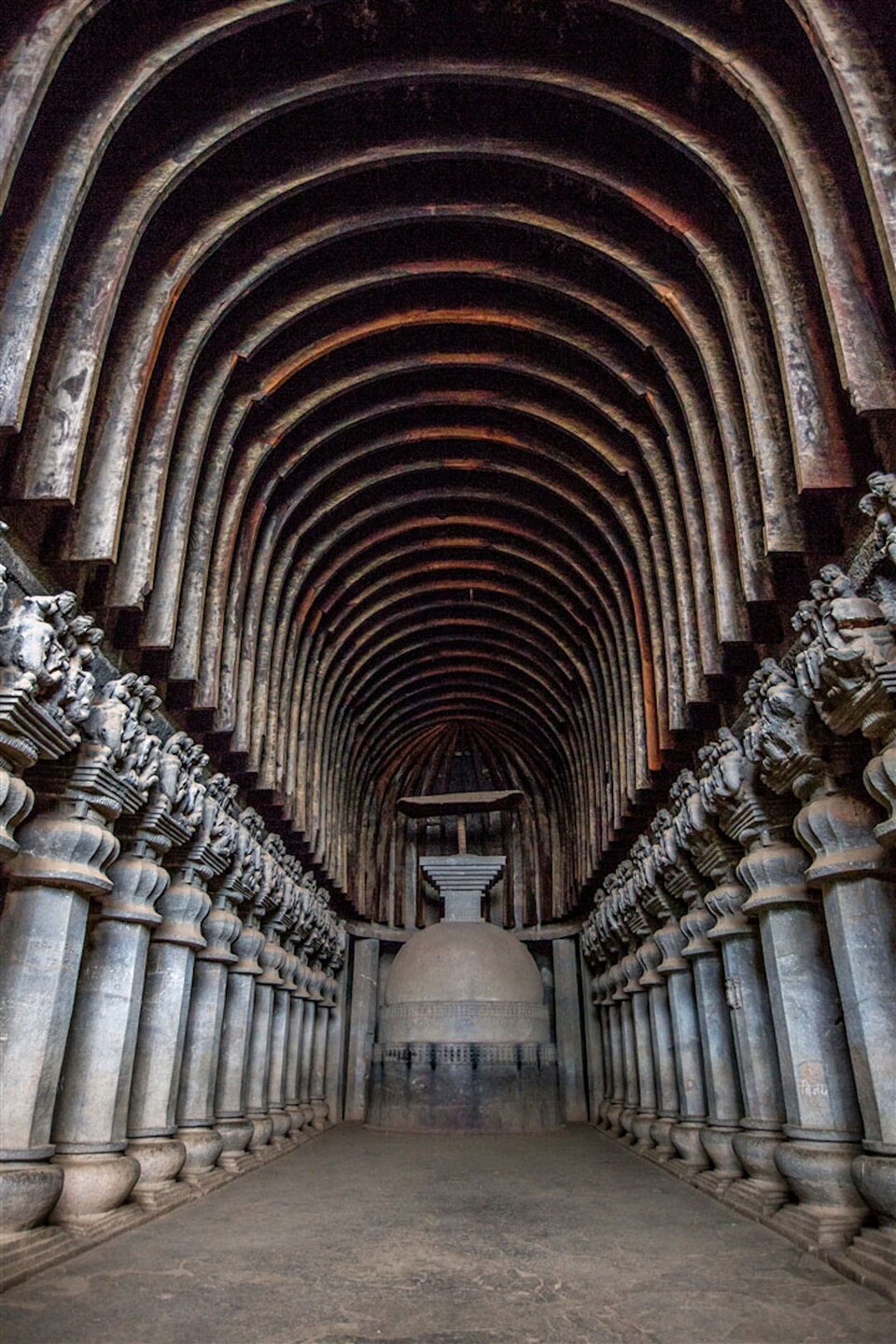
- Satavahana kings are identified by matronymics, as in Gautamiputra Satakarni, and the dynasty patronised the western Deccan cave monasteries.
- Attaching Sudarshana Lake to whichever dynasty is named in the same question.
- Confusing the Satavahanas with the Kshatrapas because their inscriptions mention each other.
- Assuming that the Andhra label used in the Puranas means the dynasty held only the eastern Deccan.
Two-statement items often pair one uncontroversial fact with one misattribution; check the attribution rather than the fact.
Which of the following rulers were identified through matronymics (names derived from that of the mother)?
- (a) Mallas of Pava
- (b) Videhas of Mithila
- (c) Yaudheyas
- (d) Satavahanas
Answer(d) Satavahanas
The naming practice that identifies the dynasty. Gautamiputra Satakarni and Vasishthiputra Pulumavi carry their mothers' names, which is the quickest way to recognise a Satavahana king in a list.
Which one of the following statements about coins struck during 200 BCE to 300 CE in the Indian subcontinent is not correct?
- (a) The Indo-Greeks introduced bilingual and biscript legends on their coins.
- (b) The Kushanas minted large quantities of gold coins as well as copper coins of low denomination.
- (c) The Satavahanas issued coins of silver, copper, lead and potin.
- (d) Absence of Negama coins suggests the declining power and authority of merchant guilds.
Answer(d) Absence of Negama coins suggests the declining power and authority of merchant guilds.
The same dynasty tested through its coinage, and in the same period as this question. Lead and potin issues are the Satavahana signature and place them firmly in the western Deccan trade network.
- practice — not a real PYQ
The Junagadh rock inscription that records the repair of Sudarshana Lake was issued by
- (a)Gautamiputra Satakarni
- (b)Rudradaman
- (c)Kharavela
- (d)Samudragupta
Answer(b) Rudradaman — the Shaka Kshatrapa ruler, in about the middle of the second century CE.
- practice — not a real PYQ
The principal capital of the Satavahanas was located at
- (a)Amaravati
- (b)Pratishthana
- (c)Vidisha
- (d)Ujjain
Answer(b) Pratishthana — modern Paithan on the Godavari in Maharashtra.