
Oil and water do NOT mix because of the property of
- (a)bulk modulus
- (b)shear strain
- (c)volume effect
- (d)surface tension
Correct — D, surface tension. Of the four properties offered, only surface tension describes what happens at the boundary of a liquid. Water molecules attract one another far more strongly than they attract oil molecules, so the boundary between the two carries a high interfacial tension, and the mixture minimises that boundary by pulling the oil together into drops instead of dispersing it. Bulk modulus, shear strain and volume behaviour all describe what a material does through its interior, and none of them says anything about an interface.
- (a)bulk modulus — Bulk modulus measures how much a substance resists being compressed uniformly. It is about response to pressure, and two liquids of similar bulk modulus can still refuse to mix.
- (b)shear strain — Shear strain describes the deformation of a body when a tangential force is applied. It concerns how a material yields, not whether two liquids will stay in one phase.
- (c)volume effect — There is no property of liquids called the volume effect, and no volume change explains immiscibility. Alcohol and water do change volume slightly on mixing — and they mix completely.
A molecule inside a liquid is pulled equally in all directions; one at the surface is not, and the imbalance gives the surface an energy cost per unit area, measured as surface tension. Wherever two liquids meet, the same argument applies at their common boundary and gives an interfacial tension. The larger it is, the more strongly the system shrinks that boundary — which is what keeps oil in blobs on water rather than spread through it.
The deeper reason for the high interfacial tension is polarity. Water is a polar molecule with hydrogen bonding, while the hydrocarbon chains of oil are non-polar, so the two have very little attraction for each other and the rule of thumb that like dissolves like applies. Soap works by bridging the divide: each soap molecule has a polar head that sits in the water and a long non-polar tail that buries itself in the oil, cutting the interfacial tension and allowing tiny oil droplets to stay suspended as an emulsion. That is what a detergent, a bile salt and a mayonnaise all do.
- Surface tension is the energy cost per unit area of a liquid surface, and it arises from the unbalanced attraction on molecules at the boundary.
- Where two immiscible liquids meet, the equivalent quantity is called interfacial tension, and a high value keeps them apart.
- Water is polar and hydrogen-bonded, while oils are non-polar hydrocarbons, so like dissolves like keeps them in separate phases.
- A soap or detergent molecule has a polar head and a non-polar tail, and it lowers interfacial tension to form an emulsion.
- Surface tension also explains liquid drops taking a spherical shape, capillary rise and insects resting on a pond surface.
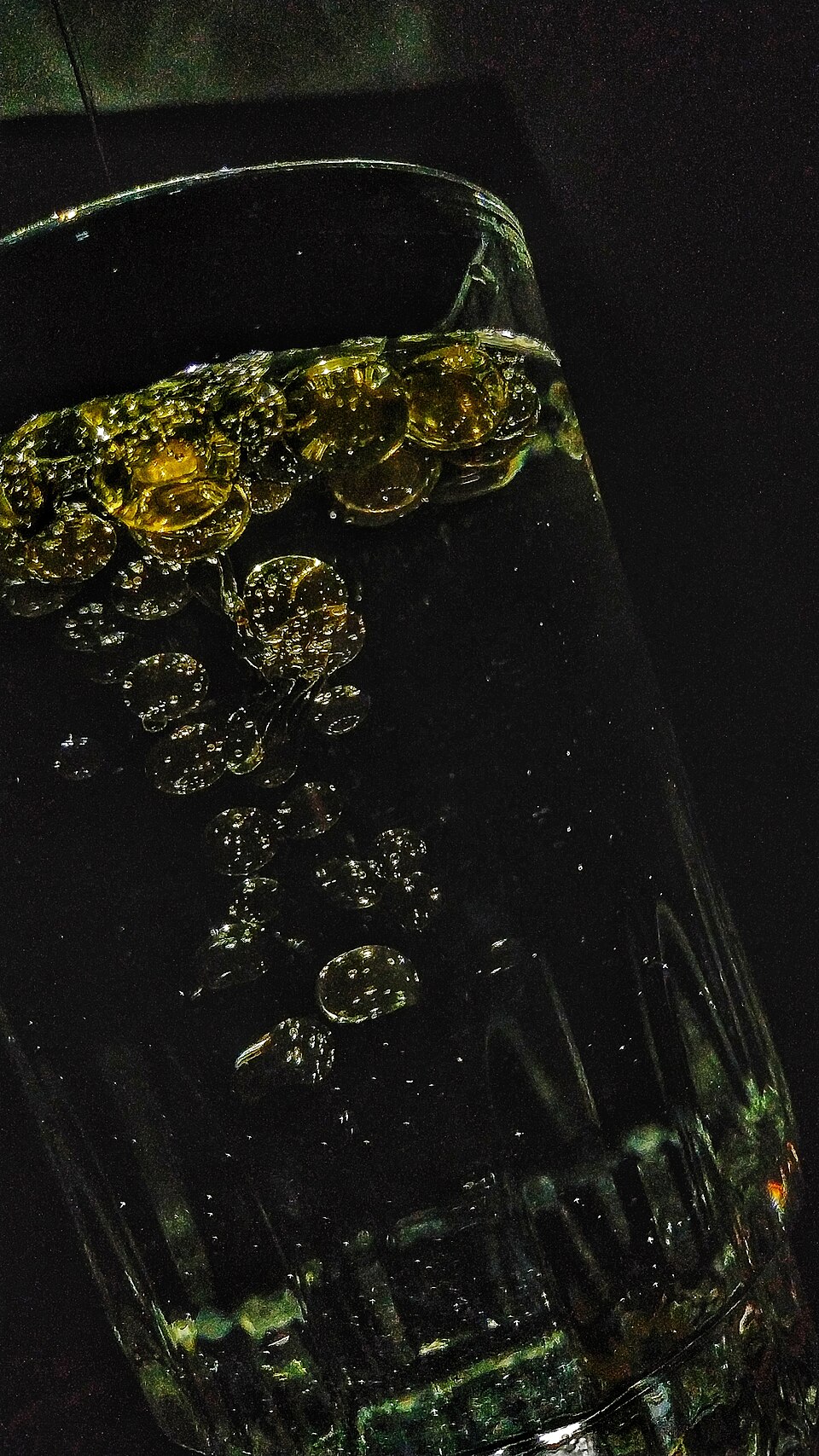
- Choosing bulk modulus because it is the only other named liquid property that sounds mechanical.
- Forgetting that soap does not make oil soluble; it disperses it as an emulsion.
- Treating density as the reason oil and water separate — density decides which floats, not whether they mix.
A property-naming item. The three wrong options are real quantities from elasticity, put in to test whether a candidate can tell a surface property from a bulk one.
The tendency of a liquid drop to contract and occupy minimum area is due to
- (a) viscosity
- (b) surface tension
- (c) density
- (d) vapour pressure
Answer(b) surface tension
The same property named from its most familiar consequence. A drop contracting to the smallest possible area is the identical minimising tendency that keeps oil balled up on water rather than spread through it.
- practice — not a real PYQ
A liquid drop takes a spherical shape because of
- (a)viscosity
- (b)surface tension
- (c)density
- (d)elasticity
Answer(b) surface tension — a sphere has the least surface area for a given volume, so it costs the least surface energy.
- practice — not a real PYQ
Soap helps in cleaning oily dirt mainly because a soap molecule has
- (a)a purely polar structure
- (b)a purely non-polar structure
- (c)a polar head and a non-polar tail
- (d)a very high density
Answer(c) a polar head and a non-polar tail — the tail buries itself in the oil while the head stays in the water, lowering the interfacial tension.