
Who won the Nobel Peace Prize in 2023 ?
- (a)Narges Mohammadi
- (b)Maria Ressa
- (c)Nadia Murad
- (d)Abiy Ahmed
Correct — A, Narges Mohammadi. The Norwegian Nobel Committee awarded the Nobel Peace Prize 2023 to Narges Mohammadi, in the Committee's own words, 'for her fight against the oppression of women in Iran and her fight to promote human rights and freedom for all'. She was born on 21 April 1972 at Zanjan in Iran, and she was in Evin prison in Tehran when the award was announced, so she could neither receive the news in person nor travel to Oslo — her children accepted the prize and read her lecture on her behalf. The award came a year after the nationwide protests that followed the death in custody of Mahsa Amini in September 2022, and the citation's phrasing ties it directly to the position of women in Iran. What makes this question answerable even without the 2023 headline is that every other name on the list is a real laureate of a clearly different year, and each of those years has its own equally famous citation. Once you can attach a year to each of the four, the question solves itself by elimination, and no two of them can be confused because no two share a cause. Note also the Iranian pattern the Committee has twice recognised: Shirin Ebadi, a lawyer and human-rights activist, had won in 2003 — a fact UPSC itself has asked — making Narges Mohammadi the second Iranian woman honoured with this prize, twenty years later.
- (b)Maria Ressa — A laureate of 2021, not 2023. The Nobel Peace Prize 2021 was awarded jointly to Maria Ressa and Dmitry Andreyevich Muratov 'for their efforts to safeguard freedom of expression, which is a precondition for democracy and lasting peace' — she a Filipino journalist and co-founder of Rappler, he the editor of Russia's Novaya Gazeta. The theme is press freedom, not the position of women.
- (c)Nadia Murad — A laureate of 2018. The prize that year went jointly to Denis Mukwege and Nadia Murad 'for their efforts to end the use of sexual violence as a weapon of war and armed conflict'. Murad is a Yazidi survivor of Islamic State captivity in Iraq; the shared subject of women's rights makes her the most confusable name here, but the year and the citation are different.
- (d)Abiy Ahmed — A laureate of 2019 — awarded to Abiy Ahmed Ali, then Prime Minister of Ethiopia, 'for his efforts to achieve peace and international cooperation, and in particular for his decisive initiative to resolve the border conflict with neighbouring Eritrea'. That is a head-of-government peace-treaty award, a different category of Peace Prize altogether from a human-rights activist's.
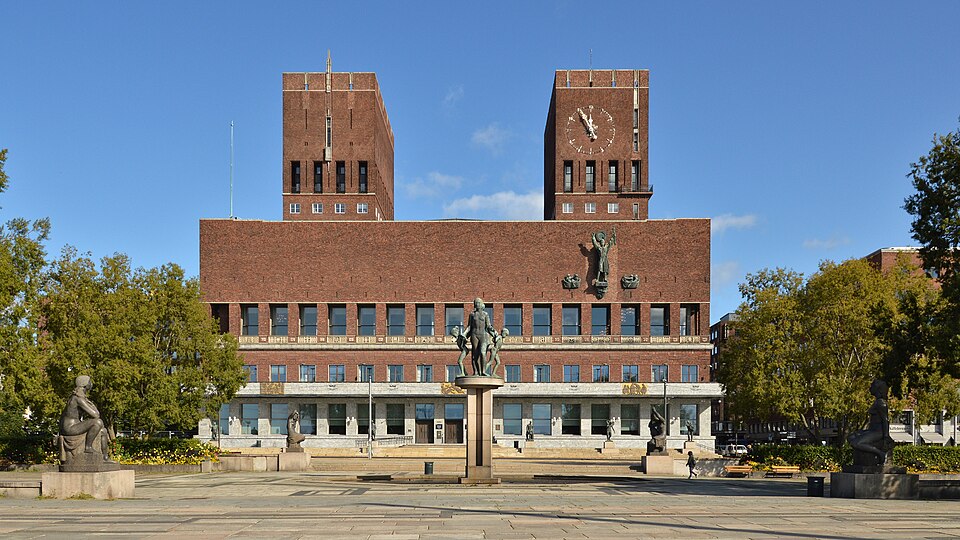
The Nobel Peace Prize is the odd one out among the Nobel Prizes in two structural ways worth knowing. First, while the prizes in physics, chemistry, physiology or medicine and literature are decided in Sweden, the Peace Prize is decided by a five-member committee appointed by the Norwegian Parliament and is awarded in Oslo, not Stockholm — an arrangement laid down in Alfred Nobel's own will. Second, it is the only Nobel that may go to an organisation as well as to a person, which is why the International Committee of the Red Cross, the United Nations High Commissioner for Refugees, the International Campaign to Abolish Nuclear Weapons and the World Food Programme are all laureates. Prizes may be shared by up to three individuals. The Peace Prize also runs closest to current events, which is why it is the Nobel that examinations ask about most: it responds to the year's politics — a protest movement, a war, a treaty — in a way the science prizes, which usually reward work done decades earlier, do not.
Treat any 'who won the prize in year X' question as a matching exercise rather than a recall test. The setter has to fill three wrong options, and the easiest way to do it is with genuine laureates of other years — as here, where all four names are real winners. So the reliable method is to attach a year to each name and see which one is left, and that works even if the target year is the one you are least sure of. Build the list in the shape the examiner uses: recent Peace Prize years with one identifying phrase each, and for each Indian-relevant laureate the reason. Kailash Satyarthi shared the 2014 prize with Malala Yousafzai for the struggle against the suppression of children and for the right of all children to education; Mother Teresa won in 1979. A second useful pattern here is the country: Iran has produced two women Peace laureates, Shirin Ebadi in 2003 and Narges Mohammadi in 2023, and UPSC has already asked about the first of them.
- The Norwegian Nobel Committee's citation for 2023, verbatim: Narges Mohammadi, 'for her fight against the oppression of women in Iran and her fight to promote human rights and freedom for all'.
- Narges Mohammadi was born on 21 April 1972 at Zanjan, Iran, and was imprisoned in Evin prison in Tehran when the prize was announced.
- Nobel Peace Prize 2021: Maria Ressa and Dmitry Andreyevich Muratov, 'for their efforts to safeguard freedom of expression, which is a precondition for democracy and lasting peace'.
- Nobel Peace Prize 2019: Abiy Ahmed Ali, 'for his efforts to achieve peace and international cooperation, and in particular for his decisive initiative to resolve the border conflict with neighbouring Eritrea'.
- Nobel Peace Prize 2018: Denis Mukwege and Nadia Murad, jointly, 'for their efforts to end the use of sexual violence as a weapon of war and armed conflict'. Shirin Ebadi of Iran had won in 2003.
- Assuming a familiar name must be the recent winner. All four options here are genuine laureates; only the year distinguishes them.
- Confusing Nadia Murad with Narges Mohammadi because both awards concern violence against women. Murad's 2018 citation is about sexual violence in war, Mohammadi's 2023 citation about the oppression of women in Iran.
- Forgetting that the Peace Prize is decided in Norway while every other Nobel is decided in Sweden — a favourite second-order question once the laureate is known.
BPSC asks current affairs as a single name against a single year, and fills the wrong options with real laureates of nearby years, so a candidate who has memorised only the latest headline can still be beaten. UPSC asks the older awards and asks around them — what a laureate's cause was, which country a laureate came from, or which of a list of four names have won at all — which is a test of context rather than of the year's news.
Shirin Ebadi, who won the Nobel Peace Prize in 2003, is from
- (a) Iraq
- (b) Nigeria
- (c) Iran
- (d) Libya
Answer(c) Iran
The same prize, the same country and the same cause, exactly twenty years earlier — Shirin Ebadi in 2003 and Narges Mohammadi in 2023 are the two Iranian women the Norwegian Nobel Committee has honoured for human-rights work.
Bishop Carlos Felipe Ximenes Belo and Jose Ramos Horta who shared the 1996 Nobel Peace Prize are known for their work for the cause of
- (a) East Timor
- (b) Guatemala
- (c) Bosnia
- (d) Barunda
Answer(a) East Timor
The same recall in reverse — the laureates are given and the cause has to be supplied. It is worth practising both directions, because the citation is what actually distinguishes one Peace Prize year from another.
- practice — not a real PYQ
The Nobel Peace Prize is awarded by a committee appointed by the parliament of
- (a)Sweden
- (b)Norway
- (c)Denmark
- (d)Switzerland
Answer(b) Norway — the five-member Norwegian Nobel Committee decides the Peace Prize and it is presented in Oslo, while all the other Nobel Prizes are decided in Sweden and presented in Stockholm.
- practice — not a real PYQ
Which Indian shared the Nobel Peace Prize in 2014 with Malala Yousafzai ?
- (a)Kailash Satyarthi
- (b)Amartya Sen
- (c)Venkatraman Ramakrishnan
- (d)Abhijit Banerjee
Answer(a) Kailash Satyarthi — honoured with Malala Yousafzai for the struggle against the suppression of children and young people and for the right of all children to education.