
Which of the following is the playground of Europe ?
- (a)Italy
- (b)France
- (c)Switzerland
- (d)Germany
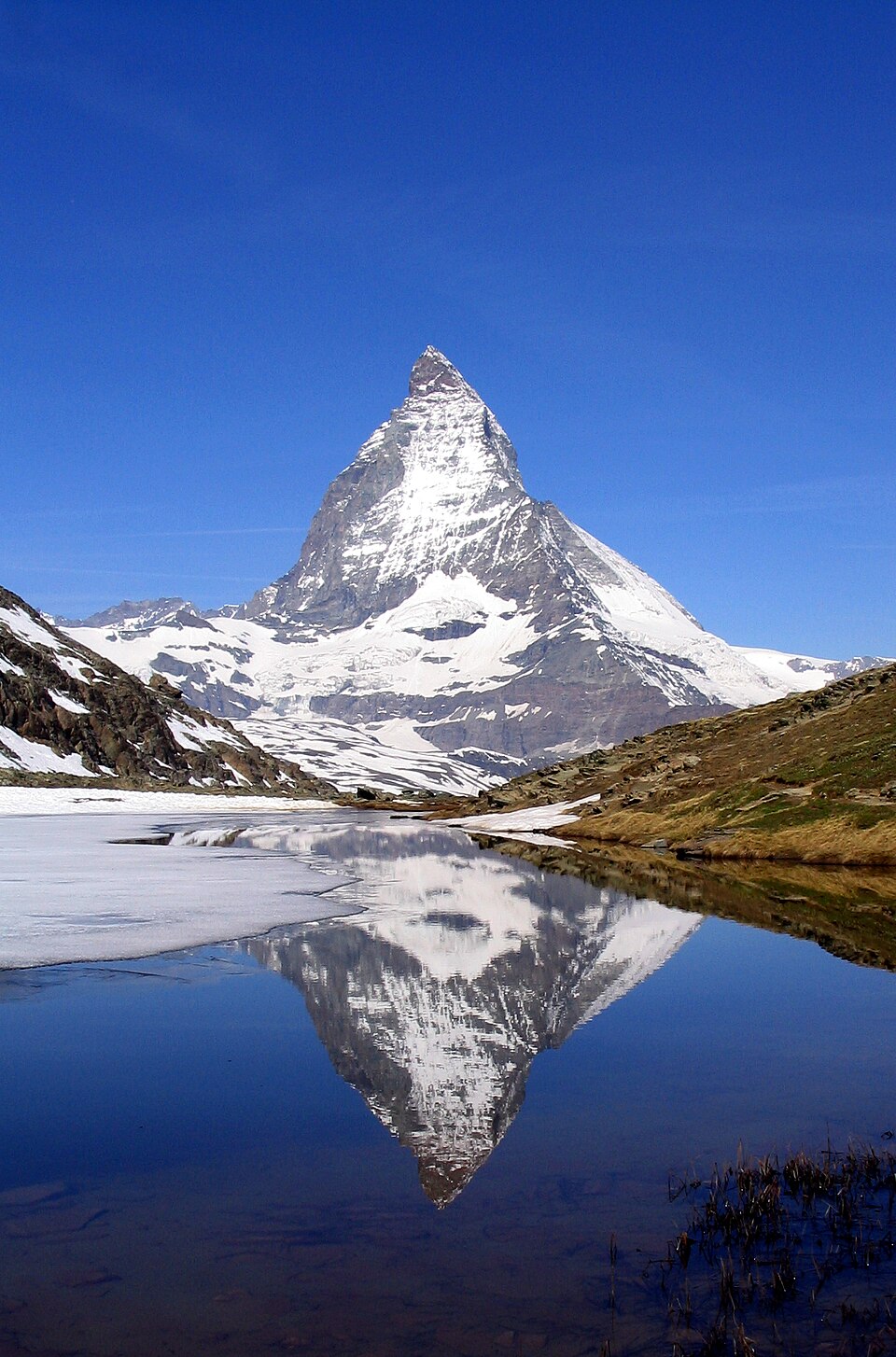
Correct — C, Switzerland. The epithet is not folklore; it has a printed origin and a date. Sir Leslie Stephen — one of the earliest presidents of the Alpine Club, which he served from 1865 to 1868, and later the founding editor of the Dictionary of National Biography — published a book in 1871 called The Playground of Europe, written in commemoration of his own first ascents in the Alps. It became a mountaineering classic and, together with Edward Whymper's Scrambles Amongst the Alps, drew successive generations of British readers to the Swiss valleys. The phrase stuck to the country the book was about. The physical geography behind it is exact: the Alps cover 60 per cent of Switzerland's 41,285 sq km, and although Switzerland holds only about 14 per cent of the Alps' total area of 192,753 sq km, 48 of the 82 Alpine four-thousanders stand inside it — the Dufourspitze (4,634 m), the Dom (4,545 m), the Weisshorn (4,506 m) and the Matterhorn (4,478 m) among them. On top of that mountain wall the Swiss built the recreational infrastructure the nickname describes: the Swiss Alpine Club in 1863, mountain railways at Rigi in 1873, Pilatus in 1889 and Gornergrat in 1898, and the Jungfraubahn in 1912 running up to the Jungfraujoch, the highest railway station in Europe. That combination — Europe's highest ground, made reachable by anybody with a ticket — is what turned one country into the continent's holiday playground and made the phrase a fixed one.
- (a)Italy — Italy has a long Alpine frontier of its own — the Matterhorn's southern slope is Italian, and the country is celebrated for the Renaissance, its lakes and its coastline — but no standard geography list gives it the playground epithet. Its shorthand nicknames run to its shape (the Boot) and its history, not to Alpine recreation.
- (b)France — The likeliest wrong answer for anyone who reasons only from tourist arrivals, since France is the world's most-visited country and holds Mont Blanc and Chamonix. But the phrase names the country whose entire identity is Alpine recreation, and France's own conventional nickname is geometric, from its outline — l'Hexagone. The Alps are one region of France; in Switzerland they are the country.
- (d)Germany — Germany's slice of the Alps is a narrow strip of the Bavarian Alps along its southern border — the Zugspitze at 2,962 m is its highest point, lower than dozens of Swiss summits and not a four-thousander at all. It carries no playground epithet in any standard nickname list.
Geographical epithets are a small, closed vocabulary that examiners across every commission reuse, because each one is a single unambiguous fact that fits in one line. They arise in three ways. Some come from a book or a writer, as here: Leslie Stephen's The Playground of Europe (1871) fixed the phrase on Switzerland. Some come from an economic function — Santos is the Coffee Port of the world, Chicago was the Hog Butcher of the world. And some come from a physical resemblance noticed by colonial officials, which is how Shillong became the Scotland of the East. The important thing about all three kinds is that they are conventions, not deductions: you cannot derive from first principles that Switzerland rather than Austria is the playground, because Austria has Alps too. You either know the convention or you guess. That is why they repay being learned as a list rather than reasoned about.
There is no escape option on this question — no 'none of the above' — so exactly one of four named countries must carry the phrase, and the discrimination is pure recall. If the phrase itself has gone, two indirect routes narrow it. First, ask which of the four countries is *defined* by its mountains rather than merely containing some: Italy, France and Germany are all large, varied states with plains, coasts and industrial belts, while Switzerland is landlocked and 60 per cent Alpine. Second, ask which country has no other famous epithet competing for the slot — France is l'Hexagone, Italy is the Boot, and Germany has none in the standard lists, which leaves the playground unclaimed except by Switzerland. Both routes land in the same place. Learn this one alongside its neighbours in the same family, because BPSC prints them regularly: the Sorrow of Bihar, the Sorrow of China, the Scotland of the East, the Roof of the World.
- Sir Leslie Stephen published The Playground of Europe in 1871; he was President of the Alpine Club from 1865 to 1868 and edited the Alpine Journal from 1868 to 1872.
- The Alps cover 60 per cent of Switzerland's 41,285 sq km; Switzerland holds about 14 per cent of the Alps' total 192,753 sq km but contains 48 of the 82 Alpine four-thousanders.
- Switzerland's highest summit is the Dufourspitze at 4,634 m; the Matterhorn (4,478 m) was first climbed on 14 July 1865 by a party led by Edward Whymper from Zermatt, four of whose seven members died on the descent.
- The Jungfrau-Aletsch area became a UNESCO World Heritage Site in 2001 — the first in the Alps; the Aletsch Glacier is the largest and longest in the Alps, reaching about 900 m depth at Konkordiaplatz.
- The tourist infrastructure that earned the nickname is datable: Swiss Alpine Club 1863, Rigi railway 1873, Pilatus 1889, Gornergrat 1898, and the Jungfraubahn in 1912 to the Jungfraujoch, Europe's highest railway station.
- Choosing France because it receives the most tourists in the world. The epithet is about a country whose whole territory is a recreation ground, not about visitor numbers.
- Assuming the Alps are Swiss alone. France, Italy, Austria, Germany, Slovenia, Liechtenstein and Monaco all touch the range; only Switzerland is 60 per cent covered by it.
- Trying to reason an epithet out from geography. These are conventions with a documented origin — here, the title of an 1871 book — and must be memorised as such.
BPSC asks epithets in their bare one-line form — 'which is the playground of Europe', 'which river is the Sorrow of Bihar', 'which is the Scotland of North-East India' — and this paper does all three within fifty questions of each other. UPSC almost never asks a nickname on its own; when the same knowledge appears it is embedded in a match-the-pairs list or used as a wrong option, as with the Coffee Port of the world.
Which one of the following is known as the “Coffee port” of the world?
- (a) Sao Paulo
- (b) Santos
- (c) Rio de Janeiro
- (d) Buenos Aires
Answer(b) Santos
The same question type in world geography — a place identified only by its conventional epithet, with three plausible neighbours offered alongside it, so the item is decided entirely by whether the phrase has been learned.
- practice — not a real PYQ
Who wrote the 1871 book The Playground of Europe, which gave Switzerland its enduring nickname ?
- (a)Edward Whymper
- (b)Leslie Stephen
- (c)John Ruskin
- (d)Horace-Bénédict de Saussure
Answer(b) Leslie Stephen — President of the Alpine Club 1865-68, who published The Playground of Europe in 1871 to commemorate his own first ascents. Whymper wrote Scrambles Amongst the Alps and led the first Matterhorn ascent in 1865.
- practice — not a real PYQ
Which is the highest peak lying entirely within Switzerland ?
- (a)Matterhorn
- (b)Mont Blanc
- (c)Dufourspitze
- (d)Jungfrau
Answer(c) Dufourspitze — 4,634 m, Switzerland's highest summit. The Matterhorn (4,478 m) straddles the Swiss-Italian border, and Mont Blanc is on the France-Italy frontier, not in Switzerland at all.