
Choose the correct pair from the following options.
- (a)Third-Year Plan – Focus on Globalisation
- (b)First Five-Year Plan – Focus on Agriculture
- (c)Fifth Five-Year Plan – Focus on Industry
- (d)Fourth Five-Year Plan – Focus on Service
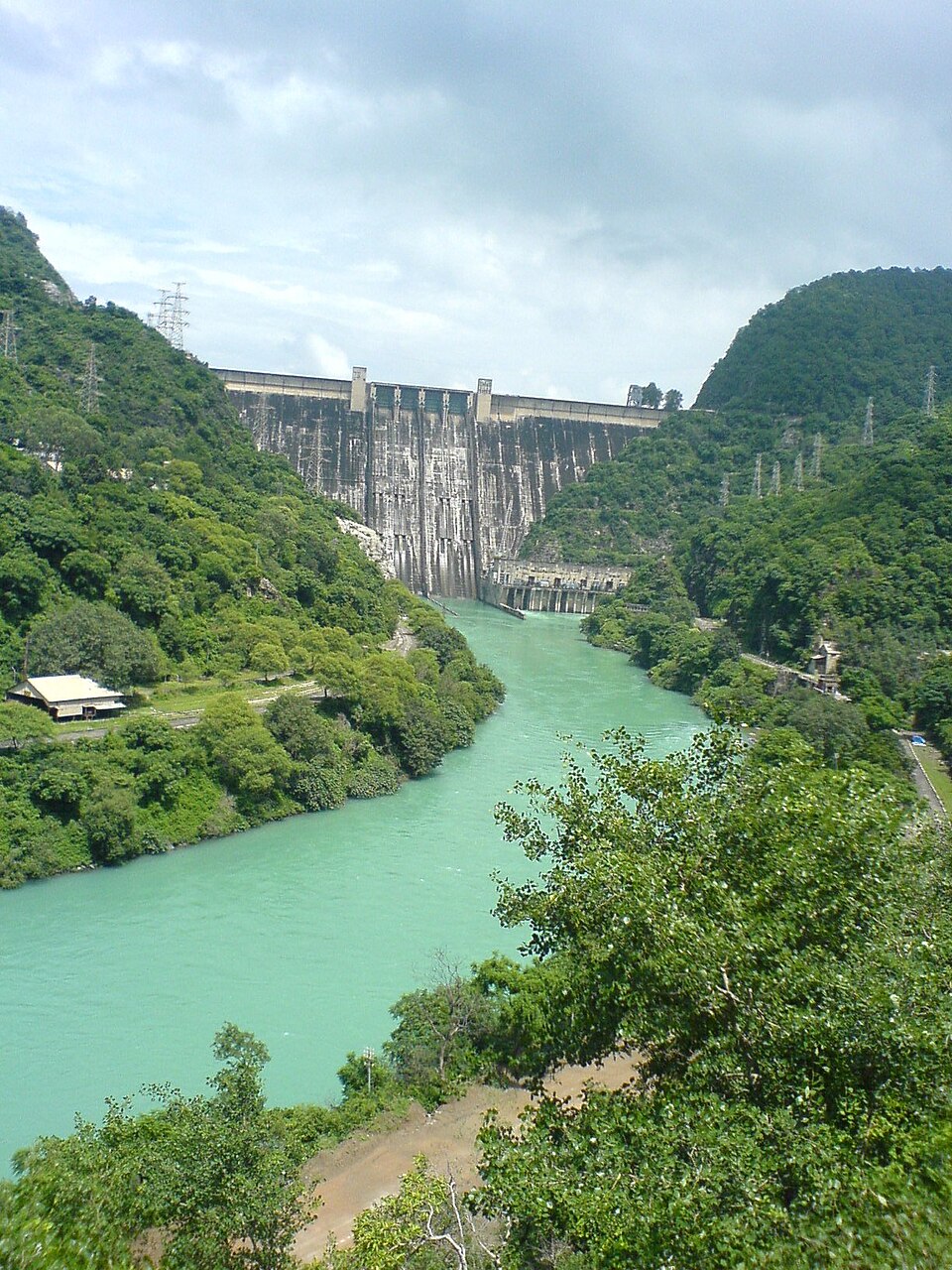
Correct — B, First Five-Year Plan – Focus on Agriculture. The First Plan ran from 1951 to 1956, was drawn on the Harrod–Domar model, and its declared motto was the development of agriculture. The reason was immediate rather than ideological: Partition had cut India off from the canal-irrigated wheat lands of west Punjab and from the jute of east Bengal, refugees had to be resettled, and foodgrain output had to be raised before anything else could be attempted. The money followed the priority — of a planned outlay of about 2,069 crore rupees, 27.2 per cent went to irrigation and energy and 17.4 per cent to agriculture and community development, against only 8.6 per cent for industry. The great multipurpose river valley projects belong to this Plan: Bhakra on the Sutlej, Hirakud on the Mahanadi and the Damodar Valley dams, all conceived to deliver irrigation, flood control and power together. It was also the only Plan comfortably to beat its own target, aiming at 2.1 per cent annual growth of gross domestic product and achieving 3.6 per cent, helped by good monsoons; per capita income rose about 8 per cent over the period. Every other pair on this page attaches a Plan to a focus that belonged to some other Plan or to no Plan at all, so (b) is the only pair in which both halves match. The one caution worth stating plainly is about the option's own phrasing: 'Focus on Agriculture' is a compression. The First Plan gave priority to agriculture, irrigation and power together and explicitly set out to lay foundations for industry as well; it did not ignore industry, it simply put agriculture first.
- (a)Third-Year Plan – Focus on Globalisation — Wrong twice over. There has never been a 'Third-Year Plan' — the booklet prints it that way where its three siblings say 'Five-Year Plan', and the misprint is the Commission's own and is reproduced here rather than repaired. And globalisation was the declared focus of no numbered Plan: the reforms of July 1991 fell in the gap between the Seventh Plan and the Eighth, during the two Annual Plans of 1990 to 1992, and the Eighth Plan of 1992 to 1997 was merely the first to be drawn up afterwards.
- (c)Fifth Five-Year Plan – Focus on Industry — The focus named belongs to a different Plan. Industry — specifically heavy and basic industry on the Mahalanobis model — was the thrust of the SECOND Plan of 1956 to 1961, which built the steel plants at Bhilai with Soviet help, Durgapur with British and Rourkela with West German. The Fifth Plan of 1974 onward stressed employment, poverty alleviation under the Garibi Hatao banner and self-reliance, and introduced the Minimum Needs Programme.
- (d)Fourth Five-Year Plan – Focus on Service — No Plan was ever built around the service sector. The Fourth Plan, 1969 to 1974, was framed on the Gadgil formula around 'growth with stability and progressive achievement of self-reliance', and its landmarks were the nationalisation of fourteen major banks in 1969, the spread of the Green Revolution and the introduction of a buffer stock of foodgrains. Services became India's largest sector by output only decades later, and by growth rather than by plan.
India ran twelve Five-Year Plans between 1951 and 2017, drawn up by the Planning Commission — a body created by a Cabinet resolution in March 1950, never mentioned in the Constitution — and finally approved by the National Development Council. The sequence of declared priorities is the examinable core. First (1951–56): agriculture, irrigation and power, on the Harrod–Domar model. Second (1956–61): heavy and basic industry, on the Mahalanobis model, alongside the Industrial Policy Resolution of 1956. Third (1961–66): self-sustaining growth, wrecked by the wars of 1962 and 1965 and the drought of 1964–65, achieving only 2.4 per cent against a target of 5.6, and followed by three Annual Plans, the 'plan holiday' of 1966 to 1969. Fourth (1969–74): growth with stability and self-reliance. Fifth (1974–79): poverty removal, cut short in 1978 when the Janata government rejected it. Sixth (1980–85) and Seventh (1985–90). Two Annual Plans (1990–92) covering the reforms. Eighth (1992–97): the first to name human development as the core of development effort, and the Plan in which industrial licensing was effectively abolished. The Twelfth (2012–17) was the last; the Planning Commission was replaced by NITI Aayog on 1 January 2015.
A 'choose the correct pair' question is a test of four independent facts, not one, and the efficient order is to knock out what is structurally impossible before checking any substance. Here option (a) can be discarded on its first word: no Plan in the series is called a 'Third-Year Plan', and even read charitably as the Third Plan, globalisation belongs to 1991 and not to 1961–66. That leaves three Plan-to-focus pairs. Anchor two focuses firmly — agriculture to the First and heavy industry to the Second — and option (c) collapses at once, because the industry label has been moved four Plans down the list. Option (d) fails on a different test: 'Service' never appears as a Plan objective at all, so no amount of remembering Fourth Plan detail is needed to reject it. What survives is (b). The general lesson for this format is that a displaced label is the commonest way a pair is falsified: the examiner takes a true description and attaches it to the wrong item in the same series, which is precisely what options (c) and (d) do.
- First Plan (1951–56): Harrod–Domar model, motto 'development of agriculture'; of about 2,069 crore rupees of outlay, 27.2 per cent went to irrigation and energy and 17.4 per cent to agriculture and community development, against 8.6 per cent for industry.
- It targeted 2.1 per cent GDP growth and achieved 3.6 per cent, and initiated the Bhakra, Hirakud and Damodar Valley projects.
- Second Plan (1956–61): Mahalanobis model and rapid industrialisation; steel plants at Bhilai (Soviet Union), Durgapur (Britain) and Rourkela (West Germany); target 4.5 per cent, achieved 4.27 per cent.
- Third Plan (1961–66): target 5.6 per cent, achieved only 2.4 per cent after the wars of 1962 and 1965 and the drought of 1964–65, forcing three Annual Plans — the 'plan holiday' of 1966 to 1969.
- Fourth Plan (1969–74) was based on the Gadgil formula and saw the nationalisation of fourteen banks in 1969; the Fifth Plan (from 1974) stressed employment, Garibi Hatao and self-reliance, and was rejected by the Janata government in 1978.
- Attaching industry to the Fifth Plan. The industry Plan is the Second, on the Mahalanobis model; the Fifth is the Garibi Hatao Plan.
- Treating 'Third-Year Plan' as a typographical slip you should read past. Even as the Third Five-Year Plan the pair fails, because globalisation is a 1991 phenomenon.
- Assuming the First Plan ignored industry. It gave agriculture priority and 8.6 per cent of outlay still went to industry; the pair is correct because agriculture came first, not because industry was absent.
BPSC likes the matched-pair format and fills it from a single series so that only the internal ordering is being tested — here four Plans and four focuses, with one label moved. UPSC has asked the same Plan-to-objective mapping as a statement question, for instance whether the Second Plan emphasised heavy industry and whether import substitution began in the Third, and as a single-answer question about which Plan first named human development as the core of development effort.
Consider the following statements regarding Indian Planning : 1. The Second Five-Year Plan emphasised on the establishment of heavy industries. 2. The Third Five-Year Plan introduced the concept of import substitution as a strategy for industrialisation. Which of the statements given above is/are correct ?
- (a) 1 only
- (b) 2 only
- (c) Both 1 and 2
- (d) Neither 1 nor 2
Answer(a) 1 only
UPSC keys the statement that industry belongs to the SECOND Plan — which is exactly the fact that falsifies option (c) here. The same row also shows the examiner's favourite move, shifting a true description one Plan along and asking whether you notice.
Which one of the following Five-Year Plans recognised human development as the core of all developmental efforts?
- (a) The Third Five-Year Plan
- (b) The Fifth Five-Year Plan
- (c) The Sixth Five-Year Plan
- (d) The Eighth Five-Year Plan
Answer(d) The Eighth Five-Year Plan
The identical skill in single-answer form — match a declared focus to the right Plan. It also fixes the Eighth Plan as the post-1991 Plan, which is the memory that keeps 'globalisation' away from option (a)'s Third Plan.
Who among the following Indian capitalist was not the architect of “Bombay Plan” ?
- (a) J. R. D. Tata
- (b) Dhirubhai Ambani
- (c) G. D. Birla
- (d) Sri Ram
Answer(b) Dhirubhai Ambani
The 70th CCE paper of December 2024 asked about the private-sector blueprint of 1944 that preceded state planning. The Bombay Plan and the First Five-Year Plan are the two ends of the same story — industrialists proposing a planned economy before Independence, and the Planning Commission delivering one after it.
Which of the following is not true about globalization and its impact on India?
- (a) It has expanded trade in goods and services.
- (b) It has led to greater flow of Foreign Direct Investment.
- (c) Increase in exports is greater than increase in imports.
- (d) None of the above
Answer(c) Increase in exports is greater than increase in imports.
The word that option (a) misplaces, examined on its own ground by the 69th CCE. Globalisation is treated there as a post-1991 process with measurable effects on trade and investment — which is precisely why it cannot be the declared focus of a Plan from the 1960s.
- practice — not a real PYQ
The Second Five-Year Plan of India was based on which model ?
- (a)Harrod–Domar model
- (b)Mahalanobis model
- (c)Gadgil formula
- (d)Wage-goods model
Answer(b) Mahalanobis model — the Second Plan (1956–61) followed P. C. Mahalanobis's investment-allocation framework and directed resources to heavy and basic industry. The Harrod–Domar model underlay the First Plan and the Gadgil formula governed central assistance from the Fourth.
- practice — not a real PYQ
The 'plan holiday' in Indian planning refers to the period
- (a)1962–65
- (b)1966–69
- (c)1978–80
- (d)1990–92
Answer(b) 1966–69 — after the Third Plan achieved only 2.4 per cent growth against a 5.6 per cent target, three Annual Plans were drawn up in place of a Five-Year Plan. The 1990–92 gap was also covered by two Annual Plans but is not what the term conventionally denotes.