
In 1901 who has published the book 'Poverty and Un-British Rule in India' ?
- (a)R. C. Dutt
- (b)Phirozshah Mehta
- (c)S. N. Banerjee
- (d)Dadabhai Naoroji
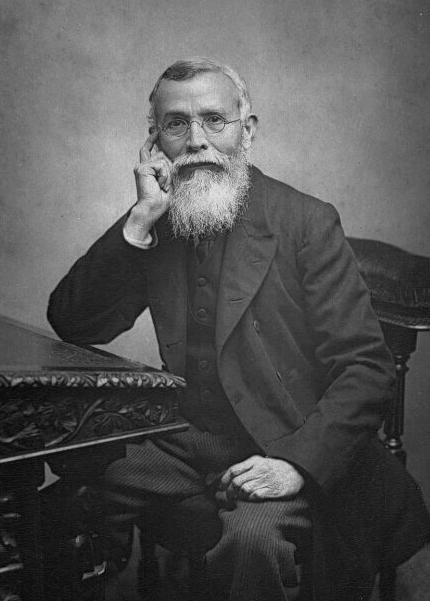
Correct — D, Dadabhai Naoroji. Poverty and Un-British Rule in India was published in London in 1901 by Dadabhai Naoroji, the Grand Old Man of India, and it gathered into one volume the papers, speeches and evidence he had been producing since the 1870s. Its argument is the drain of wealth theory, the most influential piece of economic reasoning the early national movement produced. Naoroji held that a large, continuous and unrequited transfer of India's wealth to Britain was the root cause of Indian poverty — unrequited because India received nothing in return for it. He located the transfer in specific channels: the Home Charges, that is the sums remitted annually to London for the interest on public debt raised in England, the salaries and pensions of European officials, the establishment of the India Office, the guaranteed returns paid to British railway investors, and Indian military expenditure incurred outside India. To make the scale visible he did something nobody had done before: he estimated India's national and per capita income, putting the latter at about twenty rupees a year in 1867-68 — the first such calculation for India, and a figure meant to shock. The word 'Un-British' in the title is the political move that makes the book what it is. Naoroji was not arguing that British rule was foreign and therefore wrong; he was arguing that it violated Britain's own professed principles of justice and good government, and so appealing to British liberal opinion in its own language. He carried the same argument into British politics itself, becoming in 1892 the first Indian elected to the House of Commons. He was Congress President three times — 1886, 1893 and 1906 — and it was from the chair at the Calcutta session of 1906 that he declared self-government, Swaraj, to be the Congress's goal.
- (a)R. C. Dutt — The closest possible distractor, and a genuine member of the same school. Romesh Chunder Dutt, a Bengali who entered the Indian Civil Service and later presided over the Congress in 1899, wrote The Economic History of India in two volumes in the early 1900s — one on the early period of British rule and one on the Victorian age — and it is the fullest documentation of the drain argument that exists. But that is a different book with a different title, and it is the classic swap on this question.
- (b)Phirozshah Mehta — Pherozeshah Mehta was one of the founders of the Moderate Congress and the dominant figure in Bombay's public life, known as the Lion of Bombay, and he presided over the Congress in 1890. His work was as a lawyer, municipal reformer and parliamentarian of the legislative councils rather than as an economist, and he wrote no book of this kind.
- (c)S. N. Banerjee — Surendranath Banerjea founded the Indian Association in 1876, edited The Bengalee, led the anti-partition agitation in Bengal and presided over the Congress twice. The book associated with his name is his autobiography A Nation in Making, published in 1925 — a memoir of the movement, not an economic critique, and published a quarter of a century after the date in the stem.
The economic critique of colonialism was the Moderates' most durable achievement, and Naoroji, Dutt and Ranade were its authors. Their case had three linked parts. First, India was being drained: a share of its annual product left the country every year as remittances with no equivalent flowing back, which no independent economy has to bear. Second, the drain was the reason India's capital formation stayed low and its famines recurred, so poverty was a product of policy rather than of climate or character. Third, British commercial policy had deindustrialised India — free trade in manufactures destroyed Indian handicrafts while tariffs and excise protected British textiles, turning India into a supplier of raw materials and a market for finished goods. Because the argument was made in the language of British political economy and addressed to British opinion, it could not be dismissed as sedition; it became instead the intellectual foundation on which later, more radical demands were built.
Book-and-author questions are answered by holding one distinctive title against each name and, where two names belong to the same school, one distinguishing phrase. Here the distinguishing phrase is in the title itself. 'Un-British' is Naoroji's word, and UPSC has asked precisely who used it. Attach the rest in the same way: R. C. Dutt to The Economic History of India, Surendranath Banerjea to A Nation in Making, M. G. Ranade to Essays on Indian Economics, and Naoroji to Poverty and Un-British Rule in India. The second thing worth carrying is the pairing of the man with the numbers, because that is how the harder version of this question is set — Naoroji is the source of the twenty-rupee per capita income estimate for 1867-68, and the Home Charges are the specific mechanism through which he located the drain. A candidate who has the title, the phrase and the figure can answer any of the three forms in which this material appears.
- Poverty and Un-British Rule in India was published in London in 1901 and collected Dadabhai Naoroji's writings from the 1870s onward setting out the drain of wealth theory.
- Naoroji made the first estimate of India's per capita income, putting it at about twenty rupees a year in 1867-68.
- The drain operated principally through the Home Charges — interest on debt raised in England, salaries and pensions of European officials, India Office establishment costs, guaranteed railway returns and Indian military expenditure incurred abroad.
- Naoroji became the first Indian elected to the British House of Commons in 1892, and was Congress President in 1886, 1893 and 1906; from the chair at Calcutta in 1906 he declared Swaraj to be the Congress's goal.
- R. C. Dutt's The Economic History of India, in two volumes in the early 1900s, is the fullest documentation of the same argument; Surendranath Banerjea's memoir A Nation in Making appeared in 1925.
- Swapping Naoroji's title with R. C. Dutt's. Poverty and Un-British Rule in India is Naoroji, 1901; The Economic History of India is Dutt, in two volumes shortly after.
- Reading 'Un-British' as a claim that British rule was foreign. Naoroji's point was the opposite — that it fell short of Britain's own declared standards.
- Attributing the twenty-rupee per capita income estimate to a British official. It was Naoroji's own calculation, and the first of its kind for India.
BPSC asks the book-to-author pairing directly, often with a year attached, and often with a second author from the same school planted beside the right one. UPSC prefers to ask for the idea rather than the title — who used the phrase 'Un-British', which leaders did not accept the drain theory, what exactly the Home Charges consisted of — so the argument has to be understood and not merely catalogued.
Who among the following used the phrase ‘Un-British’ to criticize the English colonial control of India?
- (a) Anandmohan Bose
- (b) Badruddin Tyabji
- (c) Dadabhai Naoroji
- (d) Pherozeshah Mehta
Answer(c) Dadabhai Naoroji
The same fact reduced to its single distinguishing word, and with Pherozeshah Mehta planted as a distractor exactly as BPSC plants him. 'Un-British' is Naoroji's coinage, so the title of the book in this stem effectively signs itself.
That the per capita income in India was Rs. 20 in 1867-68, was ascertained for the first time by
- (a) M. G. Ranade
- (b) Sir W. Hunter
- (c) R. C. Dutta
- (d) Dadabhai Naoroji
Answer(d) Dadabhai Naoroji
The figure from inside the book. Naoroji's twenty-rupee estimate for 1867-68 is the number that made the drain argument concrete, and UPSC tests it with the same option set of Moderate economists that BPSC uses here — including R. C. Dutt, the perennial near-miss.
Who wrote “New Lamps For The Old” ?
- (a) Surendranath
- (b) Aurobindo Ghosh
- (c) Motilal Ghosh
- (d) More than one of the above
Answer(b) Aurobindo Ghosh
The 70th CCE paper of December 2024 asked the same kind of question about the same decade, and about the critique from the other direction: 'New Lamps for Old' was Aurobindo's attack on the very Moderate politics that Naoroji's book represented at its most persuasive.
The book critical of the British Policies Gharib Hindustan was banned in Bihar in 1930 by the British was written by
- (a) Mohd. Wali Hassan
- (b) Ali Mohd. Shad
- (c) Shaikh Mian Jaan
- (d) Badrul Hassan
Answer(a) Mohd. Wali Hassan
The Bihar version of the same theme on the 70th CCE paper of December 2024 — a book attacking British economic policy, its author, and the ban that followed. BPSC expects both the national titles and the local ones, which is why book-and-author lists have to include Bihar's own.
- practice — not a real PYQ
The first estimate of India's national and per capita income during the colonial period was made by
- (a)R. C. Dutt
- (b)Dadabhai Naoroji
- (c)M. G. Ranade
- (d)V. K. R. V. Rao
Answer(b) Dadabhai Naoroji — he put India's per capita income at about twenty rupees a year in 1867-68. V. K. R. V. Rao's estimates belong to the 1930s and are the first made on modern statistical lines.
- practice — not a real PYQ
Which of the following formed part of the 'Home Charges' that the early nationalists identified as a channel of the drain of wealth ?
- (a)Land revenue collected in India
- (b)Salaries and pensions of European officials, and interest on debt raised in England
- (c)Customs duty on Indian exports
- (d)Expenditure on primary education in India
Answer(b) Salaries and pensions of European officials, and interest on debt raised in England — together with the cost of the India Office, guaranteed returns to railway investors and Indian military expenditure incurred outside India. Land revenue and customs were raised and largely spent within India.