
Who was the President of the Indian National Congress at the Gaya Session of 1922 ?
- (a)Chittaranjan Das
- (b)Mahatma Gandhi
- (c)Hakim Ajmal Khan
- (d)None of the above
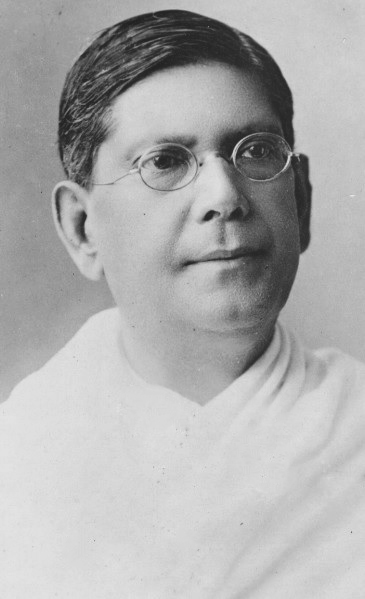
Correct — A, Chittaranjan Das. Deshbandhu C. R. Das presided over the Congress session held at Gaya, in Bihar, in December 1922, and the session matters for what happened under his presidency rather than merely for the name in the chair. The Non-Cooperation Movement had been suspended in February 1922 after Chauri Chaura, and the Congress was arguing about what to do next. Das, with Motilal Nehru, urged that Congressmen should contest elections and enter the legislative councils in order to obstruct the government from within. The No-changers, who held that the constructive programme outside the councils should continue, defeated the proposal at Gaya. Das resigned the presidency, and on 1 January 1923 he and Motilal Nehru founded the Swaraj Party to pursue council entry as a separate group inside the Congress fold — which is why UPSC's own question on the Swaraj Party dates it from 'after the 1922 Gaya session'. Das was by then one of the most prominent men in Indian public life, the Bengal leader who had given up a huge legal practice for the movement, and he presided over a session of the All India Trade Union Congress at Lahore the following year. Since (a) is right, option (d) 'None of the above' fails. The Bihar connection is the reason this question is on a BPSC paper at all: Gaya is one of the Congress sessions held in the state.
- (b)Mahatma Gandhi — Gandhi presided over the Congress exactly once, at Belgaum in December 1924 — a striking fact given how completely he dominated the organisation from 1920 onwards. In December 1922 he was not even at liberty: he had been convicted after the suspension of Non-Cooperation and was in prison, which is part of why the Congress was free to argue about council entry at all.
- (c)Hakim Ajmal Khan — The most instructive wrong answer, because Hakim Ajmal Khan did preside over a Congress session at just this period — Ahmedabad in 1921, where he took the chair as acting president precisely because C. R. Das, the elected president, was in jail. A candidate who has stored 'Ajmal Khan presided when Das could not' without the year attached will place him a session too late.
- (d)None of the above — Requires all three names to be wrong, and the first is right. On a question that names a specific session in a specific year, the answer is a matter of record, and reaching for the escape option here reflects uncertainty rather than any defect in the question.
Gaya 1922 is one of the hinge sessions of the freedom movement. Non-Cooperation had been called off in February 1922 after the violence at Chauri Chaura, and the withdrawal split the Congress into two tendencies. The Swarajists — C. R. Das, Motilal Nehru, later N. C. Kelkar and others — argued that the movement should not vacate the councils created by the Government of India Act of 1919, but should contest them and wreck them from inside. The No-changers — Rajendra Prasad, Vallabhbhai Patel, C. Rajagopalachari — held that the constructive programme of khadi, national education and Hindu-Muslim unity was the way forward. Gaya decided against the Swarajists, Das resigned, and the Swaraj Party was formed on 1 January 1923. It went on to do well in the 1923 elections, particularly in the Central Provinces and Bengal, and the two wings were formally reconciled at the Belgaum session of 1924 under Gandhi's presidency. The Swaraj Party remains examinable in its own right — it was the body that in 1934 took up the demand for a Constituent Assembly to frame India's constitution.
Congress-session questions are answered from a table with three columns — year, venue, president — and the highest-value rows are those where something happened. For BPSC, the Bihar rows come first: Gaya in 1922 under C. R. Das, and the Patna (Bankipore) session of 1912. Beyond the table, attach one event to each session you learn, because that is what makes the name stick and what a follow-up question will ask: Nagpur 1920 for the constitution of the Congress and the Non-Cooperation programme, Ahmedabad 1921 for Ajmal Khan in the chair with Das in jail, Gaya 1922 for the defeat of council entry, Belgaum 1924 for Gandhi's only presidency, Lahore 1929 for Purna Swaraj, Karachi 1931 for the resolution on fundamental rights and economic policy. Note the trap in this option set: two of the three names presided over Congress sessions within four years of each other, so the year is doing all the work.
- C. R. Das presided over the Congress session at Gaya in December 1922; the session rejected the Swarajist proposal of council entry and he resigned the presidency
- Das and Motilal Nehru founded the Swaraj Party on 1 January 1923 to contest elections to the legislative councils from within the Congress fold
- Hakim Ajmal Khan presided at the Ahmedabad session of 1921 as acting president, because the elected president C. R. Das was in prison
- Mahatma Gandhi presided over the Congress only once, at Belgaum in December 1924
- The Gaya session followed the suspension of Non-Cooperation in February 1922 after the violence at Chauri Chaura, which is what put the movement's next step in dispute
- The Swaraj Party later took up the demand for a Constituent Assembly to frame a constitution for India, in 1934
- Placing Hakim Ajmal Khan at Gaya; he presided a year earlier, at Ahmedabad in 1921, standing in for the imprisoned Das
- Assuming Gandhi presided often because he led the movement; he held the Congress presidency only once, at Belgaum in 1924
- Learning session names without their decisions — the year and the venue are the label, the resolution is what the next question will be about
BPSC asks the president of a named session and picks sessions with a Bihar connection, so Gaya 1922 and Patna 1912 are the two rows a Bihar aspirant cannot afford to miss. UPSC asks the consequences instead — who founded the Swaraj Party and when, which body first demanded a Constituent Assembly — so the same session has to be remembered for what it decided as well as for who chaired it.
Match List I with List II and select the correct answer by using the codes given below the lists: List I I. Abhinav Bharat Society II. Anushilan Samiti III. Ghadar Party IV. Swaraj Party List II A) Sri Aurobindo Ghosh B) Lala Hardayal C) C. R. Das D) V. D. Savarkar Codes:
- (a) I – D, II – A, III – C, IV – B
- (b) I – A, II – D, III – C, IV – B
- (c) I – A, II – D, III – B, IV – C
- (d) I – D, II – A, III – B, IV – C
Answer(d) I – D, II – A, III – B, IV – C
Ties C. R. Das to the Swaraj Party — the organisation he founded immediately after resigning the presidency at Gaya. Knowing that sequence answers both questions from a single piece of information.
Which one of the following first mooted the idea of a constituent assembly to frame a constitution for India?
- (a) Swaraj Party in 1934
- (b) Congress Party in 1936
- (c) Muslim League in 1942
- (d) All Parties Conference in 1946
Answer(a) Swaraj Party in 1934
What the party born out of the Gaya split went on to do. The Swarajists' argument was that Indians should work the constitutional machinery rather than abandon it, and the demand for a Constituent Assembly is that argument carried to its conclusion.
In which of the following Indian National Congress Sessions, the resolutions related to the Fundamental Rights were passed for the first time?
- (a) Surat Session—1907
- (b) Gaya Session—1922
- (c) Karachi Session—1931
- (d) None of the above
Answer(c) Karachi Session—1931
The 69th CCE put the Gaya session of 1922 on the page as a distractor, testing whether a candidate knows what each session actually decided. Between the two papers the Commission has asked both who presided at Gaya and what Gaya did not do.
- practice — not a real PYQ
The Swaraj Party was founded in January 1923 by
- (a)Mahatma Gandhi and Vallabhbhai Patel
- (b)C. R. Das and Motilal Nehru
- (c)Rajendra Prasad and C. Rajagopalachari
- (d)Bal Gangadhar Tilak and Annie Besant
Answer(b) C. R. Das and Motilal Nehru — formed after the Gaya session rejected their proposal that Congressmen should enter the legislative councils; Prasad, Patel and Rajagopalachari were leading No-changers.
- practice — not a real PYQ
Mahatma Gandhi presided over the Indian National Congress at which session ?
- (a)Nagpur, 1920
- (b)Gaya, 1922
- (c)Belgaum, 1924
- (d)Lahore, 1929
Answer(c) Belgaum, 1924 — his only term as Congress president; Nagpur 1920 and Lahore 1929 had other presidents, and Gaya 1922 was presided over by C. R. Das.