
Which of the following seed is used in production of engineered diamonds ?
- (a)Graphite
- (b)Cubic Zirconia
- (c)White sapphire
- (d)Moissanite
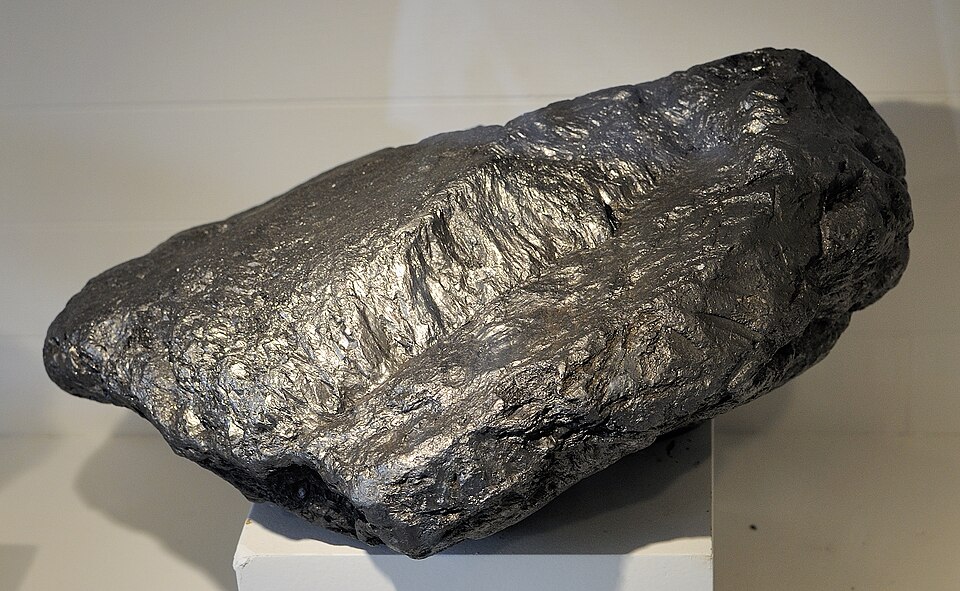
Correct — A, Graphite. A lab-grown diamond is made of exactly the same thing as a mined one, pure carbon crystallised in the cubic form, so the process must start from a carbon material — and of the four options only graphite is carbon at all. In the high-pressure high-temperature route, which remains the cheapest and most widely used, a press generates a pressure of roughly 5 to 5.5 gigapascals at a temperature above 1,400 degrees Celsius. Inside, a solvent-catalyst metal — nickel, cobalt or iron — melts, dissolves the high-purity carbon source, which is graphite, and carries the dissolved carbon to small diamond seeds, where it precipitates as diamond. The other production route, chemical vapour deposition, works at low pressure from a gas: methane and hydrogen in a ratio of about one to ninety-nine are ionised into reactive radicals, and carbon deposits on a substrate while the hydrogen etches away any non-diamond carbon that forms. One point of vocabulary deserves stating honestly, because a careful student will notice it. Strictly, the seed in both processes is a small diamond crystal, and graphite is the feedstock rather than the seed; the Commission has used 'seed' loosely to mean the starting material. But the option set forces the intended reading: the other three are diamond simulants, materials that look like diamond and are not carbon, and none of them takes any part in growing a diamond.
- (b)Cubic Zirconia — A diamond simulant — zirconium dioxide in a cubic form, stabilised with other oxides and grown as an inexpensive stand-in for diamond in jewellery. It contains no carbon, so it can neither become a diamond nor supply one with material. The reason it is on the page is that it is the imitation stone most people have actually heard of.
- (c)White sapphire — Colourless corundum, aluminium oxide, used as another cheap look-alike stone. Like cubic zirconia it is a simulant, sold in place of diamond, and it plays no role in diamond synthesis. Simulant and synthetic are the two words this question is really separating: a simulant imitates diamond, a synthetic diamond is diamond.
- (d)Moissanite — Silicon carbide, and the most convincing of the three simulants because its brilliance is close to diamond's — but it is a silicon compound, not a carbon crystal, and it is a substitute for the finished stone rather than an input to making one.
Carbon has several allotropes — diamond, graphite, fullerenes, graphene, nanotubes — that differ only in how the atoms are bonded. In diamond each carbon is tetrahedrally bonded to four others in a rigid three-dimensional lattice, which makes it the hardest natural material and a good conductor of heat but not of electricity. In graphite the atoms form flat hexagonal sheets with weak forces between the layers, which is why it is soft, slippery and electrically conducting. Turning one into the other is a matter of forcing carbon into the diamond arrangement, and the two industrial routes do it in opposite ways: HPHT reproduces the conditions of the deep mantle, while CVD builds diamond atom by atom from a gas at low pressure. What must not be confused with either is the class of diamond simulants — cubic zirconia, moissanite, white sapphire, glass — which are different substances chosen for a superficial resemblance. Lab-grown diamonds are graded like natural stones and are distinguished from them only by the growth traces instruments can detect, not by composition.
The route to the answer here does not require knowing the synthesis at all — it requires knowing what a diamond is made of. Diamond is carbon, so the input must be carbon; scan the options for a carbon material and only graphite qualifies. That single step disposes of the question even if the words HPHT and CVD mean nothing to you. It is worth learning the simulant list separately, because examiners like it: cubic zirconia is zirconium dioxide, moissanite is silicon carbide, white sapphire is aluminium oxide, and none of them is carbon. The commercial context is now an Indian one as well — Surat, already the world's great diamond-cutting centre, has become a major processor of lab-grown stones, and the distinction between a synthetic diamond and a simulant is exactly the distinction the trade and its regulators care about, because one is a diamond and the other is not.
- Synthetic diamonds are the same material as natural diamonds — pure carbon crystallised in the cubic form — unlike diamond simulants, which are different substances that merely look similar
- In the HPHT process a press produces about 5 to 5.5 gigapascals at above 1,400 degrees Celsius; molten nickel, cobalt or iron acts as a solvent-catalyst, dissolving the graphite feed and depositing carbon on small diamond seeds
- In chemical vapour deposition a carbon source, typically methane, is mixed with hydrogen at a ratio of about 1:99 and ionised into radicals; hydrogen selectively etches away non-diamond carbon
- The first reproducible synthesis of diamond was achieved in 1953, and HPHT and CVD remain the two dominant industrial routes
- Cubic zirconia is zirconium dioxide, moissanite is silicon carbide and white sapphire is aluminium oxide — none contains carbon
- Diamond and graphite are allotropes of carbon: diamond is tetrahedrally bonded in three dimensions, graphite is layered in hexagonal sheets, which is why one is the hardest of materials and the other a soft lubricant
- Treating a simulant as a synthetic — cubic zirconia and moissanite imitate diamond but are not diamond and cannot make one
- Assuming the word 'seed' must be technically exact; here it is used loosely for the starting material, and the option set makes the intended sense clear
- Forgetting that diamond and graphite are the same element, which is the single fact that answers this question
BPSC asks a one-step materials identification and relies on brand-familiar names — cubic zirconia, moissanite — as the decoys, so the defence is to ask what each substance is chemically. UPSC prefers to test the same chapter through properties and matching: which element a named gem is made of, why a diamond sparkles more than a glass imitation, so the chemistry has to be held alongside the physics.
Match List I (Naturally occurring substances) with List II (Elements) and select the correct answer using the codes given below the Lists: List I I. Diamond II. Marble III. Sand IV. Ruby List II A) Calcium B) Silicon C) Aluminium D) Carbon Codes:
- (a) I-C, II-A, III-B, IV-D
- (b) I-D, II-B, III-A, IV-C
- (c) I-B, II-A, III-C, IV-D
- (d) I-D, II-A, III-B, IV-C
Answer(d) I-D, II-A, III-B, IV-C
The one fact that settles this question: diamond is carbon. UPSC also pairs ruby with aluminium, which is the same corundum that appears here disguised as white sapphire — knowing that neither is carbon eliminates it instantly.
109. Assertion (A): A diamond sparkles more than a glass imitation cut to the same shape. Reason (R): The refractive index of diamond is less than that of glass. In the context of the above two statements, which one of the following is correct?
- (a) Both A and R are true, and R is the correct explanation of A
- (b) Both A and R are true, but R is not a correct explanation of A
- (c) A is true, but R is false
- (d) A is false, but R is true
Answer(c) A is true, but R is false
The imitation-versus-real distinction, tested through optics rather than chemistry. A glass or cubic zirconia stone can be cut to the same shape and still is not diamond — which is precisely why the three simulants on this page cannot be inputs to making one.
Which of the following is the first artificially prepared element ?
- (a) Tc
- (b) Te
- (c) Tl
- (d) Th
Answer(a) Tc
The 70th CCE paper of December 2024 asked about artificial synthesis from the other end — the first element made rather than found. Both questions reward a candidate who keeps clear what a material is made of before reasoning about how it is produced.
- practice — not a real PYQ
Which of the following is a diamond simulant rather than a synthetic diamond ?
- (a)A CVD-grown stone
- (b)An HPHT-grown stone
- (c)Moissanite
- (d)A lab-grown diamond seed plate
Answer(c) Moissanite — silicon carbide, a different substance chosen for its resemblance; CVD and HPHT stones are diamonds by composition and structure.
- practice — not a real PYQ
Graphite is soft and conducts electricity, while diamond is extremely hard and does not, because
- (a)they are made of different elements
- (b)graphite has layers of hexagonally bonded atoms with free electrons, while diamond has a rigid tetrahedral network
- (c)diamond contains silicon and graphite contains carbon
- (d)graphite is a compound and diamond is an element
Answer(b) graphite has layers of hexagonally bonded atoms with free electrons, while diamond has a rigid tetrahedral network — both are pure carbon, and only the bonding differs.