
During which movement did Gandhiji call for boycott of the Prince of Wales?
- (a)Khilafat Movement
- (b)Non-Cooperation Movement
- (c)Civil Disobedience Movement
- (d)Quit India Movement
Correct — B, Non-Cooperation Movement. When Edward, the Prince of Wales (later King Edward VIII), toured India and landed at Bombay on 17 November 1921, the Congress — as part of the ongoing Non-Cooperation Movement (launched 1920) — called for a total boycott of the visit. The day was marked by a nationwide hartal: shops, mills and markets shut, and bonfires of foreign cloth were lit as part of the movement's swadeshi component.
- (a)Khilafat Movement — The Khilafat agitation over the Ottoman Caliphate ran alongside and merged with the Non-Cooperation Movement in this same period, but the Prince of Wales boycott was a Non-Cooperation Movement action, not a distinct Khilafat demand.
- (c)Civil Disobedience Movement — Launched in 1930 with the Dandi March — nearly a decade after the Prince of Wales's 1921 visit, so it could not have called for this boycott.
- (d)Quit India Movement — Launched in August 1942 — over two decades after the 1921 Prince of Wales visit, so it is chronologically impossible.
The Non-Cooperation Movement (1920-22) combined the Khilafat grievance with the demand for Swaraj, using boycotts of British goods, titles, courts and institutions as its method. The boycott of the Prince of Wales's November 1921 visit was one of its most visible mass actions — a coordinated, nationwide hartal rather than a spontaneous protest.
Exams test whether a specific protest event is correctly slotted into its parent movement and decade — the trap is defaulting to a more 'famous' later movement (Civil Disobedience, Quit India) without checking the year.
- The Prince of Wales (later Edward VIII) landed at Bombay on 17 November 1921; the visit was boycotted with a nationwide hartal.
- The boycott was organised as part of the Non-Cooperation Movement (1920-22), not a standalone agitation.
- The Non-Cooperation Movement combined the Khilafat issue with the demand for Swaraj.
- The movement was called off by Gandhi in February 1922 after the Chauri Chaura incident.
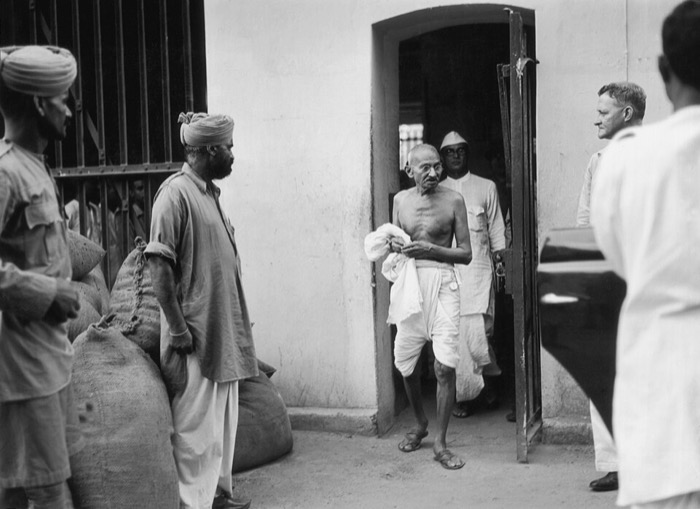
The Prince of Wales boycott came a year into the Non-Cooperation Movement and a few months before it was called off after Chauri Chaura.
- Placing a 1920s protest event under a later, more 'famous' movement (Civil Disobedience or Quit India) without checking the year
- Treating the Khilafat Movement and Non-Cooperation Movement as identical rather than parallel, merged campaigns
MPPSC/UPSC often ask which movement a specific protest event or slogan belongs to — anchor each event to its exact year and movement rather than a general sense of 'the freedom struggle.'
No directly related past PYQ (on the specific Prince of Wales boycott) was found; the UPSC store has several Non-Cooperation Movement questions on other facets of the movement, but none test this specific event.
- practice — not a real PYQ
The Non-Cooperation Movement was formally called off by Gandhi following which incident?
- (a)Jallianwala Bagh massacre
- (b)Chauri Chaura incident (Feb 1922)
- (c)Rowlatt Act protests
- (d)The Prince of Wales's visit
Answer(b) The Chauri Chaura incident, February 1922 — violence at a police station led Gandhi to suspend the movement.
- practice — not a real PYQ
The Non-Cooperation Movement, launched in 1920, combined the demand for Swaraj with which other grievance?
- (a)The Khilafat issue
- (b)The Partition of Bengal
- (c)The Ilbert Bill controversy
- (d)The Simon Commission boycott
Answer(a) The Khilafat issue — the movement combined Muslim grievances over the Ottoman Caliphate with the demand for Swaraj.