
Who appointed Keshav Chandra Sen as the Chief Acharya of Brahmo Samaj?
- (a)Raja Ram Mohan Roy
- (b)N. G. Chandavarkar
- (c)Devendranath Thakur
- (d)Mahadev Govind Ranade
Correct — C, Devendranath Thakur (Debendranath Tagore). Tagore, who had reorganised and led the Brahmo Samaj from the 1840s, brought the young Keshab Chandra Sen into the Samaj's leadership soon after he joined in 1857-58, and appointed him Acharya (chief minister/preacher) in 1862. The appointment did not last: doctrinal and social differences — especially Sen's push against caste distinctions — led Tagore to remove him from the post in 1865, and the Samaj split in 1866 into Tagore's Adi Brahmo Samaj and Sen's Brahmo Samaj of India.
- (a)Raja Ram Mohan Roy — Founder of the earlier Brahmo Sabha (1828), the movement's precursor — but he died in 1833, five years before Keshab Chandra Sen was even born, so he could not have appointed him to anything.
- (b)N. G. Chandavarkar — A Bombay-based judge and social reformer associated with the Prarthana Samaj, a separate reform body — not part of the Bengal Brahmo Samaj's leadership.
- (d)Mahadev Govind Ranade — Co-founder of the Bombay Prarthana Samaj, a contemporaneous but distinct reform movement — not connected to Sen's appointment as Acharya of the Bengal Brahmo Samaj.
Devendranath Tagore reshaped the Brahmo Samaj after Ram Mohan Roy's death, giving it a formal creed and organisation from the 1840s. Keshab Chandra Sen joined in 1857-58 and rose quickly on the strength of his oratory and organisational energy; Tagore appointed him Acharya in 1862. The relationship broke down over Sen's radicalism (rejecting caste distinctions and pushing inter-caste practices), and Tagore dismissed him from the post in 1865, precipitating the 1866 split.
MPPSC/UPSC test the exact founder-successor chain within reform movements — who founded, who reorganised, who was appointed and by whom, and why the eventual split happened — rather than treating 'Brahmo Samaj' as one undifferentiated body.
- Devendranath Tagore appointed Keshab Chandra Sen as Acharya of the Brahmo Samaj in 1862.
- Tagore removed Sen from the post in 1865 over doctrinal and social differences.
- The Samaj split in 1866: Tagore's Adi Brahmo Samaj vs Sen's Brahmo Samaj of India.
- Ram Mohan Roy (d.1833) had founded the earlier, separate Brahmo Sabha (1828), a generation before this appointment.
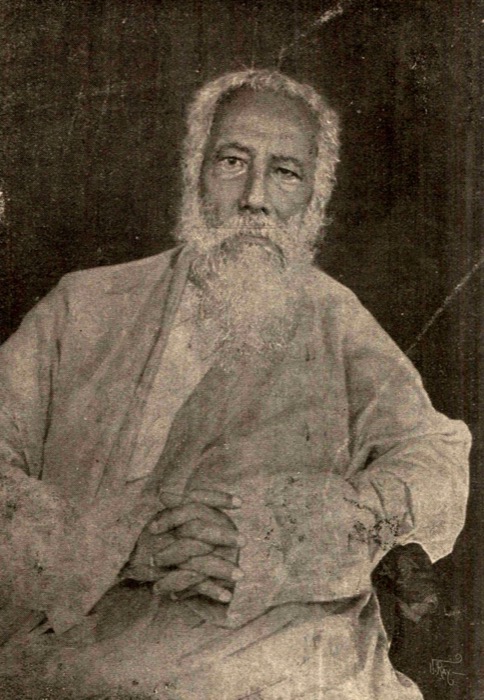
Devendranath Tagore appointed Keshab Chandra Sen as Acharya in 1862 — a relationship that ended in the 1866 split of the Brahmo Samaj.
- Assuming Ram Mohan Roy personally led the Samaj throughout the 19th century — he died in 1833, decades before this appointment
- Confusing the Bengal Brahmo Samaj's leadership (Tagore, Sen) with the separate Bombay Prarthana Samaj (Ranade, Chandavarkar)
MPPSC/UPSC test the precise founder-successor-splinter chain within 19th-century reform movements — who appointed whom, and what triggered each split.
Consider the following: 1. Calcutta Unitarian Committee 2. Tabernacle of New Dispensation 3. Indian Reform Association. Keshab Chandra Sen is associated with the establishment of which of the above?
- (a) 1 and 3 only
- (b) 2 and 3 only
- (c) 3 only
- (d) 1, 2 and 3
Answer(b) 2 and 3 only
Same reform figure and movement — this UPSC 2016 question tests the organisations (Tabernacle of New Dispensation, Indian Reform Association) Keshab Chandra Sen founded after his 1866 split from Devendranath Tagore's Samaj, the direct sequel to Tagore removing him from the Acharya post this question is about.
- practice — not a real PYQ
After the 1866 split in the Brahmo Samaj, Devendranath Tagore's faction came to be known as:
- (a)Brahmo Samaj of India
- (b)Adi Brahmo Samaj
- (c)Sadharan Brahmo Samaj
- (d)Prarthana Samaj
Answer(b) Adi Brahmo Samaj — Devendranath Tagore's original faction; Keshab Chandra Sen's became the Brahmo Samaj of India.
- practice — not a real PYQ
The Sadharan Brahmo Samaj was formed in 1878 chiefly in protest against:
- (a)Devendranath Tagore's leadership style
- (b)Keshab Chandra Sen's marriage of his minor daughter to the Maharaja of Cooch Behar
- (c)British interference in religious affairs
- (d)The Age of Consent Act, 1891
Answer(b) Keshab Chandra Sen's arrangement of his 14-year-old daughter's marriage to the Maharaja of Cooch Behar in 1878 — seen as contradicting the Samaj's own stand against child marriage — split his followers into the Sadharan Brahmo Samaj.