
In 2017, which ISRO satellite launch vehicle successfully placed 104 satellites into orbit in a single attempt?
- (a)INSAT-3DR
- (b)PSLV-C55
- (c)GSLV-F12
- (d)PSLV-C37
Correct — D, PSLV-C37. On 15 February 2017, ISRO's Polar Satellite Launch Vehicle (PSLV-C37) placed 104 satellites into orbit in a single launch from Sriharikota (Satish Dhawan Space Centre) — a world record at the time. The primary payload was Cartosat-2D, India's Earth-observation satellite, with the rest riding as co-passenger small satellites, mostly from other countries.
- (a)INSAT-3DR — INSAT-3DR is a satellite (an Indian meteorological/weather satellite), not a launch vehicle — it cannot be the answer to 'which launch vehicle'.
- (b)PSLV-C55 — A different, later PSLV mission — its much higher serial number (C55 vs C37) means it flew years after the 2017 104-satellite flight.
- (c)GSLV-F12 — A GSLV (Geosynchronous Satellite Launch Vehicle) mission, not a PSLV — GSLV is ISRO's vehicle for heavier geostationary payloads, and this is a separate, later mission.
PSLV (Polar Satellite Launch Vehicle) is ISRO's workhorse rocket, built to place satellites into polar/sun-synchronous orbits — ideal for Earth-observation payloads — and it is the vehicle ISRO most often uses to fly many small 'co-passenger' satellites alongside one primary payload.
The trap is picking a vehicle by name-recognition rather than matching the exact mission code to the exact event. PSLV-C37's 104-satellite flight (Feb 2017) is one of ISRO's most publicised achievements — lock it as 'PSLV, February 2017, Cartosat-2D primary payload, then-world record'.
- PSLV-C37 launched on 15 February 2017 from Sriharikota (Satish Dhawan Space Centre).
- Carried 104 satellites in a single flight — a world record at the time.
- Primary payload: Cartosat-2D, India's Earth-observation satellite; most of the other satellites were foreign nano-satellites.
- PSLV is ISRO's vehicle for polar/sun-synchronous orbit missions; GSLV is used for heavier geostationary payloads.
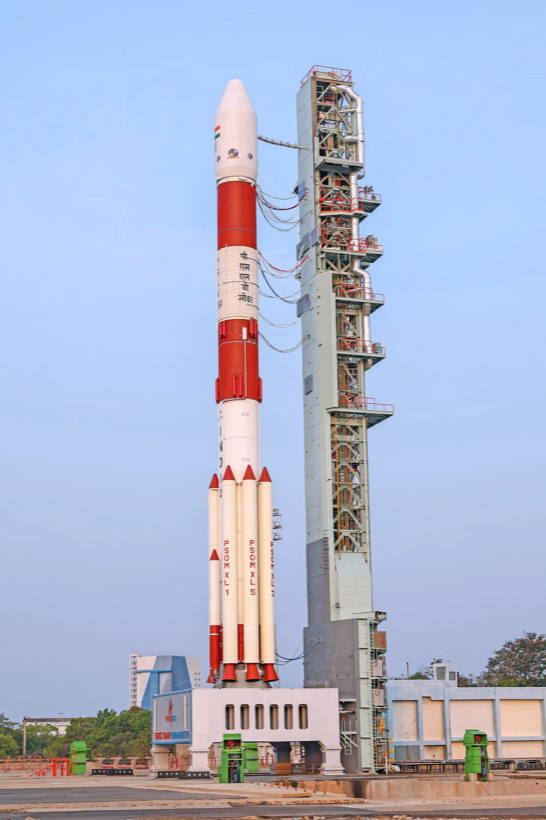
- Confusing PSLV with GSLV — PSLV = polar/sun-synchronous orbit, smaller/co-passenger payloads; GSLV = geostationary orbit, heavier payloads.
- Picking a later, higher-numbered PSLV/GSLV mission by name recognition instead of matching the year and event.
MPPSC and UPSC both like 'match the ISRO mission/vehicle to its landmark achievement' — pin record-holder facts (first, most, first-attempt) to their exact mission code and year.
No directly related past PYQ was found (a matching prior question exists but isn't attemptable yet).
- practice — not a real PYQ
PSLV-C37's 104-satellite mission (February 2017) carried which satellite as its primary payload?
- (a)Cartosat-2D
- (b)Chandrayaan-2
- (c)RISAT-2B
- (d)INSAT-3DR
Answer(a) Cartosat-2D — India's Earth-observation satellite, the primary payload of that flight.
- practice — not a real PYQ
Which ISRO launch vehicle is primarily designed to place satellites into polar/sun-synchronous orbit for Earth-observation missions?
- (a)GSLV Mk III
- (b)PSLV
- (c)SSLV
- (d)LVM3
Answer(b) PSLV — built for polar/sun-synchronous orbit Earth-observation payloads, unlike GSLV which targets geostationary orbit.