UPSC Current Affairs

12 topicsGS-1: 2GS-2: 2GS-3: 8
0/12 done
GS-3Economy

1.India Tops Global Rice Production (Rice Production)

Economic Times
Illustration for India Tops Global Rice Production (Rice Production)

What & Where

Staple cereal grown in flooded paddies; India’s 2024-25 harvest forecast at 150.18 MT.

Cultivation: Kharif-centric transplanting in hot, humid zones; irrigation crucial in low-rainfall areas.

Core belts: Eastern Indo-Gangetic plains, Krishna–Godavari–Cauvery deltas, North-East hill terraces.

Quick Facts for MCQs

Production Ranking

  • Milestone: India surpasses China as world’s largest rice producer in 2024-25.
  • Output gap: India leads by ~4.9 MT over China.
  • Validation: Figures cited by Union Agriculture Minister in Parliament.

State Profile

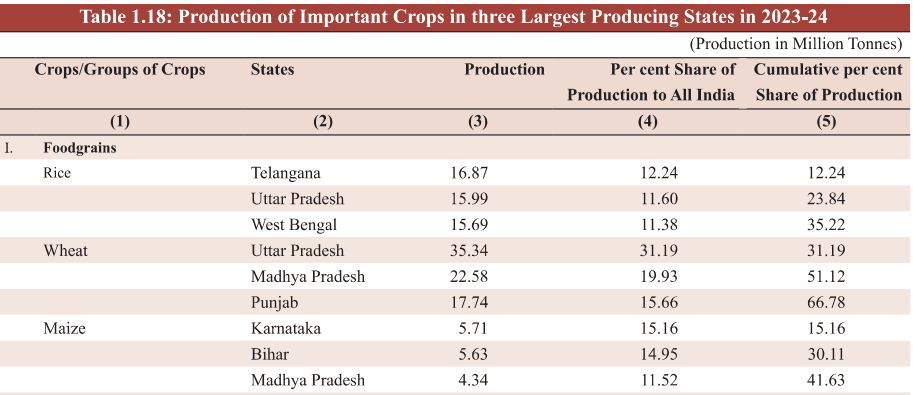
  • Leader: Telangana contributes highest volume, aided by canal irrigation and assured procurement.
  • Runners-up: Uttar Pradesh and West Bengal each exceed 15 MT annual output.
  • Consistent majors: Andhra Pradesh, Punjab, Odisha, Bihar, Chhattisgarh, Tamil Nadu, Assam.

Agro-Geography

  • Concentration: Humid east, south, north-east zones favor high paddy acreage.
  • Deltas: Alluvial Ganga-Brahmaputra and Krishna-Godavari basins offer water-rich soils.
  • Adaptations: Tube-wells in arid tracts; terraced fields in hills manage water flow.

Economic Angle

  • Buffer stocks: Record crop strengthens food-grain reserves under NFSA and PDS.
  • Trade impact: Larger surplus can temper global rice prices, aiding importing nations.

Key Data Points

FeatureData-Point
India rice output (2024-25 est.)150.18 million tonnes
China rice output145.28 million tonnes
Global production rankIndia – 1st, China – 2nd
Top Indian state (2023-24)Telangana 16.63 MT
Telangana share12.17 % of national
2nd stateUttar Pradesh 15.72 MT
3rd stateWest Bengal 15.12 MT
Data sourcesAgri Minister statement; Economic Survey 2023-24 appendix

Related UPSC Prelims PYQs

GEO_GS, GS1 2020PYQ 1

Which one of the following countries is the top producer of cereals in the world?

GEO_GS, GS1 2002PYQ 2

With reference to Indian agriculture, which one of the following statements is correct?
GS-1History

3.Rani Velu Nachiyar Birth Anniversary (Rani Velu Nachiyar)

PIB

What & Where

Rebel queen from Ramnad / Sivaganga (present Tamil Nadu); born 3 Jan 1730

First Indian queen to mount an organised armed revolt against the British East India Company

Ruled Sivaganga 1780-1790, exemplifying earliest South Indian anti-colonial assertion

Quick Facts for MCQs

Reign & Territory

  • Ascended Sivaganga throne in 1780, restoring indigenous rule
  • Governed a decade, abdicated 1790, died 1796
  • Rule underscored early organised resistance in South India

Military Innovations

  • Deployed India’s first recorded human bomb against Company forces
  • Orchestrated a structured female regiment for battlefield duties
  • Led coordinated armed uprising challenging colonial military superiority

Women in Warfare

  • Institutionalised women’s combat role, rare for 18th-century India
  • Example inspired later female freedom fighters across Tamil region

Intellectual Profile

  • Polyglot proficiency in French, English, Urdu enhanced diplomacy and intelligence gathering

Key Data Points

FeatureData-Point
Birth3 Jan 1730, Ramnad Kingdom
Death25 Dec 1796, Sivaganga
EpithetVeeramangai (brave woman)
SpouseMuthuvaduganathaperiya Udaiyathevar
Throne ascension1780 after husband’s death
Reign span1780-1790
“Firsts”Armed revolt; women’s military unit; recorded human bomb
Language skillsTamil, French, English, Urdu
Recent tributePM homage on 3 Jan 2026 (296th birth anniv)
GS-3Editorial

4.Decade Review of Paris Agreement (Paris Agreement Review)

Indian Express

What & Where

Paris Agreement 2015; legally-binding UNFCCC treaty adopted at COP-21, Paris, covering 194 States + EU.

Core mechanism: 5-year Nationally Determined Contributions, Global Stocktake, transparency framework, voluntary long-term low-carbon strategies.

Temperature goal: keep warming well below 2 °C, pursue 1.5 °C above pre-industrial levels.

Quick Facts for MCQs

Legal & Policy

  • Universality: replaces Kyoto’s Annex-based targets with common framework embedding CBDR-RC principle.
  • Rulebook: implementation details finalised COP-24 Katowice + COP-26 Glasgow.
  • Accountability gap: NDCs voluntary; no sanction for non-compliance.

Finance & Equity

  • Developed-world shortfall: USD 100 bn promise never fully delivered.
  • NCQG criticised by India; demands ≥ USD 1.3 trn/yr, with USD 600 bn as grants.
  • Carbon border measures risk unfair trade impacts on Global South.

India Track

  • Achieved 50 % non-fossil installed capacity by 2025, ahead of schedule.
  • Flagship initiatives: ISA, CDRI, LiFE promote solar, resilience, sustainable lifestyles.
  • Climate goals aligned with Viksit Bharat 2047; green hydrogen, solar seen as growth engines.

Key Data Points

FeatureData-Point
Adoption year & venue2015, COP-21 Paris
Parties (2025)194 States + European Union
First Global Stocktake2023, COP-28 Dubai
Original finance pledgeUSD 100 bn/yr till 2025
New Collective Quantified Goal≥ USD 300 bn/yr by 2035
India emission-intensity cut45 % over 2005 by 2030
India non-fossil power target50 % installed capacity by 2030
India net-zero pledgeYear 2070

Related UPSC Prelims PYQs

CAPF_GAI, GS1 2016PYQ 1

With reference to the Agreement at the UNFCCC Meeting in Paris in 2015, which of the following statements is/are correct?

CAPF_GAI, GS1 2024PYQ 2

Which one among the following statements with regard to the United Nations Climate Change Conference (COP28) is NOT correct?

GS-3Editorial

5.Transforming Urban Waste Management (Urban Waste)

Segregation

What & Where

Urban waste: 170 k t/day now, projected 165 Mt/yr (2030) → 436 Mt/yr (2050) across Indian cities

Key streams: organic > 50 %, dry ≈ 35 %, plastics 5.6 Mt/yr, e-waste 1.751 Mt/23-24, C&D 10-12 Mt/yr

Major hotspots: legacy dumps Ghazipur-Delhi, Deonar-Mumbai, Bidarwadi WtE-Bengaluru underperforming

Quick Facts for MCQs

Legal & Policy

  • Framework: six stream-specific 2016 rules; updates 2022-25; no umbrella Act
  • Instruments: EPR, digital CPCB portals, Extended Bulk Waste Generator Responsibility
  • Enforcement chain: MoEFCC → CPCB → SPCB/PCC → ULB

Environmental Impact

  • Methane: unmanaged organics major short-term climate forcer
  • Leachate: groundwater contamination around Ghazipur, Deonar documented
  • Drain clogging: plastic debris triggers Mumbai, Chennai monsoon floods

Tech & Schemes

  • Indore model: 100 % door segregation, decentralised compost, legacy dump reclaimed
  • GPS-tagged vehicles, automated MRFs, biomethanation gaining SBM-U 2.0 funding
  • Finance: 15th FC grants linked to segregation & processing outcomes

Social Concerns

  • Informal sector collects ≈ 80 % plastics yet lacks PPE, social security
  • Behaviour gap: Delhi, Mumbai segregation < 50 % despite bylaws, fines
  • Citizen apathy fosters illegal dumps; Bengaluru “blackspot” persisted 10 yrs

Key Data Points

FeatureData-Point
Current MSW generation170 000 t/day (≈ 62 Mt/yr)
Urban share 2030165 Mt/yr
Urban share 2050436 Mt/yr
Organic fraction> 50 % of MSW
Dry fraction~ 35 % of MSW
Annual plastic waste5.6 Mt
E-waste rise (5 yrs)+ 73 % to 1.751 Mt (2023-24)
Hazardous industrial waste7.9 Mt/yr
Waste sector GHG share~ 4 % of India (2018)
MSW treated scientifically< 30 %
Landfilled/dumped> 50 %
Biomedical waste Delhi40 t/day
Informal workers1.5-4 million, 70 % women
Key rules notified2016 stream-wise rules; E-waste 2022, C&D 2025
EPR coveragePlastics, e-waste, batteries

Related UPSC Prelims PYQs

GEO_GS, GS1 2019PYQ 1

As per the Solid Waste Management Rules, 2016 in India, which one of the following statements is correct?
GEO_GS, GS1 2023PYQ 2

According to the Solid Waste Management Rules, 2016, the responsibility of waste generators has been fixed for segregation of waste in which of the following streams?

GS-3Species

6.Olive Ridley Sea Turtle Conservation (Olive Ridley)

New Indian Express
Illustration for Olive Ridley Sea Turtle Conservation (Olive Ridley)

What & Where

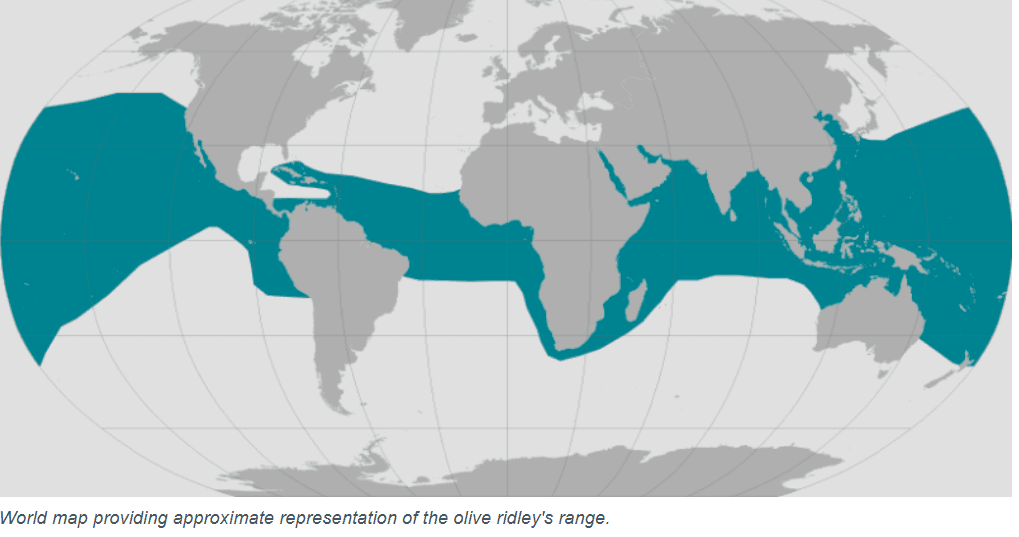
Species Olive Ridley; smallest, olive-green, heart-shaped carapace sea turtle; famed for mass nesting arribada

Global range tropical belts of Indian, Pacific, Atlantic Oceans; India’s major arribada beaches Gahirmatha, Rushikulya, Devi

Habitat pelagic open ocean; migrates to sandy shores of Odisha, Tamil Nadu, Andhra, Andamans for nesting

Quick Facts for MCQs

Legal & Policy

  • Schedule I listing affords highest domestic protection; hunting, trade banned
  • Arribada beaches notified as Coastal Regulation Zone-I; developmental activities restricted
  • India part of IOSEA Marine Turtle MoU under CMS Convention

Conservation Measures

  • Chennai coast hatcheries relocate eggs to predator-safe enclosures enhancing hatchling survival
  • Odisha deploys patrolling, offshore trawling bans, turtle-excluder devices during nesting months
  • Community-led beach clean-ups reduce plastic ingestion and entanglement risks

Reproduction & Life Cycle

  • Females nest nocturnally, excavate 45 cm deep flask-shaped pits for eggs
  • Incubation 45–60 days; hatchlings imprint natal beach cues for future return
  • High early-life mortality; estimated 1 hatchling per 1000 reaches adulthood

Migration & Behaviour

  • Satellite tagging reveals trans-oceanic migrations between Indian coast and Sri Lankan, Indonesian waters
  • Solitary nesting observed along Tamil Nadu, Andaman coasts outside arribada season
  • Diet mainly crustaceans, molluscs; opportunistic scavenger roles maintain benthic balance

Key Data Points

FeatureData-Point
IUCN statusVulnerable
Indian law tagWildlife (Protection) Act 1972, Schedule I
Arribada meaningSynchronous mass nesting by thousands of females
Major Indian arribada beachGahirmatha (Odisha)
Typical clutch size≈100 eggs
Clutches per season1–3
Sexual maturity age12–15 years
Sex determinationTemperature dependent; warmer sand → females
Carapace scutes5–9 pairs of lateral scutes
Flipper claws1–2 per flipper
Indicator roleReflects coastal & ocean health

Related UPSC Prelims PYQs

CAPF_GAI, NDA_GAT 2021PYQ 1

Operation Olivia, an initiative to protect Olive Ridley turtles, is undertaken by

CAPF_GAI, NDA_GAT 2023PYQ 2

Consider the following statements about Ramsar Wetland sites in India:

GS-3S&T

7.Battery Pack Aadhaar Number System (EV Battery ID)

New Indian Express
Illustration for Battery Pack Aadhaar Number System (EV Battery ID)

What & Where

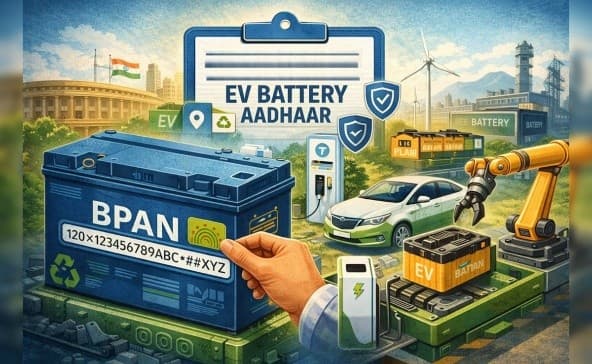
BPAN = 21-character unique ID for every EV battery pack introduced in Indian market

Implemented via draft MoRTH “Guidelines for Battery Pack Aadhaar System”, routed through Automotive Industry Standard (AIS)

Core geography: India; initial focus on EV batteries covering 80-90 % of national Li-ion demand

Quick Facts for MCQs

Legal & Policy

  • Compliance enforces Extended Producer Responsibility strengthening accountability
  • Draft guidelines open for stakeholder comments before notification as AIS norm
  • Dynamic updating clause ensures regulatory traceability across battery modifications

Environmental Impact

  • Traceability enables systematic recycling, second-life use, safe disposal limiting landfill hazards
  • Proper end-of-life management reduces lithium-ion fire and pollution risks

Implementation Design

  • Unique ID attached at manufacturing/import stage, remains through resale or repurpose
  • Central BPAN portal acts as single source of truth for regulators, recyclers, consumers

Industry Focus

  • EV segment prioritised given dominant share in Li-ion consumption, driving early adoption and scale

Key Data Points

FeatureData-Point
Full formBattery Pack Aadhaar Number
Characters21
First notifierMinistry of Road Transport & Highways
Standard routeAutomotive Industry Standards Committee (AISC)
Mandatory forProducers & importers of battery packs
Initial coverageEV batteries; industrial batteries > 2 kWh recommended
Data capturedRaw material to final disposal lifecycle
Update ruleNew BPAN on any major change
MarkingDurable, tamper-resistant, easily visible
Digital portalProducers upload all battery data
GS-2Editorial

8.Monroe Doctrine and Latin America (Monroe Doctrine)

Hindustan Times
Illustration for Monroe Doctrine and Latin America (Monroe Doctrine)

What & Where

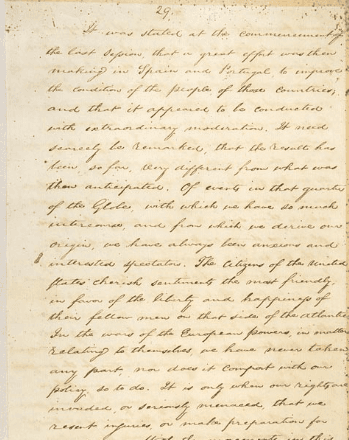
Doctrine: 1823 U.S. policy declaring Americas exclusive U.S. sphere; warned Europe against new colonisation/interference.

Geography: Applies to Western Hemisphere—North, Central, South America, Caribbean.

Evolution: 1904 Roosevelt Corollary flipped it from passive warning to active U.S. intervention right.

Quick Facts for MCQs

Historical Evolution

  • 1823 focus Defensive; 1904 Roosevelt Corollary added preventive U.S. interventions over debt/instability.
  • Shift transformed doctrine into cornerstone of early 20th-century “Big Stick” diplomacy.

Security Dimension

  • U.S. framed European meddling as direct security threat; doctrine signalled deterrence.
  • Trump cited doctrine to legitimise military seizure of Venezuelan president in 2026 transition control.

Latin American Interventions

  • Doctrine invoked in Cuba (1898), Nicaragua (1909), Haiti (1915), Dominican Republic (1916), Venezuela (2026).

Criticism & Controversy

  • Critics label doctrine neo-imperial; argues ignores Latin American sovereignty, entrenches U.S. hegemony.

Key Data Points

FeatureData-Point
Formal proclamation date2 Dec 1823
Proclaimed byPresident James Monroe (5th U.S. President)
Forum of announcementState of the Union Address to U.S. Congress
Key clause“No new European colonies in Americas”
Expansion corollary year1904
Expansion corollary authorPresident Theodore Roosevelt
Venezuela operation citedJan 2026, capture of Nicolás Maduro
Justification used“Modern update” of Monroe Doctrine
Reciprocal promiseU.S. non-interference in existing European colonies
Core ideaSeparate political spheres: Europe vs. Americas
GS-2Mapping

9.US Takeover of Venezuela (South America Geography)

Hindustan Times
Illustration for US Takeover of Venezuela (South America Geography)

What & Where

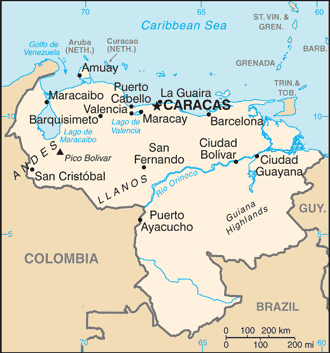
Venezuela; federal multiparty republic at northern tip of South America with Caribbean & Atlantic littorals

Landscapes span Andes Cordillera de Mérida, oil-rich Maracaibo Basin, Llanos plains, Guiana Highlands with tepuis

Orinoco system drains interior; 2026 US capture of Maduro creates transition spotlighting oil revival

Quick Facts for MCQs

Physical Geography

  • Andes NW host agricultural valleys, glaciated peaks including Bolívar Peak
  • Guiana Highlands SE feature prehistoric tepuis and Angel Falls record height
  • Llanos tropical savanna critical for cattle, seasonal wetlands, fossil fuels

Political Timeline

  • 1999 Chávez begins Bolivarian Revolution, nationalises oil, socialist constitution
  • 2013 Maduro inherits presidency; hyperinflation, sanctions, authoritarian drift deepen isolation
  • Jan 2026 US operation removes Maduro, interim external role envisaged

Economic Angle

  • Oil accounts for majority export revenue; nationalised under PDVSA since 1976
  • Infrastructure decay, sanctions cut output; US plans refurbishment post-2026 capture
  • Lake Maracaibo rigs, Orinoco Belt heavy crude central to recovery strategies

Security Dimension

  • US narcotics-terrorism charges underpin military extraction of sitting head of state
  • Leadership vacuum risks factional power struggle amid external stewardship talks
  • Territorial dispute with Guyana over Essequibo may resurface during transition

Key Data Points

FeatureData-Point
CapitalCaracas
CoastlinesCaribbean Sea & Atlantic Ocean
Highest peakBolívar Peak ≈ 4,978 m, Andes
Highest waterfallAngel Falls 979 m, Guiana Highlands
Major lakeLake Maracaibo—oil hub
Vast plainsLlanos along Orinoco
Main riverOrinoco 2,140 km, drains most territory
Key oil basinMaracaibo Basin, NW
Disputed areaEssequibo region with Guyana
2026 eventUS military captured President Maduro, NY trial

Related UPSC Prelims PYQs

GS1 1999PYQ 1

Which one of the following port cities in Venezuela has been developed as an oil port?

GS-3Security

10.Ramjet-Powered 155 mm Shells (Ramjet Artillery)

Times of India
Illustration for Ramjet-Powered 155 mm Shells (Ramjet Artillery)

What & Where

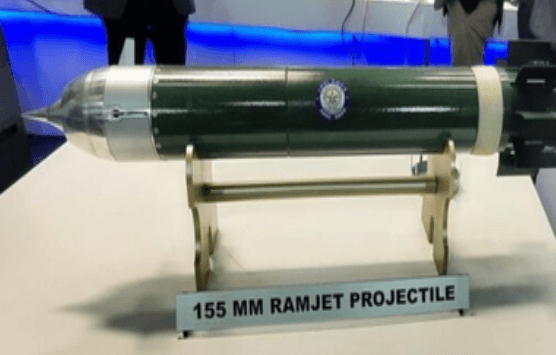
Ramjet-powered 155 mm artillery shells; incorporate air-breathing propulsion for sustained post-launch thrust.

Indian Army to field them across existing 155 mm guns, incl. M777 ultra-light howitzers—world’s first operational use.

Jointly developed in India by IIT Madras with Army Technology Board backing.

Quick Facts for MCQs

Technology Specs

  • Intake compression uses flight speed; no moving parts enhance reliability under artillery stresses.
  • Continuous combustion maintains higher average velocity versus rocket-assisted projectiles.
  • Ramjet module length optimized to avoid barrel extension.

Operational Edge

  • Deep-strike capability extends counter-battery reach inside adversary territory.
  • Precision strike retains explosive payload akin to conventional 155 mm rounds.
  • Flexibility across mountain, desert and plains formations without new logistics chains.

Indigenisation

  • Project funded under Army Technology Board’s problem-definition model.
  • Success aligns with Atmanirbhar Bharat defence manufacturing goals.
  • Potential export niche for ramjet artillery technology.

Key Data Points

FeatureData-Point
Calibre155 mm
PropulsionAir-breathing ramjet
Range boost30–50 % over standard shells
Launch exit speed~Mach 2
Specific impulse>4000 Ns/kg
Gun modification neededNil; retrofit on existing shells
Key developerIIT Madras + Army Technology Board
Compatible systemM777 ultra-light howitzer
Global firstYes; first armed force to deploy
Oxidiser carriageNone; uses atmospheric oxygen
GS-3Security

11.Suryastra Long-Range Rocket Launcher (Suryastra Launcher)

The Hindu
Illustration for Suryastra Long-Range Rocket Launcher (Suryastra Launcher)

What & Where

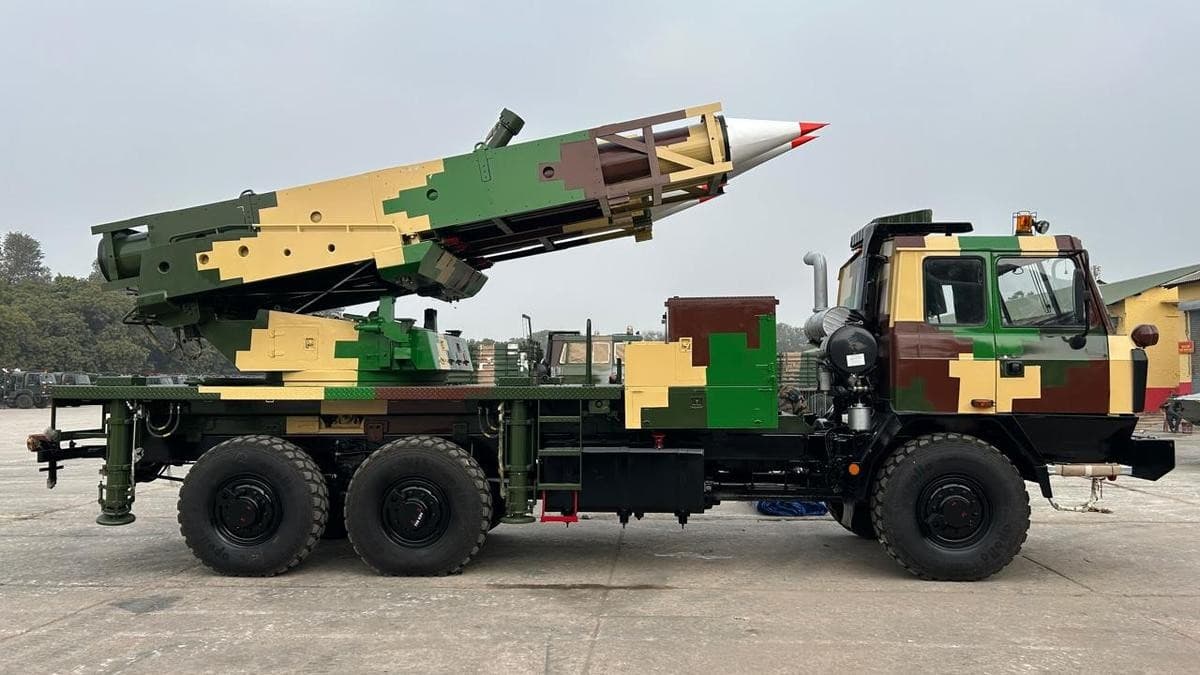
Suryastra = India’s first indigenous universal, multi-calibre rocket launcher for precision surface-to-surface strikes at 150 km & 300 km.

Contract ₹293 cr via Emergency Procurement; supplier NIBE Ltd (India) with tech from Israel’s Elbit Systems.

Deployed with Indian Army artillery formations; integrates varied rockets/missiles on 4×4/6×6/8×8 wheeled chassis.

Quick Facts for MCQs

Tech & Schemes

  • Universal-launcher design enables firing both rockets and tactical missiles from single platform.
  • Indigenous content boosts Make in India, cutting import dependence for long-range artillery.
  • High-precision guidance lowers ammunition expenditure during critical missions.

Security Dimension

  • Deep-strike capability expands Army’s battlefield reach into adversary rear areas.
  • Rapid EP induction ensures operational availability without lengthy procurement cycles.
  • Multi-target engagement supports coordinated joint-force fire plans.

Industrial Collaboration

  • Technology-Collaboration Agreement 2025 formalises Israeli know-how transfer.
  • Local production expected to spur ancillary MSME supply chains.
  • Success may open export prospects to friendly foreign armies.

Key Data Points

FeatureData-Point
Max strike range300 km
Secondary strike range150 km
Launcher typeUniversal multi-calibre
Supported calibres122 mm, 160 mm, 306 mm
Accuracy (CEP)< 5 m in trials
ManufacturerNIBE Ltd., India
Technology partnerElbit Systems, Israel
Tech lineageIsraeli PULS system
Contract value₹293 crore
Procurement routeEmergency Powers (EP)
Collaboration pact signedJuly 2025 (TCA)
Mobility options4×4, 6×6, 8×8 chassis
RoleDeep-strike & stand-off firepower
Comparison benchmarkLonger range than Pinaka
Deterrence focusChina & Pakistan

Related UPSC Prelims PYQs

ESE_GS, GS1 2003PYQ 1

With reference to Indian defence, which one of the following statements is correct?
ESE_GS, GS1 2024PYQ 2

Ministry of Defence signed contract with which one of the following organizations for Upgraded Super Rapid Gun Mount (SRGM) and other equipment for around 3000 crores?

GS-1Misc

12.Rising Acid Attacks in India (Acid Violence)

The Hindu

What & Where

Acid attack – intentional throwing/administering sulphuric, hydrochloric or nitric acid to disfigure, maim or blind

Covered by IPC 326A-B (now BNS §124); attack → 10 yrs-life, attempt → 5-7 yrs imprisonment

2023 hotspots: West Bengal 57 cases, Uttar Pradesh 31, Gujarat 15

Quick Facts for MCQs

Causes

  • Rejection retaliation – male dominance asserted after refusal of marriage/sexual advances
  • Domestic disputes – dowry, marital discord, infidelity suspicion escalate into disfiguring violence
  • Autonomy punishment – aims to curb women’s mobility, identity and dignity

Legal & Policy

  • Criminal Law (Amend.) 2013 inserted IPC 326A-B; migrated to BNS §124
  • Supreme Court 2013 guidelines: photo-ID purchase, seller register, SDM oversight on acid sale
  • MHA advisories 2013/2015: regulate sale, fast-track trials, rehabilitation mandate

Enforcement Challenges

  • Lax retail monitoring; SDMs seldom penalised for illegal acid availability
  • Investigative gaps: weak forensics, delayed charge-sheets undermine prosecution
  • Prolonged trials; negligible convictions erode deterrence and survivor faith

Rehabilitation & Way Ahead

  • Compensation delayed; ₹3 lakh insufficient for lifelong surgeries, therapy
  • Proposed Bangladesh-style licensed sale, shop-sealing and seller liability
  • Justice J.S. Verma panel: national lifelong rehabilitation fund, time-bound fast-track courts

Key Data Points

FeatureData-Point
Reported acid attacks (NCRB 2023)207
Attempted acid attacks 202365
Court cases pending 2023703
Convictions 202316
Acquittals 202327
NGO-estimated annual attacks≈1,000
Minimum SC compensation₹3 lakh
Top state 2023West Bengal 57
Acid attack punishment10 yrs-life
Attempt punishment5-7 yrs

Ready to practice?

Test your knowledge with our UPSC test series.

Start Free Trial