UPSC Current Affairs

13 topicsGS-1: 5GS-2: 1GS-3: 7
0/13 done
GS-3Economy

1.Payments Regulatory Board Functions (Payment Regulation)

News on Air

What & Where

Statutory Payments Regulatory Board (PRB) under RBI governs all payment & settlement systems across India.

Constituted by Section 3, Payment & Settlement Systems Act 2007; amendments made it operational from 9 May 2025.

First meeting in Mumbai; nationwide jurisdiction over digital, card, UPI, RTGS and other non-cash instruments.

Quick Facts for MCQs

Legal & Policy

  • Amendment-driven shift from BPSS to statutory PRB strengthens regulatory clarity and enforcement teeth.
  • PRB can issue binding directions, revoke licences under PSS Act provisions.

Governance Structure

  • Multi-stakeholder composition ensures govt, regulator, infrastructure and expert representation.
  • Experts mandated from payments, fintech, cybersecurity, financial markets for domain depth.

Regulatory Functions

  • Authorisation: grants, renews, cancels licences for UPI, cards, wallets, RTGS, etc.
  • Standards: prescribes technical, operational, security norms; enforces settlement finality.
  • Supervision: inspects providers, manages systemic risk, consumer protection mechanisms.

Systemic Significance

  • Stability: legal certainty on netting, mitigates contagion during payment defaults.
  • Trust: dedicated grievances redress, enhanced safety boost consumer confidence in digital payments.
  • Growth: tailored governance keeps pace with rapid fintech and transaction volume expansion.

Key Data Points

FeatureData-Point
Establishing LawPayment & Settlement Systems Act, 2007
Operationalised on9 May 2025
Predecessor BodyBPSS
ChairpersonRBI Governor
Statutory MembersRBI Dy. Governor (payments), Govt nominees, domain experts, UIDAI/NPCI officials
First Meeting ChairSanjay Malhotra
Core MandateAuthorise, regulate, supervise payment systems
HeadquartersMumbai

Related UPSC Prelims PYQs

ESE_GS, GS1 2024PYQ 1

To increase transparency and consumer awareness and handle customer complaints, a 'Centralised Receipt and Processing Centre' and an 'Integrated Ombudsman Scheme' have been set up. These two schemes are related to which one of the following institutions?

ESE_GS, GS1 2019PYQ 2

Consider the following statements:
GS-3Economy

2.Sustainable Rice Production Strategies (Rice Sustainability)

BL
Illustration for Sustainable Rice Production Strategies (Rice Sustainability)

What & Where

Definition: Rice, kharif cereal, staple for ~65 % Indians; covers ≈25 % of national gross cropped area.

Processes: Transplantation (25–27 irrigations), Direct-Seeded Rice (DSR), multi-season cycles (Aus-Aman-Boro).

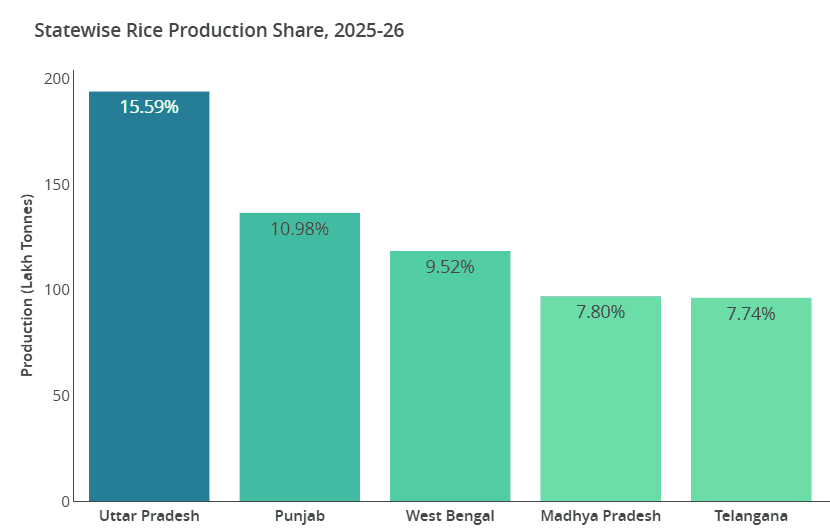
Geography: 2025-26 leaders – Uttar Pradesh, Punjab, West Bengal; high intensity in Punjab-Haryana & eastern deltas.

Quick Facts for MCQs

Environmental Impact

  • Groundwater: Tables plunged 30 ft→80–200 ft in Punjab-Haryana rice zones.
  • Methane: Flooded paddies a major emitter, worsening energy–water–climate loop.
  • Residue: Post-harvest burning spikes PM and CO over Indo-Gangetic plains.

Economic Angle

  • Subsidies: Input-heavy model burdens states; smallholders sink into debt for deeper borewells.
  • Exports: Any Indian shortfall jolts global prices, given 40 % export dominance.
  • Soil: Continuous paddy induces Zn, Fe deficits, raising fertiliser demand.

Tech & Schemes

  • Schemes: PMKSY pushes DSR & micro-irrigation; NICRA scales stress-tolerant lines.
  • Practices: AWD, SRI, digital sensors trim water use 30–40 % without yield loss.
  • Nutrition: Fortified rice under NFSA & PM-Poshan tackles anaemia.

Climate Risks

  • Yield: Warming & erratic monsoon may cut outputs 6–10 %, worst in rain-fed belts.
  • Pumping: Subsidised electricity raises CO₂, deepens groundwater stress.
  • Food security: Water scarcity in India would ripple through global rice supply.

Key Data Points

FeatureData-Point
Global export share (2025)~40 % ≈20 MMT
Producer rank 20251 India, 2 China, 3 Bangladesh
Water need per kg rice (India)3,000–4,000 L
Groundwater overdraft Punjab35–57 % above recharge
Methane share of agri GHG10–20 %
Ideal rainfall>100 cm
Optimum temp (day/night)30 °C / 20 °C
Soil pH suited5.5–6.5
Rice crops per year (south/WB)2–3
Subsidy cost Punjab paddy≈₹39,000 per ha

Related UPSC Prelims PYQs

GS1 2002PYQ 1

With reference to Indian agriculture, which one of the following statements is correct?

GS1 2010PYQ 2

In India, during the last decade the total cultivated land for which one of the following crops has remained more or less stagnant ?

GS-3EconomyQuick Bite

3.Import Curbs Lifted on Metallurgical Coke (Met Coke Imports)

BL

What & Where

Low-ash metallurgical coke = high-carbon, low-impurity fuel from coking coal; indispensable in blast-furnace steelmaking.

Made via destructive distillation of coking coal in air-tight coke ovens; acts as fuel + reducing agent.

India holds 21.6 Bt coking-coal reserves yet imports ~85 % requirements, exposing steel sector to external shocks.

Quick Facts for MCQs

Legal & Policy

  • DGFT lifted quantitative limits once Finance Ministry okayed anti-dumping duty, meeting WTO-compliant remedial norms.
  • Anti-dumping duty targets imports priced below normal value causing material injury; aims at fair trade, not bans.

Economic Angle

  • Duty protects domestic coke makers while ensuring steel plants uninterrupted supply via unrestricted volumes.
  • Price band USD 60–130 may narrow cost gap between imported and domestic coke, supporting competitiveness.

Resources & Industry

  • Low ash, ultra-low phosphorus coke essential for high-grade, low-carbon steel production.
  • Limited suitable domestic coal grades force heavy reliance on imports despite large overall reserves.

Key Data Points

FeatureData-Point
Ash ceiling for “low-ash” tag< 18 %
Provisional anti-dumping dutyUSD 60 – 130 / tonne
Import curbs previously slated1 Jan – 30 Jun 2026
Restriction withdrawal date6 Jan 2026
Notified byDirectorate General of Foreign Trade
Approving authority for dutyUnion Finance Ministry
Major user industryBlast-furnace steel
India’s coking-coal import share≈ 85 %
Medium-quality coking-coal reserves16.5 billion t
Prime-quality coking-coal reserves5.13 billion t

Related UPSC Prelims PYQs

GS1 2015PYQ 1

In India, the steel production industry requires the import of

GS1 2012PYQ 2

Despite having large reserves of coal, why does India import millions of tonnes of coal?

GS-1History

4.Neo-colonialism Dynamics in Modern Era (Neo-colonialism)

New Indian Express

What & Where

Neo-colonialism – indirect domination using markets, debt, sanctions, covert coups; flags absent yet choices controlled

Mechanisms – commodity-export trap, foreign corporate extraction, debt conditionality, security pacts, disinformation

Geography – spotlight on South America: Chile, Venezuela, Bolivia, Brazil; logic now replicated worldwide

Quick Facts for MCQs

Economic Angle

  • Commodity dependence locks revenues to copper oil gas cycles; downturns force austerity and external restructuring
  • Debt crisis 1982 led to IMF stabilisation prioritising creditor confidence over social spending across region
  • Profit repatriation by foreign miners and drillers drains surplus undermining diversification efforts

Security Dimension

  • Operation Condor enabled cross-border repression with external intelligence backing curbing political opposition
  • US military intervention Panama 1989 removed Noriega yet entrenched institutional fragility and dependency
  • Security cooperation agreements act as discipline tools substituting for formal colonial garrisons

Political Engineering

  • Allende overthrow 1973 and Goulart ouster 1964 illustrate covert support for market-friendly regimes over elected ones
  • Sanctions and financial chokepoints now pressure Caracas shifting focus from boots to banks
  • Narrative influence via global media delegitimises leaders justifying external involvement

Modern Instruments

  • Dollar payment networks and SWIFT access weaponised to throttle economies without firing shots
  • Investor-rating downgrades raise bond spreads coercing policy shifts toward privatisation and spending cuts
  • Investor-state arbitration under treaties chills labour environment regulation fearing billion-dollar awards

Key Data Points

FeatureData-Point
Chile coup year1973
Operation Condor period1970s
Latin American debt crisis start1982
Argentina default triggering protests2001
Bolivia “Gas War”2003
Venezuelan oil-price crash2014
GS-1History

5.Somnath Temple Millennium Commemoration (Somnath Temple)

BL

What & Where

Shrine Somnath is the first of 12 Shiva Jyotirlingas, revered since Rig-Veda, Skanda- and Shiva-Purana times.

Located at Prabhas Patan, Gujarat coast, where Kapila-Hiran-Saraswati meet the Arabian Sea.

Present stone temple follows Kailas Mahameru Prasad (Maru-Gurjara) style, reconsecrated in 1951.

Quick Facts for MCQs

Historical Timeline

  • Attacks: 1026, 1297, 1394, 1706, each followed by reconstruction.
  • Seventh and current structure commenced 1947, symbolising post-colonial resurgence.
  • Millennium of resilience marked as Somnath Swabhiman Parv (1026-2026).

Architectural Details

  • Style blends Nagara plan with Solanki carving finesse by Sompura Salats.
  • High curvilinear shikhar evokes Mount Kailasa and Meru symbolism.
  • Complex includes separate halls for assembly and dance before sanctum.

Civilisational Symbolism

  • Somnath cited by Swami Vivekananda as India’s life-current, ever-reviving.
  • Maharani Ahilyabai sustained rituals during Mughal-Maratha turbulence.
  • Message: faith triumphs over fanaticism, echoing Bhagavad Gita’s indestructible ātman.

Geographical Highlight

  • Tirth Stambh marker denotes uninterrupted sea line from temple to Antarctic region.
  • Coastal site fostered ancient maritime awareness and pilgrimage circuits.

Key Data Points

FeatureData-Point
Jyotirlinga rank1st of 12
Earliest recorded sack1026 CE by Mahmud of Ghazni
Key rebuilderKing Bhimdev I, Solanki dynasty
Post-1947 patronsSardar Vallabhbhai Patel & K.M. Munshi
Pran-pratishtha date11 May 1951 by President Rajendra Prasad
Architectural typeKailas Mahameru Prasad (Maru-Gurjara Nagara)
Shikhar height~155 ft (≈50 m)
Core layoutGarbhagriha, Sabha-mandap, Nritya-mandap
River confluenceKapila, Hiran, Saraswati with Arabian Sea
Abadhit Samudra Marg9,936 km open sea to South Pole
GS-1Mapping

6.Iran Geostrategic Mapping (Iran Geography)

NDTV
Illustration for Iran Geostrategic Mapping (Iran Geography)

What & Where

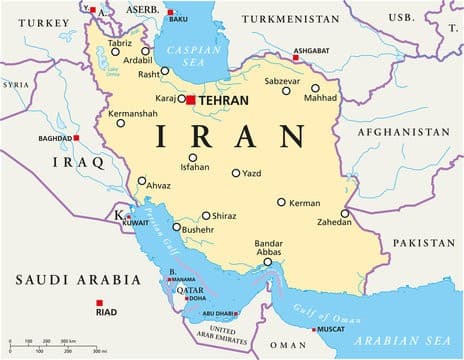
Sovereign country; hybrid Shiʿa theocracy-republic formed after 1979 Islamic Revolution.

Southwest Asian “bridge state” between Middle East, Central & South Asia; controls Persian Gulf–Strait of Hormuz access.

Core landform Central Iranian Plateau flanked by Zagros (W) and Alborz (N) ranges.

Quick Facts for MCQs

Physical Geography

  • Deserts: Salt flats, extreme diurnal temperatures, sparse settlement dominate Kavir and Lut.
  • Mountains: Zagros rich in hydrocarbons; Alborz yields high rainfall on Caspian flank.
  • Plateau: Arid interior causes largely seasonal river regimes.

Strategic Location

  • Maritime: Commands world’s busiest oil transit corridor via Strait of Hormuz.
  • Connectivity: Land bridge linking Caucasus, Central Asia and Indian Ocean routes.
  • Borders: Shares frontiers with 7 states plus Caspian Sea and two gulfs.

Seismic Risk

  • Tectonics: Frequent ≥6.0 magnitude quakes due to plate collision and thrust faults.
  • Vulnerability: Dense plateau settlements heighten casualty potential.
  • Mitigation: Hydrocarbon facilities and dams built with seismic-resistant codes.

Key Data Points

FeatureData-Point
CapitalTehran
Highest peakMount Damavand, 5 610 m (Alborz)
Strategic chokepointStrait of Hormuz frontage
Main desertsDasht-e Kavir; Dasht-e Lut
Longest rangeZagros Mountains, NW-SE alignment
Seismic settingArabian–Eurasian plate convergence
Only navigable riverKarun, southwest
Plateau average altitude≈1 200 m
Western neighbourIraq
Eastern neighboursAfghanistan, Pakistan

Related UPSC Prelims PYQs

GEO_GS 2022PYQ 1

Chabahar Port is located in which one of the following countries?

GS-3Environment

7.Global Environment Facility Overview (GEF Funding)

UNEP

What & Where

Multilateral fund; provides grants & blended finance to developing and transition economies for global environmental challenges

Supports country‐driven projects integrating climate, biodiversity, land, oceans, chemicals, pollution actions

Operates worldwide; active in 160+ countries via Assembly, Council, Secretariat, STAP, IEO structures

Quick Facts for MCQs

Mandate & Scope

  • Aim generate global environmental benefits while bolstering sustainable development
  • Integrates multiple thematic focal areas instead of siloed funding windows
  • Funds national climate reporting and Paris Agreement transparency frameworks

Finance & Scale

  • Provides grants, concessional loans, blended finance; catalyses large public-private co-financing
  • New GEF-8 cycle channels US$5 bn core resources over 4 years
  • Supports technology transfer and capacity building for low-carbon transitions

Governance

  • Assembly (every 4 yrs) sets strategy; Council meets biannually for work programme approval
  • Scientific and Technical Advisory Panel (STAP) ensures evidence-based project screening
  • Independent Evaluation Office (IEO) measures impact, accountability, learning

Key Data Points

FeatureData-Point
Year established1991
Origin eventPre-1992 Rio Earth Summit
Latest Council meet70th; approved US$52.8 mn for 4 UNEP projects
Total grants so far≈ US$26 billion
Total co-finance mobilised≈ US$153 billion
Countries served160 +
Largest funding areaBiodiversity
Financial mechanism forCBD, UNFCCC, UNCCD, Stockholm, Minamata, BBNJ
Montreal Protocol roleProvides additional implementation support

Related UPSC Prelims PYQs

GEO_GS, GS1 2014PYQ 1

With reference to 'Global Environment Facility', which of the following statements is/are correct?

GEO_GS, GS1 2026PYQ 2

The United Nations Framework Convention on Climate Change (UNFCCC) was first signed during

GS-3Environment

8.India's First Urban Night Safari Lucknow (Urban Night Safari)

TN
Illustration for India's First Urban Night Safari Lucknow (Urban Night Safari)

What & Where

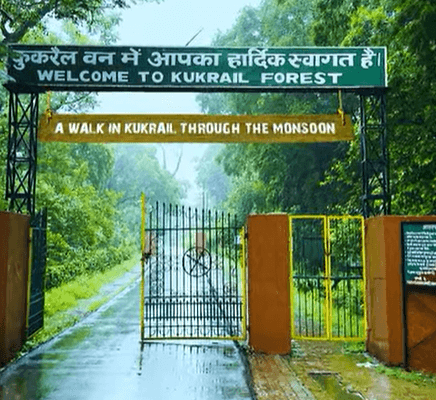
Concept: India’s first urban night safari—guided nocturnal wildlife viewing inside city limits

Locale: Kukrail Forest Area, northern outskirts of Lucknow, Uttar Pradesh, along Kukrail River

Purpose: Blend urban eco-tourism with live conservation education for residents, families, students

Quick Facts for MCQs

Conservation & Education

  • Upgrade: Existing crocodile, gharial, turtle centres retained and enhanced
  • Outreach: Guided programmes target schools to instil nocturnal ecology awareness
  • Coexistence: Demonstrates biodiversity protection within dense urban setting

Infrastructure & Design

  • Transit: Restricted safari routes to limit disturbance and control visitor flow
  • Build: Eco-friendly bamboo structures, interpretation centres harmonise with forest aesthetics
  • Lighting: Minimal glare LEDs maintain animal circadian rhythms

Urban Planning Significance

  • Model: First attempt to mainstream wildlife education inside metropolitan boundary
  • Replicability: Template for other Indian cities seeking low-impact eco-tourism
  • Balance: Shows leisure, education, conservation can co-develop in urban land parcels

Key Data Points

FeatureData-Point
Inception tagFirst urban night safari in India
StateUttar Pradesh
CityLucknow
Forest blockKukrail Reserve
River proximityKukrail River
Key resident faunaCrocodile, gharial, freshwater turtle
Lighting strategyLow-impact, animal-friendly illumination
Core activitiesNight ecology walk, bird-watching, school outreach
Infrastructure materialBamboo huts, eco-trails
Project focusConservation awareness over entertainment
GS-3EnvironmentQuick Bite

9.Green Paradox in Urban Greening (Urban Heat Islands)

The Hindu

What & Where

Urban greening: deliberate tree/vegetation addition inside city limits to moderate heat in 761 cities, 105 countries

Temperature Regulation Capability (TRC): temperature gap between vegetated and built surfaces; negative TRC = cooling, positive TRC = warming

Dry belts (<1 000 mm rain) across arid/semi-arid zones, incl. many Indian cities, risk vegetation-induced warming

Quick Facts for MCQs

Study Scope & Results

  • Overall vegetation cooled cities yet one-fourth showed net warming, concentrated in low-rainfall regions
  • Positive TRC often mapped to arid/semi-arid settlements lacking irrigation water
  • Findings challenge blanket tree-planting prescriptions for urban heat mitigation

Biophysical Mechanism

  • Limited soil moisture curbs evapotranspiration, diminishing cooling potential of leaves
  • Plants absorb higher solar radiation than some built surfaces, elevating surface temperatures under water stress
  • During severe heat, stomatal closure further slashes evaporative cooling, amplifying local heat

Indian Context

  • Several Indian cities fall in sub-1000 mm rainfall band, demanding climate-suitable species and water-sensitive design
  • Integrating greening with reflective materials, shade structures, and water management advised for heat-action plans
  • Misplaced plantations risk worsening urban heat islands, affecting public health and energy demand

Key Data Points

FeatureData-Point
Total cities analysed761
Countries covered105
Key metricTemperature Regulation Capability
Cooling cities share≈ 75 %
Net-warming cities share≈ 25 %
Rainfall cut-off for risk< 1 000 mm annually
Main cooling processEvapotranspiration
Heat-island driverConcrete/asphalt heat storage
GS-3S&T

10.National Environmental Standard Laboratory India (Air Quality Standards)

PIB

What & Where

NESL: apex lab testing & calibrating air-pollution monitors under Indian climatic stressors.

Solar Cell Primary Standard: laser-based high-precision calibration of PV cells with 0.35 % uncertainty.

Both hosted at CSIR–NPL, New Delhi; India now world’s 2nd (NESL) & 5th (Solar) holder.

Quick Facts for MCQs

Tech & Schemes

  • Calibration ensures traceable data enabling Make-in-India environmental & PV instruments.
  • Laser DSR system sets metrological traceability to SI units for solar irradiance.
  • Facilities strengthen India’s renewable targets under National Solar Mission.

International Standing

  • Only UK plus India possess national-level air-monitor calibration labs.
  • Solar calibration peers include Germany PTB, NREL USA, AIST Japan, CNM Spain.
  • Collaboration enhances India’s presence within Global Metre Convention frameworks.

Regulatory Support

  • Accurate monitors aid CPCB & SPCBs in enforcing emission norms.
  • Standardised PV metrics facilitate BIS certification and export compliance.
  • Data fidelity underpins urban air-quality indices and climate reporting.

Key Data Points

FeatureData-Point
Full form NESLNational Environmental Standard Laboratory
Full form PV facilityNational Primary Standard Facility for Solar Cell Calibration
Host instituteCSIR–National Physical Laboratory, New Delhi
Parent bodyCouncil of Scientific & Industrial Research
Global rank NESL2nd after United Kingdom
Global rank Solar facility5th worldwide
Key tech NESLClimatic chamber simulating Indian temp-humidity-dust
Key tech SolarLaser-based Differential Spectral Responsivity (L-DSR)
Calibration uncertainty Solar0.35 % (k=2) world-leading
Foreign collaboratorPhysikalisch-Technische Bundesanstalt, Germany
Policy supportedNational Clean Air Programme (NCAP)
BeneficiariesDomestic manufacturers, startups, MSMEs, regulators
GS-2Editorial

11.China's People-Centred Governance Initiatives (Global Governance)

The Hindu

What & Where

Suite of four Chinese global initiatives GDI GSI GCI GGI rolled out 2021-25

Latest GGI announced at 25th SCO Summit Tianjin China 2025

Target reforming worldwide governance architecture with people-centred benefits, emphasis Global South partnership

Quick Facts for MCQs

Chinese Initiatives

  • Sequencing GDI 2021, GSI 2022, GCI 2023, GGI 2025 forming people-centred quartet
  • Objectives shared development, common security, civilisational respect, governance equity
  • Appeal Global South by offering alternative multilateral roadmap to Western dominated institutions

Indian Parallels

  • Flagships ISA, CDRI, Mission LiFE, DPI, Vaccine Maitri embody people-centric sustainability push
  • G20 2023 theme Vasudhaiva Kutumbakam underscored inclusive development and Global South voice
  • Emphasis affordable clean energy, resilient infra, digital inclusion, health equity

Strategic Angle

  • China uses SCO platform to shape norms and gain leadership in global governance reform
  • India China soft-power contest visible across UN G20 BRICS arenas
  • Multiple governance frameworks emerging complicating rule-making and partnership alignments

Key Data Points

FeatureData-Point
GGI launch2025 Tianjin, 25th SCO Summit
GGI focusJust, equitable global governance
GDI launch2021
GDI focusPeople-centred growth, 2030 Agenda alignment
GSI launch2022
GSI focusPeace via dialogue, sovereignty respect
GCI launch2023
GCI focusMutual respect among civilisations
ISASolar alliance, climate justice
CDRIDisaster resilient infrastructure
Mission LiFEBehavioural change for sustainability
DPI ModelOpen, inclusive digital public goods

Related UPSC Prelims PYQs

GEO_GS 2024PYQ 1

Which of the following statements about 'Good Governance Index' (GGI) is/are not correct?

GS-1Editorial

12.Women Inclusion in Green Economy (Women Workforce)

RW
Illustration for Women Inclusion in Green Economy (Women Workforce)

What & Where

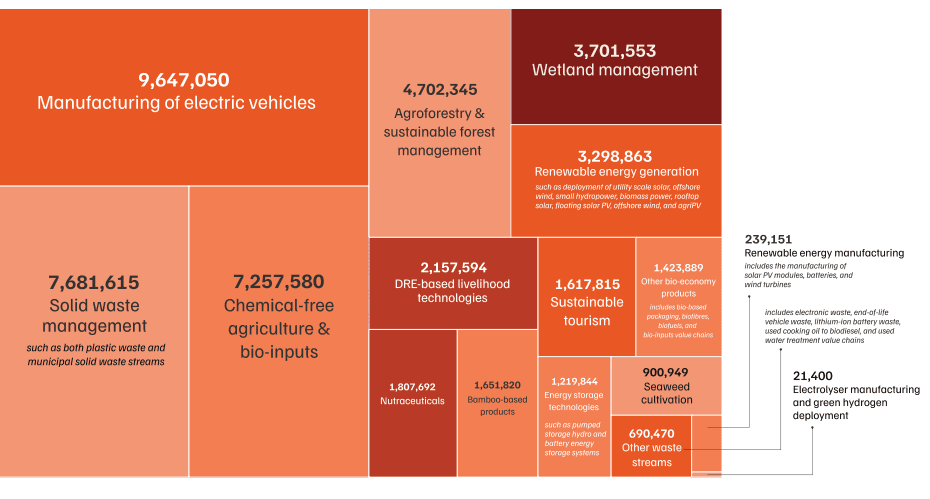
Definition – Women’s participation, leadership, income generation across energy transition, circular economy, bio-economy & nature-based solutions

Key processes – Renewable deployment, rooftop solar, waste-to-value chains, agroforestry, seaweed, drone-led precision farming

Geography – Pan-India; sharp data from rooftop-solar firms, waste hubs and EV factories

Quick Facts for MCQs

Economic Angle

  • Inclusion dividend – Gender diversity directly lifts labour productivity, expands $30 trn 2047 GDP vision
  • Green factories – Women-run EV plants embed females in higher-value manufacturing, challenge norms
  • Solar micro-enterprises – Energy cost cuts raise SHG margins, scale local production

Energy Transition

  • Workforce gap – Women underrepresented in engineering, O&M, site-based solar jobs due to safety, mobility limits
  • Asset ownership – PM Surya Ghar can register rooftop panels in women’s names unlocking credit
  • Skill pathways – Gender-focused green certifications with placement linkages address hiring bias

Circular Economy

  • Caste-gender overlap – Dalit/Adivasi women dominate hazardous informal waste work, face stigma
  • Formalisation route – Municipal contracts, social security can convert waste-picking into dignified green jobs
  • Wage equity need – 33 % pay gap persists despite identical roles

Bio-economy & NbS

  • Labour skew – Women perform unpaid agroforestry, seaweed harvesting; men control value addition
  • Millet revival – Women-led processing links biodiversity restoration, climate resilience, nutrition security
  • Drone Didi – Precision farming converts women from labourers to tech service providers cutting emissions

Key Data Points

FeatureData-Point
Female labour-force participation41.7 % (men 78.8 %)
Women share in global RE workforce~32 %; mostly non-STEM
Female staff in Indian rooftop-solar firms~11 %
Women among waste-pickers~1.5 million ≈ 49 %
Pay gap in waste rolesWomen earn ~33 % less
Productivity gain1 % rise in gender diversity → 2.9 % higher labour productivity
Women in all-female EV factory (Ola)10,000 planned

Related UPSC Prelims PYQs

GEO_GS 2024PYQ 1

Consider the following statements with reference to a Report titled 'The Paths to Equal', published in 2023, prepared by 'UN Women' and 'UNDP' (United Nations Development Programme):

GEO_GS 2026PYQ 2

With reference to distribution of employment in India for the year 2024-2025, consider the following statements:

GS-1PolityQuick Bite

13.Rabies Declared Notifiable Disease Delhi (Notifiable Diseases)

Indian Express
Illustration for Rabies Declared Notifiable Disease Delhi (Notifiable Diseases)

What & Where

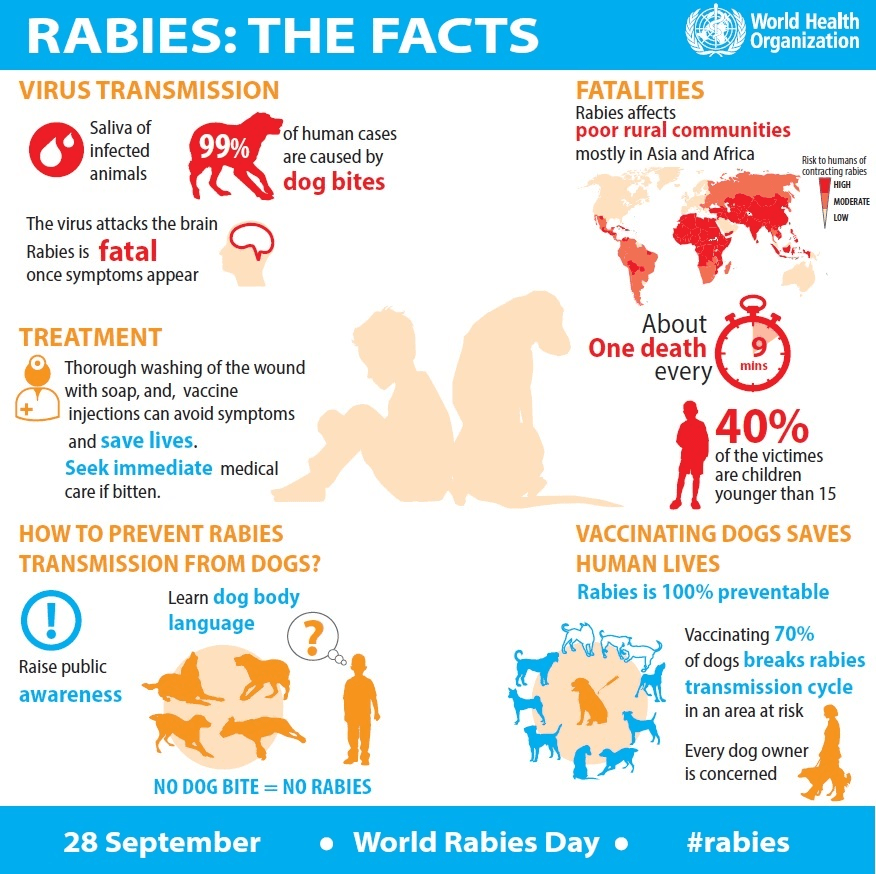
Delhi: human rabies declared notifiable under Epidemic Diseases Act, 1897

Notifiable disease: mandatory reporting of suspected-probable-confirmed cases through Integrated Disease Surveillance Programme (IDSP)

India: state/UT governments decide lists; no single national roster

Quick Facts for MCQs

Legal & Policy

  • Provision: Act empowers states to notify diseases, enforce penalties for non-reporting
  • Obligation: All public-private providers must report within prescribed timeframe
  • Variation: Lists differ across states due to legislative autonomy

Surveillance System

  • Framework: IDSP collects, collates, analyses weekly data for early outbreak detection
  • Channel: Data flows from sub-centres to district, state, then Central Surveillance Unit
  • Output: Generates alerts enabling rapid response teams

Disease Spectrum

  • Common list: Vector-borne (dengue, malaria), water-borne (cholera), respiratory (TB), vaccine-preventable (measles, polio)
  • Pandemic precedent: COVID-19 universally notified across India in 2020
  • Trend: Gradual inclusion of neglected conditions such as snakebite, rabies

International Commitments

  • IHR 2005: Legally binds 196 WHO members to notify events with potential cross-border impact
  • Scope: Applies irrespective of source—biological, chemical, radio-nuclear
  • Compliance: Timely WHO intimation avoids travel/trade restrictions

Key Data Points

FeatureData-Point
Governing lawEpidemic Diseases Act, 1897
Reporting pipelineHospital/doctor → IDSP → NCDC
Central nodal agencyNational Centre for Disease Control
Recent add-ons to listSnakebite (2024), Human rabies (2025)
Delhi’s stated goalZero human deaths from dog-mediated rabies
Usual notifiable setTB, Dengue, Malaria, Cholera, Hepatitis, Measles, Leptospirosis, Polio
Global mandateWHO International Health Regulations, 2005

Ready to practice?

Test your knowledge with our UPSC test series.

Start Free Trial