UPSC Current Affairs

14 topicsGS-1: 4GS-2: 4GS-3: 6
0/14 done
GS-2Scheme

1.PRAGATI Governance Monitoring Platform (Project Monitoring System)

The Hindu

What & Where

PRAGATI: centralised ICT platform for grievance redress, project/programme monitoring across India.

Three-tier process links PMO ↔ Union Secretaries ↔ State Chief Secretaries via secure video & GIS dashboard.

Monthly PM-chaired reviews target inter-ministerial, Centre–State bottlenecks in infrastructure & public services.

Quick Facts for MCQs

Tech & Schemes

  • Digital-GIS mapping provides ground-level visuals, objective progress tracking.
  • Unified dashboard merges grievance (CPGRAMS), investment (PMG) & statistics (MoSPI) data, cutting silos.
  • Electronic follow-up logs directives until closure, ensuring transparent audit trail.

Cooperative Federalism

  • Video conference unites PM, Union Secretaries, all State/UT Chief Secretaries simultaneously.
  • Escalation framework enforces quick Centre–State consensus on stuck tenders, clearances.
  • Platform accelerates legacy projects pending since 1990s, showcasing collaborative problem-solving.

Performance Metrics

  • Reviewed projects worth 30 % of India’s current GDP equivalent.
  • Resolution count (7,156) reflects outcome-based monitoring, not mere reporting.
  • Land acquisition flagged as top delay factor; targeted interventions expected post-50th meeting.

Key Data Points

FeatureData-Point
Launch date25 March 2015
Launched byPrime Minister of India
NatureReal-time e-governance & monitoring platform
Chaired byPrime Minister in monthly VC
Architecture tiers3 (PMO, Union Secretaries, State CMs/CSs)
Integrated databasesCPGRAMS, PMG, MoSPI
Tech toolsGIS mapping, live visuals, digital dashboards
Escalation pathMinistry → Secretary level → PM review
Projects reviewed3,300 +
Cumulative cost₹85 lakh crore
Issues resolved7,156
Delay share: land acquisition35 % of infra delays (PRAGATI-50 meet)
GS-3Editorial

2.India Renewable Energy Grid Integration (Renewable Integration)

Indian Express

What & Where

Definition: Shift from coal domination to solar, wind, hydro, storage backed by grid, tariff and market reforms

Geography: Solar-wind resources cluster in western & southern states while peak demand lies in distant urban-industrial centres

Scale: Installed solar + wind capacity crossed 180 GW, making renewables cheapest new generation nationwide

Quick Facts for MCQs

Grid & Market

  • Congestion: High renewable curtailment from transmission bottlenecks, rigid self-scheduling, imperfect forecasting
  • Fragmentation: Long-term PPAs restrict least-cost national dispatch, limiting renewable utilisation and competition
  • Reform: CERC-proposed Market-Based Economic Dispatch could save billions annually by pooling generation

Financial Health

  • Revenue gap: Volumetric retail tariffs under-recover fixed network costs, eroding DISCOM finances despite subsidy schemes
  • Cross-subsidy risk: High-tariff C&I consumers shifting to open access or captive plants destabilises utility cashflow
  • Investment drag: Persistent losses impede spending on grid modernisation, storage, and flexibility assets

Demand Flexibility

  • Limited shift: Time-of-Day pricing alone fails without automation, real-time data, and aggregation platforms
  • Opportunity: Smart appliances, controlled EV charging, automated demand response can flatten peaks cheaper than new capacity
  • Behaviour: Early ToD pilots show modest consumer response, indicating need for technology-enabled nudges

Policy Roadmap

  • Incentives: Align DISCOM earnings with reliability, loss reduction, and efficiency instead of mere sales volumes
  • Integration: Bring captive plants and renewable hybrids into spot markets to deepen liquidity and flexibility
  • Role change: Transition DISCOMs from passive sellers to active system optimisers managing demand, storage, grid stability

Key Data Points

FeatureData-Point
Installed solar + wind~180 GW
Average solar/wind tariff vs new coalLower
Smart meters deployed49 million
Exchange-traded electricity share7–9 %
Aggregate Technical & Commercial losses~16 %
Long-term PPA dominanceMajority of generation locked

Related UPSC Prelims PYQs

GEO_GS, GS1 2026PYQ 1

India's installed solar capacity in 2025 is close to

GEO_GS, GS1 2018PYQ 2

With reference to solar power production in India, consider the following statements:

GS-3Economy

3.RBI Banking Trend Report 2024-25 (Banking Sector)

Economic Times

What & Where

Report on Trend and Progress of Banking in India – statutory annual review released by RBI

Maps performance, asset quality, profitability of Scheduled Commercial Banks, NBFCs, cooperative banks for FY 2024-25

Coverage pan-India; latest data up to September 2025

Quick Facts for MCQs

Sector Health

  • Resilience GNPA multi-decadal low 2.1-2.2 percent; CRAR 17.4 ensuring shock absorption
  • Profitability Net profit ₹4 lakh crore; assets expand 11.2 percent year-on-year
  • Macroeconomy Inflation at multi-year lows; real GDP growth >8 percent supports credit momentum

Banking Frauds

  • Concentration Card & internet dominate cases 66.8 percent; loan advances top value 33.1 percent
  • Trend Fraud count down yet amount triples to ₹34,771 crore in FY 2024-25
  • Distribution Private banks lead cases 59.3 percent; public banks bear 70.7 percent loss share

NBFCs & Cooperatives

  • NBFCs Credit up 19.4 percent; CRAR 25.9 provides hefty buffer and better asset quality
  • UCBs GNPA falls to 6.2 percent improving earnings trajectory
  • Rural coops Long-term institutions remain stressed with GNPA exceeding 38 percent

Regulatory Priorities

  • Climate RBI flags physical and transition risks; calls climate finance national imperative
  • Consumer Misselling concerns trigger plan for harmonised advertising and recovery guidelines
  • Technology Focus on ethical AI, algorithmic bias, and fintech competition management

Key Data Points

FeatureData-Point
GNPA ratio (Mar 2025)2.2 %
GNPA ratio (Sep 2025)2.1 %
SCB CRAR17.4 %
SCB balance-sheet growth11.2 %
SCB net profit₹4 lakh crore
Fraud amount 2024-25₹34,771 crore
Card/Internet fraud share (cases)66.8 %
Advances fraud share (value)33.1 %
Private bank fraud share (cases)59.3 %
Public bank fraud share (value)70.7 %
NBFC credit growth19.4 %
NBFC CRAR25.9 %
UCB GNPA6.2 %
Rural long-term coop GNPA>38 %

Related UPSC Prelims PYQs

GEO_GS 2026PYQ 1

A bank generated savings credit of ₹1,600 crore in the first round from a savings deposit of ₹2,000 crore. What is the Cash Reserve Ratio fixed by the Central Bank?

GS-1History

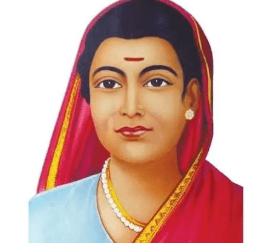
4.Savitribai Phule Social Reform Legacy (Women’s Education Reform)

DD News
Illustration for Savitribai Phule Social Reform Legacy (Women’s Education Reform)

What & Where

Pioneer Savitribai Phule (1831–1897) first modern-India woman teacher feminist reformer

Core work Pune (Maharashtra) opening India’s first girls’ school at Bhidewada 1848

Key force in Satyashodhak Samaj challenging caste patriarchy through education equality

Quick Facts for MCQs

Education Reforms

  • Qualified woman teacher 1847 defying era norms
  • Established 18 girls schools from 1848 educating Shudras Atishudras Muslims
  • Braved daily stone-dirt attacks en route classrooms yet persisted

Social Justice

  • Campaigned against child marriage caste bias untouchability widow ostracism
  • Opened shelter 1854 giving widows destitute girls safe residence and childbirth care
  • Conducted Satyashodhak marriages promoting inter-caste unions zero dowry priests

Public Service

  • Tended Pune plague victims 1897 contracting disease and dying in line of duty
  • Embodied courage public welfare prioritising health over personal safety

Legacy

  • Namesake Savitribai Phule Pune University symbolises her educational imprint
  • Revered nationally as catalyst for women’s rights social emancipation equality

Key Data Points

FeatureData-Point
BirthplaceNaigaon, present Maharashtra
Birth year1831
Spouse–allyJyotirao Phule
Teacher trainingAhmednagar & Pune, qualified 1847
First girls’ schoolBhidewada, Pune 1848
Total schools founded18 for girls & marginalised
Shelter for widowsStarted 1854, enlarged 1864
Reform marriagePromoted Satyashodhak weddings sans priests dowry
Core organisationSatyashodhak Samaj
Death1897 plague while nursing patients
GS-1History

5.Mannathu Padmanabhan Reformist Contributions (Kerala Social Reform)

PIB

What & Where

Reformer: Kerala leader Mannathu Padmanabhan (1878 – 1970) championed caste-free dignity, equality, nation-building

Institution: Founded Nair Service Society (1914) at Changanassery; organised education, cooperatives, community welfare

Geography: Activism centred in Travancore–Cochin; led Vaikom and Guruvayur temple satyagrahas across Kerala

Quick Facts for MCQs

Social Reform Agenda

  • Satyagraha: Led Savarnajatha march demanding temple entry for oppressed castes in Travancore
  • Anti-untouchability: Frontline at Vaikom 1924 and Guruvayur 1931 movements widening public-space access
  • Community-uplift: NSS ran schools, banks, hostels promoting education and self-help among Kerala Hindus

Freedom Struggle Role

  • Nationalism: Supported Congress agitation in princely Travancore aligning social reform with independence cause
  • Imprisonment: Detained by state authorities for civil-disobedience participation during 1930s protests
  • Gandhian-influence: Embraced non-violent satyagraha, constructive work, inter-faith harmony models

Awards & Legacy

  • Recognition: Padma Bhushan and Bharata Kesari honour acknowledged lifelong public service
  • Continuing-impact: NSS remains political, educational, cooperative force in contemporary Kerala
  • Ethos: Preached unity and pluralism shaping Kerala’s inclusive social fabric

Key Data Points

FeatureData-Point
Birth date2 Jan 1878
Death date25 Feb 1970
Organisation foundedNair Service Society
Year founded1914
Major satyagrahasVaikom 1924; Guruvayur 1931; Savarnajatha
Key inspirationMahatma Gandhi
National awardPadma Bhushan 1966
Honorific titleBharata Kesari

Related UPSC Prelims PYQs

GS1 1996PYQ 1

His ‘principal forte was social and religious reform. He relied upon legislation to do away with social ills and worked unceasingly for the eradication of child marriage, the purdah system …… To encourage consideration of social problems on a national scale, he inaugurated the Indian National Social Conference, which for many years met for its annual sessions alongside the Indian National Congress.’ The reference in this passage is to

GS-1Mapping

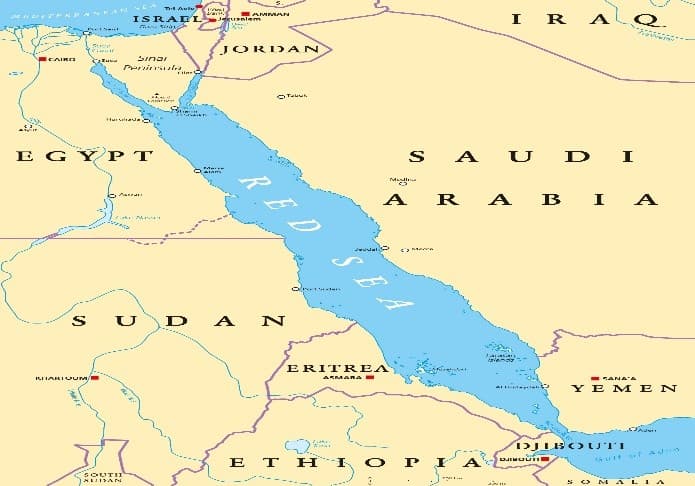
6.Red Sea Physical Geography (Red Sea Mapping)

Times of India
Illustration for Red Sea Physical Geography (Red Sea Mapping)

What & Where

Red Sea = northeast–southwest rift sea, high-salinity, coral-rich, between African & Arabian plates.

Stretches Suez (Egypt) → Bab el-Mandeb Strait, linking Mediterranean (via Suez Canal) with Arabian Sea (via Gulf of Aden).

Laps shores of Egypt, Sudan, Eritrea, Saudi Arabia, Yemen; contains Gulfs of Suez (shallow) & Aqaba (deep).

Quick Facts for MCQs

Legal & Policy

  • Regulation: Covers safety, sanitation, disability access, zoning, ecosystem protection; surpasses voluntary Blue Flag model.
  • Enforcement: Applies to all Red Sea beach operators within Saudi jurisdiction from Jan 2026.
  • Compliance: Government auditing replaces self-reporting mechanisms.

Tech & Schemes

  • Digital Guide: One‐stop portal for licensing, yacht clearance, service‐provider onboarding.
  • Integration: Links coastal permits with wider Saudi tourism e-platforms for data tracking.

Environmental Features

  • Salinity: Among world’s highest due to high evaporation, minimal river inflow.
  • Biodiversity: Supports over 200 coral species, critical fish nurseries.
  • Geology: Deep axial troughs host mineral-rich hydrothermal vents.

Physical Geography

  • Width: Averages 280 km; narrows to 29 km at Bab el-Mandeb.
  • Depth range: Gulf of Aqaba >1,800 m; Gulf of Suez largely <100 m.
  • Climate: Surface water temp ~20 – 30 °C year-round.

Key Data Points

FeatureData-Point
Tectonic settingAfrican–Arabian continental rift
Northern limitSuez, Egypt
Southern outletBab el-Mandeb Strait
Connects to Med.Through Suez Canal
Opens to Arabian SeaThrough Gulf of Aden
Bordering nations count5
Dominant ecosystemsFringing coral reefs
Unique watersHot brine pools, volcanic islands
New SA beach rulesMandatory, gov-enforced
Rules start dateJanuary 2026

Related UPSC Prelims PYQs

GS1 2024PYQ 1

Consider the following statements:

GS-3Editorial

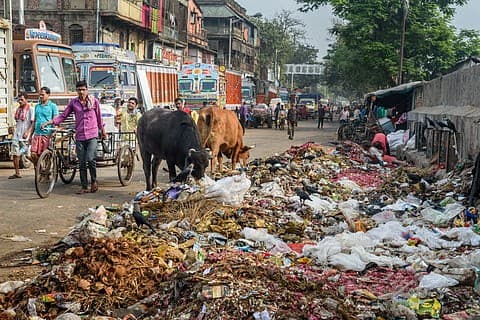
7.Circular Urban Waste Management Reforms (Urban Waste Management)

The Hindu
Illustration for Circular Urban Waste Management Reforms (Urban Waste Management)

What & Where

Definition: Circular urban waste management = minimise, segregate, recycle, reuse instead of linear collect-dump model

Key types: Municipal solid (wet & dry), Construction-Demolition, plastics, e-waste; organic fraction largest contributor

Geography: Urban India may hit 165 MT waste / yr by 2030 and 436 MT by 2050 with 814 mn urbanites

Quick Facts for MCQs

Climate Impact

  • Methane: Wet waste diversion curbs potent SLCP matching India NDC targets
  • GHG cuts: Alappuzha decentralised composting recorded measurable emission reduction
  • Global push: COP30 Belém 2025 placed waste-circularity at core with methane-cut funding

Tech & Schemes

  • SBM-U 2.0: Garbage Free Cities rating, three-bin segregation, legacy dump bio-mining mandated
  • MDA 2025: ₹1,500 / t aid boosted Fermented Organic Manure uptake by farmers
  • SafaiMitra Suraksha: SHGs like Green Roing integrated into composting and MRF jobs

Challenges

  • Segregation gap: Mixed waste ruins recyclables causing Gurgaon-type WtE failures
  • Plastics hurdle: Multi-layered packs evade viable recycling despite EPR norms
  • Capacity crunch: Tier-3 ULBs short on funds staff and technical expertise for plants

Circular Solutions

  • Composting: Urban wet waste becomes nutrient manure easing landfill pressure
  • Bio-methanation: CBG fuels mobility with Indore plant as national benchmark
  • Decentralisation: On-site processing in Srinagar hotels saved haulage emissions and achieved 100 % food-waste recovery

Key Data Points

FeatureData-Point
Projected MSW 2030165 million tonnes
Projected MSW 2050436 million tonnes
Annual C&D waste≈12 million tonnes
Urban waste GHG>41 million t CO₂-eq
Compost subsidy (MDA)₹1,500 / tonne
GOBARdhan CBG projects 2025~750 units
Indore CBG plant550 TPD capacity
7-Star GFC cities 2025Navi Mumbai, Surat
Delhi bio-mining rate 202525,000 MT / day
NCR segregation 2025<20 % (SC flagged)

Related UPSC Prelims PYQs

ESE_GS, GS1 2019PYQ 1

As per the Solid Waste Management Rules, 2016 in India, which one of the following statements is correct?

ESE_GS, GS1 2020PYQ 2

Which one of the following is an iterative and evolutionary process for achieving sustainable development?

GS-3Species

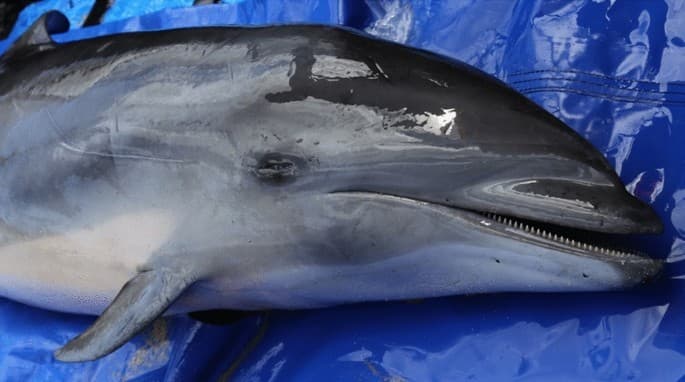
8.Cetacean Morbillivirus Arctic Emergence (Marine Mammal Virus)

Indian Express
Illustration for Cetacean Morbillivirus Arctic Emergence (Marine Mammal Virus)

What & Where

Cetacean morbillivirus – measles-like RNA virus infecting whales, dolphins, porpoises, pilot whales.

Newly confirmed in Arctic waters (humpback, sperm whales) via drone-collected blow samples.

Earlier outbreaks: North Atlantic, Mediterranean, Pacific since first ID in 1987.

Quick Facts for MCQs

Disease Ecology

  • Climate change alters migration, boosting Arctic virus circulation.
  • Close social behaviour in cetaceans accelerates respiratory droplet spread.
  • Often detected post-mortem, hindering early outbreak alerts.

Tech & Schemes

  • Drones enable real-time viral surveillance without stressing animals.
  • Non-invasive sampling supports long-term health baselines for migratory whales.

Conservation Implications

  • Early detection allows stress-reduction measures (shipping noise limits, habitat protection).
  • Highlights need for Arctic marine biosecurity and multinational response plans.

Key Data Points

FeatureData-Point
Virus familyMorbillivirus (Paramyxoviridae)
First identified1987
Primary hostsCetaceans: whales, dolphins, porpoises, pilot whales
Body systems hitRespiratory, immune, nervous
Key transmissionDirect contact & aerosolised blow
Cross-species jumpYes, among cetaceans
Recent range expansionArctic Ocean
Sampling innovationDrone-based blow collection (non-invasive)
Mass mortality linkStrandings, large die-offs
Terrestrial relativesMeasles, canine distemper viruses
GS-3SpeciesQuick Bite

9.Galaxy Frog Western Ghats Conservation (Endemic Amphibian)

Indian Express

What & Where

Species: Galaxy Frog (Melanobatrachus indicus) – tiny, shiny-black amphibian with blue speckles and orange marks.

Geography: Strictly endemic to wet evergreen patches of southern Western Ghats, Kerala-Tamil Nadu.

Habitat: Lives under rotten logs in cool, moist forest floor; highly heat- and disturbance-sensitive.

Quick Facts for MCQs

Physical Traits

  • Size: smallest Indian frogs; cold-blooded, moisture dependent.
  • Colour: galaxy pattern offers camouflage under shaded leaf-litter.
  • Behaviour: secretive, rarely sighted, no mating calls.

Threats & Causes

  • Photo-tourism: unethical log-turning, flash use causing mortality of seven recorded individuals.
  • Habitat micro-disturbance: drying logs and heat exposure fatal to skin-breathing species.
  • Low density: restricted range magnifies each loss towards extinction risk.

Conservation Measures

  • Legal: Vulnerable tag urges schedule upgrade, stricter enforcement inside Mathikettan Shola NP.
  • Management: regulate wildlife photography; prohibit log disturbance, limit tourist access seasons.
  • Research: call for population monitoring, micro-habitat restoration in Western Ghats.

Key Data Points

FeatureData-Point
Taxonomic FamilyMicrohylidae
IUCN StatusVulnerable
Average Length2–3.5 cm
VocalisationNon-vocal
Respiration AidMoist skin
Flagship ParkMathikettan Shola NP, Kerala
States FoundKerala, Tamil Nadu
Skin PatternGalaxy-like blue speckles on black
GS-3S&T

10.WHO Global Pharmacovigilance System (Drug Safety Monitoring)

NDTV

What & Where

Definition: WHO-coordinated global system tracking adverse drug/vaccine reactions post-marketing

Scope: 150+ member states pool data into a common pharmacovigilance database

Geography: Contributions uploaded to WHO database, centralised for worldwide signal detection and risk assessment

Quick Facts for MCQs

Functions & Processes

  • ADR-collection: hospitals, industry, regulators submit individual case safety reports to WHO hub
  • Signal-detection: statistical algorithms flag new, rare, unexpected reactions across populations
  • Regulatory-support: evidence triggers label changes, warnings, usage curbs, or withdrawals

India’s Performance

  • Rank-jump: 123rd to 8th within one decade, indicating stronger domestic reporting culture
  • Standards-export: Indian Pharmacopoeia accepted in 19 countries, boosting pharma credibility
  • Program-support: Generates safety evidence for UIP, National TB Elimination, Anaemia Mukt Bharat

Public Health Significance

  • Safety-net: Captures long-term, real-world effects missed in clinical trials
  • Trust-building: Transparent safety data sustains vaccine and drug acceptance
  • Decision-making: Empowers regulators with continuous benefit-risk evaluation

Key Data Points

FeatureData-Point
Coordinating bodyWorld Health Organization
Core goalEarly detection & prevention of medicine/vaccine risks
Key pillarsADR collection, signal detection, risk-benefit review, regulatory support
India’s rank 2009–14123rd globally
India’s rank 20258th globally
Recognition of Indian Pharmacopoeia19 Global South nations
Primary beneficiariesPatients, regulators, immunisation & drug programmes
Data contributorsHospitals, manufacturers, national regulators
GS-2Security

11.Quadrilateral Security Dialogue Indo-Pacific Cooperation (Indo-Pacific Grouping)

The Hindu

What & Where

Quadrilateral Security Dialogue (QUAD): informal Indo-Pacific grouping of India, USA, Japan, Australia.

Originated as 2004 tsunami relief mechanism; formal political idea floated 2007; revived 2017.

Focus area: maritime Indo-Pacific from Indian Ocean to Western Pacific, outside any mutual-defence treaty.

Quick Facts for MCQs

Institutional Evolution

  • Australia’s 2008 exit paused dialogue; re-entry 2017 revived regular senior-official meetings.
  • Leaders’ summits held 2021 onward, upgrading forum’s strategic weight.
  • Remains non-treaty, consensus-based consultation platform.

Key Initiatives

  • QUAD At Sea Observer Mission boosts interoperability & maritime domain awareness.
  • Malabar expands from bilateral (1992) to four-nation drill, sharpening joint naval readiness.
  • Working groups on vaccines, critical tech, climate, infrastructure.

Expansion Prospects

  • “Quad Plus” outreach invites like-minded Indo-Pacific partners for ad-hoc cooperation.
  • Flexibility keeps membership open without formal enlargement mechanism.
  • Expansion driven by supply-chain resilience, maritime security convergence.

China’s Reaction

  • Beijing routinely protests, equating Quad to “Asian NATO”.
  • Warns members against alliances targeting third countries.
  • Public Beijing meet (2026) shows Quad intent to keep channels open.

Key Data Points

FeatureData-Point
Present membersIndia, USA, Japan, Australia
Initial purpose (2004)Humanitarian & disaster-relief coordination
Political proposal year2007 by Japan’s PM Shinzo Abe
Dormant phase2008–2016 after Australia pulled out
Formal revival2017 ASEAN summit sidelines, Manila
2021 Leaders’ Summit outcome“Spirit of the Quad” endorsing free, open, inclusive Indo-Pacific
2024 Wilmington DeclarationLaunched QUAD At Sea Ship Observer Mission
Malabar ExerciseAnnual multilateral naval drill of all four members
Quad Plus participants (so far)South Korea, New Zealand, Vietnam
Jan 2026 updateAmbassadors met publicly in Beijing; described ties “stable & strong”
Defence treaty statusNone; focuses on coordination, not collective security
China’s stanceLabels Quad “bloc politics like NATO”, warns against exclusionary coalitions

Related UPSC Prelims PYQs

CAPF_GAI, GEO_GS 2025PYQ 1

Which one of the following countries hosted the QUAD Leaders' Summit in 2024?

CAPF_GAI, GEO_GS 2024PYQ 2

Which one among the following statements with regard to India’s maritime initiative, SAGAR, is correct?

GS-2Scheme

12.Electronics Components Manufacturing Scheme Incentives (Electronics Manufacturing)

PIB

What & Where

Incentive scheme boosting domestic electronic components, sub-assemblies & capital equipment manufacturing, cutting import dependence

Implemented nationwide by Ministry of Electronics & IT; Cabinet approval 2024 under Atmanirbhar electronics push

Provides turnover-linked (6 yrs) and capex (5 yrs) incentives to firms meeting production, investment & employment milestones

Quick Facts for MCQs

Tech & Schemes

  • Incentives offset India’s cost disabilities via performance-based payouts tied to incremental production & employment
  • Hybrid option lets firms combine turnover and capex benefits for capital-intensive lines

Economic Angle

  • Strengthens weakest value-chain node, lifting domestic value addition and global value chain integration
  • Massive ₹41,863 crore new investment spurred through latest 22 approvals

Employment & R&D

  • Scheme envisages ~91,600 direct jobs, further multiplying through ancillary units
  • Indigenous R&D expected to rise via assured domestic component demand

Key Data Points

FeatureData-Point
Parent ministryMeitY
Year approved2024
Total scheme outlay₹22,919 crore
Latest approvals22 projects, ₹41,863 crore investment
Incentive typesTurnover-linked, Capex-based, Hybrid
Tenure—turnover incentive6 years incl. 1-year gestation
Tenure—capex incentive5 years
Target segmentsPCBs, Camera Modules, Copper-Clad Laminates, Polypropylene Films, Capital equipment
Strategic target—CCL100 % domestic demand
Strategic target—PCBs20 % domestic demand
Strategic target—Camera modules15 % domestic demand
Expected direct jobs~91,600
Ecosystem linkagesPLI for Electronics; India Semiconductor Mission

Related UPSC Prelims PYQs

CDS_GK 2024PYQ 1

The Atmanirbhar Bharat Scheme announced by the Government helps in:

GS-2Scheme

13.Rural Development Year End Review 2025 (Rural Development)

PIB

What & Where

Year Ender-2025: PIB snapshot of Rural Development schemes’ 2025 performance across Indian villages

Domains: connectivity, housing, SHGs, skilling, job guarantee, pensions, convergence mechanisms

Focus-areas: border, hilly, LWE-affected, Northeast regions for inclusive, strategic infrastructure

Quick Facts for MCQs

Infrastructure

  • PMGSY: Tamil Nadu most roads, Himachal longest stretches, Bihar bridges; 7.87 lakh km all-weather network
  • MGNREGS: 49.62 lakh works, 60.59 % Category-B livelihood assets
  • VBNRIS stacks Gram Panchayat plans for coordinated rural capex

Women & Livelihoods

  • DAY-NRLM NPAs only 1.76 %, debunking high-risk borrower myth
  • 3ie-World Bank study: 19 % income and 28 % savings rise for SHG households
  • Lakhpati Didi drive targets sustainable ₹1 lakh+ annual earnings for 2 crore women

Employment & Skilling

  • DDU-GKY trained 82,000 in 2025; cumulative placements 11.64 lakh
  • RSETIs trained 59 lakh; 43 lakh livelihood settlements; RSETI 2.0 aims 50 % credit linkage

Digital & Governance

  • National Mobile Monitoring System logs 95 % MGNREGS attendance; GeoMGNREGA geotags 6.44 cr assets
  • e-Bank Guarantees, SBD, DBT ensure 99 % wage and leak-proof PMAY-G payments
  • DISHA committees (MP-chaired) monitor 100 schemes via real-time dashboard, deepening cooperative federalism

Key Data Points

FeatureData-Point
Rural roads completed95 % of 7.87 lakh km since 2000
Top road-laying state 2025Tamil Nadu
SHG women mobilised10.05 crore into 90.9 lakh groups
Lakhpati Didis2 crore achievers
SHG loan NPA1.76 % in 2025 (9.58 % in 2014)
PMAY-G progress3.86 cr sanctioned; 2.92 cr houses built
MGNREGS person-days FY26161.6 cr; women 56.73 %
Statutory workdays125 under VB–G RAM G Act 2025
NSAP beneficiaries FY263.01 cr; Aadhaar seeding 91.45 %

Related UPSC Prelims PYQs

CDS_GK, GEO_GS 2026PYQ 1

Consider the following statements regarding the Deendayal Antyodaya Yojana – National Rural Livelihoods Mission (DAY–NRLM):

CDS_GK, GEO_GS 2020PYQ 2

Which one of the following is the earliest launched scheme of the Government of India?

GS-1SchemeQuick Bite

14.Adult Skill Assessment Survey 2026 (Skill Survey)

Economic Times

What & Where

Survey: first nationwide Adult Skill Assessment Survey testing competencies of Indians aged 18 +

Conducting-body: Ministry of Statistics & Programme Implementation (MoSPI) via Comprehensive Modular Survey (CMS) framework

Geography & Timing: all States/UTs; three-month fieldwork slated for 2026

Quick Facts for MCQs

Legal & Policy

  • Government: MoSPI leverages CMS for rapid, topic-specific household surveys
  • Mandate: MSDE seeks evidence to recalibrate National Skill Development policies
  • Novelty: ASAS provides first competency dataset, filling PLFS quality gap

Demographic Dividend

  • Projection: working-age population 15-59 hits 68.9 % by 2030
  • Imperative: granular skill data crucial to harness labour-supply bulge
  • Coverage: survey targets all adults, supplementing youth-centric statistics

Skill–Employability Gap

  • Statistic: only 54.8 % graduates rated employable by industry assessments
  • Mismatch: ~75 % workforce limited to basic education, signalling quality deficit
  • Trend: vocational training uptake rose 7.3 pp in one year yet job conversion weak

Key Data Points

FeatureData-Point
Launch year2026
Age coverage18 years & above
Skill bandsBasic / Intermediate / Advanced
Field duration3 months
Conducting ministryMoSPI
Requesting ministryMSDE
Survey frameworkComprehensive Modular Survey
Working-age share by 203068.9 % of population
Voc-trained (15-59) 2023-2434.7 %
Voc-trained 2022-2327.4 %
Graduate employability54.8 %
Employed with only basic education~75 %

Related UPSC Prelims PYQs

CDS_GK 2020PYQ 1

ASEEM is

CDS_GK 2023PYQ 2

Which of the following is/are the sub-mission/sub-missions of the National Skill Development Mission (NSDM)?

Ready to practice?

Test your knowledge with our UPSC test series.

Start Free Trial