UPSC Current Affairs

14 topicsGS-1: 3GS-2: 4GS-3: 7
0/14 done
GS-2Polity

1.Four Labour Codes Reforms (Labour Codes)

LiveMint

What & Where

India’s labour reforms consolidate 29 pre-Independence Acts into four pan-India Labour Codes (wages, IR, social security, OSH).

Aim: simplify compliance, expand worker protection, align with digital-economy workplace realities.

Applicable across organised, unorganised, gig, migrant and platform labour nationwide.

Quick Facts for MCQs

Legal & Policy

  • Consolidation; single licence, return, registration; uniform wage definition; inspector replaced by facilitator.
  • Decriminalisation converts minor breaches to monetary penalties, enabling compounding.
  • Mandatory 14-day strike notice, trade-union recognition at 51 % membership.

Economic Angle

  • Flexibility; fixed-term contracts with full benefits encourage project hiring and investment inflows.
  • Digital self-assessment, time-bound EPF inquiry, universal ESIC improve ease-of-doing-business rankings.
  • Higher retrenchment threshold lowers regulatory exit cost, potentially boosting scale efficiencies.

Social Concerns

  • Universal minimum wage, national floor wage guard against regional under-payment.
  • Social-Security Fund plus aggregator levy extends maternity, life, pension to gig/platform workforce.
  • Women allowed night shifts with consent; migrant workers get annual journey allowance, portability.

Progress Status

  • Central rules framed; 24 States/UTs issued draft rules, full enforcement still pending.
  • Businesses awaiting uniform notification; transitional payroll, HRIS adjustments on hold.
  • Trade unions allege dilution of job security; employers seek clarity on wage-component definition.

Key Data Points

FeatureData-Point
Old Acts merged29
Number of new Codes4
Wage Code enactment year2019
Other three Codes enactment year2020
Lay-off approval threshold300 workers (earlier 100)
Overtime rate under Wage Code2× normal wage
Gratuity eligibility for FTEAfter 1 year service
Daily / weekly hours cap8 hrs; 48 hrs

Related UPSC Prelims PYQs

CAPF_GAI, CDS_GK 2025PYQ 1

The Code on Wages was notified by the Government of India in the year

CAPF_GAI, CDS_GK 2022PYQ 2

भारत सरकार द्वारा अधिसूचित निम्नलिखित श्रम संहिताओं में से किसमें केंद्रीय श्रम अधिनियमों, यथा कारखाना अधिनियम, 1948 और खदान श्रम अधिनियम, 1951 के विशेष उपबंध को शामिल किया गया है?
GS-3Infrastructure

2.Inland Waterways Authority of India (Inland Water Transport)

DD News

What & Where

IWAI: statutory body (1986) developing, regulating and maintaining India’s inland waterways for navigation and shipping.

Processes: fairway dredging, channel marking, terminals, Ro-Ro/Ro-Pax, night navigation, vessel movement regulation.

Geography: HQ Noida; flagship stretches — NW-1 Ganga, NW-2 Brahmaputra, NW-16 Barak powering Northeast network.

Quick Facts for MCQs

Legal & Policy

  • Statute: IWAI Act 1985 empowers fairway, vessel and safety regulations.
  • Framework: National Waterways Act designates Brahmaputra, Barak, Siang, Gumti, etc. as navigable NWs.
  • Cooperation: Indo-Bangladesh Protocol enables cross-border riverine trade and transit.

Economic Angle

  • Investment: ₹3,000 crore MoUs target cargo, urban mobility, river tourism in Northeast.
  • Efficiency: Inland water transport offers 30–50 % cheaper logistics versus road, lowers fuel use.
  • Commerce: Opens Northeast markets to Bay of Bengal and Southeast Asia supply chains.

Regional Focus

  • Arteries: Brahmaputra, Barak dominate Assam, Manipur, Mizoram connectivity.
  • Expansion: Proposed routes on Siang, Gumti, Tlawng, Umiam, Umngot to spread benefits across all NE states.
  • Infrastructure: Guwahati, Jogighopa, Varanasi multimodal terminals integrate river–rail–road networks.

Key Data Points

FeatureData-Point
Established27 Oct 1986
Parent ActInland Waterways Authority of India Act 1985
HQ locationNoida, Uttar Pradesh
Recent MoUs value₹3,000 crore
Announcement forumIndia Maritime Week 2025
Main NE waterwaysNW-2 Brahmaputra; NW-16 Barak
NW-2 stretchDhubri – Sadiya (Assam)
NW-16 stretchLakhipur – Bhanga (Barak valley)
Protocol linkIndo-Bangladesh Protocol routes to Chattogram, Mongla ports

Related UPSC Prelims PYQs

CAPF_GAI, CDS_GK 2025PYQ 1

Consider the following pairs with reference to National Waterways (NW) in India and the associated rivers:

CAPF_GAI, CDS_GK 2024PYQ 2

On which among the following is National Waterway No. 2 situated?

GS-1Mapping

3.Mount Semeru, Indonesia (Volcano Mapping)

NDTV

What & Where

Stratovolcano Mount Semeru, active since 1967, third-tallest Indonesian volcano, part of Pacific Ring of Fire

Located southern Tengger Volcanic Complex, Eastern Java; lies on Indo-Australian–Eurasian subduction boundary

Latest eruption blasted ash 13 km high, unleashed pyroclastic flows, underscoring region’s extreme volcanic hazard

Quick Facts for MCQs

Geological Setting

  • Subduction zone generates volcanic arcs, deep trenches, frequent seismicity
  • Semeru capped by steep cone amid calderas, crater lakes, volatile belts
  • Region straddles equator between Indian & Pacific Oceans

Hazard Profile

  • Pyroclastic flows, ash plumes, crater explosions recurrent since 1818
  • Continuous low-level activity raises aviation alerts, lahar and ashfall risks
  • Area one of Java’s most dangerous volcanic zones

Cultural Significance

  • Name Mahameru links to sacred Hindu Mount Meru/Sumeru
  • Volcano revered locally, integrated into folklore and pilgrimages
  • Cultural identity intertwines with periodic offerings and rituals

Key Data Points

FeatureData-Point
Elevation3,676 m
Volcano typeAndesitic stratovolcano
Island & provinceEastern Java, Indonesia
Local nameMahameru
Recorded eruptive periods> 61 since 1818
Ash plume 2023~13 km altitude
Surrounding complexTengger Volcanic Complex
Subduction platesIndo-Australian under Eurasian
Active volcanoes Indonesia~130
Deepest trench nearbyJava Trench 7,450 m

Related UPSC Prelims PYQs

CAPF_GAI 2021PYQ 1

Volcano Mount Merapi, which erupted in January 2021, is situated in

GS-3Environment

4.COP30 Draft Outcome, Brazil (Climate Negotiations)

The Hindu
Illustration for COP30 Draft Outcome, Brazil (Climate Negotiations)

What & Where

Instrument: COP30 draft outcome text, proposed political declaration under Paris Agreement.

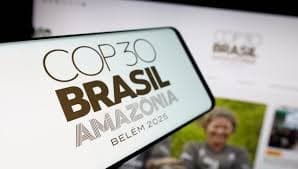
Location: Negotiated at COP30 summit, Belém, Pará state, Brazilian Amazon.

Status: Becomes formal “cover decision” only if all Parties adopt by consensus.

Quick Facts for MCQs

Legal & Policy

  • Mechanism: Draft acts as Paris Agreement cover decision guiding mitigation, adaptation, finance, implementation.
  • Omission: Deletes language on transitioning away from coal, oil, gas, reversing COP28 Global Stocktake.
  • Sensitivity: Sidesteps trade barriers, just transition measures, emission pathways due to producer pressure.

Finance & Economics

  • Target: Seeks tripling total climate finance by 2030 versus 2025 baseline.
  • Ambiguity: Provides no payer list, pathways, or monitoring for finance mobilisation.
  • Process: Schedules ministerial roundtable to advance NCQG replacing unmet USD100 billion pledge.

Diplomatic Dynamics

  • Standoff: Twenty-nine Parties threaten veto without fossil-fuel commitments.
  • Bloc: Over eighty nations demand orderly phase-out roadmap for coal, oil, gas.
  • Credibility: Weak outcome could undermine UNFCCC multilateral legitimacy.

Key Data Points

FeatureData-Point
Summit numberCOP30
Host cityBelém, Brazil
Fossil-fuel references in draftNone; all removed
Countries backing fossil-fuel roadmap80 +
Countries threatening to block draft29
Finance ambitionTripling climate finance by 2030 vs 2025
New finance termNew Collective Quantified Goal (NCQG)
Adoption ruleConsensus of all Parties

Related UPSC Prelims PYQs

CAPF_GAI, CDS_GK 2024PYQ 1

Which one among the following statements with regard to the United Nations Climate Change Conference (COP28) is NOT correct?

CAPF_GAI, CDS_GK 2024PYQ 2

Which one of the following resolutions in the final agreement reached at COP28 is associated with the target of achieving 'Net Zero by 2050'?

GS-3S&T

5.Advanced Zinc-Ion Battery Technology (Battery Technology)

PIB
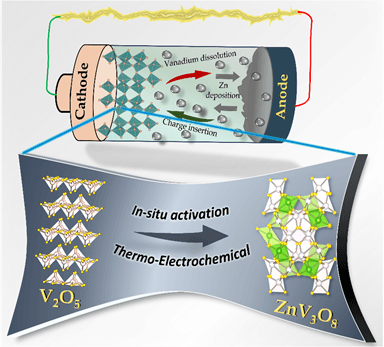
Illustration for Advanced Zinc-Ion Battery Technology (Battery Technology)

What & Where

Aqueous Zinc-Ion Battery: rechargeable system using zinc metal anode plus water-based electrolyte; positioned as safer lithium substitute

Cathode upgrade: thermo-electrochemical activation of V₂O₅ yields porous Zn-V₂O₅ with fast Zn²⁺/H⁺ transport

Geography: technology developed at Centre for Nano and Soft Matter Sciences (CeNS), Bengaluru, under DST

Quick Facts for MCQs

Tech & Schemes

  • Activation method introduces oxygen vacancies and interconnected porosity enabling ultrafast ion diffusion
  • Modified cathode delivers higher energy density and stable capacity over extended cycling
  • Aqueous electrolyte eliminates organic solvents, enhancing safety and simplifying manufacturing

Environmental Impact

  • Non-toxic water electrolyte and abundant zinc cut ecological footprint versus lithium systems
  • Safer chemistry permits household and grid storage without thermal runaway concerns

Economic Angle

  • Indigenous zinc and vanadium reduce import dependence on lithium and cobalt
  • Longevity plus low material cost lowers levelised cost of energy storage for renewables

Key Data Points

FeatureData-Point
Anode metalZinc
Activated cathodeZn-V₂O₅
Base cathode materialVanadium oxide (V₂O₅)
Activation techniqueThermo-electrochemical
Electrolyte typeFully aqueous
Key mobile ionsZn²⁺ and H⁺
Cycle lifeThousands of cycles, minimal fade
Fire riskNon-flammable
Critical metals avoidedLithium, Cobalt
Developing instituteCeNS, Bengaluru

Related UPSC Prelims PYQs

GS1 1995PYQ 1

113. Which one of the following pairs of materials serves as electrodes in chargeable batteries commonly used in devices such as torchlights, electric shavers, etc.?

GS-3S&TQuick Bite

6.Pharmacogenomics and Drug Response (Genomic Medicine)

The Hindu

What & Where

Definition: Pharmacogenomics studies individual drug response through combined pharmacology–genomics analysis

Process: Screens Single Nucleotide Polymorphisms to guide dose, drug choice, adverse-event avoidance

Application: Deployed in chronic illness care, oncology, psychiatry across tertiary hospitals worldwide

Quick Facts for MCQs

Health Benefits

  • Precision-therapy reduces adverse reactions, boosts recovery speed
  • Tailored dosing improves efficacy for anticoagulants, cardiac, psychiatric, cancer drugs
  • Early optimal drug choice lowers hospital readmissions

Economic Angle

  • Falling test price broadens accessibility and insurer acceptance
  • Up-front genomic profiling curbs long-run trial-and-error drug costs
  • Small-population drug development remains expensive, discouraging investment

Scientific Challenges

  • Mapping millions of SNPs to clinical outcomes remains technically complex
  • Rare variants can narrow therapeutic options for certain patients
  • Robust databases and AI analytics required for reliable genotype–phenotype links

Key Data Points

FeatureData-Point
Genetic test costUSD 200–500
Population with actionable variant≈90 %
Core biomarker analysedSingle Nucleotide Polymorphism (SNP)
Clinically optimised drugsWarfarin; Clopidogrel
Highest cost-effectivenessChronic disease management
Key benefitFirst-time right prescription
Major industry hurdleHigh R&D cost for small genetic cohorts
GS-3MiscQuick Bite

7.Regional Open Digital Health Summit (Digital Health)

PIB

What & Where

Regional Open Digital Health Summit (RODHS): platform advancing open, interoperable digital health; 2nd edition held in 2025.

Venue: New Delhi, hosted by India for WHO South-East Asia Region member-states.

Core aim: use Digital Public Infrastructure to fast-track Universal Health Coverage & health-related SDGs.

Quick Facts for MCQs

Tech & Schemes

  • Aadhaar, UPI, CoWIN, ABDM cited as secure, scalable building blocks for health data exchange.
  • WHO SMART Guidelines promote standards-based, machine-readable protocols ensuring interoperability across platforms.

International Cooperation

  • Policymakers, technologists, health experts drafted country-specific roadmaps for UHC, health security.
  • Summit extends Nairobi momentum, deepening South-East Asian collaboration on digital health infrastructure.

Governance & Capacity

  • WHO & UNICEF stress trust, digital skills, community-centric design for successful adoption.
  • NeGD-NHA coordination under MeitY aligns technology governance with national health objectives.

Key Data Points

FeatureData-Point
Summit edition2nd (2025)
Host cityNew Delhi
Host countryIndia
Regional focusWHO South-East Asia Region
Lead ministryMeitY
Key Indian organisersNeGD, NHA
Global partnersWHO SEARO, UNICEF
Flagship DPI showcasedAadhaar, UPI, CoWIN, ABDM
Framework highlightedWHO SMART Guidelines
Primary goalScalable, people-centric digital health systems
Prior summit locationNairobi (inaugural)

Related UPSC Prelims PYQs

CDS_GK 2025PYQ 1

Which one of the following platforms marks a transformative step in India's immunization efforts by digitizing vaccination records for pregnant women and children up to 16 years?

GS-2Misc

8.South Africa G20 Presidency 2025 (G20 Summit)

IT

What & Where

G20; premier forum for international economic cooperation addressing global economic, developmental, governance challenges

Composition; 19 countries plus European Union and African Union spanning every inhabited continent

2025 Summit; hosted by South Africa, first gathering on African soil under theme “Solidarity, Equality, Sustainability”

Quick Facts for MCQs

Leadership & Structure

  • Presidency; annual rotation, current Troika Brazil-South Africa-USA ensures continuity
  • African Union; became permanent member in 2023, boosting Global South voice
  • Decisions; consensus-based with no formal secretariat, supported by host-country sherpa tracks

Agenda Expansion

  • Scope; evolved from macroeconomics to climate, health, digital economy, food systems, taxation, anti-corruption
  • Reform; advocates stronger IMF quotas, Multilateral Development Banks capital, streamlined debt treatment
  • Climate; energy transition and finance now core pillars alongside traditional growth focus

2025 Focus Areas

  • Disaster resilience; enhance early warning systems, financing for recovery in vulnerable states
  • Debt relief; push for Common Framework effectiveness, voluntary SDR channelling to poorer economies
  • Just energy transition; mobilise concessional climate finance for Africa’s low-carbon pathways

Key Data Points

FeatureData-Point
Formation year1999
Trigger eventAsian Financial Crisis
Leaders’ Summit upgrade2008–09 Global Financial Crisis
Total members21 (19 nations + EU + AU)
GDP coverage≈85 % of world
Trade coverage≈75 % of world
Population coverage≈66 % of humanity
2025 Presidency holderSouth Africa
2025 Presidency themeSolidarity, Equality, Sustainability
Troika 2024-26Brazil, South Africa, United States

Related UPSC Prelims PYQs

GEO_GS 2021PYQ 1

G-20 is a forum of countries that intends to promote global economic stability and sustainable growth. Which among the following group of countries DOES NOT form a part of the forum?

GEO_GS 2025PYQ 2

Which country is the Chair of G20 for the year 2025?

GS-3Security

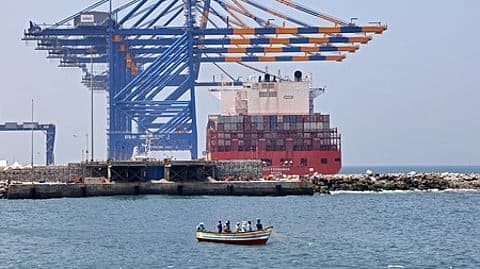
9.CISF Seaport Security Regulator (Port Security)

New Indian Express
Illustration for CISF Seaport Security Regulator (Port Security)

What & Where

Designation: CISF notified as Recognised Security Organisation (RSO) for every major & minor Indian seaport

Coverage: 250+ maritime facilities along ~7,500 km mainland & island coastline

Function: Regulate, audit and enforce uniform port-security standards, replacing fragmented DG Shipping oversight

Quick Facts for MCQs

Security Dimension

  • Standardisation: Uniform threat assessment, access control, X-ray & canine screening across all ports
  • Threats addressed: Smuggling, sabotage, terror infiltration, illegal migration
  • Expertise leverage: CISF experience from airports, nuclear plants, metros feeds port protocols

Legal & Policy

  • Notification: Govt empowers CISF as RSO under International Ship & Port Facility Security (ISPS) Code
  • Single-agency model: Eliminates multi-department gaps; CISF will issue audits, certifications, penalties
  • Compliance: Port operators must file security plans and periodic drills for CISF approval

Economic Angle

  • Trade impetus: Secure ports critical for rising cargo volumes & Blue Economy targets
  • Investment pull: Global liners & investors favour uniform, professional security architecture

Key Data Points

FeatureData-Point
New Security RegulatorCentral Industrial Security Force
Earlier overseerDirectorate General of Shipping
Ports under mandate250 +
Coastline length guarded~7,500 km
CISF raised1969 (Act of Parliament)
Armed-force statusCISF Act, 1983
Airports already secured70 +

Related UPSC Prelims PYQs

NDA_GAT 2019PYQ 1

CORAS (कोरास), निम्नलिखित में से किसकी एक प्रमुख (विशेष) कमांडो यूनिट है?

GS-3Security

10.India Defence Self-Reliance Push (Defence Production)

PIB
Illustration for India Defence Self-Reliance Push (Defence Production)

What & Where

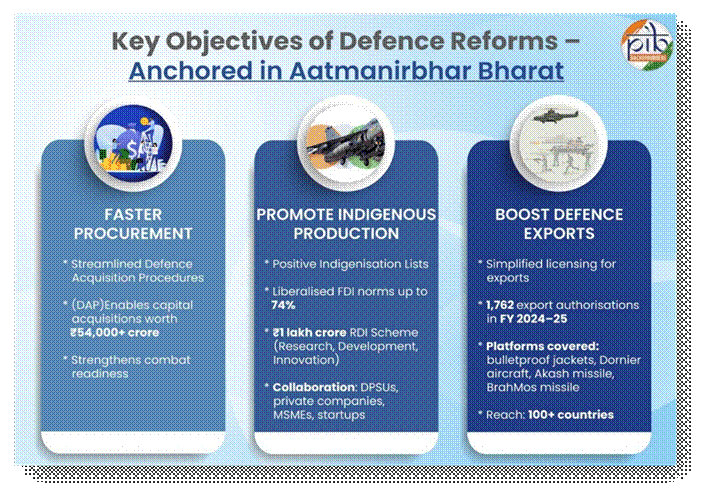
Milestone: India’s defence production hit ₹1.54 lakh cr (FY 24-25) under Aatmanirbhar Bharat thrust.

Processes: DAP 2020 & DPM 2025 plus Positive Indigenisation Lists ensure 65 % equipment sourced domestically.

Geography: Defence Industrial Corridors—Uttar Pradesh & Tamil Nadu—secured ₹9,000 cr+ pledged investment.

Quick Facts for MCQs

Legal & Policy

  • Reform: DAP 2020, DPM 2025, OGEL streamline procurement and export licensing accelerating contract cycles.
  • Restriction: Positive Indigenisation Lists bar import of 5,099 items, prioritising IDDM category orders.
  • Liberalisation: FDI up to 74 % automatic, 100 % via approval encourages critical tech inflow.

Industrial Ecosystem

  • Corridors: UP & TN clusters nurture tier-2/3 vendors, drawing ₹9,000 cr+ committed capital.
  • Participation: 16,000 MSMEs, start-ups onboarded through SRIJAN portal, iDEX challenges, TDF grants.
  • Market-share: DPSUs still 77 %; private firms risen to 23 % of output.

Challenges

  • Technology: Indigenous jet engine, hypersonic, advanced sensor capability lag; Tejas continues with US GE-F404 engines.
  • Governance: DPSU delays, e.g., INS Vikrant 12-year slip, 13× cost; risk-averse procurement culture.
  • Funding: Defence R&D <1 % budget versus China 20 %, USA 12 %, stunting breakthrough innovation.

Key Data Points

FeatureData-Point
Record production FY 24-25₹1.54 lakh crore
Projected production FY 25-26₹1.75 lakh crore
Target production 2029₹3 lakh crore
Defence exports FY 24-25₹23,622 crore
Export target 2029₹50,000 crore
Defence budget 2025-26₹6.81 lakh crore
Domestic equipment share65 %
Private sector production share23 %
MSMEs engaged16,000
FDI cap (automatic)74 %

Related UPSC Prelims PYQs

CDS_GK, ESE_GS 2024PYQ 1

The Atmanirbhar Bharat Scheme announced by the Government helps in:

CDS_GK, ESE_GS 2024PYQ 2

Ministry of Defence signed contract with which one of the following organizations for Upgraded Super Rapid Gun Mount (SRGM) and other equipment for around 3000 crores?

GS-2Scheme

11.Integrated Child Development Services Scheme (Child Nutrition)

The Hindu

What & Where

Integrated Child Development Services (ICDS): India’s largest early-childhood care, nutrition & pre-school scheme.

Operates via ~14 lakh Anganwadi Centres nationwide; started in Dharani & Dharavi blocks.

Targets children 0–6 yrs, pregnant & lactating women; converges with health missions for rural/tribal reach.

Quick Facts for MCQs

Objectives

  • Nutritional uplift: cut child malnutrition, anaemia, mortality, morbidity.
  • Developmental base: foster cognitive, physical, social growth; prep school readiness.
  • Maternal empowerment: deliver nutrition & health education to mothers.

Service Delivery

  • Village hub: Anganwadi Centre as first contact for maternal-child healthcare.
  • Multi-sectoral: integrates health, education, sanitation via inter-department coordination.
  • Staffing pattern: one Anganwadi Worker, one Helper per centre.

Scale & Significance

  • Global ranking: among world’s largest community-based child development programmes.
  • Fifty-year milestone: 2025 marks half-century of continuous nationwide expansion.
  • High-burden focus: pivotal in aspirational districts battling stunting & dropouts.

Key Data Points

FeatureData-Point
Launch date2 Oct 1975
First blocksDharani (Amravati) & Dharavi (Mumbai)
Scheme typeCentrally Sponsored
Nodal ministryWomen & Child Development
Core services6 – Supplementary nutrition, Pre-school, Health check-ups, Immunisation, Referral, Nutrition-Health education
Present coverage≈ 14 lakh Anganwadi & mini-Anganwadi Centres
Primary staffAnganwadi Worker + Helper
Age focusChildren 0–6 yrs; women 15–45 yrs
Maharashtra network10 lakh + centres (state figure quoted)
Key convergenceNational Rural Health Mission (NRHM)

Related UPSC Prelims PYQs

CDS_GK 2023PYQ 1

Which one of the following statements about Mission Indradhanush, launched by the Government of India in 2014, is correct?

CDS_GK 2025PYQ 2

Which one of the following platforms marks a transformative step in India's immunization efforts by digitizing vaccination records for pregnant women and children up to 16 years?

GS-2Scheme

12.PVTG Individual Entitlement Survey (PVTG Welfare)

Economic Times
Illustration for PVTG Individual Entitlement Survey (PVTG Welfare)

What & Where

PVTGs = 75 most-vulnerable tribal groups (~48 lakh people) across 18 States + Andaman & Nicobar.

Individual Entitlement Survey audits access to 39 Central schemes for 10 lakh PVTG households in 1,000 blocks.

Data via NeGD mobile app; follow-up Universal Entitlement Card lists person-wise eligible benefits.

Quick Facts for MCQs

Legal & Policy

  • Article 342(1): President, post-Governor consult, notifies ST list.
  • Dhebar Commission 1973 created Primitive Tribal Group tag; upgraded nomenclature to PVTG in 2006.
  • Criteria: small isolated population, no script, low literacy, primitive tech.

Tech & Implementation

  • NeGD app: real-time digital capture, geo-tagged for 39-scheme entitlement tracking.
  • Universal Entitlement Card: post-survey document signalling individual eligibility across monitored programmes.
  • State machinery: Panchayats & NGOs may assist enumeration within 1,000 blocks.

Flagship Missions

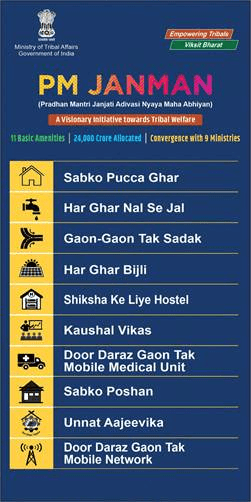
  • PM-JANMAN: covers 22,544 villages in 220 districts for mainstreaming 75 PVTGs.
  • PM-PVTG Mission: bundles housing, water, sanitation, roads, education, health, nutrition.
  • Janjatiya Gaurav Divas: 15 Nov honours Birsa Munda, tribal valour and heritage.

Key Data Points

FeatureData-Point
Schemes assessed39
Central departments18
Households surveyed10 lakh
Blocks covered1,000
Recognised PVTGs75
Approx. PVTG population48 lakh
States/UTs included18 + A&N Islands
Highest PVTGs stateOdisha – 13 groups
PTG renamed PVTG2006

Related UPSC Prelims PYQs

CAPF_GAI, GS1 2019PYQ 1

Consider the following statements about Particularly Vulnerable Tribal Groups (PVTGs) in India:

CAPF_GAI, GS1 2022PYQ 2

Which one of the following statements is not true with regard to tribal welfare?

GS-1Editorial

13.Digital Divide Across Social Groups (Digital Inclusion)

The Hindu

What & Where

Concept; Digital divide = uneven access, skills and outcomes in Information & Communication Technology

Survey; MIS 79th round (2022-23) by MOSPI assesses ICT skills among Indians aged 15+

Geography; Data reveal caste, gender, income, rural-urban gaps across all states

Quick Facts for MCQs

Drivers

  • Caste-exclusion restricts school quality, device ownership, public investment
  • Income-inequality limits ability to purchase computers and broadband
  • Rural-infrastructure weak electricity and broadband throttles digital exposure

Schooling Gaps

  • Private CBSE/ICSE introduce coding from Class 3
  • Government schools often lack computers even by Class 8
  • Dalit-dominated areas receive delayed digital infrastructure

Employment Impact

  • ICT skill strongly correlated with regular salaried jobs
  • Marginalised groups stay in low-wage informal work without digital skills
  • Low rural digital capability reduces overall productivity competitiveness

Gender Dimension

  • National ICT skill gap 22.78 % men versus 13.91 % women
  • Limited female mobility and income due to exclusion from tech jobs
  • Home digital literacy support minimal for first-generation girl learners

Way Ahead

  • Universalise computer labs, trained ICT faculty, reliable electricity in government schools
  • Offer targeted device subsidies and community digital centres for SC, ST, OBC, women
  • Build open-source regional language platforms and rural training hubs

Key Data Points

FeatureData-Point
Survey sourceMIS 79th Round (MOSPI, 2022-23)
No ICT skill – ST89.49 %
No ICT skill – SC86.62 %
No ICT skill – OBC81.73 %
No ICT skill – Others73.71 %
ICT skill Men vs Women (India)22.78 % vs 13.91 %
ICT skill Men vs Women (Uttar Pradesh)14.62 % vs 6.93 %
Computer+Internet access Poorest vs Richest quintile6.8 % vs 66.3 %

Related UPSC Prelims PYQs

ESE_GS 2020PYQ 1

Which one of the following is not the vision area of Digital India as a program to transform India into a digitally empowered society and knowledge economy?

ESE_GS 2020PYQ 2

Statement (I): Information and Communication Technologies (ICTs) can facilitate improved service delivery and more efficient internal operations.

GS-1Editorial

14.Juvenile Justice System Gaps (Juvenile Justice)

The Hindu

What & Where

Juvenile Justice (Care & Protection of Children) Act 2015: national framework for Children in Conflict with Law (CICL) and in Need of Care & Protection (CNCP).

Juvenile Justice Boards: district-level panels (magistrate + 2 social workers) ensuring child-friendly, rehabilitation-oriented hearings.

India Justice Report 2023 studied JJB performance across states; pendency highest in Odisha, lowest in Karnataka.

Quick Facts for MCQs

Structural Gaps

  • Vacancies: 24% JJBs incomplete, impeding quorum and timely hearings.
  • Legal clinics: 30% boards miss mandated legal-aid desks.
  • Coordination: weak links among police, WCD, SCPS, SLSA hinder Act’s decentralised architecture.

Data & Transparency

  • RTI culture: 11% rejections, 24% no reply, exposing opacity.
  • Data grid: no national child-centric repository for real-time information sharing.
  • IJR recommendation: public dashboard tracking pendency, rehabilitation progress.

Legislative & Policy

  • JJ Act 2015 superseded 2000 law; prioritises rehabilitation over punishment.
  • 2021 amendment: 3–7 yr offences now non-cognisable; DMs empowered for adoptions.
  • CARA: upgraded to statutory authority regulating all domestic & inter-country adoptions.

Key Data Points

FeatureData-Point
Overall JJB pendency (Oct 2023)55%
Odisha pendency83%
Karnataka pendency35%
Avg pending cases per JJB/yr154
JJBs not fully constituted24%
JJBs lacking legal clinic30%
RTI queries unanswered24%
RTI complete replies36%
Heinous offences adult-trial age16–18 yrs
Adoption orders (post-2021)District Magistrate

Ready to practice?

Test your knowledge with our UPSC test series.

Start Free Trial