UPSC Current Affairs

7 topicsGS-1: 2GS-2: 2GS-3: 3
0/7 done
GS-1Mapping

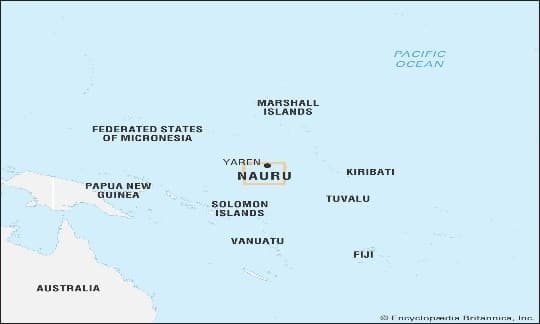
1.Nauru Pacific Island Micronation (Island Country)

DD News
Illustration for Nauru Pacific Island Micronation (Island Country)

What & Where

Nauru; raised coral atoll microstate in southwestern Pacific just south of Equator, southeastern Micronesia

Land area 21 sq km; no official capital but Yaren district hosts Parliament and Presidency

Interior phosphate-rich plateau encircles Buada Lagoon; coastal fertile ring yet chronic fresh-water scarcity

Quick Facts for MCQs

Legal & Policy

  • Australia-Nauru pact worth A$2.5 b for 30 years covering detention, resettlement, defence cooperation
  • Critics term policy responsibility shifting to small aid-dependent Pacific nations
  • Arrangement continues offshore asylum processing started 2001

Environmental Impact

  • Phosphate mining degraded over 80 percent land leaving jagged limestone pinnacles
  • Limited arable soil forces heavy food imports and restricts agriculture
  • Rainfall dependent reservoirs plus shipped water indicate severe freshwater scarcity

Economic Angle

  • Revenue sources led by phosphate exports, Australian aid inflows, fees from asylum processing facility
  • Market exhaustion of phosphate reserves threatens long-term fiscal sustainability
  • Employment and infrastructure largely tied to Australian funded projects

Key Data Points

FeatureData-Point
Area21 sq km
Political systemUnitary parliamentary republic
Legislature size19 members
De facto capitalYaren district
Latitude~25 mi south of Equator
RegionSoutheastern Micronesia, Pacific Ocean
Highest point~100 ft above sea level
Main mineralPhosphate rock
Land degraded by mining>80 %
Long-term Australia pactA$2.5 billion, 30 years
GS-3Environment

2.Green Crackers Environmental Impact (Eco Fireworks)

Indian Express

What & Where

Definition: eco-modified fireworks by CSIR–NEERI to cut particulate, toxic gases, noise without losing festivity

Key types: SWAS, STAR, SAFAL variants using barium-free formulations and soot-capturing additives

Geography: Certified, manufactured and retailed across India; only country with a government–backed green-cracker programme

Quick Facts for MCQs

Tech & Schemes

  • Composition: controlled oxidation, lower combustion temperature delivers light with reduced metal oxide output
  • Absorbent: Zeolite lattice traps soot and acidic gases during burst
  • Variants: SWAS water-releaser, STAR thermite cracker, SAFAL minimal-aluminium line

Environmental Impact

  • Emission: 30–40 % cut in PM₂.₅, SO₂, NOₓ against traditional fireworks
  • Noise: Designs meet CPCB decibel ceilings, easing auditory stress
  • Residues: Significantly less aluminium, copper, heavy metals settling on soil and water bodies

Legal & Policy

  • Compliance: Fully aligned with Supreme Court 2018 directives on cracker composition, emissions, sound
  • National goal: Supports NCAP clean air agenda and 2070 net-zero pathway through regulated festive adoption

Key Data Points

FeatureData-Point
Lead R&D bodyCSIR–NEERI
Toxic salt removedBarium nitrate
Key substitutesPotassium nitrate, strontium salts, zeolite, iron oxide
Emission reduction30–40 % lower PM₂.₅, SO₂, NOₓ
Authenticity toolQR-coded CSIR licence on package
Regulatory yardstickSupreme Court & CPCB emission-noise limits
GS-3Environment

3.Graded Response Action Plan Air Pollution (Delhi Air Quality)

DH

What & Where

Statutory emergency-response framework tackling ambient air pollution in Delhi–NCR

Operates via four escalating stages mapped to AQI bands (Poor → Severe+)

Enforced by Commission for Air Quality Management (CAQM) with multi-agency support

Quick Facts for MCQs

Legal & Policy

  • Supreme Court directive initiated GRAP; CAQM now notifies activation/deactivation
  • Measures become legally binding on CPCB, SPCBs, ULBs once stage declared
  • Non-compliance liable for penalties under Environment Act provisions

Stage Triggers

  • Stage I 201–300: dust suppression, waste burning ban, PUC checks
  • Stage III 401–450: halt non-essential construction, restrict BS-III petrol & BS-IV diesel
  • Stage IV > 450: truck entry ban (except essentials), work-from-home, shutdown C&D sites

Implementation Features

  • Predictive enforcement based on 48-hr IMD/IITM forecasts enables pre-emptive curbs
  • Mechanical sweeping & water-sprinkling mandated from Stage II onward
  • Measures at higher stage automatically include all lower-stage actions

Key Data Points

FeatureData-Point
First launch year2017
Legal backingEnvironment (Protection) Act, 1986 & Supreme Court order
Latest revisionDecember 2024 (adds IMD/IITM forecasts)
Supervising bodyCAQM
Total stages4 (Stage I–IV)
Stage II AQI band301–400 (“Very Poor”)
Severe+ triggerAQI > 450
ApproachCumulative, predictive, dynamic

Related UPSC Prelims PYQs

CDS_GK, GS1 2022PYQ 1

WHO के वायु गुणवत्ता दिशानिर्देशों के संदर्भ में, निम्नलिखित कथनों पर विचार कीजिए :

CDS_GK, GS1 2023PYQ 2

भारत के सन्दर्भ में जलवायु परिवर्तन पर राष्ट्रीय कार्य योजना (NAPCC) के बारे में निम्नलिखित में से कौन-सा/कौन-से कथन सही है/हैं ?

GS-3S&T

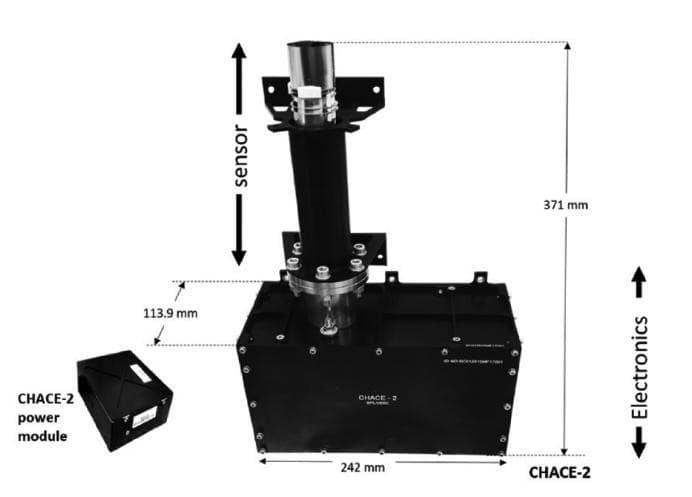
4.CHACE-2 Lunar Exosphere Spectrometer (Lunar Exosphere)

The Hindu
Illustration for CHACE-2 Lunar Exosphere Spectrometer (Lunar Exosphere)

What & Where

CHACE-2: neutral-gas mass spectrometer on Chandrayaan-2 orbiter, probing lunar exosphere chemistry and dynamics

Process: in-situ mass spectroscopy across 1–300 amu, tracking water vapour, noble gases, isotopic makeup, density shifts

Locale: ~100 km polar lunar orbit; on 10 May 2024 logged first direct Sun CME pressure surge on Moon

Quick Facts for MCQs

Instrument Specs

  • Heritage: succeeds CHACE-1 (Chandrayaan-1) and MENCA (MOM) technology
  • Capability: real-time, in-situ exosphere sampling with isotopic resolution
  • Target gases: Argon-40, molecular water, heavier volatiles

Scientific Discovery

  • Observation: CME ejecta produced measurable exosphere pressure spike
  • Validation: confirms long-standing theoretical CME-Moon interaction models
  • Dataset: delivers first quantitative solar event signature in lunar atmosphere

Space Weather Relevance

  • Insight: links solar activity to transient lunar atmospheric changes
  • Utility: aids planning for human bases, instrument shielding, mission timing

Comparative Missions

  • CHACE-1: furnished baseline lunar exosphere data in 2008
  • MENCA: extended neutral gas studies to Martian exosphere, informing CHACE-2 design

Key Data Points

FeatureData-Point
Payload nameCHACE-2
Parent missionChandrayaan-2 Orbiter
DeveloperISRO
Launch vehicleGSLV Mk-III M1
Launch date22 July 2019
Measurement range1–300 amu
Detected speciesNeutral atoms, water vapour, noble gases
CME impact date10 May 2024
Density rise~10× total neutral atom number
First-ever tagDirect CME effect observed on Moon
GS-2Polity

5.International Maritime Organization Overview (UN Maritime Body)

The Hindu

What & Where

IMO: UN specialised agency regulating global shipping safety, security, environment; headquarters London, United Kingdom

Carbon-free shipping framework: IMO 2023 GHG Strategy steering maritime sector to net-zero emissions by 2050

London IMO meeting: 57 member-states voted to defer framework adoption by one year after US opposition

Quick Facts for MCQs

Legal & Policy

  • Conventions: IMO drafts, updates SOLAS, MARPOL, STCW embedding uniform maritime norms
  • Framework proposes global fuel standard plus carbon-pricing applicable to all flags
  • Equity clause grants developing States finance and technology access for compliance

Environmental Impact

  • Targets: carbon-intensity ‑40 % by 2030; full decarbonisation by 2050
  • Measures aligned with Paris Agreement temperature objectives
  • Standards extend to ship design, operation, disposal limiting marine and air pollution

Technology & Finance

  • Fuel switch: phased shift from fossil bunkers to green hydrogen, ammonia and other zero-emission options
  • Carbon-pricing mechanism financially penalises heavy emitters, rewards cleaner vessels
  • Strategy encourages accelerated R&D for maritime fuel-efficiency innovations

International Dynamics

  • US reluctance triggered 57-nation vote to delay adoption one year
  • Delay pushes final framework approval to 2025, implementation from 2027
  • Divergent national interests exposing fault-lines in global maritime decarbonisation pace

Key Data Points

FeatureData-Point
Parent organisationUnited Nations
Establishing convention year1948
Entered into force1958
First IMO session1959
Headquarters cityLondon, UK
Flagship safety conventionSOLAS
Main pollution treatyMARPOL
Net-zero target year2050
Interim carbon-intensity cut40 % by 2030
Implementation start2027 onwards
Vote result57 nations backed one-year delay
Key alternative fuelsGreen hydrogen, ammonia
GS-2Security

6.India–Australia Defence Collaboration Arc (India-Australia Defense)

The Hindu
Illustration for India–Australia Defence Collaboration Arc (India-Australia Defense)

What & Where

Bilateral defence cooperation between India & Australia across Indo-Pacific maritime, air and submarine domains.

Anchored by inaugural Defence Ministers’ Dialogue (2025) in Canberra; supported by Quad framework.

Geography spans Indian Ocean and Pacific theatres, leveraging India’s western, Australia’s eastern maritime reach.

Quick Facts for MCQs

Strategic Drivers

  • China-centric power shift catalyses closer India-Australia military alignment.
  • Diversification; both aim autonomous crisis-response capacity beyond single-alliance reliance.
  • Quad cohesion reinforced, promoting free, rules-based Indo-Pacific.

Operational Mechanisms

  • Logistics pact enables reciprocal basing, repair, resupply for naval units.
  • Air-refuelling framework extends joint mission endurance and reach.
  • Regular Talisman Sabre & other exercises hone interoperability in multi-domain operations.

Industrial Cooperation

  • Ship-repair, maintenance hubs planned in both countries for regional fleet support.
  • Co-production opportunities marry India’s cost-efficient scale with Australia’s high-tech R&D.
  • Defence industry roundtables institutionalise private-sector linkages and supply-chain resilience.

Regional Impact

  • Enhanced maritime domain awareness safeguards critical sea-lanes across Indian Ocean–Pacific continuum.
  • Combined capability signals credible deterrence, stabilising regional security architecture.
  • Promotes transparent, democratic security order aligned with UNCLOS principles.

Key Data Points

FeatureData-Point
Inaugural Defence Ministers’ DialogueCanberra, 2025
Key maritime pactJoint Maritime Security Collaboration Roadmap
Submarine accordMutual Submarine Rescue Support Arrangement (2025)
Air-to-Air Refuelling pact year2024
Flagship joint drillTalisman Sabre
Institutional forumsAnnual Defence Ministers’ Dialogue & Joint Staff Talks

Related UPSC Prelims PYQs

CAPF_GAI, GEO_GS 2024PYQ 1

Which one among the following statements with regard to India’s maritime initiative, SAGAR, is correct?

CAPF_GAI, GEO_GS 2025PYQ 2

Which one of the following countries hosted the QUAD Leaders' Summit in 2024?

GS-1Editorial

7.Prioritising Emergency Medical Care (Emergency Healthcare)

The Hindu
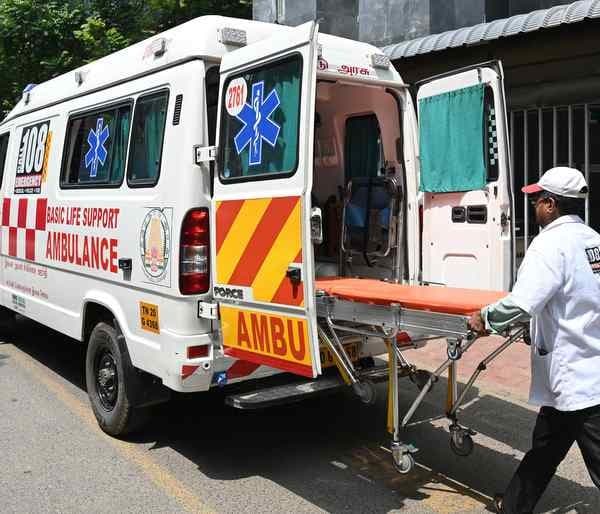
Illustration for Prioritising Emergency Medical Care (Emergency Healthcare)

What & Where

Emergency medical care = time-critical stabilisation + transport during trauma/acute illness, now viewed as Article 21 right.

108 Emergency Response System: pan-India NHM PPP network of ambulances acting as mobile ICUs.

Tamil Nadu stampede (Karur) spotlighted gaps despite State’s near-benchmark 10-min response record.

Quick Facts for MCQs

Evolution & Science

  • Triage roots traced to World Wars; industrial era birthed life-support ambulances.
  • Modern units carry oxygen, defibrillator, ECG, airway kits, tele-links enabling on-site ICU-grade care.
  • Rapid intervention cuts deaths from trauma, stroke, MI by reversing early circulatory collapse.

Legal & Policy

  • Article 21 read with SC rulings obliges State to assure timely emergency access.
  • MV Act 2019 enforces ambulances’ priority; absence of national regulator causes uneven compliance.
  • Proposal: National Emergency Services Regulatory Authority to unify training, equipment, audits.

Infrastructure & HR Gaps

  • Fragmented services create inter-State quality gulf; advanced life-support ambulances scarce.
  • EMT shortage + high attrition undermine continuity; lack of national certification hampers parity.
  • Weak call-centre–hospital coordination delays dispatch and preparedness.

Tech & Schemes

  • GPS-enabled ambulances under NHM; AI-based dispatch, drone/air ambulances suggested for remote zones.
  • PPP model of 108 allows State customisation in fleet mix, financing, first-responder training.

Key Data Points

FeatureData-Point
Golden HourFirst 60 min after injury
Platinum TenMedical help within 10 min
108 fleet size≈10,000 ambulances
Annual caseload7–9 million patients
TN mean response10 min 14 sec
AIS-125National Ambulance Code specs
MV Act 2019Right of way + fines for blockage
Article invokedArticle 21 (Right to Life)

Ready to practice?

Test your knowledge with our UPSC test series.

Start Free Trial