UPSC Current Affairs

5 topicsGS-2: 3GS-3: 2
0/5 done
GS-3S&T

1.DigiLocker Secure Document Wallet (Digital Governance)

New Indian Express

What & Where

DigiLocker: cloud‐based document wallet under Digital India, developed by MeitY, accessible across India

UPSC: will e-verify candidates’ caste, income, disability certificates through DigiLocker for upcoming recruitments

My UPSC Interview portal: nationwide platform inviting serving/retired civil servants to submit interview anecdotes

Quick Facts for MCQs

Tech & Schemes

  • Storage: Aadhaar, PAN, driving licence, educational, caste certificates held in encrypted cloud wallet
  • Real-time-check: Issuing authority APIs allow instant authenticity validation, cutting manual workflow
  • Access: Citizens retrieve and share documents anytime with consent via web or mobile apps

Governance & Transparency

  • UPSC-move: Digital verification curbs forged submissions, speeds candidate processing
  • Interview-portal: Crowdsourced anecdotes boost transparency, guide aspirants, capture organisational memory
  • Centenary-plan: Selected stories to feature in 2026 commemorative release

Legal & Policy

  • Equivalence: Rule 9A grants DigiLocker files same evidentiary value as physical originals
  • Consent-driven: User approval mandatory for document sharing, aligning with privacy principles
  • Paperless-push: Initiative furthers Digital India aim of eco-friendly, efficient governance

Key Data Points

FeatureData-Point
Implementing ministryMeitY
Legal backingIT Rules 2016 Rule 9A
Document statusDigital copy equals original
UPSC verification targetsCaste, income, disability certificates
Verification mediumDigiLocker API real-time pull
Interview portal occasionUPSC centenary year 2024
Anecdote publication year2026 compilation volume
Governance goalPaperless, fraud-free scrutiny

Related UPSC Prelims PYQs

GS1 2016PYQ 1

Regarding ‘DigiLocker’, sometimes seen in the news, which of the following statements is/are correct?

GS1 2022PYQ 2

Consider the following :
GS-3S&T

2.Environmental Surveillance for Disease Monitoring (Wastewater Surveillance)

The Hindu
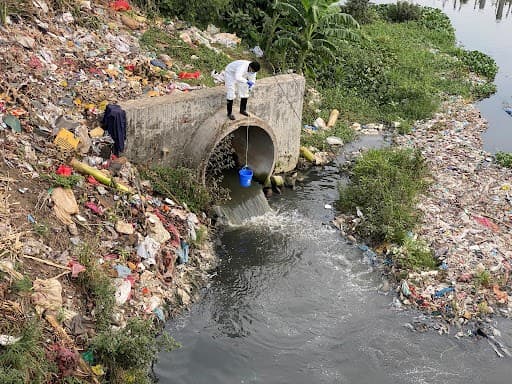
Illustration for Environmental Surveillance for Disease Monitoring (Wastewater Surveillance)

What & Where

Environmental surveillance: community pathogen monitoring via sewage, wastewater, soil, air

ICMR plan: wastewater tracking of 10 viruses across 50 Indian cities

Collection sites: sewage plants, hospitals, airports, public spaces nationwide

Quick Facts for MCQs

Operational Steps

  • Collection: composite samples from sewage lines, treatment plants, high-footfall sites
  • Detection: RT-PCR or antigen assays identify viruses, bacteria, parasites shed by carriers
  • Sequencing: whole genomes reveal mutations, variant emergence, transmission chains

Distinct Features

  • Non-invasive: monitors entire population privacy intact, no individual testing
  • Economical: single wastewater test represents health status of thousands, scalable nationwide
  • Time-sensitive: signals infection spikes 7–10 days before clinical surge allowing proactive measures

Public Health Impact

  • Early-warning: enables vaccine allocation, medicine stockpile, hospital bed planning
  • Complements: augments clinical surveillance uncovering asymptomatic or under-reported cases
  • Multipurpose: applicable to cholera, polio, SARS-CoV-2, other emerging pathogens

Key Data Points

FeatureData-Point
Lead agencyICMR
Surveillance mediumWastewater / sewage
Initial coverage50 Indian cities
Pathogen focus10 viruses
Early detection window7–10 days pre-clinical rise
Variant tracking toolWhole-genome sequencing

Related UPSC Prelims PYQs

GS1 2023PYQ 1

'Aerial metagenomics' best refers to which one of the following situations?

GS1 2021PYQ 2

The term 'ACE2' is talked about in the context of

GS-2Polity

3.IHR Pandemic Emergency Definition (Global Health Governance)

The Hindu

What & Where

Pandemic emergency: new sub-category under WHO’s International Health Regulations (IHR) for severe, globally spreading communicable diseases.

Applies only after a PHEIC is declared, signalling higher alert needing rapid, coordinated international action.

Geography: All 196 IHR States Parties; amendments adopted at 77th World Health Assembly, Geneva, June 2024.

Quick Facts for MCQs

Legal & Policy

  • Clarification: Amendments add duties but keep States’ legislative sovereignty intact.
  • Integration: Pandemic emergency builds on existing PHEIC, avoiding parallel procedures.
  • Requirement: Countries must coordinate multi-ministry response through National IHR Authority.

Equity & Finance

  • Solidarity: Amendments stress fair access to vaccines, diagnostics, therapeutics.
  • Mechanism: Coordinating Financial Mechanism channels funds for preparedness, esp. to LMICs.

Alert Architecture

  • Tiering: Pandemic emergency = higher, rarer category demanding whole-of-society response.
  • Decision path: DG first declares PHEIC, then may elevate to pandemic emergency if criteria met.

Key Data Points

FeatureData-Point
Legal basis amendedIHR (2005) via Resolution WHA77.17
Adoption methodConsensus at 77th WHA, June 2024
Formal entry into force19 Sept 2025 (for accepting States)
Declaring authorityWHO Director-General (Art 12)
Additional alert tier“Pandemic emergency” above PHEIC
Core triggersWide spread, health-system overload, socio-economic disruption
National obligationDesignate National IHR Authority
Financing toolCoordinating Financial Mechanism for developing nations
Oversight bodyStates Parties Committee (non-punitive)
Sovereignty clauseWHO cannot impose domestic measures
GS-2Scheme

4.National Pulses Mission for Self-Reliance (Agricultural Scheme)

PIB

What & Where

National Pulses Mission: six-year (2025-26→2030-31) central scheme to make India self-reliant in pulses.

Executing arm: Union Ministry of Agriculture & Farmers’ Welfare; coverage: all major pulse-growing states.

Focus: raise production, assure MSP procurement, strengthen post-harvest chain for food-nutritional security.

Quick Facts for MCQs

Targets & Metrics

  • Production: incremental 108 lakh tonnes, cutting 15–20 % import dependency.
  • Area: expansion aligned with rain-fed, rice-fallow, and irrigated zones.
  • Yield: lift national average by ~200 kg/ha.

Support Measures

  • Seed: massive certified supply plus free kits to quick-start varietal replacement.
  • Procurement: four-year assured MSP buys to stabilise farmer income.
  • Research: multi-location trials for climate-resilient, pest-tolerant cultivars.

Financials

  • Funding pattern: 60:40 Centre-State; 90:10 for NE & Himalayan states; 100% UTs.
  • Capital assistance: post-harvest units get 40 % subsidy, ceiling ₹25 lakh.
  • Cost saving: forex outgo reduction via lower pulse imports.

Implementation Tools

  • Digital: SATHI portal tracks seed distribution and field performance.
  • Capacity: farmer trainings on mechanisation, water-smart practices, bio-fertilisers.
  • Convergence: links with PM-KISAN, Agri-Infrastructure Fund for holistic support.

Key Data Points

FeatureData-Point
Total outlay₹11,440 crore
Duration2025-26 to 2030-31
Baseline production (2024-25)242 lakh tonnes
Target production (2030-31)350 lakh tonnes
Target cultivated area310 lakh hectares
Target yield1,130 kg/ha
Certified seed distribution126 lakh quintals
Free seed kits88 lakh
MSP procurement coverageTur, Urad, Masoor (100% for 4 years)
Processing-unit subsidyUp to ₹25 lakh for 1,000 units
Monitoring portalSATHI

Related UPSC Prelims PYQs

CAPF_GAI, GS1 2010PYQ 1

An objective of the National Food Security Mission is to increase the production of certain crops through area expansion and productivity enhancement in a sustainable manner in the identified districts of the country. What are those crops?

CAPF_GAI, GS1 2025PYQ 2

Which one among the following schemes focuses on developing modern infrastructure and optimizing supply chain from farm to retail in Indian agriculture sector?

GS-2Scheme

5.Beti Bachao Beti Padhao Decadal Impact (Girl Child Education)

The Hindu
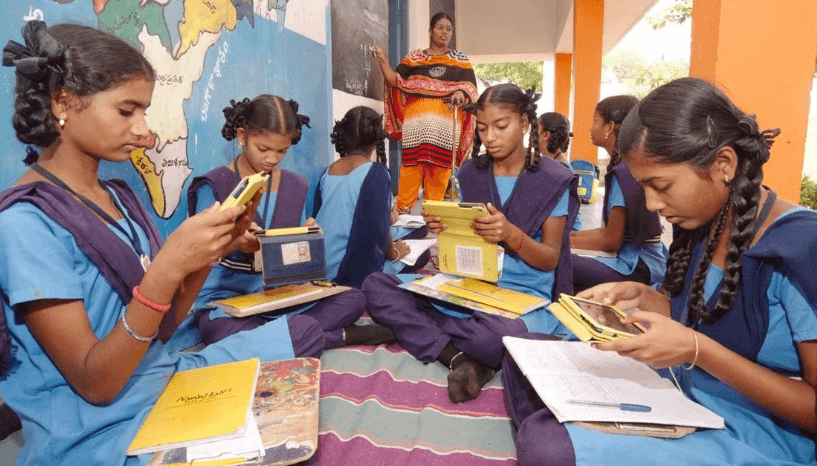
Illustration for Beti Bachao Beti Padhao Decadal Impact (Girl Child Education)

What & Where

Beti Bachao Beti Padhao (BBBP) 2015 scheme preventing female foeticide and promoting girls’ education

Tri-ministerial execution by Women & Child Development, Health, Education via district convergence and mass IEC drives

Monitors Sex Ratio at Birth across 30 States/UTs; focus districts span rural and urban India

Quick Facts for MCQs

Policy & Implementation

  • Convergence model; WCD anchors funding while Health & Education supply medical, schooling services
  • District collectors act as nodal leaders organising rallies, pledge drives, community monitoring

Socio-Demographic Impact

  • Fertility drop; female literacy linked to national TFR 2.0, delaying marriage and births
  • Infant mortality declined to 33 per 1000 (2020) as institutional deliveries rise among educated mothers
  • Female graduates increasingly enter STEM, healthcare, entrepreneurship, diversifying economic base

Behavioural Change

  • Mindset shift; phrase “Beti padhegi toh kya karegi?” replaced by aspiration viewing daughters as assets
  • Symbolic auctions of leaders’ gifts publicly fund girls’ education, signalling societal responsibility
  • Village rallies and women’s conferences normalise regular school attendance for girls across communities

Key Data Points

FeatureData-Point
Launch year2015
Sex Ratio at Birth (NFHS-4)919 girls per 1000 boys
Sex Ratio at Birth (NFHS-5)929 girls per 1000 boys
States/UTs above national SRB average20 of 30 units
Public awareness in Madhya Pradesh89.5 % population
Families motivated to school daughters63.2 % respondents
National Total Fertility Rate2.0 (NFHS-5)
Infant Mortality Rate49 → 33 (2014-2020)

Related UPSC Prelims PYQs

CDS_GK, GS1 2023PYQ 1

जननी सुरक्षा योजना के संबंध में, निम्नलिखित कथनों पर विचार कीजिए :

CDS_GK, GS1 2025PYQ 2

NEP 2020 के दिशा-निर्देश के अनुसार, 'पोषण और पढ़ाई पूर्व' (PPBP), निम्नलिखित में से किस कार्यक्रम के अंतर्गत प्रारंभ की गई है?

Ready to practice?

Test your knowledge with our UPSC test series.

Start Free Trial