UPSC Current Affairs

13 topicsGS-1: 3GS-2: 2GS-3: 8
0/13 done
GS-3Economy

2.External Commercial Borrowings Framework (External Borrowings)

Business Standard

What & Where

ECBs: commercial loans to Indian entities from recognised non-resident lenders in foreign currency or INR.

Governed by FEMA 1999 + RBI Master Direction; cleared via Automatic or Approval Route.

Scope: Borrowers in India, funds sourced globally through banks, multilateral agencies, foreign equity holders.

Quick Facts for MCQs

Legal & Policy

  • Draft simplification: RBI to expand borrower & lender eligibility, trim compliance.
  • Regulation anchored in FEMA 1999; changes via RBI circulars/Master Direction.
  • Approval Route applies when borrowing breaches automatic caps or negative-list norms.

Economic Angle

  • Foreign-currency loans often cheaper than domestic rupee credit, lowering financing costs.
  • Supports long-gestation infrastructure, expansion, debt-refinance for corporates.
  • Diversifies funding sources, easing pressure on Indian banking system.

Operational Terms

  • All-in-cost ceiling caps interest + fees to limit excessive borrowing costs.
  • LRN must be secured before first draw-down; monthly reporting mandatory.
  • Negative list bars proceeds for real estate, capital market or speculative activities.

Eligible Parties

  • Borrowers include corporates, PSUs, NBFC-IFC, NBFC-MFI, SEZ developers, NGOs (micro-finance).
  • Lenders span overseas banks, multilateral bodies, export credit agencies, supranational funds.
  • Loans permitted in any freely convertible foreign currency or INR-denominated ECBs.

Key Data Points

FeatureData-Point
Governing lawFEMA 1999
Primary regulatorReserve Bank of India
Key routesAutomatic Route, Approval Route
Eligible borrowersCorporates, PSUs, NBFCs, selected trusts
Recognised lendersIntl. banks, multilaterals, export credit agencies, ≥25 % foreign equity holders
Mandatory reportingLoan Registration Number + monthly Form ECB
Typical usesCapital expenditure, infrastructure, refinancing
Prohibited usesReal estate business, stock market, speculation

Related UPSC Prelims PYQs

GS1 2022PYQ 1

निम्नलिखित कथनों पर विचार कीजिए :

GS1 2019PYQ 2

Which one of the following is not the most likely measure the Government/RBI takes to stop the slide of Indian rupee?

GS-3Economy

3.Annual Survey of Industries 2023-24 (Industrial Statistics)

PIB

What & Where

Annual Survey of Industries (ASI): NSO-MoSPI yearly survey measuring factory-sector structure, output, input, GVA, jobs.

Coverage: Factories Act 1948 units, Bidi & Cigar Act 1966 units, electricity undertakings outside CEA, ≥100-employee establishments.

Core geography: GVA leaders — Maharashtra 16 %, Gujarat 14 %, Tamil Nadu 10 %, Karnataka 7 %, Uttar Pradesh 7 %.

Quick Facts for MCQs

Economic Angle

  • Dominance: Basic metals, autos, chemicals, food, pharma drive nearly half of industrial output.
  • Efficiency: GVA growth outpacing output and input signals improving value addition.
  • State concentration: First three states contribute 40 % of national factory GVA.

Employment & Skills

  • Job creation: 5.92 % annual rise, yet wages trail GVA gains.
  • Skilling gap: Only 4.7 % workforce formally trained, hindering Industry 4.0 adoption.
  • Leaders: TN, Gujarat, Maharashtra, UP, Karnataka host most factory jobs.

Policy & Schemes

  • Incentives: PLI, National Manufacturing Mission, PM-MITRA parks attract capacity expansions.
  • Financing: Credit Guarantee Fund Scheme and faster GST refunds aimed at MSME liquidity.
  • Skilling: PMKVY and Skill India align training with advanced manufacturing needs.

Challenges

  • Infrastructure: Gaps in logistics, power, water, warehousing raise transaction costs.
  • Competition: China, Vietnam cost advantages, limited Indian R&D weaken export edge.
  • Green costs: Compliance with CBAM, net-zero, ethanol blending increases production expenditure.

Key Data Points

FeatureData-Point
ASI year released2023-24
GVA growth11.89 %
Output growth5.80 %
Input growth4.71 %
Employment growth5.92 %
Jobs added 2014-2457 lakh
Avg emolument rise5.6 %
Top 5 industries’ output share48 %
IIP Aug 2025 growth4.0 %
Gross FDI FY 24-25USD 81.04 bn
Manufacturing FDI rise18 %

Related UPSC Prelims PYQs

CDS_GK, GS1 2022PYQ 1

भारत में, निम्नलिखित में से कौन-सा, उन फैक्टरियों में नियमित रूप से औद्योगिक विवाद, समझौते, छँटनी और कामबंदी के विषय में सूचनाओं को संकलित करता है?

CDS_GK, GS1 2025PYQ 2

Consider the following statements regarding Annual Periodic Labour Force Survey (PLFS) report 2023–24 by the National Statistical Organization (NSO):

GS-3Infrastructure

4.Foodgrain Storage Infrastructure India (Post-Harvest Storage)

PIB

What & Where

Definition – Network of public, private & household facilities preserving harvested grains for PDS, emergencies and price stability.

Key types – FCI/CWC/state godowns & silos, CAP yards, traditional farmer stores (Morai, Mud Kothi).

Geography – Nationwide depots; CAP concentrated in Punjab; new 50,000 MT silo example in Bihar.

Quick Facts for MCQs

Legal & Policy

  • Statute – FCI created via 1965 Act; CWC via Warehousing Corporations Act 1962.
  • Regulator – WDRA sets warehousing standards, negotiable receipt system.
  • States – State Warehousing Corporations established under individual Acts.

Tech & Schemes

  • Finance – Agriculture Infrastructure Fund gives interest subvention, credit guarantee for post-harvest assets.
  • Infrastructure – Steel Silo programme & PEG scheme offer long-term hiring to private builders.
  • Processing – PMKSY links farm gate to retail, raising processing levels, export potential.

Challenges & Losses

  • Quantum – 22 % grain wasted post-harvest; 6.58 % during storage from pests, rodents, moisture.
  • Vulnerability – CAP yards expose stocks to weather; Punjab stores 90 % wheat this way.
  • Remedy – Scale modern silos, enforce safe moisture, digitise 63,000 PACS for transparent local storage.

Economic Angle

  • Cost – ₹7,000 cr annual loss reduces food security, raises fiscal burden.
  • Farmer – Scientific storage lets farmers delay sale, improving realisations.
  • Market – Adequate buffer stabilises prices, supports regular PDS off-take.

Key Data Points

FeatureData-Point
Record foodgrain output 2024-25353.96 million tonnes
Public storage capacity (FCI + states)917.83 Lakh MT
Household storage share60–70 % of total grain
Post-harvest loss (overall)22 % ≈ 74 MT (2022-23)
Storage-specific loss6.58 % of grains
Wheat under CAP in Punjab~90 % of state stocks
Annual value of storage losses₹7,000 crore (insects ₹1,300 crore)
AIF launch year2020

Related UPSC Prelims PYQs

CDS_GK, GS1 2019PYQ 1

The economic cost of food grains to the Food Corporation of India is Minimum Support Price and bonus (if any) paid to the farmers plus

CDS_GK, GS1 2023PYQ 2

Consider the following statements about the Public Distribution System :

GS-1EnvironmentQuick Bite

5.Typhoon Bualoi Pacific Cyclone (Tropical Cyclone)

DD News
Illustration for Typhoon Bualoi Pacific Cyclone (Tropical Cyclone)

What & Where

Typhoon Bualoi (Opong) was a Category-2 equivalent tropical cyclone in the 2025 Northwest Pacific season.

Formed north of Yap, crossed the Philippines, made final landfall at Hà Tĩnh, Vietnam.

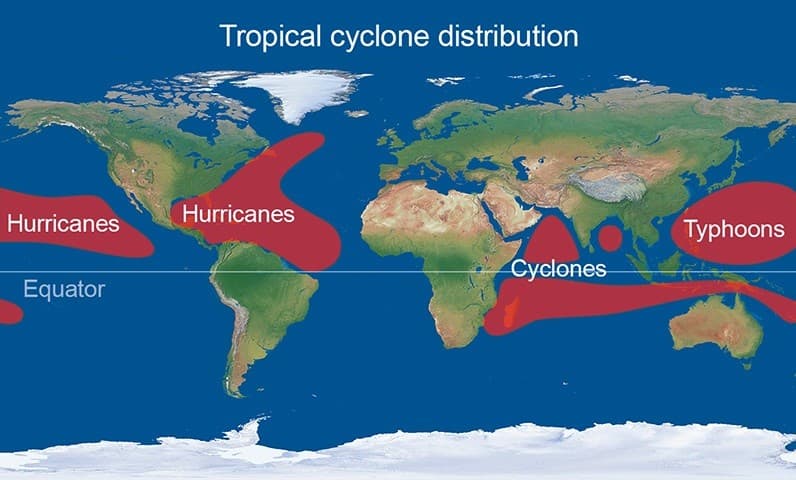
Naming: Typhoon (NW Pacific); Hurricane (Atlantic/E Pacific); Cyclone (Indian & South Pacific).

Quick Facts for MCQs

Environmental Impact

  • Floodwaters spread after heavy rainfall causing widespread inundation in central Vietnam
  • Storm surge eroded coastlines, damaging fishing infrastructure
  • Winds and floods wiped 51,000 ha crops, hitting food security

Economic Angle

  • Direct farm losses valued at USD 435 million
  • Damage to 210,000 houses enlarges reconstruction burden
  • Power grid and road repairs likely to strain provincial budgets

Geography & Meteorology

  • Disturbance organized north of Yap before tracking west-northwest
  • Intensified over warm Philippine Sea, then weakened near Indochina coast
  • Category assigned via 1-minute sustained wind speeds by JTWC equivalence

Key Data Points

FeatureData-Point
Alternate nameOpong (PAGASA)
BasinNorthwest Pacific
Peak intensityCategory 2-equivalent
Season tally20th named storm; 9th typhoon (2025)
Formation zoneDisturbance north of Yap
Vietnam landfallHà Tĩnh Province
Vietnam death toll36
Houses damaged210,000 +
Agricultural lossUSD 435 million
Crops destroyed51,000 ha
Key hazardsStrong winds, flooding, storm surge
Naming agencyJMA designated “Bualoi”
GS-1Mapping

6.Sir Creek Border Dispute (Border Demarcation)

IT
Illustration for Sir Creek Border Dispute (Border Demarcation)

What & Where

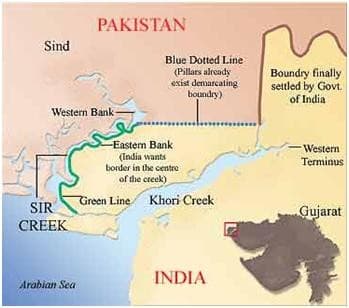
Tidal estuary, 96 km, in Indus Delta where seawater meets river flow

Separates Kutch (Gujarat, India) from Sindh (Pakistan); debouches into Arabian Sea

Marshy, shifting channel; controls maritime boundary, EEZ and continental-shelf limits

Quick Facts for MCQs

Boundary Dispute History

  • 1914 Bombay–Sindh pact ambiguous; east-bank vs thalweg interpretations
  • 1947 Partition placed Kutch with India, Sindh with Pakistan, dispute internationalised
  • 1968 tribunal fixed most Rann of Kutch; Sir Creek left unresolved

Security Dimension

  • Recent Pakistan troop concentration prompted Indian defence warning
  • Control influences EEZ lines; affects naval patrolling, surveillance outposts
  • Narrow, shifting channel complicates demarcation and troop deployment

Environmental Impact

  • Creek within fragile mangrove-rich Indus Delta wetlands
  • Habitat for migratory birds, marine biodiversity; tidal shifts reshape banks
  • Uninhabited marshland limits permanent settlements but heightens ecological sensitivity

Legal & Treaty Basis

  • Thalweg principle: boundary runs mid-channel in navigable waters
  • Pakistan cites east-bank clause of 1914 pact to claim entire creek
  • UNCLOS relevance: baseline affects EEZ and continental shelf entitlement

Key Data Points

FeatureData-Point
Former nameBan Ganga
Length≈ 96 km
Bordering regionsKutch (India) & Sindh (Pakistan)
Opens intoArabian Sea
1914 resolution partiesGovt. of Bombay & Ruler of Sindh
Key legal doctrineThalweg principle
International tribunal year1968 (Rann of Kutch)
Ecological tagPart of Indus Delta wetlands
Main economic stakesFishing, oil & gas exploration rights
Present flashpointPakistan military build-up; Indian warning of decisive response

Related UPSC Prelims PYQs

GS1 1999PYQ 1

In the November 1998 Composite Dialogue Process between India and Pakistan, three contentious issues listed below as 1, 2 and 3 were discussed.

GS-1Mapping

7.Switzerland Geographical Profile (European Geography)

NDTV

What & Where

Swiss glaciers: ~1,400 Alpine ice bodies; 3 % ice-mass lost in 2024-25, 4th-largest annual shrinkage on record.

Switzerland: land-locked Central European hydrographic hub feeding Rhine, Rhône, Ticino, Reuss rivers.

Dual capitals: Bern (administrative) & Lausanne (judicial); borders France, Germany, Italy, Austria, Liechtenstein.

Quick Facts for MCQs

Glacier Loss

  • GLAMOS notes accelerating melt; 3 % loss follows back-to-back high-melt years.
  • One-quarter glacier volume vanished since 2015, threatening Alpine hydrology.
  • Aletsch Glacier still largest yet progressively thinning.

Physical Geography

  • Alps dominate south; major peaks include Dufourspitze, Matterhorn, Weisshorn, Dom.
  • Jura Mountains sit northwest; Mittelland plateau lies between Jura & Alps.
  • Rhine flows to North Sea; Rhône to Mediterranean; Ticino to Po; Reuss to Aare.

Political & Cultural

  • Tradition of armed neutrality; hosts numerous UN bodies in Geneva.
  • Direct democracy practiced via frequent nationwide referenda.
  • Multilingual society integrates four official languages.

Infrastructure

  • Gotthard Base Tunnel (57 km) exemplifies Swiss alpine engineering; longest rail tunnel globally.

Key Data Points

FeatureData-Point
2024-25 glacier ice loss3 % of total mass
Rank of 2024-25 loss4th-largest on record
Cumulative volume lost since 2015~25 %
Glacier monitoring bodyGLAMOS
Largest Swiss glacierAletsch (Great Aletsch)
Highest peakDufourspitze – 4,634 m
Longest rail tunnelGotthard Base Tunnel – world’s longest
Official languagesGerman, French, Italian, Romansh
GS-3Environment

8.India's E-Waste Hazards (E-Waste Pollution)

The Hindu
Illustration for India's E-Waste Hazards (E-Waste Pollution)

What & Where

Definition: discarded electrical-electronic equipment containing recoverable metals, plastics, hazardous additives

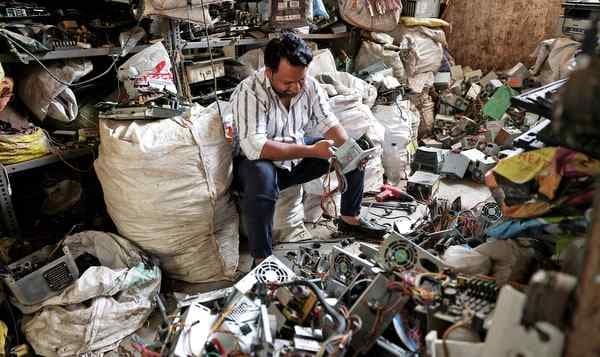
Processes: formal mechanised dismantling vs informal manual extraction, open-burning, acid-leaching

Geography: Seelampur (Delhi), Moradabad (UP), Bhiwandi (Maharashtra); 65 Indian cities generate 60 % of load

Quick Facts for MCQs

Health Hazards

  • Respiratory; open burning PM causes 76–80 % bronchitis / asthma among workers (2025 MDPI)
  • Neurological; blood lead ≥5 µg/dL linked to cognitive decline, behavioural disorders (2023 review)
  • Dermal-ocular; 2024 review found dermatitis or burns in up to 100 % recyclers

Legal & Policy

  • E-waste Rules 2022 tighten EPR, mandate producer collection targets, recycler registration
  • Capped EPR credits and lax policing leave 57 % waste outside formal system
  • Incentives include skill training, PPE subsidies, tax breaks for informal-to-formal transition

Informal Sector

  • Kabadiwala chain handles >1.1 MT using open fires, acid baths for copper, gold recovery
  • Syndemic of poverty, malnutrition elevates miscarriages, preterm births in recycling hubs
  • Suggested tools: GPS-based waste tracking, quarterly audits, hotspot health camps, social security coverage

Key Data Points

FeatureData-Point
India’s e-waste (2025)2.2 million tonnes
Global rank3rd after China, USA
Rise since 2017-18150 %
Cities’ contribution60 % from 65 cities
Formal recycling units322
Formal annual capacity2.2 MT
Share formally processed 2023-2443 %
Waste still informal>50 %
Respiratory illness prevalence76–80 % informal workers
Children in e-waste zones (WHO)18 million

Related UPSC Prelims PYQs

GS1 2019PYQ 1

In India, ‘extended producer responsibility’ was introduced as an important feature in which of the following?

GS1 2013PYQ 2

Due to improper/indiscriminate disposal of old and used computers or their parts, which of the following are released into the environment as e-waste?

GS-3Environment

9.Amazon Rainforest Wildfire Surge (Tropical Forests)

The Hindu
Illustration for Amazon Rainforest Wildfire Surge (Tropical Forests)

What & Where

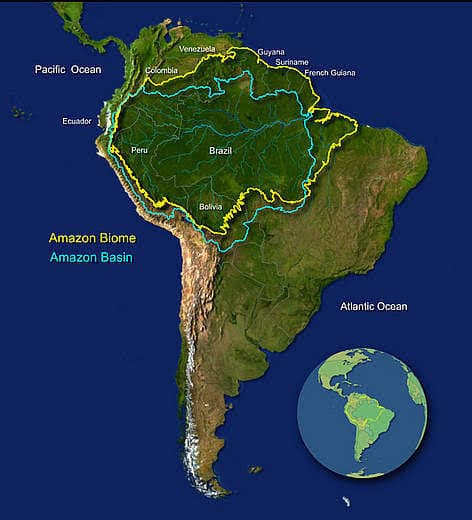
Amazon rainforest – 6 million km² closed-canopy tropical forest spanning Amazon River basin, northern South America

Located 28° N–S belt; ≈40 % of Brazil; bounded by Guiana Highlands, Andes, Brazilian plateau, Atlantic

INPE reports major 2019 fire surge concentrated in Brazilian sector

Quick Facts for MCQs

Causes

  • Dry-season weather aids ignition despite near-normal 2019 rainfall
  • Farmers ignite vegetation for pasture; cattle, logging, mining intensify deforestation
  • Presidential stance favors commercial exploitation, diluting conservation enforcement

Environmental Impact

  • Extra fires emit carbon beyond basin absorption, heightening climate change risk
  • Continued loss may shift rainforest into savanna ecosystem, altering regional ecology
  • Biodiversity and indigenous livelihoods face severe degradation

Water Cycle

  • Evapotranspiration from forest generates roughly half its own rainfall
  • Moisture plume travels westward, feeding precipitation over Andes and beyond

International Concern

  • UN and global community urged to initiate urgent protections for Amazon
  • 2019 fire escalation compared with 2016 El Niño crisis, raising worldwide alarm

Key Data Points

FeatureData-Point
Fire incidents Jan–Aug 201974 155
Rise over 201885 % increase
Previous major fire year2016 El Niño drought
Amazon area~6 million km²
Share of Brazil territory~40 %
Mean tropical-forest rainfall>200 cm annually
Typical temperature range20 °C – 35 °C
Amazon oxygen contribution~20 % of global O₂
Carbon balance statusSequestration ≈ regional emissions
Key mineral resourceGold reserves

Related UPSC Prelims PYQs

GS1 2024PYQ 1

One of the following regions has the world’s largest tropical peatland, which holds about three years worth of global carbon emissions from fossil fuels; and the possible destruction of which can exert detrimental effect on the global climate. Which one of the following denotes that region?

GS-3S&T

10.SARAL AI Research Tool (AI Research Tool)

The Hindu

What & Where

SARAL = AI tool turning complex research papers into easy summaries for non-experts.

Built & launched by Anusandhan National Research Foundation (ANRF) under India’s Research Development & Innovation (RDI) Mission.

Forms part of national AI Science & Engineering Open India Stack spanning drug discovery, aerospace, climate and materials.

Quick Facts for MCQs

Tech & Schemes

  • Integration; SARAL feeds datasets to Open India Stack for sectoral AI applications.
  • Alignment; supports deep-tech start-ups envisaged in National RDI roadmap.
  • Automation; converts research text to multimedia, widening dissemination speed.

Social Impact

  • Inclusivity; narrows science–society gap by translating jargon into everyday language.
  • Accessibility; empowers evidence-based policymaking through quick grasp of findings.
  • Outreach; fosters public engagement with indigenous R&D achievements.

Economic Angle

  • Commercialisation; clearer insights hasten industry adoption of lab outputs.
  • Competitiveness; positions India for global R&D leadership via faster knowledge cycles.
  • Cost-efficiency; reduces duplication by spotlighting existing research outcomes.

Key Data Points

FeatureData-Point
Full formSimplified and Automated Research Amplification and Learning
Launch agencyAnusandhan National Research Foundation
Core outputLayperson summaries of scholarly papers
Extra formatsVideos, podcasts, posters, presentations
Tech backboneNatural-language AI extracting key insights
Target audiencesCitizens, policymakers, industry, academia
Linked platformAI Science & Engineering Open India Stack
Funding umbrella₹1 lakh crore Research Development & Innovation Scheme
GS-3Security

12.India Adapts Multi-Domain Warfare (Integrated Commands)

The Hindu

What & Where

Integrated Theatre Command (ITC): single commander controls Army, Navy, Air Force assets within a geographic theatre.

Multi-Domain Warfare: concurrent operations across land, sea, air, cyber, space, information to outpace adversary decision-loops.

Core Geography: India’s twin fronts—Northern/LAC against China, Western/LoC against Pakistan; 2025 Commanders’ Conference held in Kolkata.

Quick Facts for MCQs

Security Dimension

  • Two-Front Threat: simultaneous China-Pakistan pressure mandates seamless east-west asset shift and joint deterrence.
  • Cyber & Info Warfare: hacking, deepfakes, infrastructure sabotage can precede or replace kinetic strikes.
  • Precision Weapons: cheap drones + PGMs increase lethality, demand layered air defence.

Tech & Platforms

  • AI Adoption: faster sensor-to-shooter loops, but raises autonomous-weapon ethics and spoofing risks.
  • MQ-9B, Rafale-M, Pralay: enable persistent ISR, maritime strike, land-based theatre attack respectively.
  • Akashteer AI Grid: automates target acquisition, shortens engagement timelines.

Organisational Reforms

  • Theatre Commands: shift from service silos to unified geographic commands; gradual rollout advised.
  • Inter-Services Rules 2025: confer disciplinary, admin powers on joint commanders.
  • Civil-Military Fusion: DRDO, PSUs, startups integrated into rapid prototyping and field trials.

Doctrine & Training

  • Joint Doctrines 2017-18: foundational synergy documents now being updated for multi-domain contests.
  • Ran Samvad Seminar: pitched “hybrid warriors” skilled in tactics, coding, cyber ops.
  • PME Upgrade: AI, data, tech modules mandatory for future commanders.

Key Data Points

FeatureData-Point
Year PM pushed ITCs2025
New rules titleInter-Services Rules 2025
Tri-service agenciesDefence Cyber, Space & Special Ops under HQ IDS
Rudra/Bhairav roleModular Integrated Battle Groups
IBG mobilisation time12–48 hours
Pralay missile typeSolid-fuel quasi-ballistic, theatre range
MQ-9B strength40+ hr ISR & precision strike endurance
Rafale-M platformCarrier-borne 4.5-gen fighter for Navy
Akashteer networkAI-enabled Army-IAF integrated air-defence grid
Amphibious doctrine statusDrafted; implementation lagging behind PLA

Related UPSC Prelims PYQs

CAPF_GAI, CDS_GK 2022PYQ 1

भारत की सुरक्षा के संदर्भ में, निम्नलिखित हेलीकॉप्टरों पर विचार कीजिए :

CAPF_GAI, CDS_GK 2025PYQ 2

भारत के सैन्य आयुध (military arsenal) के बारे में निम्नलिखित में से कौन-सा/कौन-से कथन सही है/हैं?

GS-2SchemeQuick Bite

13.Electronics Component Manufacturing Scheme (Electronics Incentives)

Economic Times

What & Where

ECMS = 6-year pan-India scheme (FY 2025-26 → 2031-32) to incentivise domestic electronic-component production

Complements India Semiconductor Mission, plugs value-chain gaps beyond finished goods and chip fabs

Supports cross-sector linkages with automobile, power, industrial equipment clusters

Quick Facts for MCQs

Tech & Schemes

  • Incentives tied partly to employment metrics, promoting labour-intensive units
  • Early-production readiness secures priority payouts, hastening capacity rollout
  • Scheme works with PLI and chip initiatives to build USD 500 bn electronics ecosystem by 2030-31

Economic Angle

  • USD 13 bn commitments nearly double original target, signalling investor confidence
  • MSME-heavy participation broadens supply base and domestic value addition
  • Horizontal sector support expected to cut import reliance and improve trade balance

Employment Impact

  • 1.41 lakh direct jobs projected; ancillary roles foreseen in linked sectors
  • Fiscal support contingent on meeting workforce thresholds, ensuring job delivery
  • Skill demand rise anticipated in component design, SMT assembly, testing, logistics

Key Data Points

FeatureData-Point
LaunchApril 2025
Gestation period1 year
Operational span6 years
Investment proposalsUSD 13 billion
MSME participation60 % of proposals
Expected direct jobs1.41 lakh
Incentive modesTurnover-linked / Capex-linked / Hybrid
Disbursal principleFirst-come, first-served
Export rankingElectronics = India’s 3rd-largest export
Mobile manufacturing rank2nd largest globally

Ready to practice?

Test your knowledge with our UPSC test series.

Start Free Trial