UPSC Current Affairs

9 topicsGS-1: 2GS-2: 3GS-3: 4
0/9 done
GS-2Polity

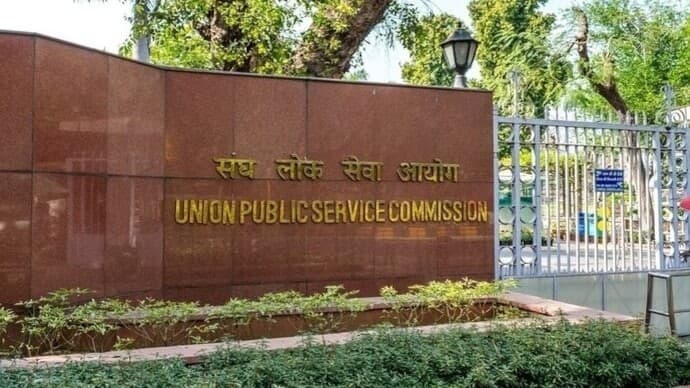
1.UPSC Centenary Constitutional Role (Constitutional Bodies)

The Hindu
Illustration for UPSC Centenary Constitutional Role (Constitutional Bodies)

What & Where

Constitutional recruitment body under Articles 315-323; HQ New Delhi; autonomous, quasi-judicial status.

Conducts tiered exams (Prelims → Mains → Personality Test) plus specialised tests for engineering, medical, forest, defence, statistics.

Manages 10–12 lakh Prelim aspirants annually at 2,500 + centres across India with biometric & digital safeguards.

Quick Facts for MCQs

Historical Evolution

  • 1919 Act proposed central body; Lee Commission (1924) paved way.
  • 1935 Act broadened remit, allowed greater Indian participation.
  • Post-1950: gained constitutional autonomy, insulated from executive influence.

Core Principles

  • Meritocracy: anonymous script evaluation across 48 subjects.
  • Fairness: language choice, disability accommodations, gender-neutral procedures.
  • Integrity: independent members, sealed question papers, strict confidentiality.

Reforms & Tech

  • Online applications, e-Admit cards, biometric/face recognition curb impersonation.
  • PRATIBHA Setu links interview-cleared candidates to alternative careers.
  • Planned AI tools for screening, fraud detection, logistics optimisation.

Challenges Ahead

  • Skill gap in AI, climate, cybersecurity governance.
  • High coaching cost, urban bias threaten equity.
  • Psychological stress from low success rate and long prep cycle.

Nation-Building Role

  • Provides leadership during wars, reforms, disasters, pandemics.
  • Ensures Union-State administrative balance through All-India cadres.
  • Professionalises bureaucracy with neutrality, probity, efficiency values.

Key Data Points

FeatureData-Point
Establishment year1926
Centenary day1 Oct 2025
Original namePublic Service Commission
First ChairmanSir Ross Barker
Upgrade to Federal PSCGovt of India Act 1935
Became UPSC26 Jan 1950
Constitutional Articles315-323
All-India ServicesIAS, IPS, IFoS
Scheduled languages in Mains22
Avg. Prelim applicants10–12 lakh
Selection ratio≈ 1 : 1000
Rural share of selectees> 60 % (DoPT)

Related UPSC Prelims PYQs

CDS_GK, GEO_GS 2025PYQ 1

Part IV-A of the Constitution of India relates to which of the following?

CDS_GK, GEO_GS 2020PYQ 2

Who among the following is the ex-officio Chairman of the Civil Services Board?
GS-3Economy

2.Second Deep-Sea Mineral Exploration Contract (Deep-sea Mining)

Indian Express
Illustration for Second Deep-Sea Mineral Exploration Contract (Deep-sea Mining)

What & Where

Polymetallic Sulphides (PMS): hydrothermal seabed deposits rich in Cu, Zn, Pb, Ag, Au

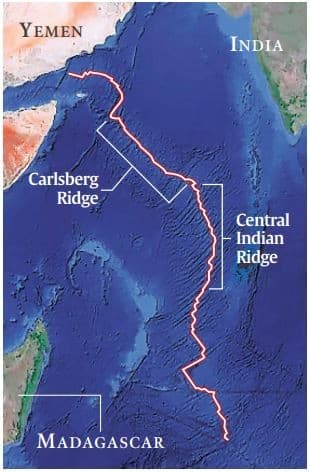
India’s second ISA exploration licence covers 10,000 sq km on Carlsberg Ridge, central Indian Ocean

Carlsberg Ridge: slow-spreading ridge between Arabian Sea and Somali Basin, 1,800–3,600 m deep

Quick Facts for MCQs

Legal & Policy

  • UNCLOS: contract issued under convention’s deep-seabed provisions
  • Leadership: India first state holding two PMS exploration areas
  • Policy-fit: project advances national Blue Economy roadmap

Tech & Schemes

  • Surveys: ship geophysics, AUV, ROV mapping, resource evaluation planned
  • Missions: Deep Ocean Mission and Samudrayaan provide indigenous submersible, tech stack
  • NCPOR: leads 2026 onward exploration and ISA reporting

Economic Angle

  • Minerals: copper, zinc, silver, gold critical for electronics, batteries, solar manufacturing
  • Transition: domestic supply reduces import reliance for green technologies
  • Strategic: strengthens aerospace and defence material security

Geological Features

  • Vents: hydrothermal activity precipitates PMS along ridge median valley
  • Tectonics: part of African-Indian-Australian plate triple junction, seismically active
  • Logistics: site at 2° N nearer Indian ports than previous 26° S block

Key Data Points

FeatureData-Point
Contract sequenceSecond PMS block for India
Global statusOnly nation with two ISA PMS licences
Allocated area10,000 sq km
Supervising bodyInternational Seabed Authority
Legal frameworkUNCLOS Part XI
Implementing agencyNational Centre for Polar & Ocean Research
Exploration start2026
Ridge location~2° N, 66° E
Ridge depth1,800–3,600 m
Spreading rate2.4–3.3 cm yr⁻¹
Ridge age~40 million years
Mineral suiteCu, Zn, Pb, Ag, Au, trace rares
Previous PMS block2016, Central & SW Indian Ridge

Related UPSC Prelims PYQs

GS1 2021PYQ 1

Consider the following statements:

GS1 2025PYQ 2

Consider the following statements:

GS-3Economy

3.India EFTA Free Trade Agreement (Free Trade Agreement)

PIB

What & Where

India-EFTA Trade & Economic Partnership Agreement (TEPA): India + EFTA bloc (Switzerland, Norway, Iceland, Liechtenstein).

In force 1 Oct 2025; eliminates/reduces tariffs, especially 100 % duty-free entry for Indian industrial & non-agri goods.

Aims to deepen India’s role in European value chains, complementing UAE CEPA, Australia ECTA, upcoming UK/EU deals.

Quick Facts for MCQs

Economic Angle

  • Investment: USD 100 bn FDI pledge, biggest ever secured via Indian FTA.
  • Exports: ~95 % current Indian exports gain zero-duty access in EFTA markets.
  • Employment: Govt projects 1 million direct jobs, chiefly manufacturing/services.

Concerns & Risks

  • Trade-deficit: Past ASEAN deal shows imports may outrun exports.
  • Vulnerables: Rubber, dairy, MSMEs fear cheaper EFTA inflows.
  • Sustainability: Carbon-linked EU measures could raise compliance costs.

Policy & Facilitation

  • Mechanism: Dedicated EFTA Desk handles clearances, after-care, partner matching.
  • Alignment: TEPA harmonises standards/certifications, slashing testing duplication.
  • Diversification: India pursuing Africa & Latin-America FTAs to spread market risk.

Key Data Points

FeatureData-Point
Agreement nameIndia-EFTA TEPA
Partner bloc membersCH, NO, IS, LI
Signed onMarch 2024
Effective date1 Oct 2025
Investment pledgeUSD 100 bn / 15 yrs
Projected direct jobs1 million
Industrial & non-agri access100 % duty-free in EFTA
Processed agri treatmentTariff concessions committed
Single-window “EFTA Desk”Operational Feb 2025
Recent comparable FTAsUAE CEPA 2022; Australia ECTA 2022

Related UPSC Prelims PYQs

CAPF_GAI, CDS_GK 2024PYQ 1

भारत ने EFTA, जो कि चार देशों का एक क्षेत्रीय समूह है, के साथ व्यापार और आर्थिक भागीदारी करार (TEPA) पर हस्ताक्षर किया है। निम्नलिखित में से कौन-सा देश इस समूह का सदस्य नहीं है?

CAPF_GAI, CDS_GK 2022PYQ 2

Recently, with which one of the following countries did India sign the 'Comprehensive Economic Partnership Agreement'?

GS-1History

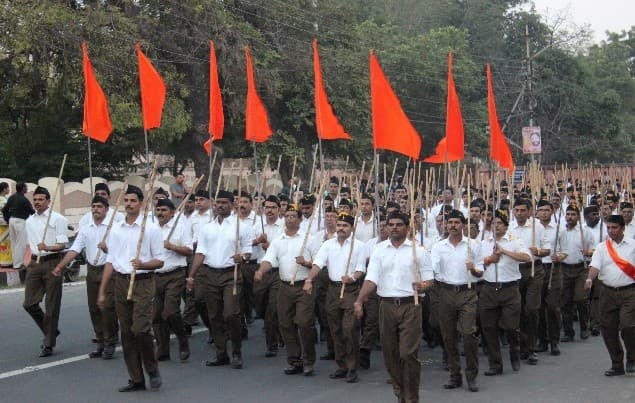
4.Rashtriya Swayamsevak Sangh Centenary (Socio-cultural Organisation)

The Hindu
Illustration for Rashtriya Swayamsevak Sangh Centenary (Socio-cultural Organisation)

What & Where

Organisation: socio-cultural volunteer body advocating Hindu Rashtra; fountainhead of Sangh Parivar

Origin: founded 27 Sep 1925 by Dr. K.B. Hedgewar at Nagpur, Maharashtra

Milestone: centenary celebrations slated for 2025 across India

Quick Facts for MCQs

Organisational Vision

  • Unity: bridge caste, regional, sectarian divides within Hindu society
  • Culture: revive heritage through daily shakhas stressing discipline and physical training
  • Geopolitics: reclaim Akhand Bharat and elevate India as global teacher

Freedom Movement Role

  • Jungle Satyagraha 1930: Hedgewar with swayamsevaks protested British forest laws
  • Poorna Swaraj Day: all shakhas hoisted saffron flag on 26 Jan 1930
  • Partition relief 1947: managed refugee camps in Punjab, Delhi, Bengal for displaced Hindus

Post-Independence Developments

  • Ban 1948-49: imposed after Gandhi’s murder by Godse linked to Hindu organisations
  • Gandhi meet Sept 1947: lauded RSS discipline yet warned against exclusive Hindu nationalism
  • Political channel: M.S. Golwalkar backed formation of Bharatiya Jana Sangh under Syama Prasad Mookerjee in 1951

Key Data Points

FeatureData-Point
Full nameRashtriya Swayamsevak Sangh
FounderDr. Keshav Baliram Hedgewar
Establishment27 September 1925
HeadquartersNagpur, Maharashtra
Centenary year2025
Core visionAkhand Bharat, Vishwa Guru
Motto focusDiscipline, service, cultural revival
Political offshootBharatiya Jana Sangh, 1951
1930 flag on Poorna Swaraj DayBhagwa (saffron)
First government ban4 Feb 1948 post-Gandhi assassination

Related UPSC Prelims PYQs

CDS_GK 2022PYQ 1

निम्नलिखित में से कौन सितम्बर 1928 में स्थापित ‘हिन्दुस्तान सोशलिस्ट रिपब्लिकन आर्मी’ का/के संस्थापक सदस्य थे ?

CDS_GK 2020PYQ 2

Who among the following formed the Seva Samiti Boy Scouts Association in 1914?

GS-3S&T

5.Desert Soilification Technology for Arid Crops (Desert Soilification)

The Hindu

What & Where

Desert soilification technology: biotech process turning loose desert sand into water-retentive, soil-like substrate via bioformulations & polymers.

First successful field application: arid desert tracts of western Rajasthan, enabling wheat and other dryland crops.

Addresses land degradation/desertification across arid, semi-arid, dry sub-humid zones.

Quick Facts for MCQs

Technology Mechanism

  • Polymers cross-link sand particles, creating stable, structured matrix.
  • Bioformulation heightens microbial activity, enhancing nutrient cycling & soil health.
  • Combined action boosts water retention, curbing evaporation losses.

Agricultural Output

  • Wheat cultivated for the first time on Rajasthan desert sand using the method.
  • Crops exhibit greater tolerance to extreme heat and aridity.
  • Higher yields without proportionate rise in inputs enhance farm viability.

Environmental Impact

  • Direct tool to combat desertification and restore degraded drylands.
  • Supports sustainable land management, aligning with UN-CCD goals.
  • Reduced irrigation cuts groundwater stress in water-scarce regions.

Key Data Points

FeatureData-Point
First field trial siteWestern Rajasthan desert
Yield jump54 % higher in bajra, guar gum, chickpea
Core inputsBioformulation + synthetic/organic polymers
Water demandIrrigation need significantly reduced
Compatible cropsWheat, bajra, guar gum, chickpea

Related UPSC Prelims PYQs

GS1 2004PYQ 1

Tarun Bharat Sangh, an organization based in a village near Alwar (Rajasthan) has become famous because of

GS-2Misc

6.Nobel Peace Prize Overview (Global Awards)

DH
Illustration for Nobel Peace Prize Overview (Global Awards)

What & Where

Nobel Peace Prize; annual award for outstanding peace contributions under Alfred Nobel’s 1895 will

Selected by five-member Norwegian Nobel Committee, Oslo; ceremony at Oslo City Hall on 10 December

Recognises individuals or organisations worldwide promoting fraternity, arms reduction, peace congresses

Quick Facts for MCQs

Eligibility & Nomination

  • Criteria: fraternity among nations, standing-army abolition/reduction, peace congress advancement
  • Nominations global; thousands received annually; self-nominations invalid
  • Repeat nominations permitted; no age or nationality bar for nominees

Selection Process

  • Shortlist crafted by committee with permanent advisers, external experts
  • Monthly deliberations seek consensus; majority vote if needed
  • Prize can be withheld or shared between multiple laureates

Award Components

  • 18-carat recycled gold medal, handmade diploma, monetary cheque
  • Medal design unique to Peace Prize; differs from medals minted in Sweden
  • Funds drawn from Nobel Foundation endowment income

Key Data Points

FeatureData-Point
First awarded1901
Cash reward (2024)SEK 11 million (~US $1.2 mn)
Nomination deadline31 January each year
Committee strength5 members appointed by Norwegian Parliament
Confidentiality period50 years for nomination files
Announcement date 202510 October
Ceremony date10 December (Nobel’s death anniversary)
Eligible proposersHeads of state, legislators, govt members, specific professors, ex-laureates, certain NGOs, international judges

Related UPSC Prelims PYQs

GS1 2006PYQ 1

In which country is the committee which selects winners for Nobel Peace Prize located?

GS1 2006PYQ 2

Consider the following statements:

GS-2Misc

7.India Re-elected to ICAO Council (Civil Aviation Body)

PIB
Illustration for India Re-elected to ICAO Council (Civil Aviation Body)

What & Where

ICAO = UN specialised agency coordinating safe, secure, sustainable international civil aviation.

Born 1944 via Chicago Convention; HQ Montreal, Canada; 193 member-states.

India just re-elected (Part II seat) to 36-member ICAO Council for 2025-28.

Quick Facts for MCQs

Governance Structure

  • Assembly (all States) elects Council every three years; meets triennially in Montreal.
  • Council executes policy; subdivided into Parts I–III ensuring equitable geographic representation.
  • SARPs adoption requires Council approval; binding once Annexed.

Core Functions

  • Safety oversight through GASP; navigation upgrades via Global Air Navigation Plan.
  • Security & facilitation standards bolster aviation and border resilience.
  • Economic, environmental policies encourage fair competition, sustainable fuels.

India Dimension

  • Founding signatory; continuous Council presence underscores diplomatic weight in aviation rule-making.
  • Votes, working papers shape SARPs on safety, security, emerging tech.
  • Supports “No Country Left Behind” drive for capacity-building in developing States.

Key Data Points

FeatureData-Point
Founding legal base1944 Chicago Convention
ICAO HQMontreal, Canada
Total membership193 States
Council size36 members
Council term3 years
Council seat groupsPart I, Part II, Part III
India on Council since1944 (uninterrupted 81 yrs)
Latest Indian tenure2025-2028, Part II
Key outputsSARPs (Standards & Recommended Practices)
Global safety planGASP
GS-3Security

8.India Chairs Wassenaar Arrangement (Export Control Regime)

Hindustan Times

What & Where

Voluntary export-control regime on conventional arms & dual-use goods, launched July 1996

Secretariat + annual plenary in Vienna, Austria

42 participating states share transfer/denial data to non-members every six months

Quick Facts for MCQs

Membership & Structure

  • Composition mainly NATO/EU, plus India, Japan, Australia, others
  • Chairmanship rotates yearly among 42 states
  • National export licences guided by common control lists

Objectives & Mechanism

  • Purpose limit destabilising arms/tech flows to states, terrorists
  • Maintains dual-use & munitions lists, updated by consensus
  • Info-exchange underpins stricter domestic enforcement

India’s Chairmanship Edge

  • Platform to tighten controls blocking terror financing & diversion
  • Chance to spotlight drones, cyber, space export norms beneficial to Indian industry
  • Raises India’s stature in global non-proliferation order

Related Export Regimes

  • NSG tackles nuclear materials & tech
  • MTCR governs WMD delivery vehicles
  • Australia Group curbs chemical-biological weapon precursors

Key Data Points

FeatureData-Point
Formal nameWassenaar Arrangement
Establishment year1996
Secretariat cityVienna, Austria
Current members42
India joinedDec 2017
India as Plenary Chair1 Jan 2023 – 31 Dec 2023
Reporting cycleHalf-yearly
Plenary meetAnnual, usually December
Decision ruleConsensus
Previous chairs2018 UK; 2019 Greece
Major blocs insideNATO & EU states
Core coverageConventional weapons + dual-use tech

Related UPSC Prelims PYQs

CDS_GK, GS1 2023PYQ 1

Which one of the following statements about the Wassenaar Arrangement is not correct?

CDS_GK, GS1 2011PYQ 2

Recently, the USA decided to support India's membership in multi-lateral export control regimes called the "Australia Group" and the "Wassenaar Arrangement". What is the difference between them?

GS-1Editorial

9.Women’s Participation in Indian Agriculture (Women in Agriculture)

The Hindu
Illustration for Women’s Participation in Indian Agriculture (Women in Agriculture)

What & Where

Feminisation of agriculture = rising women share in farm labour/management amid male out-migration.

PLFS 2023-24: women 42 % of agri workforce; ≈ 50 % remain unpaid family labour.

High concentration in Indo-Gangetic belt; Bihar & Uttar Pradesh show >80 % female rural workers in farming.

Quick Facts for MCQs

Economic Angle

  • Male-out-migration creates labour gaps; women fill roles in cereals, horticulture, plantations.
  • Contract farming prefers women for labour-intensive tasks, keeping wages suppressed.
  • Wage discrimination persists; equal hours, 20–30 % lower pay.

Social Concerns

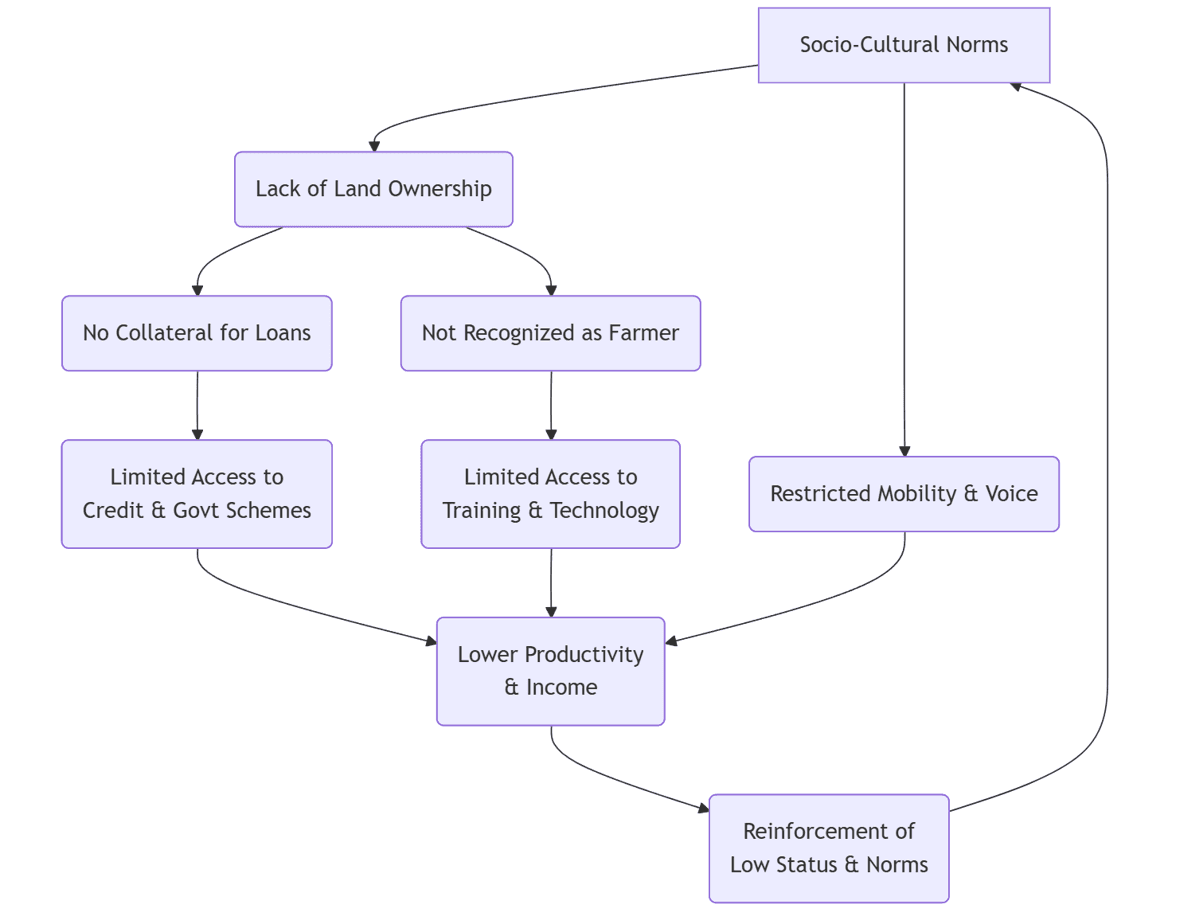
  • Patriarchal norms tag women as cultivators, curbing credit and cooperative voice.
  • Domestic double burden drives time poverty, limiting market, training access.
  • Low literacy & mobility restrict non-farm job options, locking women into agriculture.

Tech & Schemes

  • MKSP, Kisan Credit Card, SHG networks provide credit, skills, bargaining to ~92 lakh women.
  • Farm tools sized for men; ergonomic mismatch lowers female mechanisation adoption.
  • e-NAM, BHASHINI, Jugalbandi, Digital Sakhi expand voice-first advisories & fintech inclusion.

Legal & Policy

  • Joint/individual land titles proposed to unlock credit, insurance, FPO entry.
  • India-UK FTA expected 20 % agri export rise in women-intensive sectors: tea, spices, dairy.
  • On-farm crèches, piped water, clean energy suggested to cut unpaid care workload.

Key Data Points

FeatureData-Point
Women in agri workforce (PLFS 23-24)42 %
Decadal growth in female agri labour135 %
Unpaid female workers 2024-2559.1 million
Unpaid female workers 2017-1823.6 million
States with >80 % female agri labourBihar, Uttar Pradesh
Female land ownership share13–14 % holdings
Gender wage gap (agri)20–30 % lower
Key women-centric schemeMahila Kisan Sashaktikaran Pariyojana

Related UPSC Prelims PYQs

CDS_GK, ESE_GS 2025PYQ 1

Consider the following statements regarding Annual Periodic Labour Force Survey (PLFS) report 2023–24 by the National Statistical Organization (NSO):

CDS_GK, ESE_GS 2023PYQ 2

Which one of the following is NOT an objective of Mahila Kisan Sashaktikaran Pariyojana (MKSP) ?

Ready to practice?

Test your knowledge with our UPSC test series.

Start Free Trial