Editorial
1.Debate on Raising Reservation Cap (Reservation Cap Debate)
The Hindu50% limit · creamy layer · 85% quota proposal
What & Where
Reservation: affirmative action for SC, ST, OBC, EWS ensuring representation in education, employment, politics
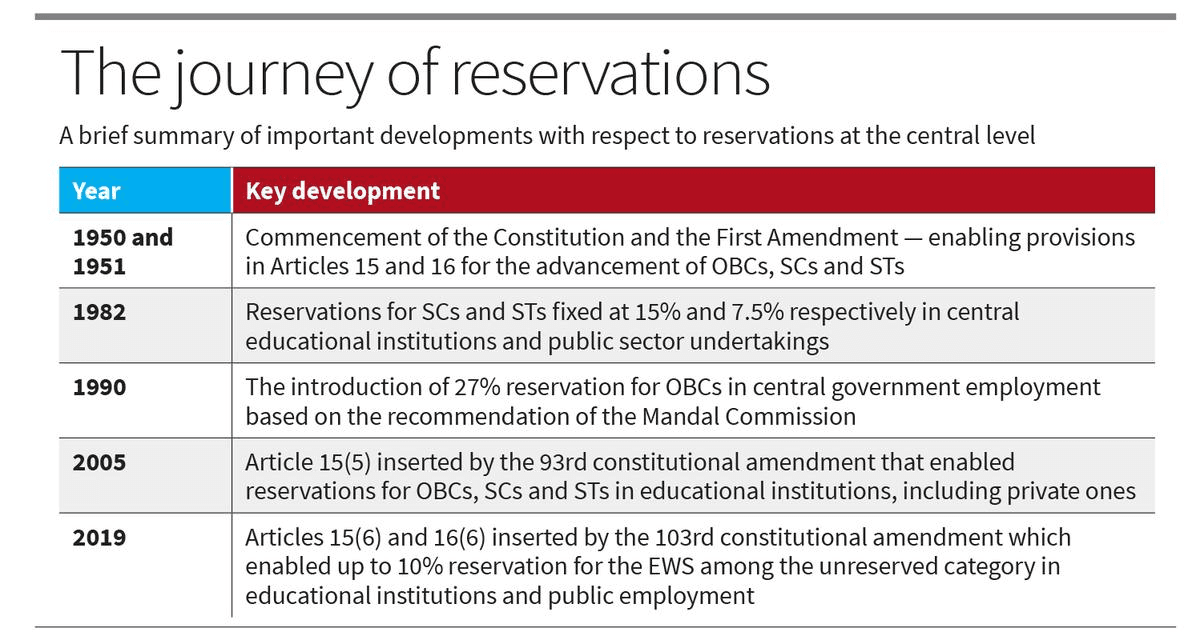
Central quotas: OBC 27 %, SC 15 %, ST 7.5 %, EWS 10 %; cumulative 59.5 %
Geography: Nationwide implementation; states like Tamil Nadu, Haryana, Maharashtra legally cross 50 % limit
Quick Facts for MCQs
Constitutional Provisions
- Articles 15(3),(4),(5),(6) empower special provisions in admissions including private unaided
- Articles 16(4),(4A),(4B),(6) enable job, promotion, backlog reservations including EWS
- Articles 330,332,243D,233T secure SC/ST seats in Parliament, Assemblies, Panchayats, Municipalities
Judicial Landmarks
- Balaji 1962: reservations exceptional, capped around 50 % for equality balance
- N M Thomas 1975: reservations seen as substantive equality extension, not exception
- Indra Sawhney 1992: ceiling reaffirmed; OBC promotion barred; economic criteria rejected
50% Cap Debate
- Supporters cite >60 % backward population; seek proportional inclusion, substantive equity
- Critics warn of merit dilution, administrative efficiency, existing 40 % seat vacancies
- Creamy-layer proposal targets intra-caste equity; Centre resists extension to SC/ST
Implementation Measures
- Caste census demanded for evidence-based quota calibration and monitoring
- Rohini recommendations: OBC sub-categorisation, two-tier SC/ST, creamy-layer exclusion
- Governance focus: fill backlog posts, integrate skill training and job creation
Key Data Points
| Feature | Data-Point |
|---|---|
| Central reservation total | 59.5 % |
| Constitutional ceiling case | Indra Sawhney 1992 |
| Initial 50 % limit case | Balaji v Mysore 1962 |
| EWS quota amendment | 103rd Amendment 2019 |
| Creamy-layer for SC/ST debated in | Davinder Singh 2024 |
| OBC benefit skew (Rohini) | 97 % to 25 % sub-castes |
| Unfilled reserved seats | 40–50 % backlog |
Related UPSC Prelims PYQs
CDS_GK, GEO_GS 2023PYQ 1
Which one of the following amendments to the Constitution of India has introduced reservations in education and in public employment for people from the Economically Weaker Sections (EWS) of society?
CDS_GK, GEO_GS 2025PYQ 2
With reference to Article 16 of the Constitution of India, which of the following statements is/are correct?