UPSC Current Affairs

14 topicsGS-1: 5GS-2: 3GS-3: 6
0/14 done
GS-2Polity

1.Vice President of India Election (Vice President)

Times of India

What & Where

Vice President of India – second-highest constitutional office; ex-officio Rajya Sabha Chairperson

Election by both Houses of Parliament through single transferable vote; simple majority decides

Secretariat located in New Delhi; holder shifts to Rashtrapati Bhavan when acting as President

Quick Facts for MCQs

Legal & Policy

  • Article 63 creates post; Article 64 makes VP Rajya Sabha Chairperson; Article 65 grants Acting-President role
  • Emoluments, privileges, powers equal to President during acting period
  • No voting right in Rajya Sabha except casting vote on tie

Eligibility Norms

  • Citizenship India, age ≥35, Rajya Sabha qualification mandatory
  • Allowed concurrent roles only as Vice President, Governor, Union or State Minister
  • Oath administered by Chief Justice or seniormost available Supreme Court judge

Election Snapshot

  • Total valid votes 752; quota 377 attained by CP Radhakrishnan in first count
  • Opponent Justice B Sudershan Reddy secured 300 votes
  • Record turnout attributed to digital authentication & party whips

Key Data Points

FeatureData-Point
15th Vice PresidentCP Radhakrishnan
Election date9 September 2025
Victory margin452 vs 300 votes
MP turnout98 %+
Birth20 Oct 1957, Tiruppur, TN
Previous postsGovernor of Maharashtra, Jharkhand; addl charge Telangana & Puducherry
Constitution articles63, 64, 65
Term length5 years
Minimum age35 years
Electoral collegeLok Sabha + Rajya Sabha MPs only
Removal methodRajya Sabha resolution, Lok Sabha agreement, 14-day notice
Acting President max6 months
Office of profit barCannot hold profit office under Union/State/local bodies

Related UPSC Prelims PYQs

CDS_GK, GEO_GS 2021PYQ 1

Which one of the following statements about the Vice-President of India is not correct?

CDS_GK, GEO_GS 2025PYQ 2

The Vice President of India, who is also the ex-officio Chairman of the Council of States, is elected by the Members of an Electoral College consisting of the Members of
GS-3Economy

2.National Cooperative Exports Limited Overview (Cooperative Exports)

PIB

What & Where

National Cooperative Exports Limited (NCEL): apex multi-state cooperative society for all Indian cooperative exports.

Registered 25 Jan 2023 under Multi-State Cooperative Societies Act 2002; HQ – New Delhi.

Operates pan-India; MoU with APEDA targets global agri-export markets.

Quick Facts for MCQs

Legal & Policy

  • Registration ensures multi-state operation; umbrella mandate avoids overlap with individual cooperative export efforts.
  • MoU with APEDA aligns with Foreign Trade Policy focus on value-added agri exports.

Economic Angle

  • Export platform expected to aggregate volumes, securing better price realisation for small farmers.
  • Promoter mix provides capital strength and established supply chains for quick market penetration.

Tech & Schemes

  • Infrastructure support includes pack-houses, cold-chains, quality labs to meet international standards.
  • Training & market intelligence modules planned to help cooperatives navigate global regulatory compliances.

Key Data Points

FeatureData-Point
Legal statusMulti-State Cooperative Society (national level)
Registration ActMulti-State Cooperative Societies Act, 2002
Establishment date25 January 2023
HeadquartersNew Delhi
Core objectiveBoost cooperative-led exports, raise farmer income
Guiding slogan“Sahakar se Samriddhi”
Key promotersAMUL, IFFCO, KRIBHCO, NAFED, NCDC
Recent MoU partnerAPEDA
Product scopeAgri, dairy, fisheries, horticulture, handloom, handicraft, textiles, allied
Support offeredInfrastructure, branding, compliance, market access, training

Related UPSC Prelims PYQs

ESE_GS 2026PYQ 1

Which organization is responsible for implementing the National Beekeeping & Honey Mission (NBHM)?

GS-3Infrastructure

3.UK–India Infrastructure Financing Bridge (Infrastructure Financing)

The Hindu
Illustration for UK–India Infrastructure Financing Bridge (Infrastructure Financing)

What & Where

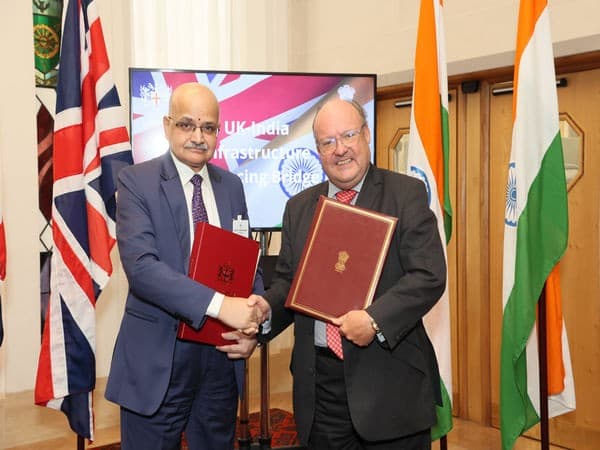
Bilateral UK–India mechanism to funnel global private money into India’s sustainable infrastructure.

Works via policy tweaks, project structuring, ESG alignment; mirrors UK’s Five Case procurement model.

Geography confined to India for projects, London & Delhi for coordination.

Quick Facts for MCQs

Objectives

  • Mobilisation: attract long-term international private capital into Indian infrastructure.
  • Alignment: embed global procurement & ESG norms for transparency and predictability.
  • De-risking: propose fixes for revenue, forex, tax, repatriation concerns.

Functions

  • Policy-advice: issue recommendations to improve project competitiveness.
  • Knowledge-share: develop best-practice toolkits for climate-resilient, green finance.
  • Joint-structuring: facilitate co-design of specific projects across transport & energy.

Significance

  • India: augments financing pool, opens space for mid-sized domestic firms.
  • UK: expands financial-services footprint, reinforces green-finance leadership in growth market.
  • Global: showcases North-South partnership aligning capital flows with SDGs.

Key Data Points

FeatureData-Point
Full nameU.K.-India Infrastructure Financing Bridge (UKIIFB)
Launch month-yearSeptember 2024
Announced atIndia–UK Economic & Financial Dialogue
Indian leadNITI Aayog
UK leadCity of London Corporation
First-year review venueLondon
Investment gap targeted≈ $2 trillion by 2030
Focus sectorsHighways, mass transit, renewables
Core standard citedUK Five Case Model
Key risk areasRevenue, repatriation, taxation

Related UPSC Prelims PYQs

GS1 2017PYQ 1

The Global Infrastructure Facility is a/an

GS-1History

4.Lankhong Puja of Tiwa Tribe (Tribal Festival)

The Hindu
Illustration for Lankhong Puja of Tiwa Tribe (Tribal Festival)

What & Where

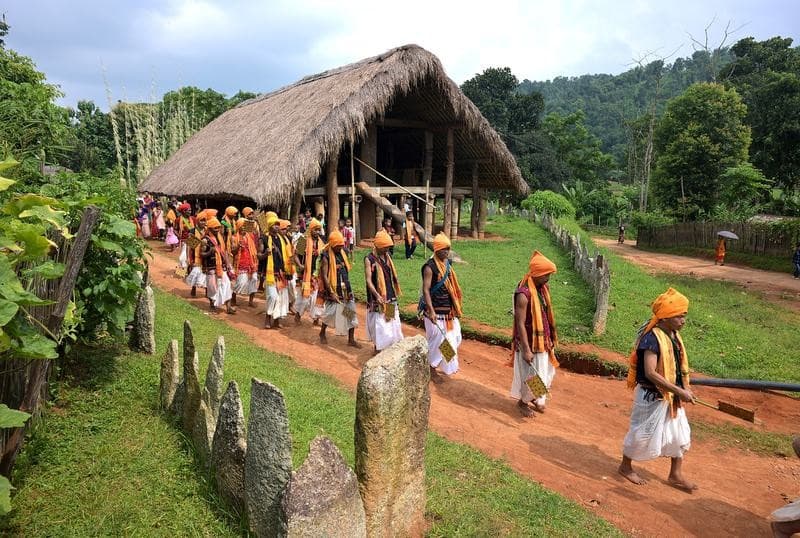
Festival Lankhong Puja socio-religious ritual praying for prosperous Rabi harvest

Celebrated by Tiwa tribe Assam formerly Lalung Mongoloid Tibeto-Burman

Geography central Assam districts Nagaon Morigaon etc plus parts Meghalaya Tripura hill–plain settlements

Quick Facts for MCQs

Cultural Practices

  • Music dance integral to rituals reinforcing group identity
  • Oral histories cited in Assam, Jayanta, Kachari Buranjis
  • Festivals mirror agricultural calendar sustaining cultural continuity

Social Organisation

  • Chamadi youth body manages community service and social duties
  • Hill versus Plain Tiwas show lifestyle variation via geography neighbours
  • Religious life anchored in Borghar Thaan Ghar Naamghar structures

Agricultural Link

  • Puja held pre-Rabi sowing to appease deities for bumper harvest
  • Collective participation strengthens farmer solidarity
  • Ritual offerings symbolise dependence on agriculture for livelihood

Key Data Points

FeatureData-Point
Festival purposeBlessings for Rabi crop yield
Festival accompanimentsPrayer, ritual offerings, music, dance
Associated tribeTiwa (Lalung)
Linguistic familyTibeto-Burman
Ethnic stockMongoloid
Key Assam districtsNagaon, Morigaon, Dhemaji, Dibrugarh, Jorhat, Titabor
Settlement typesHill Tiwas, Plain Tiwas
Core religious spacesBorghar; Thaan Ghar; Naamghar
Youth organisationChamadi
Name etymologyTi = water; Wa = superior
GS-1Environment

5.Recurring Floods in Punjab Analysis (Punjab Floods)

Indian Express

What & Where

Flooding in Punjab: seasonal monsoon overflow of Ravi, Beas, Sutlej, Ghaggar

Process: heavy upstream rainfall + dam releases overwhelm embankments

Location: all 23 districts across Majha, Doaba, Malwa zones

Quick Facts for MCQs

Natural & Human Causes

  • Heavy monsoon, cloudbursts elevate river discharge beyond capacity
  • Dam mismanagement, high reservoir levels reduce flood cushion
  • Illegal sand mining and floodplain encroachment weaken dhussi bundhs

Governance Gaps

  • Centralised BBMB prioritises power/irrigation, limited Punjab say
  • 2022 BBMB amendment allows non-Punjab officers, heightens trust deficit
  • Reactive post-flood spending replaces preventive desilting, embankment upkeep

Impacts

  • Agriculture: 4 lakh acres paddy, basmati submerged; quality below MSP
  • Health: Polluted Buddha Dariya waters raise cholera, hepatitis, dengue risk
  • Economy: Repairing roads, canals strains fisc, deepens farm debt

Mitigation Measures

  • Scientific rule curves integrate IMD forecasts, ensure August-September storage buffer
  • Strengthen dhussi bundhs, curb mining via satellite surveillance
  • Deploy C-FLOOD, NRSC BHUVAN for village-scale early warnings, zero-casualty drills

Key Data Points

FeatureData-Point
Flood year2025
Districts affected23/23
People impacted3.8 lakh
Farmland damaged11.7 lakh ha
Excess rainfall45 % above normal
Pong inflow spike20 % over 2023
Perennial riversRavi, Beas, Sutlej
Seasonal riverGhaggar
Key damsBhakra, Pong, Thein
Embankment upgrade cost₹4,000–5,000 cr

Related UPSC Prelims PYQs

GS1, NDA_GAT 2021PYQ 1

River Beas, flowing from Himachal and Punjab, joins the river

GS1, NDA_GAT 2010PYQ 2

Rivers that pass through Himachal Pradesh are

GS-1Mapping

6.Nepal Geography and Political Profile (Neighbouring Country Mapping)

Hindustan Times

What & Where

Nepal – landlocked Himalayan republic in South Asia, squeezed between India and China.

Terrain spans subtropical Tarai plains to alpine peaks, incl. Mount Everest.

Current unrest: Gen-Z protests over governance, digital freedoms after social-media ban.

Quick Facts for MCQs

Political Structure

  • President ceremonial, also Commander-in-Chief, elected by Electoral College.
  • Prime Minister wields executive power, responsible to House of Representatives.
  • Provinces elect National Assembly members indirectly.

Geography & Natural Resources

  • Rivers crucial for irrigation, hydropower development potential.
  • Mountain system hosts Everest, Kanchenjunga, Annapurna tourism economy.
  • Diverse climate supports varied biodiversity from rhinos to snow leopards.

Gen-Z Protest Drivers

  • Triggered by blanket social-media ban citing tax, cybersecurity grounds.
  • Discontent amplified by corruption, nepotism, opaque governance.
  • Youth demand accountability, transparency, safeguarding of democratic freedoms.

Key Data Points

FeatureData-Point
CapitalKathmandu
BordersIndia E-S-W, China N
Political systemFederal Democratic Republic (since 2008)
Head of StatePresident Ram Chandra Paudel
Head of GovtPM (office vacated by K.P. Sharma Oli resignation)
LegislatureBicameral; House 275 elected, National Assembly 59 indirect
Highest peakMount Everest 8,848 m
Key riversKosi, Narayani (Gandak), Karnali
Social-media ban26 platforms incl. Facebook, Instagram, YouTube
Climate rangeSubtropical Tarai to alpine Himalaya
GS-3Environment

7.Great Indian Bustard Habitat Threat (Endangered Bird)

Indian Express

What & Where

Great Indian Bustard: critically-endangered, heavy flying bird; core range Thar Desert, scattered groups in 4 other peninsular states.

Birmania Rock Phosphate Mine: proposed open-pit in Jaisalmer, Rajasthan; overlaps identified GIB habitat, EAC cleared EIA.

Phosphate rock: sedimentary, high-P mineral; India’s key deposits Rajasthan & Madhya Pradesh, but 90 % demand imported.

Quick Facts for MCQs

Legal & Policy

  • EAC clearance granted despite Supreme Court order on undergrounding power lines in bustard areas.
  • Schedule I status mandates highest protection; violations invite imprisonment up to 7 years.
  • Recovery Plan aims habitat securement, ex-situ breeding, strengthened enforcement.

Threats

  • Habitat-loss: mining, wind turbines, roads fragment arid grasslands.
  • Collision: narrow frontal vision; overhead lines prime killer.
  • Chemical & hunting: pesticide-laden prey and illegal poaching add mortality.

Conservation Efforts

  • Captive-breeding centre, Jaisalmer, rears chicks for later soft release.
  • Satellite-tracking studies identify critical lekking and nesting sites.
  • Community outreach trains local shepherds as “GIB guardians”.

Resource Geology

  • Formation: marine organic accumulation over millions of years.
  • Extraction: open-pit, dragline, excavator methods predominant.
  • Uses: 80 % fertilisers, rest animal feed & industrial phosphorous compounds.

Key Data Points

FeatureData-Point
Wildlife Protection Act slotSchedule I
IUCN listingCritically Endangered
CITES appendixI
Estimated GIB left (2024)≈ 140 birds
Annual power-line deaths18 (WII 2020)
National Bustard Recovery Plan2016 – 2033
Lead agencyWildlife Institute of India
Fund sourceCAMPA
Prime GIB stateRajasthan
Phosphate rock import reliance~ 90 %

Related UPSC Prelims PYQs

GS1 2010PYQ 1

Consider the following pairs:

GS1 2017PYQ 2

In India, if a species of tortoise is declared protected under Schedule I of the Wild Life (Protection) Act, 1972, what does it imply?

GS-3S&T

8.AdFalciVax Indigenous Malaria Vaccine (Malaria Vaccine)

The Hindu
Illustration for AdFalciVax Indigenous Malaria Vaccine (Malaria Vaccine)

What & Where

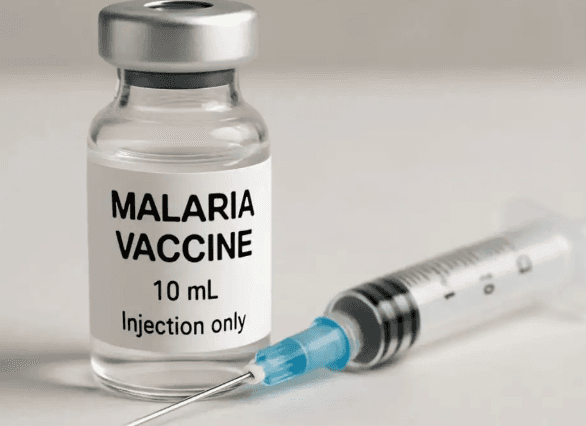
AdFalciVax – India’s first indigenous recombinant chimeric multi-stage vaccine against Plasmodium falciparum malaria.

Conceived at ICMR-RMRC Bhubaneswar with support from ICMR-NIMR & NII, New Delhi.

Union govt. (2025) licensed Indian Immunologicals, Techinvention Lifecare, Panacea Biotec, Biological E & Zydus Lifesciences for manufacture/commercialisation.

Quick Facts for MCQs

Tech & Schemes

  • Multi-stage design targets sporozoite and gametocyte phases, interrupting both infection and further mosquito spread.
  • Thermostability >9 months enables cold-chain-light distribution across tropical hinterlands.
  • Recombinant platform allows rapid, affordable scale-up using existing domestic facilities.

Legal & Policy

  • DCGI licences underpin Atmanirbhar Bharat focus on indigenous biopharma self-reliance.
  • Supports National Framework for Malaria Elimination 2016-2030, complementing vector-control schemes.
  • Indigenous option decreases strategic reliance on imported RTS,S/AS01 vaccine stocks.

Health Impact

  • High-burden states, tribal belts expected primary beneficiaries, aiding morbidity & mortality reduction.
  • Community transmission blockade accelerates trajectory to zero indigenous cases by 2030.
  • Affordable pricing likely to enhance immunisation coverage among vulnerable populations.

Key Data Points

FeatureData-Point
Vaccine nameAdFalciVax
Parasite targetedPlasmodium falciparum
Vaccine natureRecombinant chimeric, multi-stage
Core actionBlocks infection & mosquito transmission
Acts whenBefore parasite enters bloodstream + gametocyte stage
Thermostability> 9 months at room temperature
Development bodiesICMR-RMRC, ICMR-NIMR, NII
Trial statusPre-clinical validation successful
Licences issued5 Indian firms (2025)
India’s malaria share1.4 % global; 66 % SE Asia
National goal alignedMalaria Elimination Goal 2030
Strategic benefitReduces import dependence; boosts Atmanirbhar R&D

Related UPSC Prelims PYQs

GS1 2010PYQ 1

Widespread resistance of malarial parasite to drugs like chloroquine has prompted attempts to develop a malarial vaccine to combat malaria. Why is it difficult to develop an effective malaria vaccine ?

GS-3S&TQuick Bite

9.International Conference on Space 2025 (Space Policy)

PIB

What & Where

International Conference on Space 2025; multi-stakeholder forum for innovation, policy, growth in the global space sector

Hosted in India; inaugurated 10 Sep 2025; falls under GS-3 Science & Tech syllabus

Theme: Harnessing Space for Global Progress — Innovation, Policy and Growth

Quick Facts for MCQs

Strategic Targets

  • Bharatiya Space Station operational by 2035, boosting indigenous crewed-orbit capability
  • Indian astronaut Moon landing aimed before 2040, signalling deep-space ambition
  • Roadmap extends to Mars, Venus, asteroid exploration, widening interplanetary reach

Recent Milestones

  • Chandrayaan-3 secured first-ever landing near lunar south pole, enhancing polar science
  • Gp Capt Shubhanshu Shukla became inaugural IAF officer aboard ISS, proving crew readiness

International Partnerships

  • NISAR with NASA deploying dual-frequency radar for precise Earth monitoring
  • Chandrayaan-5 co-developed with Japan targets lunar sample return possibilities
  • Conference positions space as diplomacy lever, catalysing multilateral cooperation

Flagship Programmes & Policy

  • Gaganyaan prioritised; crewed low-Earth-orbit mission eyed for late 2020s launch
  • Policy thrust invites private sector, aiming larger share in emerging space economy

Key Data Points

FeatureData-Point
Inauguration date10 Sep 2025
Host countryIndia
Conference themeHarnessing Space for Global Progress
Space station targetBharatiya Space Station by 2035
Lunar astronaut targetIndian on Moon by 2040
Priority programmeGaganyaan human spaceflight
Planned planetary foraysMars, Venus, asteroid missions
Key US tie-upNASA-ISRO NISAR Earth-observation
Japan collaborationChandrayaan-5 lunar mission
Recent lunar featChandrayaan-3 near-south-pole landing
First IAF officer on ISSGp Capt Shubhanshu Shukla

Related UPSC Prelims PYQs

CDS_GK, GS1 2022PYQ 1

India's maiden human space mission will be launched in 2023. What is its name?

CDS_GK, GS1 2025PYQ 2

निम्नलिखित अंतरिक्ष मिशनों पर विचार कीजिए :

GS-2Infrastructure

10.Grand Ethiopian Renaissance Dam Dispute (Nile Water Dispute)

Unknown
Illustration for Grand Ethiopian Renaissance Dam Dispute (Nile Water Dispute)

What & Where

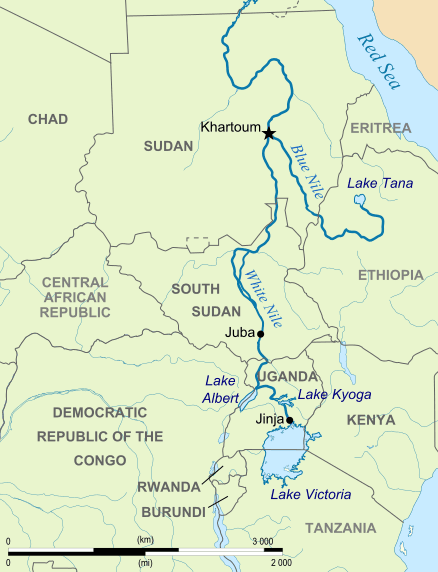
GERD – Africa’s largest hydro-electric dam for power export; launched 2011, inaugurated 2024.

Sited on Blue Nile (Abay) in Guba, Ethiopia ~30 km upstream of Sudan border.

Blue Nile supplies ≈85 % of Nile flow, making GERD a trans-boundary flashpoint.

Quick Facts for MCQs

Security Dimension

  • Egypt: labels dam “existential”; filed UN protest on inauguration day.
  • Downstream dependence: Egypt & Sudan rely on Blue Nile for irrigation, drinking water.

Economic Angle

  • Power export: GERD to sell surplus electricity across East Africa.
  • Nation-building: project framed as Ethiopian self-reliance, jobs, foreign-exchange earner.

River Geography

  • Course: deep gorges through highlands, meets White Nile at Khartoum after ~1,460 km.
  • Tributaries: Dinder & Rahad join in Sudan, boosting seasonal discharge.

Key Data Points

FeatureData-Point
Dam height~170 m
Crest length~2 km
Reservoir capacity74 billion m³
Inundated area~1,874 km²
Installed capacity5,150–6,450 MW
Main riverBlue Nile (Abay)
Upstream distance from Sudan~30 km
Start year2011
First power generation2022
Builder nationEthiopia
GS-3Security

11.Exercise Zapad 2025 Multilateral Drill (Military Exercise)

New Indian Express
Illustration for Exercise Zapad 2025 Multilateral Drill (Military Exercise)

What & Where

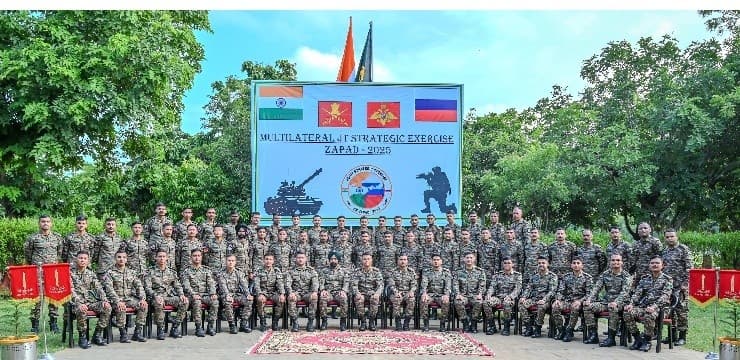
Exercise Zapad 2025 – Russia-hosted multilateral drill simulating high-intensity conventional war and counter-terror ops

Core geography – Mulino Training Ground, Nizhniy, western Russia

Participants – Russia, India, other partner nations; Indian Army, Navy, Air Force field joint company-level team

Quick Facts for MCQs

Security Dimension

  • Scenario – high-tempo conventional battles plus counter-terror modules
  • Outcome sought – operational synergy against peer and non-state threats
  • Exposure – emerging military tech in multinational environment

Participants & Forces

  • Indian detachment – company group with tri-service representation
  • Multinational mix – several Russian partner states alongside India
  • Training scale – joint planning, live-fire, arms skills exchange

Historical Context

  • Soviet-era roots revived 2009 as strategic theatre exercises
  • Rotational list – Zapad complements Vostok, Tsentr, Kavkaz cycles
  • Name indicates western strategic direction in Russian doctrine

Key Data Points

FeatureData-Point
Meaning of “Zapad”Russian word for West
Host Nation 2025Russian Federation
Exercise CycleQuadrennial since 2009 modern series
Indian Debut2021 edition
2025 VenueMulino Training Ground, Nizhniy
Indian ComponentsArmy, Air Force, Navy
Key FocusTactical drills, plains warfare, special ops
Broad AimInteroperability & defence cooperation

Related UPSC Prelims PYQs

CAPF_GAI, GS1 2023PYQ 1

Exercise Ajeya Warrior is a biennial training event between the Indian Army and the army of:

CAPF_GAI, GS1 2024PYQ 2

Which of the following statements about 'Exercise Mitra Shakti-2023' are correct?

GS-2SchemeQuick Bite

12.Himachal Pradesh Achieves Functional Literacy (Adult Literacy)

Indian Express

What & Where

ULLAS/New India Literacy Programme; centrally sponsored, 2022-27, delivers adult literacy, digital & life-skills nationwide.

Himachal Pradesh, declared 8 Sep 2025, becomes 4th fully functionally literate state with 99.30% rate.

Functional literacy: ability to apply reading-writing-numeracy daily; Ministry treats ≥95 % state rate as “full literacy”.

Quick Facts for MCQs

Tech & Schemes

  • Components: foundational, digital, financial literacy plus continuing education modules.
  • Delivery: DIKSHA & mobile-based resources; emphasis on vernacular content, 26 languages.
  • Funding: 60:40 Centre-State; 90:10 for NE, Himachal, Uttarakhand, J-K; 100 % for UTs.

State & UT Milestones

  • Sequence: Tripura (2023) → Mizoram → Goa → Himachal (2025).
  • Ladakh set first-UT precedent, spurring hill-state participation.
  • Declaration timed with International Literacy Day for visibility.

Statistical Landscape

  • ULLAS success ratio: 90 % pass in foundational assessments.
  • Non-literate adult pool shrinking via 3 crore enrolments since 2022.
  • Literacy gap: 14 pp between India average (80.9 %) and Himachal (99.3 %).

Key Data Points

FeatureData-Point
Fully literate states count4 (HP, Tripura, Mizoram, Goa)
First fully literate UTLadakh, Jun 2024
HP literacy rate99.30 %
National full-literacy benchmark95 %
Overall India literacy (PLFS 2023-24)80.9 %
ULLAS scheme window2022-2027
Target age group15 years & above
Learners enrolled3 crore +
Volunteers onboarded42 lakh
Learners passed assessment1.83 crore
Assessment success rate90 %
Languages offered26 Indian languages
Literacy definition (RGI)Age ≥ 7, can read & write with understanding
GS-1Editorial

13.Gender Inequality in Domestic Sphere (Gender Inequality)

The Hindu
Illustration for Gender Inequality in Domestic Sphere (Gender Inequality)

What & Where

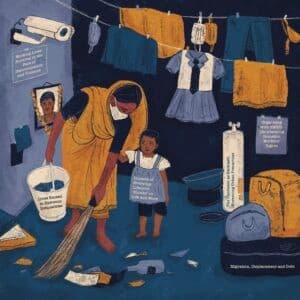
Definition: Domestic sphere covers unpaid care, household labour, intimate relationships inside Indian homes.

Geography: Data from NFHS-5, Time-Use Survey 2024, dowry-death NCRB 2017-22 across India.

Scope: Includes violence, dowry, gendered labour divide, informal care workforce (ASHA, Anganwadi, mid-day meal).

Quick Facts for MCQs

Legal & Policy

  • Gap: Marital rape still uncriminalised; Domestic Violence Act enforcement weak.
  • Directive: Articles 39(d) equal pay, 42 humane work remain aspirational.
  • Need: Formal wages, social security for ASHA, Anganwadi, mid-day meal staff.

Economic Angle

  • Subsidy: Women’s unpaid labour keeps subsistence wages low, indirectly aiding capital accumulation.
  • Accounting: Inclusion of unpaid work would lift GDP by 7 %.
  • Proposal: Pension, universal childcare, paternity leave redistribute care burden.

Social Concerns

  • Patriarchy: Cultural glorification of female sacrifice entrenches silence on abuse.
  • Spill-over: Home violence reduces productivity, civic participation, child outcomes.
  • Intersection: Burden heavier across caste, class, rural divides.

Data & Monitoring

  • Recommendation: Regular national Time-Use Surveys for gender-responsive budgeting.
  • Indicator: Track unpaid hours, complaint rates, care-work formalisation.

Key Data Points

FeatureData-Point
NFHS-5 intimate partner violence30 % women; only 14 % complain
Average dowry deaths (2017-22)≈ 7,000 annually
Time-Use 2024 women unpaid domestic work~7 h/day; 93 % participation
Time-Use 2024 men unpaid domestic work26 min/day
Women caregiving time2.5 h/day; 41 % participation
Estimated value unpaid work (SBI 2023)7 % GDP ≈ ₹22.5 lakh cr
Constitution articles breached14, 15, 21, 39(d), 42
ARC observationPatriarchy biggest barrier to probity, justice
GS-1Editorial

14.Loneliness Among Urban Young Workers (Mental Health)

New Indian Express

What & Where

Loneliness: social isolation and emotional detachment amid crowded urban workplaces.

Core pockets: migrant 25–35-yr employees in Bengaluru, Gurugram, Pune, Hyderabad, Chennai.

Process: migration-dislocation + work–party routine + tech-mediated ties erode traditional bonds.

Quick Facts for MCQs

Causes

  • Migration: uproots hometown culture, kinship, neighbourhood trust.
  • Workload: long hours plus nightlife crowd out sustained friendships.
  • Technology: dating apps and speed-mixers substitute superficial connections.

Effects

  • Mental-health: higher anxiety, depression, emotional emptiness, weaker resilience.
  • Social-capital: reduced neighbourhood participation, declining trust and cooperation.
  • Demography: delays marriage, parenthood, reshapes kinship patterns.

Interventions

  • Community: revive neighbourhood associations, ethnic festivals, youth clubs.
  • Workplace: HR to foster bonding, mental-health support, work–life balance.
  • Urban-planning: recreational spaces, migrant support systems, digital moderation.

Key Data Points

FeatureData-Point
Survey coverage14 urban firms
Age band studied25–35 years
Admit loneliness56 % employees
Feel yet deny23 % employees
Claim not lonely21 % employees
Women acknowledging64 %
Men acknowledging36 %
Men on dating apps19 %
Women on dating apps4 %
Major affected citiesBengaluru, Gurugram, Pune, Hyderabad, Chennai

Ready to practice?

Test your knowledge with our UPSC test series.

Start Free Trial