UPSC Current Affairs

15 topicsGS-1: 3GS-2: 6GS-3: 6
0/15 done
GS-2Editorial

1.India's Right to Repair Initiative (Consumer Rights)

The Hindu
Illustration for India's Right to Repair Initiative (Consumer Rights)

What & Where

Right to Repair: consumer entitlement to access parts, manuals, independent repair for owned products

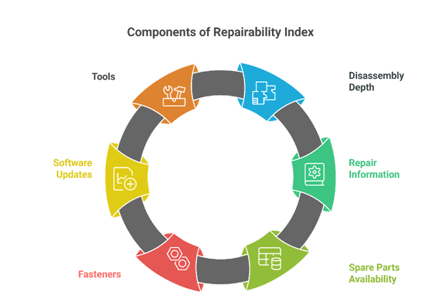
Repairability Index: proposed India-wide label grading electronic devices on ease, cost, availability of repair

Informal hubs: Karol Bagh-Delhi & Ritchie Street-Chennai showcase tacit, generational repair know-how

Quick Facts for MCQs

Legal & Policy

  • ConsumerAffairs: portal operational but no statutory backing yet
  • IndexProposal: India agrees to introduce repairability scoring for electronics via BIS standards
  • Gap: informal repairers excluded from labour codes, certification frameworks

Informal Economy

  • Workforce: lakhs of unorganised technicians rely on tacit mentorship, not formal skilling
  • Identity: regional jugaad methods form intangible technological heritage
  • Risk: sealed designs & disposable goods erode repair literacy, livelihoods

Digital Policy Gaps

  • PMKVY: rigid curricula mismatch improvisational diagnostics needed in field
  • DPI & AI policies: centre on structured datasets, ignore human repair insights
  • NEP 2020: espouses experiential learning yet omits repair craft recognition

Sustainability Angle

  • CircularEconomy: repair first, recycle later prolongs device life, cuts e-waste volumes
  • Climate: aligns with Mission LiFE to reduce material extraction, emission footprint
  • GlobalPositioning: inclusive repair framework could make India circular economy showcase

Key Data Points

FeatureData-Point
Right to Repair portal launchJuly 2023 by Dept. of Consumer Affairs
Sectors coveredElectronics, automobiles, farming equipment
Key global pushEU Directive & multiple U.S. states mandate spare-part access
Relevant SDGSDG 12 Responsible Consumption & Production
E-Waste (Mgmt) Rules 2022 focusRecycling; no explicit repair mandate
Flagship repair culture sloganMission LiFE promotes reuse, longevity

Related UPSC Prelims PYQs

ESE_GS 2024PYQ 1

To increase transparency and consumer awareness and handle customer complaints, a 'Centralised Receipt and Processing Centre' and an 'Integrated Ombudsman Scheme' have been set up. These two schemes are related to which one of the following institutions?
GS-2Polity

2.Single Window for DGP Appointments (Police Reforms)

The Hindu

What & Where

Single Window System (SWS): online mechanism to standardise proposals for appointing State DGP/Head of Police Force.

Implemented by Union Home Ministry; applicable to all States/UTs for upcoming DGP vacancies.

Aligns with Supreme Court’s Prakash Singh (2006) police-reform directives.

Quick Facts for MCQs

Legal & Policy

  • SupremeCourt directives under Article 142 mandate merit-based, tenure-secure DGP appointments.
  • PoliceAct 1861 §3 affirms State superintendence despite Union guidelines.
  • SeventhSchedule allocation limits Union role to standard-setting, not direct appointment.

Administrative Process

  • Checklist captures service length, ACR grades, vigilance clearance for each IPS nominee.
  • Secretary certification and portal submission prevent last-minute ad-hoc extensions.
  • Timely, uniform data eases UPSC evaluation for final empanelment.

Federal Structure

  • Union-run SWS standardises procedure while leaving final selection to State Cabinet.
  • District policing retains colonial duality of DM oversight alongside SP command.

Key Data Points

FeatureData-Point
Launching authorityUnion Government (MHA)
Compliance basisSC case Prakash Singh vs UoI 2006
Minimum residual service6 months
Proposal lead time≥ 3 months before vacancy
Certifying officialState Secretary-rank officer
Core toolChecklist + uniform formats
Constitutional listPolice under State List, 7th Schedule
Police Act clauseSection 3: superintendence with State Govt
District controlDual: District Magistrate & Superintendent of Police
State police head rankDirector General of Police (DGP)
GS-2History

3.Linguistic Reorganisation of Indian States (State Reorganisation)

Indian Express

What & Where

1956 Reorganisation Act created 14 States, 6 UTs chiefly on linguistic lines

Key precursors: Dhar 1948, JVP 1949, Fazl Ali SRC 1953-55 recommending unity-oriented language re-mapping

Andhra State 1953 first linguistic unit, triggering nationwide boundary resets

Quick Facts for MCQs

Benefits & Integration

  • Accommodation: linguistic states channel regional identity, defusing secessionist pressures
  • Governance: common tongue eases schooling, courts; 2nd ARC cites efficiency gains
  • Politics: regional parties thrive yet join national coalitions, deepening federal democracy

Challenges & Critiques

  • Chauvinism: dominant language may sideline minorities; Maharashtra non-Marathi issue cited
  • Border disputes: Belagavi Maharashtra-Karnataka row persists over linguistic claims
  • Nationalism worry: serial new-state demands risk diluting pan-Indian identity

Policy Roadmap

  • Multilingualism: flexible Three-Language Formula, NEP 2020 mother-tongue schooling push
  • Safeguards: rigorously apply Articles 29-30 to protect intra-state linguistic minorities
  • Technology: expand Bhashini, multilingual signage and e-forms for inclusive governance

Key Data Points

FeatureData-Point
1950 constitutional groupingParts A, B, C, D
Potti Sreeramulu sacrifice1952 hunger strike
First linguistic stateAndhra State 1953
SRC setup / report1953 / 1955
States Reorganisation Act1 Nov 1956
Units formed 195614 States, 6 UTs
JVP Committee trioNehru, Patel, Sitaramayya
Minority-rights Articles29 & 30

Related UPSC Prelims PYQs

GS1, NDA_GAT 2024PYQ 1

Consider the following statements about the Linguistic Reorganization of the States:

GS1, NDA_GAT 2006PYQ 2

Which one of the following pairs is not correctly matched?

GS-1MappingQuick Bite

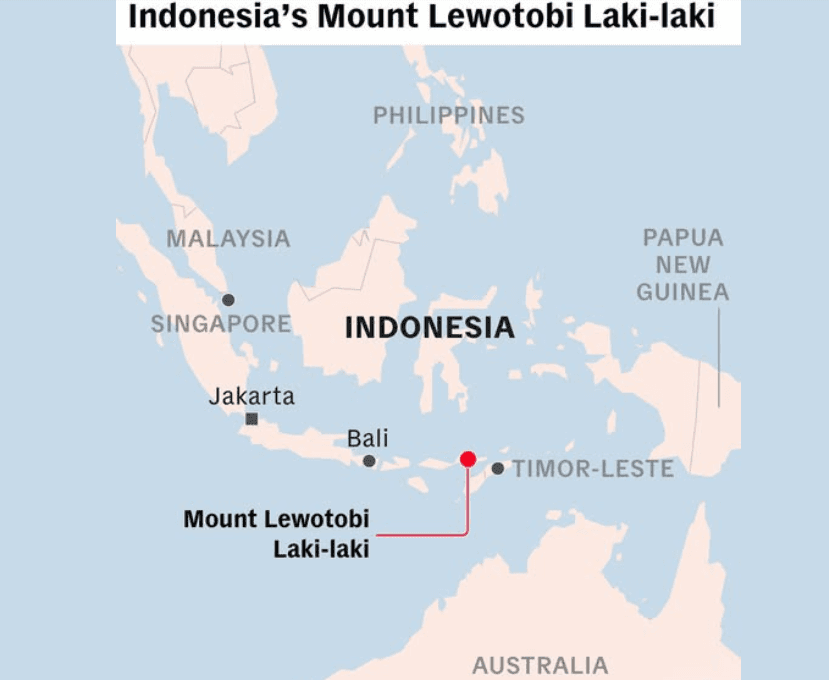
4.Mount Lewotobi Laki-Laki Eruption (Indonesian Volcano)

Indian Express
Illustration for Mount Lewotobi Laki-Laki Eruption (Indonesian Volcano)

What & Where

Mount Lewotobi Lakilaki – active stratovolcano on Flores Island, eastern Indonesia, inside Pacific Ring of Fire

Twin-peaked Lewotobi system: Lakilaki (male) & Perempuan (female) summit craters separated by <2 km

Ring of Fire – 40,000 km circum-Pacific belt hosting ≈75 % of world volcanoes and 90 % of earthquakes

Quick Facts for MCQs

Geophysical Setting

  • Flores sits on Indo-Australian–Eurasian plate subduction zone
  • Stratovolcano built by alternating lava and pyroclastic layers
  • Volatile, gas-rich magma yields explosive eruptions

Recent Eruption Details

  • Ash plume penetrated stratosphere at ~18 km, triggering aviation alerts
  • Nearby villages coated with tephra; evacuation advisories issued
  • Listed among Indonesia’s biggest eruptions since 2010

Past Analogues

  • 2010 Merapi event killed >350, displaced hundreds of thousands
  • Merapi infamous for frequent pyroclastic flows and highest national threat score
  • Experience prompted stronger early-warning systems and exclusion zones in Indonesia

Key Data Points

FeatureData-Point
Volcano eruptedMount Lewotobi Lakilaki
IslandFlores
CountryIndonesia
Volcano typeStratovolcano
Twin system meaning“Husband and wife”
Distance between craters<2 km
Ash column height≈18 km
Ring of Fire length≈40,000 km
Global volcano share≈75 %
Global earthquake share≈90 %
Largest prior eruptionMount Merapi 2010
Merapi 2010 deaths>350
GS-1Mapping

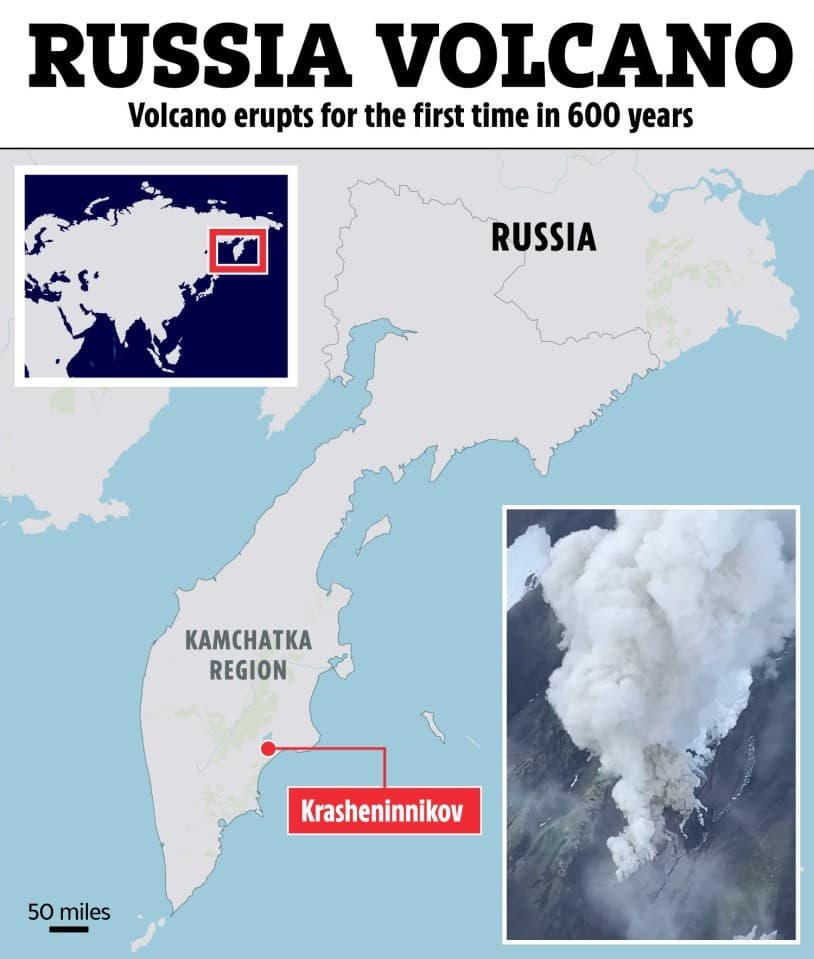
5.Krasheninnikov Volcano, Kamchatka Peninsula (Volcano Mapping)

Times of India
Illustration for Krasheninnikov Volcano, Kamchatka Peninsula (Volcano Mapping)

What & Where

Krasheninnikov; complex twin-cone stratovolcano within ancient caldera, named after explorer Stepan Krasheninnikov.

Located eastern Kamchatka Peninsula, inside Kronotsky Nature Reserve, south of Lake Kronotskoye.

Part of Pacific Ring of Fire; 2024 eruption came after nearby quake, first in ~600 years.

Quick Facts for MCQs

Volcanology & Petrology

  • Silica-rich dacite gives viscous magma, favouring explosive eruptions.
  • Plagioclase, quartz phenocrysts dominate dacite mineralogy.
  • Presence marks subduction-zone volcanic arc processes.

Geological Timeline

  • Caldera created by massive eruption ~39 kya.
  • Subsequent twin cones built over separate 4.5-kyr phases.
  • 600-year dormancy ended with 2024 eruption.

Hazard & Monitoring

  • Orange aviation code warns aircraft of ash clouds up to 6 km.
  • Seismic quake days earlier likely stress-triggered magma ascent.
  • Part of seismically active Kamchatka cluster monitored by Russian Academy of Sciences.

Key Data Points

FeatureData-Point
Volcano typeComplex stratovolcano
Elevation1,856 m
Caldera formation~39,000 years ago
Southern cone growthBegan ~11 kya, lasted 4.5 kyr
Northern cone growthFollowed, similar duration
Dominant lava rockDacite (silica-rich)
Dacite silica content63–69 % SiO₂
Last known eruption1463–1550 CE
2024 alert levelOrange aviation code
Ash plume height≈6,000 m
Tectonic settingPacific Ring of Fire, Russia
GS-1Mapping

6.Mahanadi River Basin and Tributaries (River Mapping)

Hindustan Times
Illustration for Mahanadi River Basin and Tributaries (River Mapping)

What & Where

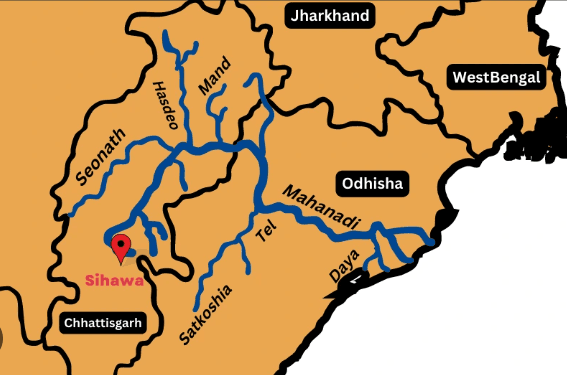
Mahanadi River: major east-flowing peninsular river, notorious for heavy silt, recurring floods, agrarian significance.

Origin: Nagri Sihawa Hills near Pharsiya, Dhamtari (Chhattisgarh, 442 m); meets Bay of Bengal near Paradip (Odisha).

Basin covers Chhattisgarh, Odisha; minor stretches in Jharkhand, Maharashtra, Madhya Pradesh.

Quick Facts for MCQs

Infrastructure & Economy

  • Hirakud Dam enables flood control, irrigation, hydropower across lower basin.
  • Extensive delta sustains paddy, fisheries, Paradip-linked port economy.

Biodiversity & Ecology

  • Satkosia Gorge hosts crocodiles, >130 bird species; ecological hotspot within Eastern Ghats.
  • River supports rich fish diversity, adjoining tiger-reserve landscapes.

Legal & Policy

  • States move from tribunal litigation to negotiated sharing, signalling cooperative federalism.
  • ACWC-guided committee to provide hydrological data, craft equitable formula.
  • May become template for resolving other inter-state water disputes.

Key Data Points

FeatureData-Point
Total length≈ 900 km
Basin area≈ 1.32 lakh km²
Source altitude≈ 442 m
Left-bank tributariesSeonath, Hasdeo, Mand, Ib
Right-bank tributariesOng, Tel, Jonk
Key damHirakud; world’s longest earthen
Scenic gorgeSatkosia through Eastern Ghats
Delta partnerBrahmani River
Recent stepOdisha–Chhattisgarh opt for amicable settlement
Mediation bodyACWC-led Joint Committee proposed

Related UPSC Prelims PYQs

GS1 2011PYQ 1

Two important rivers – one with its source in Jharkhand (and known by a different name in Odisha), and another, with its source in Odisha – merge at a place only a short distance from the coast of Bay of Bengal before flowing into the sea. This is an important site of wildlife and biodiversity and a protected area. Which one of the following could be this?

GS1 2006PYQ 2

Which one of the following statements is not correct?

GS-3Environment

7.Wind Turbines Impact on Birds (Wind Turbine Avifauna)

The Hindu
Illustration for Wind Turbines Impact on Birds (Wind Turbine Avifauna)

What & Where

Wind-turbine–related avian mortality documented by Wildlife Institute of India in Jaisalmer district, Thar Desert, Rajasthan

Study over 3,000 sq km covers key Central Asian flyway used by migratory and resident raptors, bustards, cranes

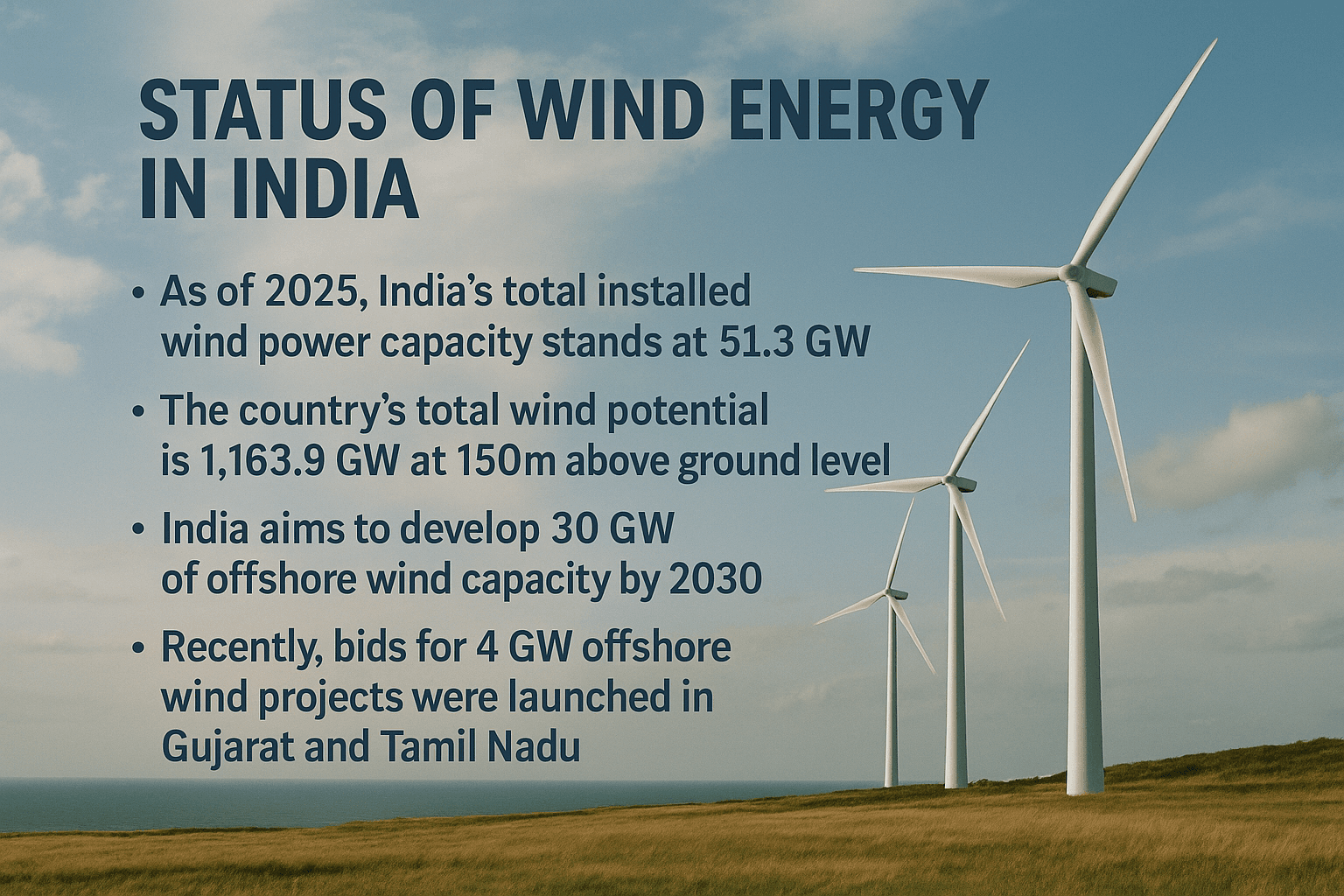
Focus on onshore wind sector; India added 3.5 GW early 2025 amid 82 % year-on-year capacity growth

Quick Facts for MCQs

Environmental Impact

  • Raptor vulnerability high due to slow reproduction and trophic-level importance
  • Bird loss alters pest control, threatening regional agriculture and ecosystem balance
  • Thar Desert classified as biodiversity hotspot intersecting a major migratory flyway

Legal & Policy

  • Onshore wind farms presently outside mandatory Environmental Impact Assessment purview
  • Clearance committees often overlook cumulative and regional biodiversity impacts
  • Poor MNRE–MoEFCC coordination delays adoption of ecological safeguard norms

Tech & Mitigation

  • Blade-painting (single black blade) improves visibility, lowers collision rates
  • Timed shutdowns during peak migration and smart turbine layout reduce strike risk
  • AVISTEP and radar-AI systems enable bird-sensitive zoning and real-time turbine control

Key Data Points

FeatureData-Point
Study turbines sampled90 units
Carcasses found124 birds
Estimated annual mortality4,464 birds/1,000 sq km
Control-site deaths0
Most affected groupRaptors
Critically endangered at riskGreat Indian Bustard
Blade-collision sourcesTurbine blades & power lines
Onshore EIA statusExempt under present rules
Wind addition Jan-Mar 20253.5 GW
YoY growth same period82 %
GS-3Environment

8.Climate-Resilient Indian Himalayan Region (Himalayan Sustainability)

Times of India
Illustration for Climate-Resilient Indian Himalayan Region (Himalayan Sustainability)

What & Where

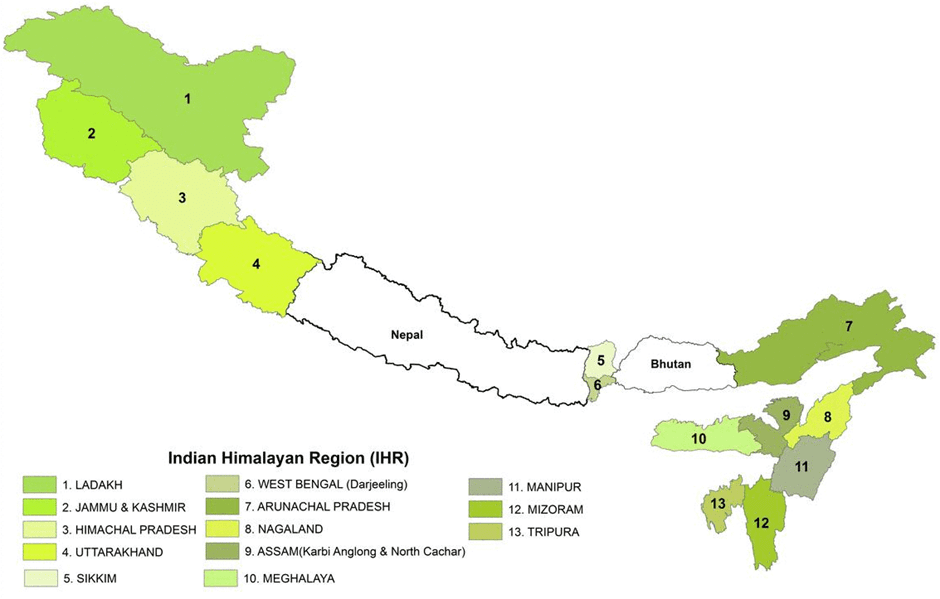
Indian Himalayan Region: 2,500-km mountain arc spanning 13 States/UTs from J-K to Arunachal.

Extent: 16.2 % of India; sustains 50 million hill residents and >600 million downstream water users.

Ecology: Tropical forests to alpine meadows; shelters snow leopard and 3,160+ endemic plant species.

Quick Facts for MCQs

Environmental Threats

  • Deforestation: 1,072 sq km loss accelerates erosion and habitat fragmentation.
  • Springs: Half of perennial sources vanishing, intensifying rural water insecurity.
  • Tourism: Carrying-capacity overshoot increases waste, traffic, wildlife disturbance.

Climate & Disaster Risks

  • Glacier retreat: Rapid melt creating expanding lakes, heightening outburst potential.
  • GLOFs: Cumulative toll exceeds 12,000 lives; frequency projected to rise.
  • Landslides: Infrastructure and slope cutting provoke events like Joshimath 2023 subsidence.

Policy & Schemes

  • Flagships: NMSHE, IHCAP, SECURE Himalaya, IHDP push adaptation, biodiversity and livelihood security.
  • Judiciary: Supreme Court demands ecologically sensitive governance for Himachal, broader Himalayas.
  • Planning: Hazard zoning, EIA strengthening, early-warning tech endorsed for all hill projects.

Key Data Points

FeatureData-Point
IHR length≈2,500 km
Member States/UTs13
Share of India’s area16.2 %
Direct population supported50 million
Forest loss 2019-211,072 sq km
Natural springs drying≈50 %
Glaciers lost in Arunachal (32 yrs)110
Historic GLOF deaths>12,000
Rivers fed10 incl. Ganga, Indus
Tourism share in hill GDP>10 %
Hydropower example13,000 MW Lohit Basin

Related UPSC Prelims PYQs

CDS_GK, NDA_GAT 2025PYQ 1

भारत वन स्थिति रिपोर्ट 2021 के अनुसार, निम्नलिखित में से किस हिमालयी राज्य में इसके भौगोलिक क्षेत्र का सर्वाधिक प्रतिशत वन है?

CDS_GK, NDA_GAT 2024PYQ 2

ISRO, in its studies, has revealed that there is a 178% increase in the size of the Gepang Ghat Glacial Lake. In which of the following States/UTs is this lake located?

GS-3S&T

9.NRL Industrial 5G Private Network (Private 5G)

DD News

What & Where

First industrial-grade 5G Captive Non-Public Network (CNPN); exclusive, private 5G for enterprise operations.

Location: Numaligarh Refinery Limited (NRL), Golaghat, Assam—India’s pioneer refinery deployment.

Partners: Bharat Sanchar Nigam Ltd. (BSNL) & NRL; unveiled at “Industry 4.0 Workshop for CPSEs”, Fin Min.

Quick Facts for MCQs

Tech & Schemes

  • Indigenous-infrastructure; completely India-built, network-slicing ready.
  • URLLC permits instant analytics, autonomous robots, remote inspections.
  • AR/VR immersive training + Digital Twins enable predictive maintenance cycles.

Economic Angle

  • Operational-efficiency; automation cuts downtime, raises throughput, lowers costs.
  • North-East-boost; creates high-skill digital jobs, upgrades regional ICT ecosystem.
  • Replicable-model; template for steel, ports, mining PSUs.

Security Dimension

  • Cyber-resilience; private spectrum insulates mission-critical systems from external threats.
  • Privacy-enhancement; sensitive refinery data never exits enterprise perimeter.
  • Encrypted device-to-device communication secures safety, logistics, monitoring streams.

Key Data Points

FeatureData-Point
Network type5G Captive Non-Public Network (private 5G)
Sector firstRefinery / oil & gas
Implementing CPSUsBSNL + NRL
Spectrum useLicensed / BSNL-allocated 5G bands
Key tech layerUltra-Reliable Low-Latency Communication (URLLC)
Digital toolsAR/VR, IoT sensors, Digital Twins
Latency goalSub-10 ms, real-time control
Security designIsolated from public networks; cyber-resilient architecture
Geographic focusAssam, North-East India
Policy contextIndustry 4.0 digitalisation drive for CPSEs
GS-3S&TQuick Bite

10.Tropical Rain and Ocean Stability (Ocean Buoyancy)

The Hindu

What & Where

Concept Rain‐induced buoyancy changes in tropical ocean surface layers; outcome depends on rainfall intensity and accompanying cold-pool dynamics.

Process Heavy rain plus cold pools cools, densifies surface, suppresses vertical mixing; light rain freshens, lightens surface, enhances mixing.

Geography Cold-rain zones Western Pacific & Indian Oceans; Hot-rain zone Central Pacific; strongest night-time effects in tropics.

Quick Facts for MCQs

Ocean Dynamics

  • Cold pools Cold, dry downdrafts under convective clouds cool sea skin, overriding freshwater lightening effect.
  • Mixing control Balance between freshwater buoyancy gain and cold-pool heat loss decides stability outcome.
  • Buoyancy flux sign Positive → mixing; Negative → stratification.

Temporal Variation

  • Diurnal cycle Weaker solar heating at night makes rain-driven cooling dominate, fostering instability easier.
  • Daytime sunlight Adds surface warming, helping cold pools stabilize upper ocean under heavy rain.

Spatial Variation

  • Western Pacific & Indian Oceans High heat loss, frequent cold rain, thus stronger stratification episodes.
  • Central Pacific Warmer “hot rain” loses less heat, mixing prevails more often.

Climate Relevance

  • Weather models Need rain-type parameterisation to forecast SST changes and convection feedbacks accurately.
  • Climate regulation Vertical mixing moves heat, carbon, nutrients; misrepresentation skews long-term climate projections.

Key Data Points

FeatureData-Point
Light rainfall band0.2 – 4 mm h⁻¹
Light rain effectPositive buoyancy flux; surface instability; promotes mixing
Heavy rain effectNegative buoyancy flux via cold pools; increases stability
Cold pool actionBlocks sunlight + extracts ocean heat to atmosphere
Night vs dayNight rain more prone to create instability
Cold-rain zonesWestern Pacific & Indian Oceans
Hot-rain zoneCentral Pacific

Related UPSC Prelims PYQs

GEO_GS, GS1 2020PYQ 1

महासागर औसत तापमान (Ocean Mean Temperature/OMT) के संदर्भ में, निम्नलिखित में से कौन-सा/से कथन सही है/हैं?

GEO_GS, GS1 2023PYQ 2

The uplift mechanism that takes place when lighter warm moist air mass rises after encountering a colder and denser air mass causes

GS-2Polity

11.Bangladesh July Declaration Draft Charter (Bangladesh Constitution)

Business Standard

What & Where

Constitutional draft recognising Bangladesh’s 2024 July Uprising, called the “July Declaration”.

To be unveiled in Dhaka by interim government led by Muhammad Yunus on 5 Aug 2025.

Seeks a “Second Republic”, embedding student-led anti-authoritarian ideals into the supreme law.

Quick Facts for MCQs

Legal & Policy

  • Constitutionalisation grants formal legitimacy to protest movement without elected-parliament approval.
  • Reform roadmap promises civil-rights guarantees, institutional accountability, transparent governance.
  • Critics flag potential judicial challenges over extra-constitutional procedure.

Social Mobilisation

  • Youth mobilisation unprecedented since 1971, crossing rural-urban lines, sustaining pressure for declaration.
  • Grassroots networks expanded civic participation, linking labour, minority, farmer groups to student core.
  • Public rallies brand change as “Second Republic”, amplifying social expectations of inclusive rule.

Political Symbolism

  • Declaration likened to South-Africa post-apartheid charter, signalling fresh republican start.
  • Recognition reframes state sovereignty as people-driven, distancing from Awami-League legacy.
  • Adoption date matches first anniversary of Hasina ouster, reinforcing rupture message.

Key Data Points

FeatureData-Point
Proposed release date5 August 2025
Drafting authorityInterim govt., Muhammad Yunus
Uprising recognisedJuly Uprising 2024
Lead movementStudents Against Discrimination
Primary objectiveBreak from authoritarianism, democratic renewal
Key ideologyAnti-fascism, inclusive governance
CriticismLegality outside parliamentary channels
Public support baseYouth, nationwide grassroots
GS-2Economy

12.India-EFTA Trade Partnership Agreement (EFTA TEPA)

Hindustan Times

What & Where

Trade & Economic Partnership Agreement (TEPA): India ↔ EFTA (Iceland, Liechtenstein, Norway, Switzerland), signed 10 Mar 2024.

Enters 1 Oct 2025; cuts tariffs, opens services, seeks USD 100 bn EFTA investment.

21 negotiation rounds since 2008; 14-chapter coverage-–goods, services, IPR, dispute settlement.

Quick Facts for MCQs

Economic Angle

  • USD 100 bn EFTA FDI targets 1 mn Indian jobs; India may revoke perks if unmet.
  • Gold retains existing duty; Indian rice enters EFTA zero-duty.
  • Sovereign wealth funds exempted from standard FDI obligations.

Services & Mobility

  • Pact promises predictable market access in IT, education, culture, sports.
  • Framework for Mutual Recognition in nursing, accountancy, architecture.
  • Facilitates professional mobility, easing visas and business stays.

IPR & Safeguards

  • 14-chapter pact curbs evergreening; protects generic drug production.
  • India allowed pre-emptive withdrawal of concessions if investment clauses breached.
  • Enhances customs cooperation and transparent dispute resolution.

Trade Balance

  • 2024-25 trade USD 24.4 bn; imports 22.45, exports 1.96, large deficit.
  • Swiss gold (~USD 20.7 bn) remains main deficit driver.
  • Invest India-run India-EFTA Desk offers single-window investment facilitation.

Key Data Points

FeatureData-Point
Signed10 Mar 2024
Enforcement1 Oct 2025
EFTA membersIceland, Liechtenstein, Norway, Switzerland
Investment pledgeUSD 100 bn over 15 yrs
Tariff lines EFTA offers92.2 % = 99.6 % of India exports
Tariff lines India offers82.7 % = 95.3 % of EFTA exports
Duty-free Indian productBasmati & non-basmati rice
Excluded sectorsDairy, soya, coal, PLI items
India’s rank for EFTA5th-largest trade partner

Related UPSC Prelims PYQs

CAPF_GAI, CDS_GK 2024PYQ 1

भारत ने EFTA, जो कि चार देशों का एक क्षेत्रीय समूह है, के साथ व्यापार और आर्थिक भागीदारी करार (TEPA) पर हस्ताक्षर किया है। निम्नलिखित में से कौन-सा देश इस समूह का सदस्य नहीं है?

CAPF_GAI, CDS_GK 2022PYQ 2

Recently, with which one of the following countries did India sign the 'Comprehensive Economic Partnership Agreement'?

GS-3Security

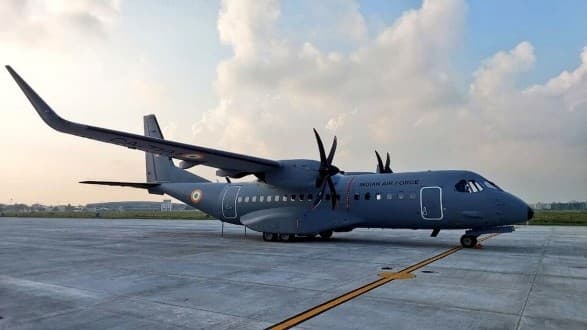
13.Airbus C-295 Tactical Transport Aircraft (Transport Aircraft)

News on Air
Illustration for Airbus C-295 Tactical Transport Aircraft (Transport Aircraft)

What & Where

C-295 : medium tactical transport aircraft for troop lift, surveillance, MEDEVAC, maritime patrol.

Built by Airbus Defence & Space; 16 imported from Spain, 40 to be assembled in Tata plant, Vadodara, Gujarat.

Will replace IAF’s ageing HS-748 Avro fleet, enabling operations on short, semi-prepared strips in NE, Ladakh, islands.

Quick Facts for MCQs

Technical Features

  • Multirole capability: troop drop, disaster relief, maritime patrol, MEDEVAC.
  • FITS sensors, touchscreen nav, bubble windows give real-time situational awareness.
  • Long cabin integrates consoles while retaining cargo or 71 troops.

Make in India Push

  • First indigenous military aircraft programme led by private sector.
  • Vadodara line to localise fuselage, wings, avionics incrementally.
  • Supports Atmanirbhar Bharat goals and potential future exports.

Security Dimension

  • Strengthens rapid logistics to forward areas in NE, Ladakh, Andaman.
  • Replaces ageing Avros, reducing maintenance burden and downtime.
  • Enhances strategic airlift during humanitarian crises and border contingencies.

Key Data Points

FeatureData-Point
Total IAF order56 aircraft
Spain-built batch16 units (final one arrived early)
India-built batch40 units by Tata Advanced Systems
Tech-transfer level~90 %; >13,000 parts indigenised
Endurance11+ hours
Developer originCASA, Spain (1990s)
Main replacementHS-748 Avro
Key mission suiteFITS, bubble windows, rear ramp
Runway requirementShort / semi-prepared capable
First private aircraft projectYes, under Make in India
GS-3Security

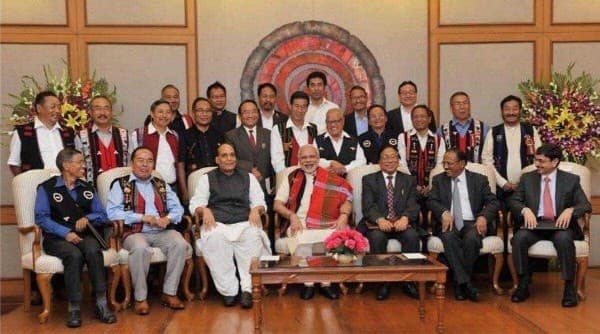
14.2015 Naga Framework Agreement (Naga Peace Accord)

New Indian Express
Illustration for 2015 Naga Framework Agreement (Naga Peace Accord)

What & Where

Framework Agreement (FA) = peace accord between GoI & NSCN-IM, signed 3 Aug 2015 in New Delhi

Seeks shared sovereignty & new political relationship across “Nagalim” (Naga-inhabited areas of Nagaland & adjoining NE states)

Forms core of ongoing Indo-Naga peace process, replacing pure security approach with negotiated settlement

Quick Facts for MCQs

Legal & Policy

  • Recognition; FA treats Indo-Naga issue as political conflict, not law-and-order matter
  • Mutual-respect clause; affirms equality of Indian & Naga political institutions
  • Time-bound implementation promised, later stalled over constitutional safeguards

Security Dimension

  • Ends six-decade insurgency aim; offers demobilisation under negotiated autonomy
  • NSCN-IM vows to “defend” FA against dilution by GoI or NNPGs
  • Peace talks shifted insurgent narrative from secession to shared sovereignty

Governance Model

  • People-centric; sovereignty said to reside with Naga populace, enabling democratic self-rule
  • Proposes clear division: defence, foreign affairs with GoI; cultural, land, resources with Nagalim
  • Inclusive intent; envisages bringing all Naga-inhabited regions into consultative framework

Key Data Points

FeatureData-Point
Signing date3 August 2015
VenueNew Delhi (PM’s residence, 7 Lok Kalyan Marg)
GoI signatoryPrime Minister + interlocutor R N Ravi
Naga signatoryNSCN-IM (Chairman Isak Chishi Swu, Gen.-Secy. Th. Muivah)
Core recognitionDistinct political identity & unique history of Nagas
Governance ideaShared sovereignty with separate yet cooperative jurisdictions
Follow-up instrumentCompetency Clauses (yet to be publicly released)
Rival group blocNNPGs (Naga National Political Groups)
GS-2Scheme

15.Standardised Ayurveda Aahara List (Ayurveda Aahara)

PIB
Illustration for Standardised Ayurveda Aahara List (Ayurveda Aahara)

What & Where

Ayurveda Aahara: food items prepared per Ayurvedic dietary principles for balanced, seasonal, herbal nutrition.

Definitive product list issued nationwide by FSSAI in collaboration with Ministry of Ayush.

Governed under Food Safety and Standards (Ayurveda Aahara) Regulations, 2022, India.

Quick Facts for MCQs

Legal & Policy

  • Regulations empower FSSAI to license, label, and monitor Ayurveda Aahara across India.
  • Schedule-A textual citations mandatory for authenticity of each listed formulation.
  • Structured pathway lets FBOs add new products after NIA scrutiny and FSSAI nod.

Industry Impact

  • Regulatory clarity cuts entry barriers, spurring innovation in Ayurveda-centric food market.
  • Start-ups gain defined framework for R&D, investment, export prospects.
  • Compliance guide simplifies audits, boosting confidence among supply-chain stakeholders.

Public Health

  • List promotes diet-based prevention, aligning with National Ayush Mission goals.
  • Encourages consumption of seasonal, herb-rich foods for holistic wellness.
  • Government endorsement increases consumer trust in evidence-backed traditional nutrition.

Key Data Points

FeatureData-Point
Launching bodiesFSSAI + Ministry of Ayush
Legal basisFood Safety & Standards (Ayurveda Aahara) Regulations, 2022
Document releasedDefinitive List of Ayurveda Aahara Products
Validation sourceClassical Ayurvedic texts in Schedule A
Nodal agencyNational Institute of Ayurveda, Jaipur
Inclusion mechanismFBO request with scripture reference; FSSAI approval
Primary beneficiariesFood Business Operators & Ayurveda startups
Core objectiveMainstream traditional diet; preventive healthcare
Public-health focusDigestion, immunity, long-term wellness
Key compliance gainClear manufacturing & labelling standards

Related UPSC Prelims PYQs

GS1 2016PYQ 1

With reference to pre-packaged items in India, it is mandatory to the manufacturer to put which of the following information on the main label, as per the Food Safety and Standards (Packaging and Labelling) Regulations, 2011?

Ready to practice?

Test your knowledge with our UPSC test series.

Start Free Trial